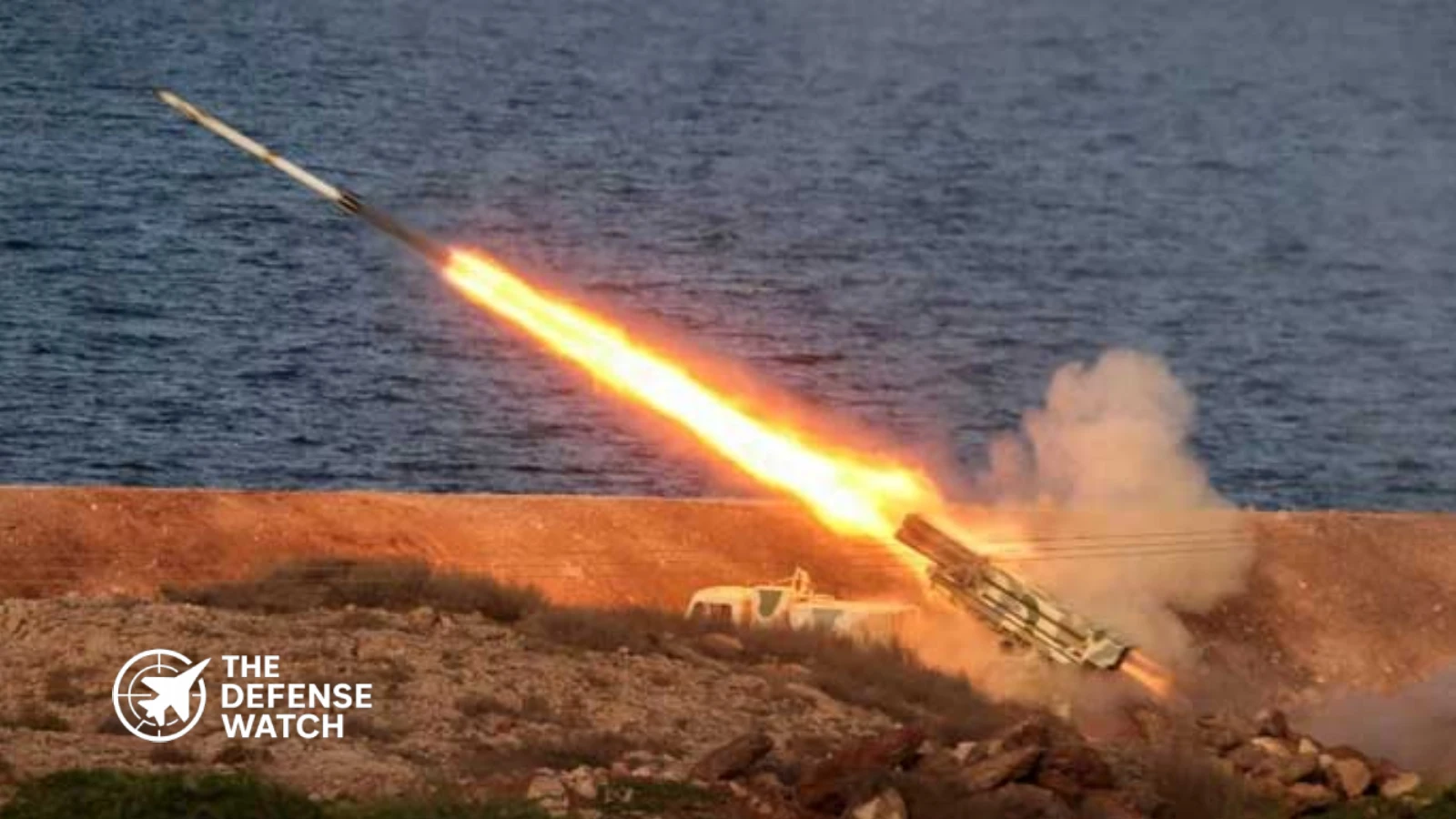
A new exchange of strikes between Washington and Tehran has raised tensions around the Strait of Hormuz after the United States carried out its first publicly acknowledged attack on Iranian territory in weeks.
Takeaways
The latest U.S.-Iran exchange centers on Larak Island, the Strait of Hormuz and Iranian missile strikes against U.S. military positions in Jordan.
Iran strikes U.S. military targets in Jordan after the United States attacked Iranian rocket launchers on Larak Island, opening a new phase of direct military escalation around the strategically important Strait of Hormuz.
Iran’s Islamic Revolutionary Guard Corps said it launched ballistic missiles against two U.S. military air bases in Jordan on Monday. Iranian state media identified the targets as King Hussein and Al Azraq air bases and claimed the strikes caused heavy damage.
Jordan’s military, however, said it intercepted eight missiles that entered its airspace. The statement did not identify the origin of the missiles or provide details on damage at the bases.
The exchange followed a U.S. operation against two Iranian rocket launchers on Larak Island, located near the Strait of Hormuz. A U.S. official told Reuters that Iranian Islamic Revolutionary Guard Corps forces had been observed preparing to launch rockets carrying sea mines into the strategic waterway.
U.S. Strike Targeted Iranian Mine-Laying Threat
The U.S. military described the operation as a limited action intended to address an imminent threat to shipping.
U.S. Central Command said its forces conducted limited and precise action against IRGC forces involved in mine-laying activities in the Strait of Hormuz. CENTCOM said the operation was intended to protect civilian mariners, commercial shipping and the free flow of international commerce.
The strike was significant because it represented the first publicly acknowledged U.S. military attack on Iranian territory since late July.
According to Reuters, the U.S. operation specifically targeted two launchers on Larak Island after American forces detected preparations to fire rockets carrying sea mines into the Strait of Hormuz.
The location is strategically important. Larak Island sits near one of the world’s most important energy shipping routes, making any effort to deploy mines in the area a potential threat to commercial vessels and naval forces operating in the waterway.
Iran Responds With Ballistic Missile Strikes
Iranian officials described the U.S. action as an attack that required retaliation.
The IRGC said its Aerospace Force targeted the King Hussein and Al Azraq facilities in Jordan using ballistic missiles as part of a combined missile and drone operation. Iranian officials claimed the attacks struck technical infrastructure, maintenance facilities and areas associated with fighter aircraft. Those damage claims have not been independently verified.
Jordan provided a different measure of the attack, reporting that its air defenses intercepted eight missiles. There were no immediate independently confirmed reports establishing the extent of damage to U.S. facilities in Jordan.
The incident demonstrates the importance of regional air and missile defense for U.S. forces stationed across the Middle East. Jordan’s geographic position makes the country an important location for U.S. military operations and regional air activity.
Iran Also Claims Attack On UAE Base
Iranian state television separately reported that Iranian forces attacked the Al Minhad Air Base in the United Arab Emirates with drones.
The Iranian military said the operation targeted locations where U.S. forces and helicopters were stationed. As of the latest reports, the UAE had not publicly confirmed the Iranian claim.
That distinction is important. The reported attack on the UAE should therefore be treated as an Iranian claim rather than an independently confirmed strike.
The wider pattern shows how military activity connected to the Strait of Hormuz can quickly extend beyond Iran’s immediate coastline. U.S. forces operate from multiple locations across the Gulf region, while Iran has previously targeted American facilities and regional partners during periods of heightened confrontation.
Why The Strait Of Hormuz Matters
The latest escalation is closely tied to the security of the Strait of Hormuz, a narrow maritime passage connecting the Persian Gulf with the Gulf of Oman and the Arabian Sea.
The waterway is a critical route for global energy shipments. Any sustained disruption could affect oil transportation, shipping insurance, regional trade and energy prices.
U.S. Central Command said it had completed clearing sea mines from international shipping routes in the strait during the previous week. CENTCOM also said American forces remained prepared to protect the free flow of commerce through the waterway.
That makes the reported Larak Island launchers particularly significant from a military perspective. Rocket-launched mines could create a maritime hazard without requiring Iran to directly attack commercial vessels. Mine warfare can also force ships to alter routes and compel naval forces to conduct lengthy clearance operations.
For the United States, preventing the placement of mines is therefore both a force-protection mission and a broader maritime security objective.
A New Test For U.S. Regional Defenses
The latest Iran strikes U.S. military targets episode also highlights the challenge of defending widely distributed American forces.
U.S. bases across the Middle East operate within range of Iranian ballistic missiles, cruise missiles and unmanned aircraft. Jordan, Iraq, the Gulf states and other regional partners have all become strategically important to U.S. force posture.
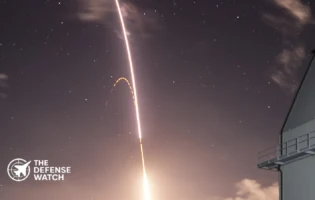
The reported interception of eight missiles by Jordan demonstrates the role of layered air defense in reducing the potential impact of ballistic missile attacks. At the same time, the incident reinforces the need for early warning, integrated radar coverage, interceptor systems and coordination between U.S. and partner forces.
For Iran, launching ballistic missiles against U.S. facilities provides a means of responding directly to American attacks while attempting to impose costs beyond Iran’s borders. The effectiveness of such attacks depends not only on the number of weapons launched but also on whether they penetrate regional air defenses and cause meaningful damage.
Escalation Around Hormuz
The latest exchange comes after months of military confrontation between the United States and Iran and follows a period in which Washington had placed greater emphasis on economic pressure.
The April ceasefire reduced the intensity of the broader fighting, while diplomatic efforts involving regional mediators, including Pakistan and Qatar, continued. However, continued clashes around the Strait of Hormuz have prevented the situation from returning to a stable ceasefire environment.
The Larak Island strike is therefore important beyond the immediate military action. It shows that Washington remains willing to use force when it assesses that Iranian activity poses a direct threat to shipping or U.S. forces.
Iran’s response shows that Tehran remains prepared to strike American military positions in the region following attacks on Iranian forces.
The immediate question is whether the exchange remains limited or triggers another cycle of strikes. Neither side has indicated that it intends to abandon its stated objectives around the Strait of Hormuz.
For commercial shipping and regional military forces, the central concern remains the same: whether the waterway can remain open without renewed attacks, mine threats or retaliatory strikes.
What Happens Next
The reported strikes leave the Strait of Hormuz at the center of the latest U.S.-Iran confrontation.
The United States has made clear that it intends to protect maritime traffic and prevent Iranian forces from laying mines in critical shipping lanes. Iran, meanwhile, has demonstrated that attacks against its forces can trigger missile and drone operations against U.S. positions in neighboring countries.
The reported Iranian strikes on U.S. military targets in Jordan should therefore be viewed as part of a broader contest over access, deterrence and control around one of the world’s most strategically important waterways.
For now, the extent of damage from the Iranian attacks remains unclear, while Iran’s separate claim of a drone strike against the Al Minhad Air Base has not been independently confirmed.
Further U.S. or Iranian military action could determine whether the latest exchange remains an isolated confrontation or develops into a broader escalation across the region.