• Home
  • About
  • Defense Systems
  • Manufacturer
  • Comparisons
  • Compare 
  • Tools
TheDefenseWatch.com
  • Aerospace & Aviation
  • Military & Ordnance
  • Naval & Maritime
  • Cyber & Space Defense
  • Policy & Strategy
  • Global News
  • Tools Library
    • Smart Calculator
    • Drone Flight Time Calculator
    • Drone Range Calculator
    • Counter-Drone Jammer Effective Range Calculator
    • Counter-Battery Radar Detection Calculator
    • Artillery Fire Correction Calculator
    • Thermal Camera Detection Range Calculator
    • Missile Range & Time-of-Flight Calculator
    • Radar Detection Range Calculator
    • FPV Strike Drone Payload vs Range Calculator
    • Loitering Munition Endurance Calculator
    • Sniper Ballistic Drop & Windage Calculator
    • Bullet Drop Calculator
    • U.S. Army Combat Fitness Test (ACFT) Calculator
    • Military Pension Calculator
    • Military Retirement Calculator
    • Military Pension Calculator
    • Large Number Calculator
Font ResizerAa

TheDefenseWatch.com

The Defense Watch | U.S. & Global Defense News, Analysis & Military Updates

Search
  • Home
  • About
  • Defense Systems
  • Manufacturer
  • Comparisons
  • Compare 
  • Tools

Stay Updated

Get the latest update

Subscribe

Explore

  • Drone
  • Fighter Jets & Military Aircraft
  • Hypersonic Weapons
  • Aircraft Carriers
  • Strategic History & Missions
  • Tools Library
Home » Rafale vs F-35: Europe’s Multirole Fighter Against America’s Stealth Power
Head-to-Head

Rafale vs F-35: Europe’s Multirole Fighter Against America’s Stealth Power

TeamDefenseWatch
Last updated: September 8, 2026 5:20 am
TeamDefenseWatch
Share
3 Min Read
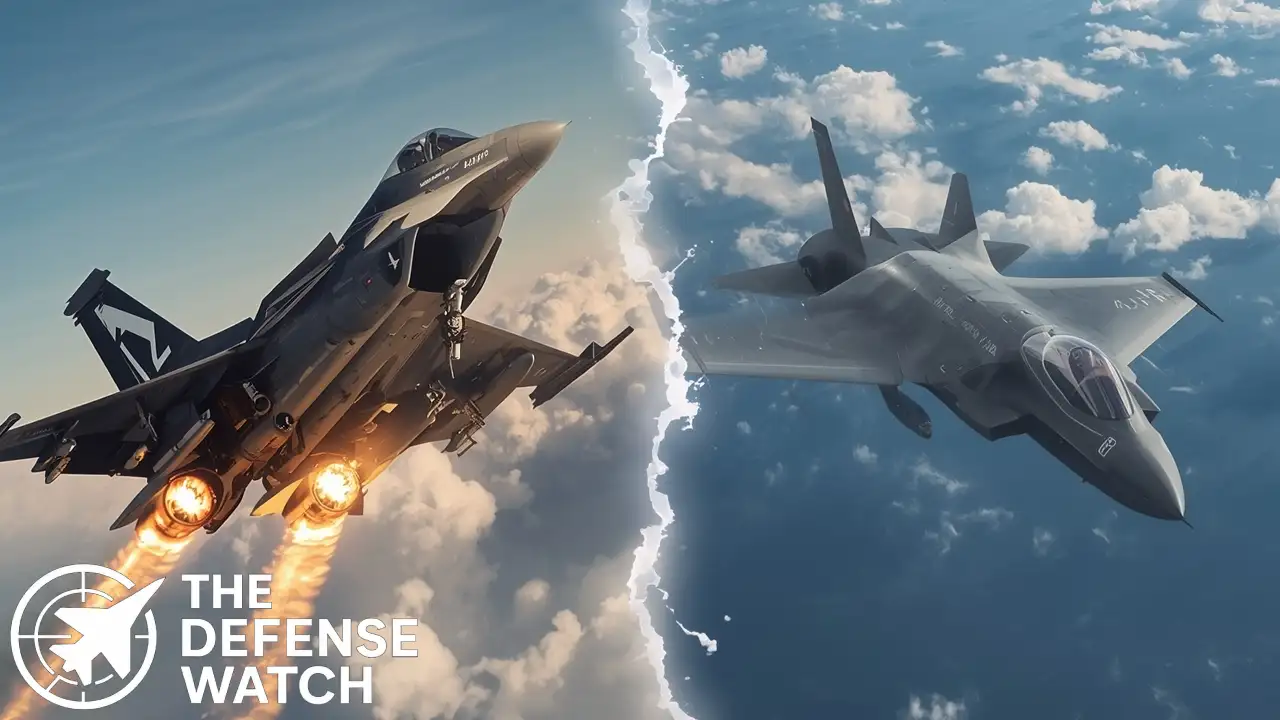
Rafale vs F-35 comparison
AI generated images
SHARE
Follow The Defense Watch on Google:

Rafale vs F-35 comparison

The debate of Rafale vs F-35 has gained traction as nations reassess their defense priorities amid rising global tensions. France’s Dassault Rafale, a 4.5-generation multirole fighter, has earned a reputation as a combat-proven, export-friendly platform. Meanwhile, the U.S. Lockheed Martin F-35 Lightning II represents the cornerstone of NATO’s future airpower, designed for stealth, sensor fusion, and next-generation warfare.

Contents
Rafale vs F-35 comparisonSpecifications Comparison: Rafale vs F-35Design & TechnologyFirepower & PerformanceOperational Range & MobilityCombat EffectivenessCost & Export ValueAnalysis: Rafale vs F-35 – Who Wins?ConclusionFAQ: Rafale vs F-35

For U.S. readers, the comparison is more than technical—it’s strategic. While Washington promotes the F-35 as the alliance’s standard, some partners, including France and India, continue to invest in Rafale fleets. This raises key geopolitical questions: Is the Rafale a viable alternative to the F-35? And under what circumstances could it outperform America’s stealth jet?

Specifications Comparison: Rafale vs F-35

SpecificationDassault RafaleLockheed Martin F-35 Lightning II
OriginFranceUnited States
Generation4.5th generation5th generation
Crew1 (Rafale C/B), 2 (Rafale B)1
Top SpeedMach 1.8 (~1,912 km/h)Mach 1.6 (~1,960 km/h)
Ferry Range~3,700 km (with drop tanks)~2,200 km
Combat Radius~1,850 km~1,100 km
Payload Capacity~9,500 kg~8,160 kg
Stealth / RCS~1 m² (est., frontal)~0.001–0.005 m² (stealth-optimized)
Service Entry20012015
Unit Cost (est.)$100–120 million$80–100 million (F-35A variant)
Primary OperatorsFrance, India, Egypt, GreeceUnited States, NATO allies, Japan

Design & Technology

The Rafale was built as an “omnirole” fighter capable of switching between air-to-air and strike missions mid-flight. It features advanced avionics, active electronically scanned array (AESA) radar, and a glass cockpit with hands-on-throttle-and-stick (HOTAS) control. Its design prioritizes agility, versatility, and survivability, though it is not a true stealth aircraft.
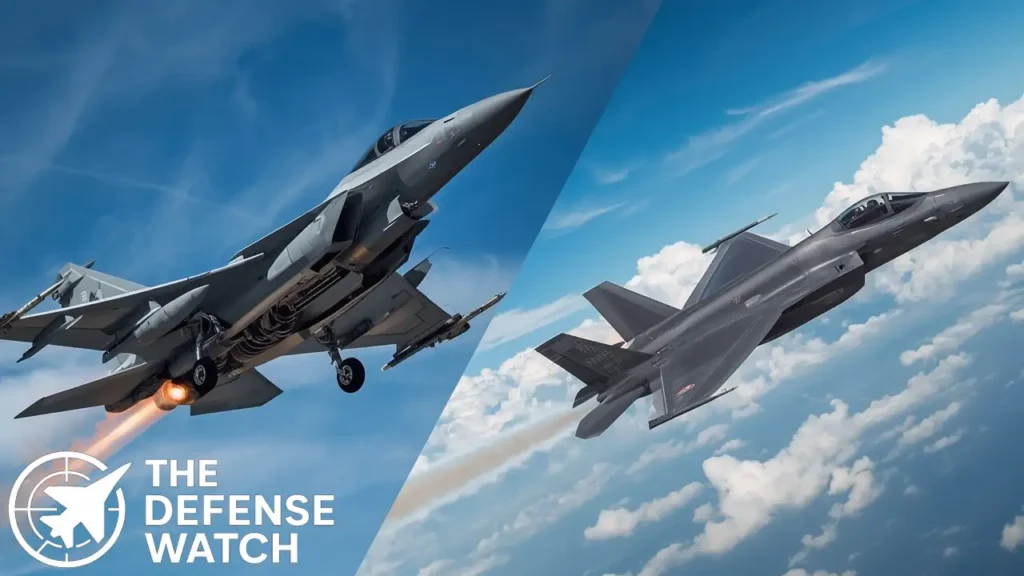
Rafale vs F-35 comparison
AI generated images

The F-35, by contrast, is a dedicated 5th-generation stealth fighter. Its design emphasizes radar-evading geometry, internal weapons bays, and advanced sensor fusion. The Distributed Aperture System (DAS) and Electro-Optical Targeting System (EOTS) give pilots 360-degree situational awareness. In terms of digital battlespace integration, the F-35 sets the global benchmark.

- Advertisement -

Firepower & Performance

  • Rafale Armament:
    • 30mm GIAT cannon
    • Air-to-air: MICA, Meteor, Magic II missiles
    • Air-to-ground: SCALP cruise missile, AASM precision bombs
    • Nuclear role: ASMP-A nuclear missile (French deterrence role)
    • 14 hardpoints allow heavy payload flexibility.
  • F-35 Armament:
    • 25mm GAU-22/A cannon
    • Air-to-air: AIM-120 AMRAAM, AIM-9X Sidewinder
    • Air-to-ground: JDAMs, SDBs, JASSM, nuclear-certified (B61-12 for NATO)
    • Internal bays preserve stealth; external pylons increase payload but reduce low observability.

In dogfights, the Rafale’s agility, high thrust-to-weight ratio, and “supercruise” capability give it an edge. However, the F-35 rarely seeks close combat—its stealth and long-range sensors are designed to “kill before being seen.”

Operational Range & Mobility

The Rafale offers a longer combat radius and can conduct buddy-buddy refueling with wing-mounted pods. Its ability to operate from aircraft carriers (Rafale M) and short, rugged airstrips adds flexibility.

The F-35 has a shorter combat radius, but its integration into U.S. and NATO aerial refueling networks mitigates this. Mobility-wise, the F-35 is heavily dependent on advanced infrastructure and maintenance hubs, whereas the Rafale is known for its ease of deployment in expeditionary campaigns.

Combat Effectiveness

The Rafale is battle-proven in Afghanistan, Libya, Mali, Iraq, and Syria. Its adaptability to both air-to-air and deep-strike roles has given it credibility as a versatile warfighter.

The F-35 has not yet seen large-scale combat but has been deployed in intelligence and strike missions by Israel, the U.S., and UK forces. Its ability to link multiple platforms via secure datalinks gives it unmatched force-multiplying potential, especially in high-threat environments like the Indo-Pacific or Eastern Europe.

Cost & Export Value

  • Rafale: Costs more per unit but is attractive for nations unwilling or unable to rely on U.S. technology. Export deals with India, Egypt, and Greece showcase its geopolitical reach. Maintenance is simpler than the F-35 but still costly.
  • F-35: Initially criticized for overruns, its cost has stabilized. With more than 20 operators worldwide, it has become the default NATO fighter. Its mass adoption ensures steady parts supply and training synergy.

For allies, buying the F-35 often means deeper political alignment with Washington. Rafale buyers, meanwhile, enjoy a degree of strategic independence.

Analysis: Rafale vs F-35 – Who Wins?

  • Air Superiority: F-35 (stealth advantage, beyond-visual-range combat)
  • Agility / Dogfighting: Rafale (maneuverability, supercruise)
  • Strike Missions: Tie (Rafale heavy loadout vs F-35 stealth penetration)
  • Logistics & Training: F-35 (global standardization)
  • Expeditionary Flexibility: Rafale (rugged operations, carrier-ready)

From a U.S. defense perspective, the F-35 clearly outpaces the Rafale in terms of future-proof technology and integration. However, the Rafale remains an elite fighter for nations prioritizing sovereignty, versatility, and proven combat history.

Conclusion

The Rafale vs F-35 comparison reflects more than aircraft design—it reflects two defense philosophies. The Rafale excels as a flexible, combat-tested platform suited for independent strategies. The F-35 dominates in stealth, networks, and coalition warfare.

- Advertisement -

For U.S. readers, the takeaway is clear: the F-35 is America’s choice for joint operations, but the Rafale remains a formidable counterpart and a reminder that not all allies fly American wings.

Source: Dassault Aviation Rafale Official

FAQ: Rafale vs F-35

Which is more advanced, Rafale or F-35?

The F-35 is more advanced in stealth and sensor fusion, while the Rafale is highly versatile and proven in combat.

Can Rafale beat the F-35 in a dogfight?

In close combat, Rafale’s agility could give it an advantage, but the F-35’s strategy is to avoid dogfights using stealth and long-range weapons.

Why do some countries choose Rafale instead of F-35?

Nations like India and Egypt choose Rafale for strategic independence, simpler logistics, and fewer U.S. export restrictions.

Which jet has better range?

The Rafale has a longer combat radius and expeditionary flexibility, while the F-35 relies on advanced tanker support.

Is the F-35 worth the cost?

For U.S. and NATO allies, yes—the F-35 offers unparalleled interoperability. But for independent powers, Rafale offers a strong alternative.

Enjoying our coverage?

Make The Defense Watch a preferred source on Google to see more of our geopolitical and defense insights when relevant to you.


TAGGED:Military technology comparisonModern fighter jetsNATO airpowerRafale vs F-35U.S. defense systems
Share This Article
Facebook Copy Link Print
ByTeamDefenseWatch
TeamDefenseWatch is the official editorial byline of TheDefenseWatch.com. Working under one umbrella, TheDefenseWatch.com, the team delivers verified, factual reporting on global defense, military technology, aerospace systems, and security developments. Articles are sourced from official statements, defense industry releases, and trusted media, with editorial review to ensure accuracy and clarity.Contact: info@TheDefenseWtach.com
2 Comments
  • Pingback: Rafale vs Eurofighter Typhoon: A Comprehensive Fighter Jet Comparison
  • Pingback: Bangladesh Air Force Gains Approval to Acquire Multirole Fighters in $2.2 B Deal

Leave a Reply Cancel reply

Your email address will not be published. Required fields are marked *

Search Defense Systems

Latest Defense Systems

  • FGM-148 Javelin Anti-Tank Missile FGM-148 Javelin Anti-Tank Missile
  • F-104 Starfighter F-104 Starfighter
  • F-15J Eagle Fighter Jet F-15J Eagle Fighter Jet
  • China’s GJ-21 Stealth Drone China’s GJ-21 Stealth Drone
  • China’s GJ-11 Stealth Drone China’s GJ-11 Stealth Drone
  • F-15EX Eagle Fighter Jet F-15EX Eagle Fighter Jet
  • TRML-4D Radar TRML-4D Radar
  • F-47A Fighter Jet F-47A Fighter Jet
  • China DF-61 Missile China DF-61 Missile

Recent Compares

  • J-10C vs JF-17 Thunder: Which Fighter Is More Capable? J-10C vs JF-17 Thunder: Which Fighter Is More Capable? View Comparison →
  • Tejas vs Gripen: Key Differences and Capabilities Tejas vs Gripen: Key Differences and Capabilities View Comparison →
  • Tejas vs MiG-21 Bison: How India Replaced Its Iconic Supersonic Fighter Tejas vs MiG-21 Bison: How India Replaced Its Iconic Supersonic Fighter View Comparison →
  • F-35 vs F-16: Stealth, Sensors and Combat Roles F-35 vs F-16: Stealth, Sensors and Combat Roles View Comparison →
  • Tejas Fighter Jet vs F-16 Fighting Falcon: Capability Compared Tejas Fighter Jet vs F-16 Fighting Falcon: Capability Compared View Comparison →
  • Rafale Fighter Jet vs F-16 Fighting Falcon : Which Fighter Has the Edge? Rafale Fighter Jet vs F-16 Fighting Falcon : Which Fighter Has the Edge? View Comparison →
  • Su-57 Fighter Jet vs J-20 Fighter Jet: Stealth and Air Combat Compared Su-57 Fighter Jet vs J-20 Fighter Jet: Stealth and Air Combat Compared View Comparison →
  • Mirage 2000 vs Tejas Mk1A: Legacy Combat Power vs Indigenous Modernization Mirage 2000 vs Tejas Mk1A: Legacy Combat Power vs Indigenous Modernization View Comparison →
  • Rafale Fighter Jet vs F-22 Raptor: Which Air Dominance Fighter Has the Edge? Rafale Fighter Jet vs F-22 Raptor: Which Air Dominance Fighter Has the Edge? View Comparison →
  • Tejas Fighter Jet vs. Rafale Fighter Jet: India’s Indigenous Fighter Meets France’s Proven Multirole Combat Aircraft Tejas Fighter Jet vs. Rafale Fighter Jet: India’s Indigenous Fighter Meets France’s Proven Multirole Combat Aircraft View Comparison →

Recent Posts

  • PLA Expands Joint Training to Improve Navy, Air Force and Rocket Force Coordination
  • How the Korean Service Corps Supports U.S.-ROK Military Readiness
  • Northrop Grumman Highlights 500,000 Hours of Autonomous ISR Flight Experience
  • 101st Airborne Tests Drones for Explosive and Smoke Delivery
  • U.S. Army Plans 20 IFPC Launchers for Guam Missile Defense by 2027

You Might Also Like

US military vs Indian military
Head-to-Head

US Military vs Indian Military: How Their Armed Forces Compare

November 14, 2026
U.S. Navy Tomahawk cruise missile launch compared with a Naval Strike Missile launcher aboard a modern warship.
Head-to-Head

Tomahawk Cruise Missile Cost vs Naval Strike Missile: Which Delivers More Firepower Per Dollar?

September 7, 2026
Green-Water Navy vs Blue-Water Navy
Head-to-Head

Green-Water Navy vs. Blue-Water Navy: Understanding the U.S. Navy’s Strategic Depth

November 16, 2025
destroyer vs frigate differences
Head-to-Head

Destroyer vs Frigate, What’s the Difference in Modern Navies

September 8, 2026

Logo

Copyright © 2026 TheDefenseWatch.com

Helpful Links

  • Home
  • About Us
  • Privacy Policy
  • Terms of Use / Disclaimer
  • U.S. Privacy Notice – CCPA Compliance

Defense Systems

  • Defense Systems
  • Comparisons 
  • Manufacturer
  • Tactical Calculators

Popuplar

Which 5 Air Forces Possess the Costliest Fighter Jet Fleets in the World
Evolving Strategic Value: Carrier Strike Groups in the Indo-Pacific’s Future Security Architecture
Autonomous Weapon Systems Spark U.S. Ethics Debate Amid Rapid Military AI Integration

We report on developments involving military forces, governments, defense companies, research organizations, and security institutions around the world. 

Welcome Back!

Sign in to your account

Username or Email Address
Password

Lost your password?

Enjoying our coverage?

Make The Defense Watch a preferred source on Google to see more insights.