• Home
  • About
  • Defense Systems
  • Manufacturer
  • Comparisons
  • Compare 
  • Tools
TheDefenseWatch.com
  • Aerospace & Aviation
  • Military & Ordnance
  • Naval & Maritime
  • Cyber & Space Defense
  • Policy & Strategy
  • Global News
  • Tools Library
    • Smart Calculator
    • Drone Flight Time Calculator
    • Drone Range Calculator
    • Counter-Drone Jammer Effective Range Calculator
    • Counter-Battery Radar Detection Calculator
    • Artillery Fire Correction Calculator
    • Thermal Camera Detection Range Calculator
    • Missile Range & Time-of-Flight Calculator
    • Radar Detection Range Calculator
    • FPV Strike Drone Payload vs Range Calculator
    • Loitering Munition Endurance Calculator
    • Sniper Ballistic Drop & Windage Calculator
    • Bullet Drop Calculator
    • U.S. Army Combat Fitness Test (ACFT) Calculator
    • Military Pension Calculator
    • Military Retirement Calculator
    • Military Pension Calculator
    • Large Number Calculator
Font ResizerAa

TheDefenseWatch.com

The Defense Watch | U.S. & Global Defense News, Analysis & Military Updates

Search
  • Home
  • About
  • Defense Systems
  • Manufacturer
  • Comparisons
  • Compare 
  • Tools

Stay Updated

Get the latest update

Subscribe

Explore

  • Drone
  • Fighter Jets & Military Aircraft
  • Hypersonic Weapons
  • Aircraft Carriers
  • Strategic History & Missions
  • Tools Library
Home » Boeing Unveils MQ-28 Ghost Bat Upgrade To Expand Combat Reach And Counter Emerging Air Threats
Aerospace & AviationDrones & UAVsStealth Technology

Boeing Unveils MQ-28 Ghost Bat Upgrade To Expand Combat Reach And Counter Emerging Air Threats

Daniel Mercer / Defense & Aerospace Analyst
Last updated: September 7, 2026 7:20 am
Daniel Mercer / Defense & Aerospace Analyst
Share
2 Min Read
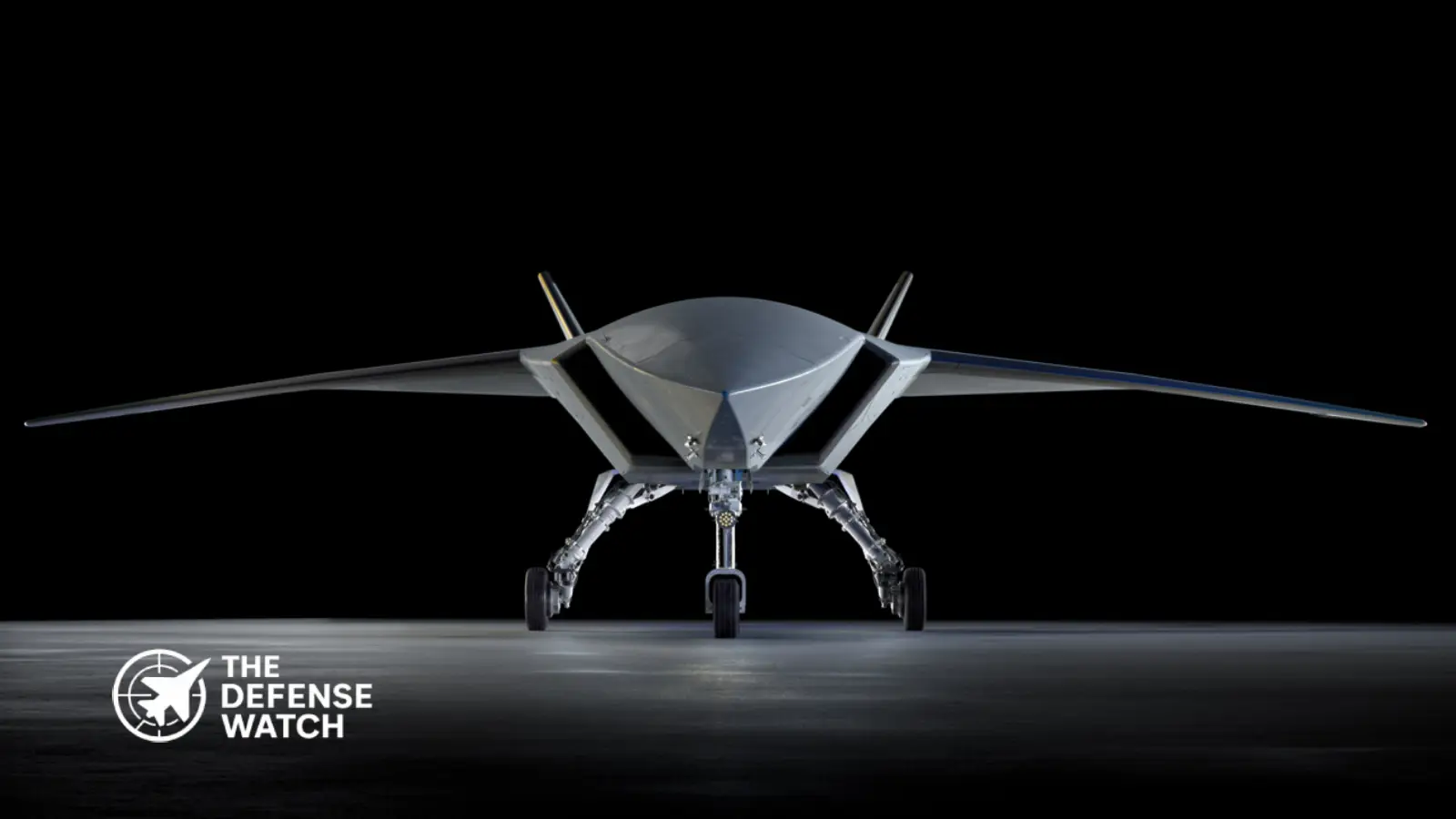
Boeing's upgraded MQ-28 Ghost Bat collaborative combat aircraft displaying enlarged wings and internal weapons bay configuration at ILA Berlin 2026.
Image : Boeing
SHARE

Executive Summary:

Boeing has unveiled a significantly upgraded MQ-28 Ghost Bat collaborative combat aircraft, adding larger wings, internal weapons stations, and extended operational range.

The enhancements strengthen the platform’s ability to support crewed aircraft, carry additional payloads, and meet growing demand for autonomous combat aircraft among allied air forces.

(adsbygoogle = window.adsbygoogle || []).push({});

Boeing MQ-28 Ghost Bat Upgrade Expands Combat Reach

Boeing’s MQ-28 Ghost Bat collaborative combat aircraft has received a major capability upgrade aimed at increasing range, payload capacity, and mission flexibility as global militaries accelerate investment in autonomous air combat systems.

Contents
  • Boeing MQ-28 Ghost Bat Upgrade Expands Combat Reach
  • Internal Weapons Bays Add New Combat Capability
  • Beyond-Line-of-Sight Operations Expand Mission Flexibility
  • Growing Importance Of Collaborative Combat Aircraft
  • Why The Upgrade Matters

The company unveiled the latest enhancements during the ILA Berlin Air Show 2026, presenting a roadmap that significantly expands the aircraft’s operational capabilities while preserving its role as a force multiplier for crewed fighter aircraft.

Developed in partnership with the Royal Australian Air Force (RAAF), the MQ-28 Ghost Bat is designed to operate alongside manned aircraft, conducting missions that include intelligence gathering, electronic warfare, air combat support, and strike operations.

  • MQ-28 Ghost Bat

    MQ-28 Ghost Bat

    • Primary Effect / Kill Mechanism: AI-guided kinetic or electronic attack
    • Operational Range / Engagement Envelope: ~3,700 km (2,000+ nm)
    • Autonomy / Guidance Level: Supervised autonomy with AI teaming
    • Power / Propulsion Type: Jet turbine engine
    • View Details →
    8.0

    According to Boeing, the upgraded configuration introduces a wing that is more than 25 percent larger than previous variants, allowing the aircraft to carry an additional 2,000 pounds of fuel, mission payloads, or stores. The increase provides operators greater flexibility to balance endurance and combat loadouts based on mission requirements.

    (adsbygoogle = window.adsbygoogle || []).push({});

    Internal Weapons Bays Add New Combat Capability

    One of the most significant additions is the introduction of internal weapons stations.

    The upgraded MQ-28 can now be configured to carry up to two AIM-120 AMRAAM air-to-air missiles or four Small Diameter Bombs internally. By carrying weapons inside the airframe rather than on external hardpoints, the aircraft can retain lower observable characteristics while expanding its combat role.

    The move reflects a broader trend across next generation unmanned combat aircraft programs, where survivability and weapons integration are becoming increasingly important requirements.

    Boeing officials stated that the new capabilities are part of a spiral development approach, enabling future upgrades to be integrated incrementally as operational requirements evolve.

    (adsbygoogle = window.adsbygoogle || []).push({});

    Beyond-Line-of-Sight Operations Expand Mission Flexibility

    Another notable enhancement is the addition of beyond-line-of-sight communications capability.

    This allows operators to control and coordinate MQ-28 missions over significantly greater distances than earlier configurations, expanding operational flexibility in large theaters such as the Indo-Pacific.

    The capability is particularly important for collaborative combat aircraft, which are expected to operate alongside advanced fighters, airborne early warning aircraft, and other networked platforms across dispersed battlespaces.

    • MQ-28 Ghost Bat

      MQ-28 Ghost Bat

      • Primary Effect / Kill Mechanism: AI-guided kinetic or electronic attack
      • Operational Range / Engagement Envelope: ~3,700 km (2,000+ nm)
      • Autonomy / Guidance Level: Supervised autonomy with AI teaming
      • Power / Propulsion Type: Jet turbine engine
      • View Details →
      8.0

      As air forces increasingly emphasize distributed operations, secure long-range connectivity has become a key requirement for future autonomous systems.

      (adsbygoogle = window.adsbygoogle || []).push({});

      Growing Importance Of Collaborative Combat Aircraft

      The latest MQ-28 improvements come as collaborative combat aircraft programs gain momentum across the United States, Australia, Europe, and Asia.

      Military planners view autonomous wingmen as a cost-effective way to increase combat mass without procuring large numbers of expensive crewed aircraft. These systems can perform reconnaissance, electronic attack, decoy missions, and strike operations while reducing risk to pilots.

      The MQ-28 has emerged as one of the most mature programs in this rapidly evolving sector. Boeing and the RAAF have already completed extensive flight testing, including autonomous teaming demonstrations, operational deployments, and missile firing trials.

      The platform has also undergone radar cross-section validation testing to verify its survivability characteristics in contested environments.

      (adsbygoogle = window.adsbygoogle || []).push({});
      • MQ-28 Ghost Bat

        MQ-28 Ghost Bat

        • Primary Effect / Kill Mechanism: AI-guided kinetic or electronic attack
        • Operational Range / Engagement Envelope: ~3,700 km (2,000+ nm)
        • Autonomy / Guidance Level: Supervised autonomy with AI teaming
        • Power / Propulsion Type: Jet turbine engine
        • View Details →
        8.0

        From a strategic perspective, the latest upgrades indicate Boeing is positioning the Ghost Bat not only for Australian requirements but also for a growing international market. Germany has shown interest in collaborative combat aircraft concepts, and Boeing recently expanded its industrial partnerships in Europe to support future opportunities.

        Why The Upgrade Matters

        The significance of the MQ-28 upgrade extends beyond individual performance improvements.

        Modern air warfare increasingly depends on a combination of crewed and uncrewed systems operating as an integrated force. Larger payload capacity, longer endurance, internal weapons carriage, and improved connectivity directly enhance the aircraft’s ability to perform that role.

        Rather than serving solely as a reconnaissance platform, the upgraded Ghost Bat moves closer to becoming a true combat asset capable of contributing meaningful firepower while supporting manned aircraft in high-threat environments.

        As air forces prepare for future conflicts involving advanced air defenses and long-range engagements, collaborative combat aircraft such as the MQ-28 are expected to play an increasingly central role in force structure planning.

TAGGED:Boeing DefenseCollaborative Combat AircraftMQ-28 Ghost Bat
Share This Article
Facebook Copy Link Print
ByDaniel Mercer / Defense & Aerospace Analyst
Follow:
Daniel Mercer is a defense and aerospace analyst at TheDefenseWatch.com covering military aviation, aerospace technology, unmanned systems, air warfare, and defense procurement. His reporting uses official documents, government and military statements, company announcements, and other public sources.
Leave a Comment

Leave a Reply Cancel reply

Your email address will not be published. Required fields are marked *

Latest Defense Systems

  • RUTA B1 Cruise Missile RUTA B1 Cruise Missile
  • XQ-67A Drone XQ-67A Drone
  • B-25 Mitchell Bomber B-25 Mitchell Bomber
  • F-100 Super Sabre F-100 Super Sabre
  • North American F-86 Sabre North American F-86 Sabre
  • North American XB-70 Valkyrie North American XB-70 Valkyrie
  • Northrop YF-23 Fighter Northrop YF-23 Fighter
  • P-51 Mustang Fighter Aircraft P-51 Mustang Fighter Aircraft
  • Rafale F5 Fighter Rafale F5 Fighter

Recent Compares

  • J-10C vs JF-17 Thunder: Which Fighter Is More Capable? J-10C vs JF-17 Thunder: Which Fighter Is More Capable? View Comparison →
  • Tejas vs Gripen: Key Differences and Capabilities Tejas vs Gripen: Key Differences and Capabilities View Comparison →
  • Tejas vs MiG-21 Bison: How India Replaced Its Iconic Supersonic Fighter Tejas vs MiG-21 Bison: How India Replaced Its Iconic Supersonic Fighter View Comparison →
  • F-35 vs F-16: Stealth, Sensors and Combat Roles F-35 vs F-16: Stealth, Sensors and Combat Roles View Comparison →
  • Tejas Fighter Jet vs F-16 Fighting Falcon: Capability Compared Tejas Fighter Jet vs F-16 Fighting Falcon: Capability Compared View Comparison →
  • Rafale Fighter Jet vs F-16 Fighting Falcon : Which Fighter Has the Edge? Rafale Fighter Jet vs F-16 Fighting Falcon : Which Fighter Has the Edge? View Comparison →
  • Su-57 Fighter Jet vs J-20 Fighter Jet: Stealth and Air Combat Compared Su-57 Fighter Jet vs J-20 Fighter Jet: Stealth and Air Combat Compared View Comparison →
  • Mirage 2000 vs Tejas Mk1A: Legacy Combat Power vs Indigenous Modernization Mirage 2000 vs Tejas Mk1A: Legacy Combat Power vs Indigenous Modernization View Comparison →
  • Rafale Fighter Jet vs F-22 Raptor: Which Air Dominance Fighter Has the Edge? Rafale Fighter Jet vs F-22 Raptor: Which Air Dominance Fighter Has the Edge? View Comparison →
  • Tejas Fighter Jet vs. Rafale Fighter Jet: India’s Indigenous Fighter Meets France’s Proven Multirole Combat Aircraft Tejas Fighter Jet vs. Rafale Fighter Jet: India’s Indigenous Fighter Meets France’s Proven Multirole Combat Aircraft View Comparison →

Recent Posts

  • Destinus Produces 1,750 Ruta B1 Cruise Missiles as European Output Expands
  • Boeing Wins $11.1 Million Contract Modification for Kuwait F/A-18 Training Support
  • U.S. Navy Awards $23.1 Million Contract for Cybersecurity of Shipboard Power Systems
  • Lockheed Martin Wins $43.7 Million F-35 Reprogramming Lab Upgrade Contract
  • USS Colorado Arrives in Australia for AUKUS Submarine Maintenance

You Might Also Like

sonic boom supersonic aircraft explained
Aerospace & AviationFighter Jets & Military Aircraft

NASA Moves Toward Quiet Supersonic Flight As X-59 Reaches Mach 1.4 and 55,000 Feet

June 15, 2026
Netherlands nuclear-capable F-35 fighters
Aerospace & AviationFighter Jets & Military Aircraft

Netherlands Deploys Nuclear-Capable F-35s for NATO Steadfast Noon

October 14, 2026
Russian fighter jets
Aerospace & AviationFighter Jets & Military Aircraft

Top 5 Russian Fighter Jets in 2026: Su-57 to MiG-35 Ranked

August 5, 2026
Warfighter
Aerospace & AviationDrones & UAVs

U.S. Warfighters Push for Greater Drone Access and Autonomy in Future Battlespaces

September 8, 2025

Logo

Copyright © 2026 TheDefenseWatch.com

Helpful Links

  • Home
  • About Us
  • Privacy Policy
  • Terms of Use / Disclaimer
  • U.S. Privacy Notice – CCPA Compliance

Defense Systems

  • Defense Systems
  • Comparisons 
  • Manufacturer
  • Tactical Calculators

Popuplar

Which 5 Air Forces Possess the Costliest Fighter Jet Fleets in the World
Evolving Strategic Value: Carrier Strike Groups in the Indo-Pacific’s Future Security Architecture
Autonomous Weapon Systems Spark U.S. Ethics Debate Amid Rapid Military AI Integration

We report on developments involving military forces, governments, defense companies, research organizations, and security institutions around the world. 

Welcome Back!

Sign in to your account

Username or Email Address
Password

Lost your password?