Iron Dome Turns 15: 10,000 Intercepts & Counting
Iron Dome missile defense system has crossed a milestone that few weapons platforms in modern history can claim: fifteen uninterrupted years of combat-proven performance, more than 10,000 confirmed intercepts, and an operational record that has fundamentally altered how militaries worldwide think about short-to-medium-range air defense. On April 9, 2026, Rafael Advanced Defense Systems formally marked the anniversary, underscoring the system’s evolution from a domestic Israeli solution into one of the most replicated and studied air defense concepts on the planet.
- Iron Dome conducted its first successful operational intercept on April 7, 2011, neutralizing a rocket launched from the Gaza Strip.
- The system has surpassed 10,000 combat intercepts over 15 years of active service with a reported success rate exceeding 90 percent.
- Iron Dome was developed in approximately two and a half years and is capable of engaging rockets, cruise missiles, UAVs, and other aerial threats.
- The naval variant, C-Dome, became operational in 2017 and recorded its first at-sea intercept in April 2024 aboard an Israeli Sa’ar 6 corvette.
- The United States Marine Corps has selected Iron Dome to bolster its own ground-based short-range air defense capabilities.
The Shot That Changed Everything: April 7, 2011
The clock started on April 7, 2011, when an Iron Dome battery neutralized a rocket fired from the Gaza Strip — the system’s first confirmed operational intercept. The moment was more than a technical proof of concept. It signaled a deliberate shift in Israeli national security strategy: rather than relying solely on deterrence and ground operations to suppress rocket fire, Israel would field a persistent, high-volume intercept capability designed to protect its civilian population in near-real time.
That first intercept marked a shift in Israel’s defensive approach to countering aerial threats, and the system has since been deployed across multiple large-scale operations including Protective Edge, Guardian of the Walls, Breaking Dawn, Shield and Arrow, the Swords of Iron War, and Operation Roaring Lion.
The speed of development was equally remarkable. Iron Dome was built in approximately two and a half years — an extraordinarily compressed timeline for a platform of this complexity, reflecting both the urgency of the threat environment and the depth of Israeli defense-industrial capacity.
A System Built for the Modern Threat Landscape
Iron Dome is not a single-mission interceptor. It is a short- to medium-range system designed to engage a wide range of targets, including rockets, cruise missiles, unmanned aerial vehicles, and other aerial threats under various operational conditions — capable of functioning independently or as part of an integrated, layered air defense network.

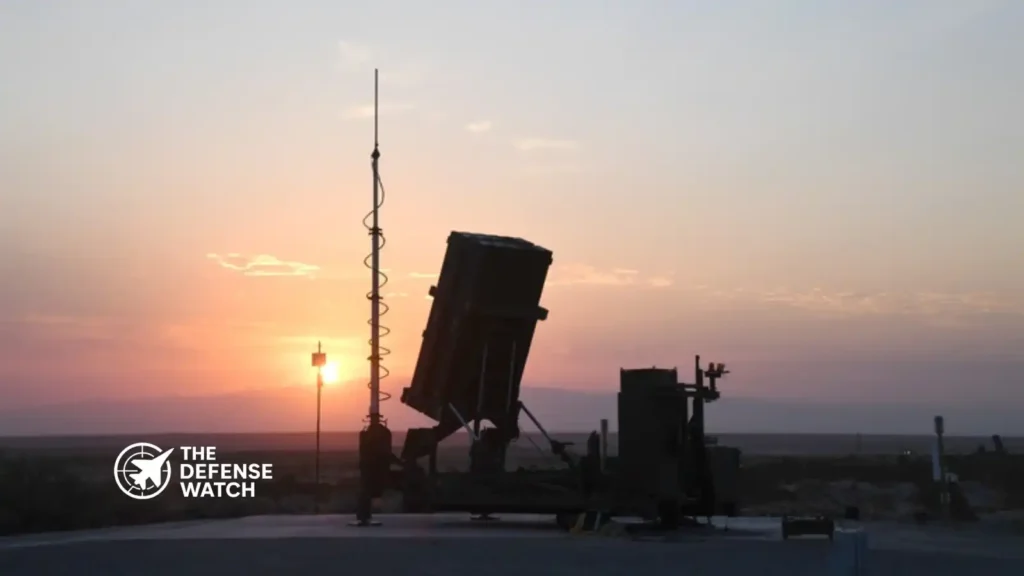
Image : Iron Dome missile defense system That multi-threat adaptability has proven decisive. In today’s conflict environment, where adversaries routinely saturate defenses with mixed salvos of unguided rockets, precision cruise missiles, and low-cost kamikaze drones, a system that can discriminate between threat types and engage selectively represents a significant operational advantage. Iron Dome’s battle management component calculates probable impact points and prioritizes intercepts against threats aimed at populated or strategically critical areas — a feature that directly contributes to its cost efficiency in high-volume engagements.
Over 15 years of service, the system has maintained a reported success rate exceeding 90 percent across more than 10,000 combat intercepts.
Leadership Voices: Confidence Backed by Battlefield Data
Rafael’s leadership did not mince words when assessing the system’s legacy.
Yuval Steinitz, chairman of Rafael, framed Iron Dome’s significance in both strategic and economic terms. He described it as “the only system capable of engaging rockets and missiles across short and medium ranges — and doing so at a cost that makes large-scale deployment feasible,” adding that it reflects the scientific and technological superiority of Israel and of Rafael’s engineers in particular.
Yoav Tourgeman, Rafael’s chief executive, pointed to the system’s continuous performance improvement as its defining characteristic. He stated that ongoing upgrades have significantly enhanced capabilities, noting that what the system can do today across the full spectrum of threats it faces exceeds what it could do at initial delivery by “an order of magnitude.” Tourgeman also credited the system with saving tens of thousands of Israeli lives over the course of its operational service.
Both statements reflect a broader truth about Iron Dome: it is not the same system it was in 2011. Iterative upgrades based on operational feedback — a process conducted in close coordination with the Israel Air Force and the Directorate of Defense Research and Development — have kept the platform ahead of an evolving threat curve that now includes precision-guided rockets, loitering munitions, and salvo tactics designed to overwhelm point defenses.
Expanding to Sea: The C-Dome Naval Variant
One of the clearest indicators of Iron Dome’s strategic staying power is the decision to extend the platform into the maritime domain. The C-Dome naval variant became operational in 2017 and conducted its first combat intercept in April 2024, aboard an Israeli Sa’ar 6 corvette.
The significance of that intercept extends well beyond Israel’s territorial waters. Naval forces globally are grappling with a rapidly deteriorating threat environment driven by cheap, proliferating anti-ship missiles and drone swarms. C-Dome’s integration aboard surface combatants offers a potential model for navies seeking affordable, high-rate intercept capability without the footprint of larger shipborne air defense systems. Its operational debut in a live conflict environment will inevitably draw close scrutiny from allied naval planners.
U.S. Adoption and International Demand
Perhaps the most telling endorsement of Iron Dome’s standing is its adoption by the United States military. The U.S. Marine Corps selected Iron Dome to enhance its own short-range air defense capabilities — a choice that reflects both the system’s combat credibility and Washington’s broader effort to address gaps in ground-based air defense following years of neglect during the counter-insurgency era.
The USMC selection also carries significant implications for allied interoperability. Iron Dome batteries operating alongside U.S. forces in a contested theater would need to integrate with American command-and-control networks, a requirement that accelerates technical cooperation between Rafael and U.S. defense industry partners and potentially opens doors to further foreign military sales.
Analysis: What Iron Dome’s 15-Year Record Reveals About the Future of Air Defense
Iron Dome’s anniversary arrives at a moment when the global air defense market is experiencing its most significant surge in demand since the Cold War. The wars in Ukraine and the Middle East have demonstrated that aerial threats — from crude artillery rockets to sophisticated cruise missiles and drone swarms — are now a fixture of modern combined-arms warfare, not an exception.
Several lessons from Iron Dome’s operational history are already shaping procurement decisions worldwide. First, the value of layered defense architecture is now empirically validated rather than theoretically argued. Iron Dome was never designed to operate alone; it functions as the lower tier of a network that includes David’s Sling and the Arrow systems for medium and long-range threats. That integrated approach, once primarily an Israeli concept, is now being adopted as a template by NATO members accelerating their own air defense investments.
Second, the cost-per-intercept question — long a vulnerability in Iron Dome’s economic case — has become less acute as adversaries increasingly deploy more expensive offensive systems. When the incoming threat is a $50,000 precision rocket rather than a $500 unguided projectile, the calculus of using a multi-thousand-dollar interceptor becomes considerably more defensible. And as Rafael continues to reduce production costs through scale and manufacturing efficiency, the system’s economics improve further.
Third, Iron Dome’s journey from a domestic emergency response to a global export product underscores how battlefield validation accelerates international adoption. No amount of laboratory testing or simulation replicates the persuasive power of a 90-plus percent success rate accumulated over 15 years and across multiple high-intensity conflicts. That record is Rafael’s most effective sales tool — and the reason allied defense ministries continue to study it closely.
What comes next will likely involve deeper integration of artificial intelligence into threat discrimination and intercept sequencing, expanded cooperation with U.S. and European partners on next-generation interceptors, and continued development of the C-Dome naval platform as maritime air defense becomes a priority concern across multiple allied navies.
Iron Dome did not just defend a country. It helped define what effective short-range air defense looks like in the 21st century — and fifteen years on, that definition is still being written.
FAQs
How many intercepts has Iron Dome made in 15 years?Iron Dome has recorded more than 10,000 combat intercepts since its first operational engagement in April 2011, maintaining a reported success rate above 90 percent.
What types of threats can Iron Dome intercept?The system is designed to engage short- to medium-range rockets, cruise missiles, and unmanned aerial vehicles. It can operate across all weather conditions and in dense threat environments.
Has the U.S. military adopted Iron Dome?Yes. The United States Marine Corps selected Iron Dome to strengthen its short-range air defense capabilities, marking a significant international endorsement of the platform.
What is C-Dome?C-Dome is the naval variant of Iron Dome developed by Rafael. It became operational in 2017 and conducted its first live combat intercept in April 2024 aboard an Israeli Sa’ar 6 corvette.
How long did it take to develop Iron Dome?Rafael developed Iron Dome in approximately two and a half years, an unusually compressed timeline for a system of its complexity and capability.
Is Iron Dome still being upgraded?Yes. Rafael conducts continuous capability upgrades based on operational experience, and company leadership has stated that the system’s current performance substantially exceeds its original specifications at the time of delivery.
Get real time update about this post category directly on your device, subscribe now.