

Iran’s Ceasefire Rejection and the Hormuz Chokehold
Iran’s rejection of the U.S.-Pakistan ceasefire proposal marks a critical inflection point in what has become the most consequential military confrontation in the Middle East in decades. Tehran did not offer silence — it responded with substance. The Iranian counter-proposal, reported by state media agency IRNA, included 10 conditions: among them an end to all regional hostilities, a formal safe-passage protocol for the Strait of Hormuz, the lifting of U.S. sanctions, and binding commitments on reconstruction financing.
- Trump set a midnight EDT Wednesday deadline for Iran to accept a ceasefire and reopen the Strait of Hormuz, threatening to destroy power plants and bridges if Tehran refuses.
- Iran rejected a U.S. proposal brokered by Pakistan and issued a 10-clause counter-offer, including regional conflict resolution, safe passage protocols, sanctions relief, and reconstruction guarantees.
- Iran’s ambassador to Pakistan described Islamabad’s mediation as “approaching a critical, sensitive stage,” signaling cautious diplomatic progress.
- Brent crude rose to $111.53 per barrel — up more than 50% since the conflict began on February 28 — as the Strait closure disrupts roughly 20% of global oil and gas supply.
- At least 3,546 Iranians have been killed per rights group HRANA, alongside nearly 1,500 in Lebanon and 13 U.S. service members since hostilities began.
- Saudi Arabia, Bahrain, and the UAE issued simultaneous public safety alerts amid cross-border missile fire; the Saudi-Bahrain causeway was briefly closed as a precaution.
The Strait of Hormuz remains the central pressure point. Effectively closed by Iran since the conflict escalated, the waterway channels roughly one-fifth of the world’s oil and natural gas supply. Tehran’s willingness to keep the strait shut — even under the threat of large-scale U.S. strikes — underscores just how powerful a bargaining chip it represents. Reopening Hormuz without binding security guarantees would surrender Iran’s strongest negotiating lever before any talks begin.
Trump’s Ultimatum: Infrastructure Strikes by Midnight
President Donald Trump escalated his rhetoric sharply on Monday, warning that Iran’s power plants and bridges would be destroyed before midnight EDT Wednesday if Tehran did not agree to his terms. “Every bridge in Iran will be decimated,” Trump said. Every power plant in Iran will be out of business, burning, exploding, and never to be used again.” He dismissed concerns that targeting civilian infrastructure could constitute a war crime, saying he was “not at all” concerned.
Iran’s UN envoy pushed back forcefully, calling Trump’s statements “direct incitement to terrorism” and evidence of intent to commit war crimes under international law. Iran’s senior military leadership described Trump as “delusional.” Deputy Sports Minister Alireza Rahimi called on athletes and artists to form human chains around power plants across the country on Tuesday in a show of civil resistance.
Israel Strikes Tehran; Saudi Arabia Under Fire
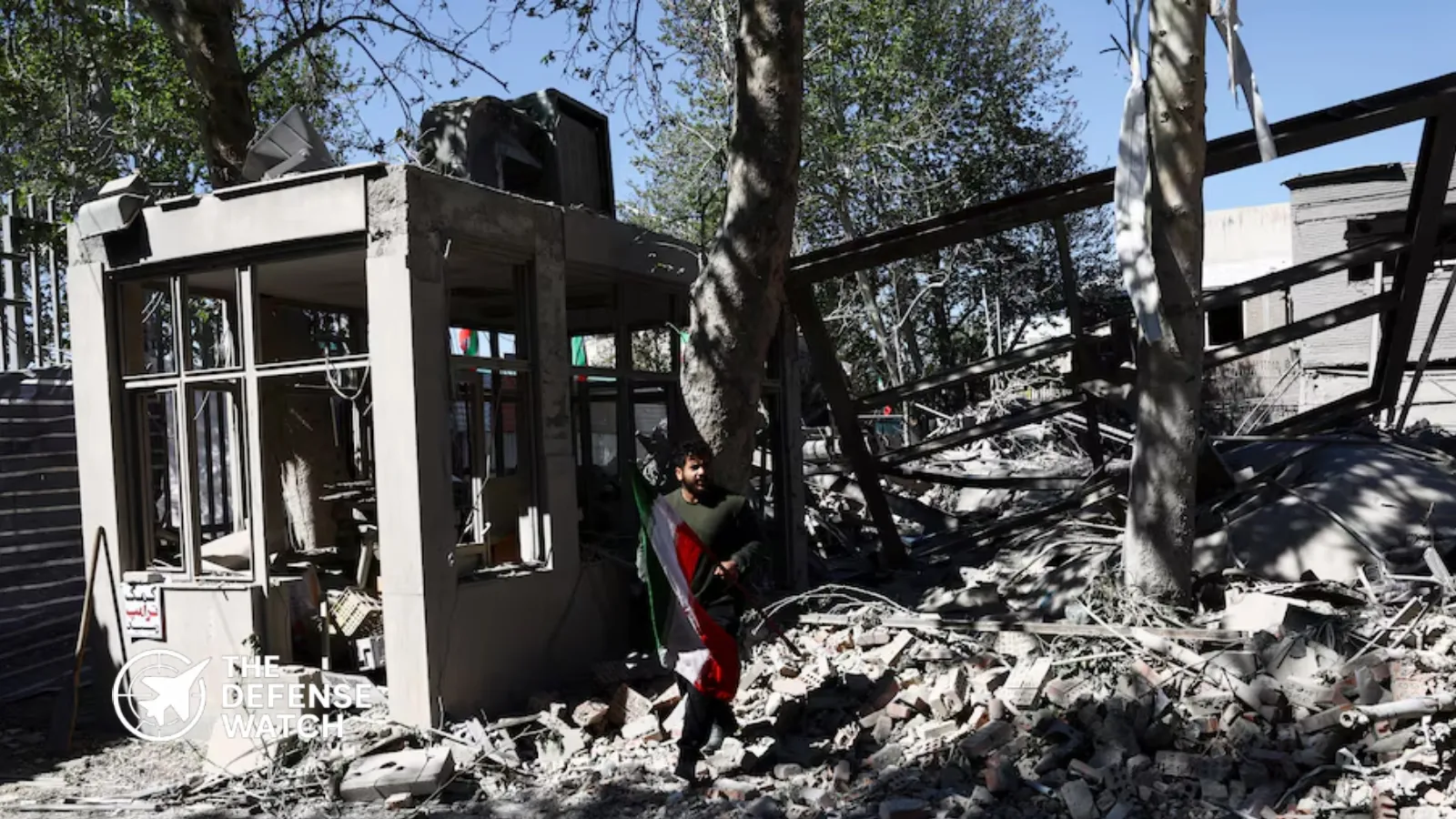
The Israeli military reported completing a fresh wave of airstrikes against Iranian government infrastructure in Tehran and surrounding areas in the early hours of Tuesday. Israel simultaneously operated air defense systems to intercept incoming Iranian missiles. An Israeli advisory — posted in Persian on platform X — urged Iranian civilians to avoid rail networks until Tuesday evening, citing danger to life near railway lines. This targeting of transportation infrastructure signals a deliberate expansion of Israel’s pressure campaign beyond military installations.
The regional fallout continued to widen. Saudi Arabia’s defense ministry confirmed it intercepted ballistic missiles directed at its eastern region, with debris falling in the vicinity of energy facilities. The kingdom has reportedly faced hundreds of Iranian missile and drone attacks since the conflict began on February 28. Bahrain’s causeway linking it to Saudi Arabia was briefly shut as a precautionary measure, while Bahrain, Saudi Arabia, and the UAE simultaneously issued public safety alerts — a coordinated signal of the threat environment across the Gulf.
Pakistan’s Mediation: A Window Opening?
Amid the military exchanges, there are faint but notable diplomatic signals. Iran’s ambassador to Pakistan stated that Islamabad’s efforts to mediate an end to the conflict were “approaching a critical, sensitive stage” — language that implies active back-channel discussions are ongoing, even as public postures remain hardened.
Pakistan occupies a rare position of trust: it maintains diplomatic relations with Iran, has longstanding ties to Gulf Arab states, and is not a party to the conflict. The U.S. proposal it helped broker — an immediate ceasefire, Hormuz reopening, and broader peace talks within 15 to 20 days — was rejected in its current form, but Tehran’s 10-clause counter-proposal suggests Iran is engaged in the negotiation process, not simply stonewalling. Whether the two sides can close the gap before Trump’s deadline is the defining question of the next 24 hours.
Economic and Humanitarian Costs Mount
Brent crude futures climbed to $111.53 per barrel on Tuesday — a rise of more than 50% since the war began — with U.S. West Texas Intermediate crude trading at $113.31. The Hormuz closure has driven inflation fears across oil-importing economies globally, from Europe to South and Southeast Asia.
On the human cost, U.S.-based rights group HRANA reports at least 3,546 Iranians killed since the conflict began. Lebanon has suffered nearly 1,500 deaths as Israel has targeted Iran-backed Hezbollah militia positions there in parallel operations. Thirteen U.S. service members have been killed. On Friday, a U.S. F-15E fighter jet was shot down over Iranian territory, with one crew member stranded deep inside the country before a commando rescue mission successfully extracted him — averting what officials described as a potentially severe political and military escalation for the Trump administration.
Analysis: A Standoff With No Clean Exit
President Trump entered this conflict predicting a swift outcome. Instead, Iran has demonstrated greater resilience than anticipated — surviving sustained airstrikes, sustaining its Hormuz blockade, and forcing the U.S. into a politically uncomfortable position with mounting casualties and a stranded airman requiring a special operations rescue. With 13 service members dead and a credible threat of expanded strikes on civilian infrastructure, Trump faces growing pressure from Congress, international partners, and public opinion.
Iran, for its part, is playing a long game. Its 10-clause counter-proposal is not a capitulation — it is a comprehensive opening bid that would require the U.S. to acknowledge Iranian security interests, lift sanctions, and commit to reconstruction funding. Whether Washington views these terms as a foundation for negotiation or a diplomatic stall tactic will shape what happens at midnight.
Pakistan’s role as intermediary may be the most consequential diplomatic development of the crisis. If Islamabad can bridge the gap between Tehran’s counter-offer and Washington’s ceasefire framework, it would represent an extraordinary diplomatic achievement — and a potential off-ramp from a conflict that has already reshaped global energy markets and regional security architecture.
