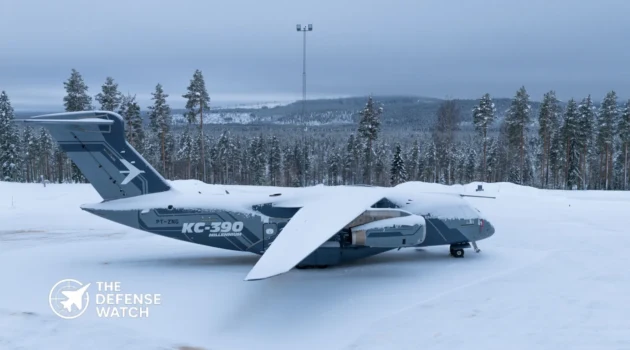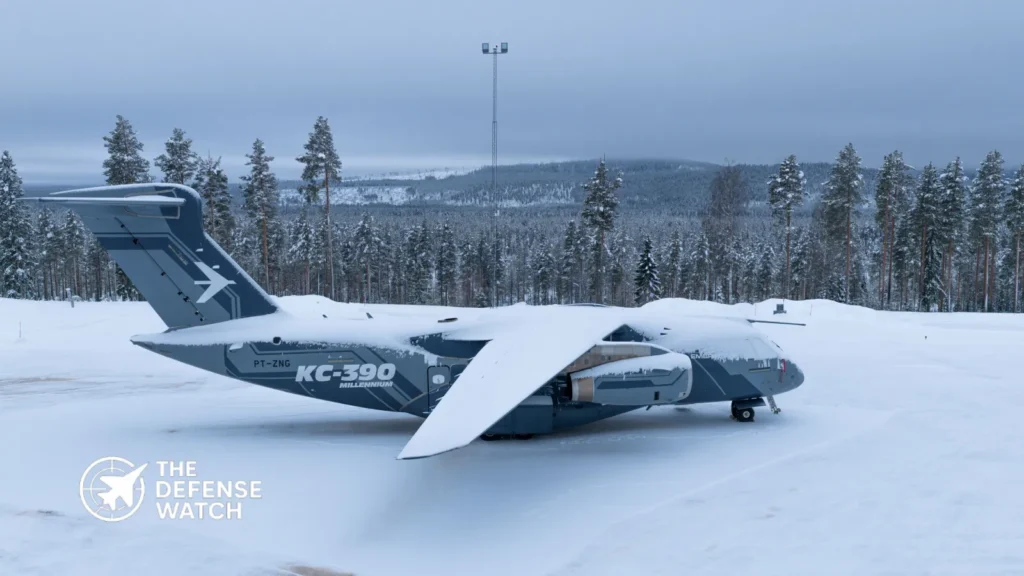
- Embraer KC-390 Millennium completed extreme cold weather operations in Sweden.
- Aircraft validated performance in sub-zero temperatures, including logistics and ground operations.
- Demonstration supports NATO Arctic readiness and northern European defense posture.
- Exercise conducted in partnership with Swedish Armed Forces and operational units.
- KC-390 strengthens its position against legacy tactical airlifters in extreme environments.
Embraer KC-390 Millennium Demonstrates Arctic Readiness
The Embraer KC-390 Millennium has successfully completed an extreme cold weather exercise in Sweden, validating its ability to operate in harsh Arctic conditions and reinforcing its role as a next-generation tactical airlifter for NATO-aligned forces.
The demonstration, confirmed by Embraer, focused on testing the aircraft’s operational performance, ground handling, and mission readiness in sub-zero environments.
The Big Picture
Arctic operations have become a central focus for NATO as northern Europe gains strategic importance amid rising tensions with Russia. Harsh climates, limited infrastructure, and extended distances demand highly capable airlift platforms.
Modern military logistics increasingly depend on aircraft that can operate without extensive ground support. This includes rapid deployment, austere airfield operations, and resilience in extreme weather.
The KC-390 Millennium enters this environment as a competitor to legacy platforms such as the C-130, offering jet-powered speed, modern avionics, and multi-mission flexibility.
What’s Happening
The exercise took place in Sweden in coordination with the Swedish Armed Forces, where the KC-390 Millennium conducted operations under extreme cold conditions.
Embraer confirmed that the aircraft performed a range of tasks, including:
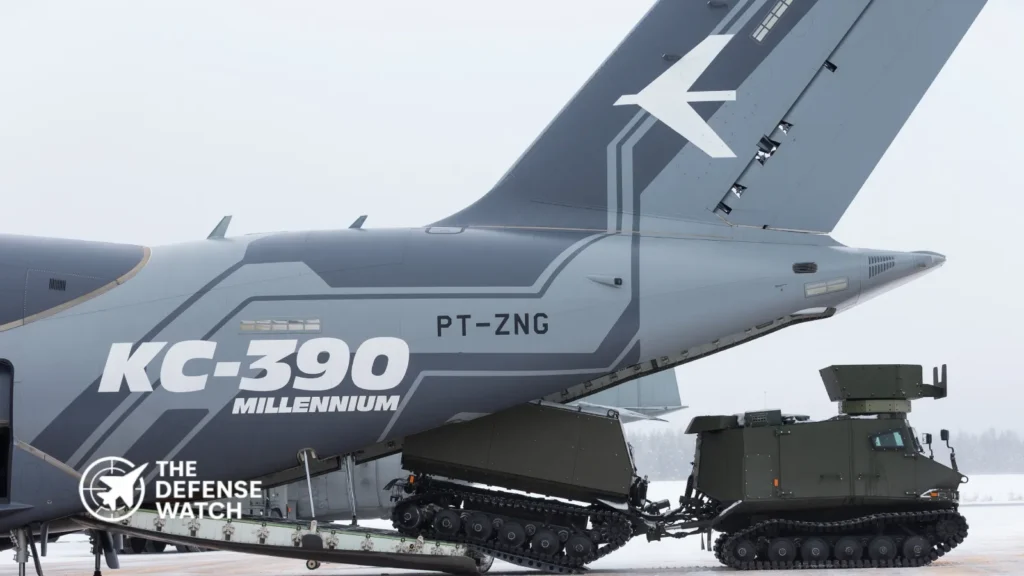
- Ground operations in freezing temperatures
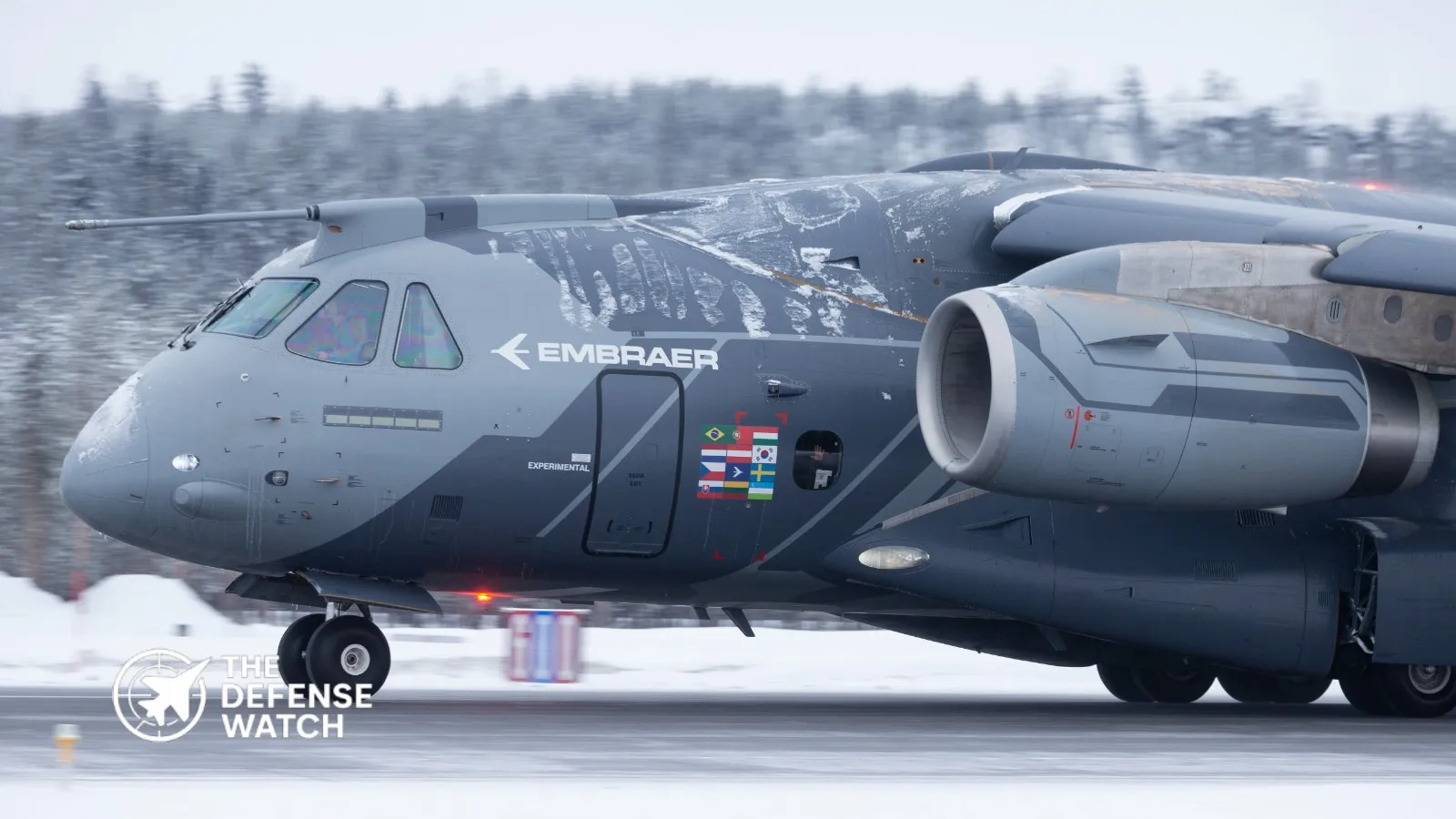
- Engine start and system checks in cold weather
- Logistics and transport missions under Arctic conditions
The trials validated the aircraft’s ability to maintain operational readiness without degradation in performance, a critical requirement for northern deployments..

Image : Embraer Sweden, which has moved closer to NATO integration, offers a relevant operational environment for testing due to its Arctic climate and strategic geography.
Why It Matters
Cold weather performance directly impacts operational reliability in northern theaters. Aircraft that fail to start, sustain systems, or maintain sortie rates in freezing conditions can disrupt entire logistics chains.
The KC-390 Millennium’s success demonstrates:
- Reliable engine performance in sub-zero temperatures
- Effective onboard systems under environmental stress
- Reduced dependency on specialized ground infrastructure
These factors translate into higher sortie generation rates and improved mission availability during winter operations.
For NATO-aligned air forces, this reduces logistical risk in high-latitude deployments and strengthens rapid response capability.
Strategic Implications
The Arctic is becoming a contested operational domain. NATO’s northern flank requires platforms capable of sustaining operations across Norway, Sweden, Finland, and the Baltic region.
The KC-390’s performance supports:
- Enhanced mobility across dispersed bases
- Rapid reinforcement of forward units
- Sustained logistics under extreme weather
The aircraft’s jet propulsion provides faster response times compared to turboprop alternatives, which can be decisive in time-sensitive missions such as troop deployment or humanitarian relief.
This capability aligns with broader NATO efforts to improve readiness and mobility across Europe’s northern corridor.
Competitor View
Russia has long maintained Arctic operational experience, with established infrastructure and specialized equipment designed for cold environments.
A proven Western airlifter capable of matching these conditions signals a narrowing capability gap.
Image : Embraer China, while less directly involved in Arctic operations, has declared itself a “near-Arctic state” and continues to monitor developments in polar logistics and access routes.
For both competitors, improved NATO airlift capability in extreme climates reinforces alliance resilience and complicates operational planning.
What To Watch Next
Future developments to monitor include:
- Additional cold weather certifications for the KC-390
- Expanded deployments with European operators
- Integration into NATO logistics frameworks
- Procurement decisions by additional countries seeking Arctic-capable airlift
Countries in northern and eastern Europe are likely to assess performance data from these trials as they modernize their air transport fleets.
Capability Gap
Legacy tactical airlifters often face limitations in speed, payload efficiency, and system resilience under extreme conditions.
The KC-390 Millennium aims to address:
- Slower deployment times associated with turboprop aircraft
- Maintenance challenges in freezing environments
- Limited interoperability with modern digital logistics systems
However, limitations remain. The KC-390’s operational footprint, support ecosystem, and long-term sustainment costs will influence adoption rates compared to established platforms.
Air forces must balance performance gains with logistics, training, and infrastructure considerations.
The Bottom Line
The KC-390 Millennium’s successful Arctic exercise in Sweden confirms its growing role as a high-performance airlifter capable of strengthening NATO readiness in extreme environments.