U.S. Air Force Selects Shield AI For CCA Mission Autonomy Development
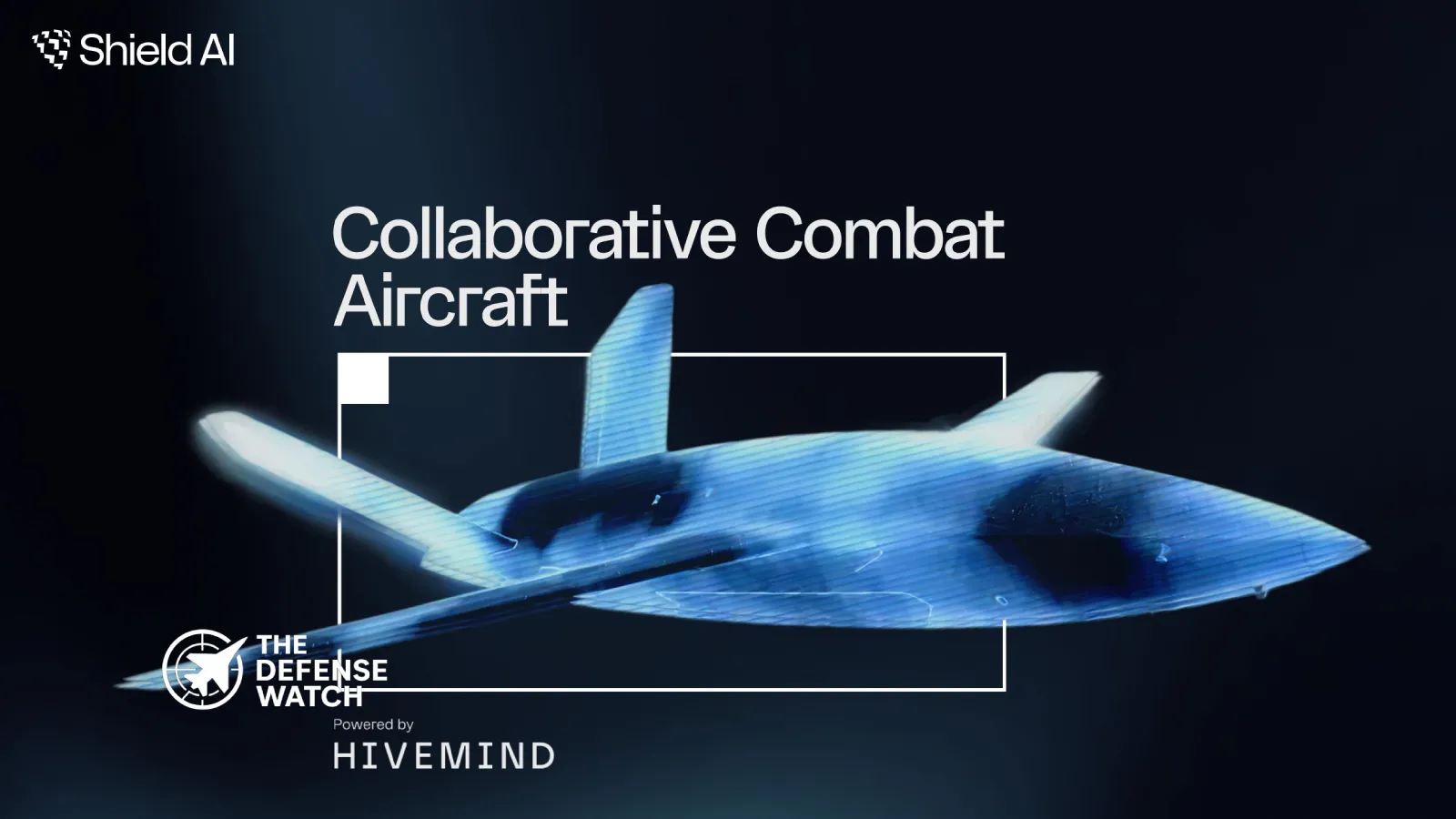
Shield AI has been selected as a mission autonomy provider for the U.S. Air Force Collaborative Combat Aircraft program following a competitive Technology Maturity and Risk Reduction evaluation, the San Diego-based company announced February 13, 2026.
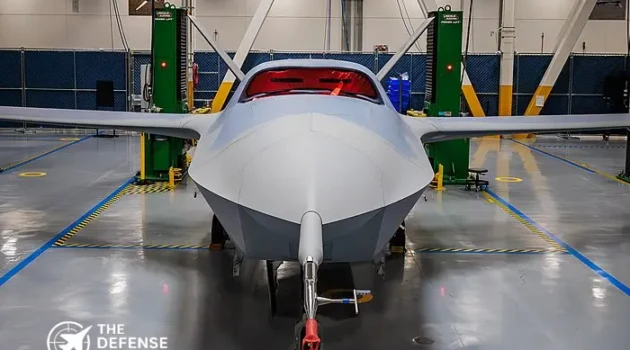
The company’s Hivemind autonomy software has successfully integrated on Anduril’s Fury aircraft and is supporting system-level testing in preparation for flight demonstrations expected in the coming months, marking a significant milestone in the Air Force’s effort to field autonomous combat drones alongside crewed fighters.
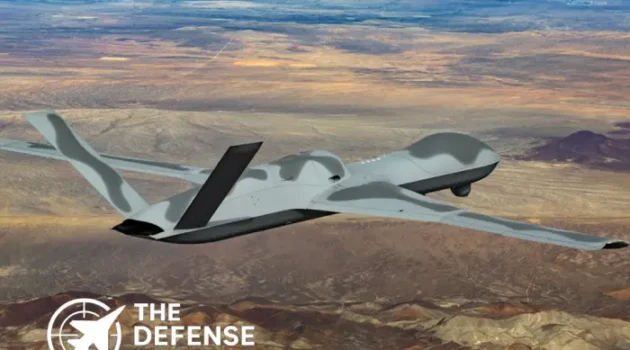
The announcement positions Shield AI as one of two mission autonomy providers for the Air Force’s CCA program. Collins Aerospace will provide autonomous software for General Atomics’ YFQ-42A platform, while Shield AI’s Hivemind will power Anduril’s YFQ-44A variant.
“Shield AI is proud to be named a mission autonomy provider supporting the Collaborative Combat Aircraft program,” said Gary Steele, CEO of Shield AI. “The Air Force is moving with urgency to explore how autonomy can reshape air combat, and we have spent years preparing for this—building, testing, and flying mission autonomy in the real world.”
What Is Collaborative Combat Aircraft?
The U.S. Air Force is developing CCAs as large uncrewed aircraft powered by jet engines, potentially equipped for missions including air-to-air combat, air-to-ground combat, electronic warfare, targeting, and intelligence, surveillance, and reconnaissance. The platforms are designed to fly alongside fifth and sixth-generation fighters such as the F-35A and future F-47.
The Air Force hopes to field at least 1,000 CCAs in varying configurations and have them carry out missions such as strike operations, reconnaissance, electronic warfare and as decoys to lure enemy fire away from piloted fighters.
Air Force officials have estimated that CCAs might cost roughly one-third the price of crewed fighters, potentially enabling the service to purchase the platforms in larger quantities than traditional combat aircraft.
Hivemind Autonomy Software Capabilities
Hivemind is Shield AI’s core artificial intelligence software that assumes the role of a human pilot or operator, enabling unmanned defense systems to sense, decide, and act. Unlike conventional autopilot systems that follow predetermined flight paths, Hivemind can reroute around no-fly zones, avoid or engage obstacles, respond to unexpected conditions, and complete missions safely and effectively without human intervention.
Christian Gutierrez, vice president of Hivemind Solutions at Shield AI, emphasized the complexity of the mission. “Delivering mission autonomy in real-world combat conditions is hard, which is why Shield AI has spent more than a decade building Hivemind and the technical and operational foundation to do it right,” he stated.
Hivemind is Autonomy Government Reference Architecture compliant, platform-agnostic, and has demonstrated A-GRA-aligned autonomy across multiple government and industry test efforts. The software has been tested on platforms including General Atomics’ MQ-20 Avenger, Northrop Grumman’s Talon IQ autonomous ecosystem, U.S. Navy BQM-177 test aircraft, and the Airbus UH-72A Lakota helicopter.
CCA Program Timeline And Competition
In April 2024, the Air Force selected Anduril and General Atomics to produce Increment 1 production-representative test articles after eliminating Boeing, Lockheed Martin, and Northrop Grumman from competition. The service designated the platforms YFQ-44A and YFQ-42A respectively in March 2025.
General Atomics‘ YFQ-42A completed its maiden flight in August 2025, while Anduril’s YFQ-44A first flew on October 31, 2025. Both platforms are now undergoing flight testing at California locations.
The Air Force is currently integrating a government-owned Autonomy Government Reference Architecture onto loyal wingman drones built by both General Atomics and Anduril. The A-GRA framework prevents vendor lock-in by establishing a single standard for CCA mission autonomy systems, allowing the service to install new software and capabilities from multiple vendors.
The Air Force said Thursday that government-owned autonomous software programs have been successfully integrated into both of its prototype collaborative combat aircraft, demonstrating that the platforms can be easily modified using modular open systems architecture.
Strategic Significance For Air Dominance
The CCA program represents a cornerstone of the Air Force’s Next-Generation Air Dominance initiative, which seeks to counter sophisticated adversary air defense systems. China’s development of anti-access/area-denial capabilities, such as long-range missiles and sophisticated air defense systems, has challenged the U.S. Air Force’s ability to achieve air superiority.
CCAs are central to restoring mass and resilience to U.S. combat air power in the face of sophisticated Chinese and Russian air defenses. The combination of lower unit cost, modular payloads, and AI-enabled autonomy promises to extend the reach, sensing, and striking power of a shrinking fleet of crewed aircraft.
The Air Force is planning to make a final competitive production decision on Increment 1 of CCA in fiscal year 2026 and expects to field a fully operational capability by the end of the decade.
Industry Impact And Future Increments
Several Increment 2 contract awards are expected in the early part of fiscal year 2026, with overseas suppliers also in contention The Air Force has indicated Increment 2 will focus on different capability sets than the initial platforms, potentially including enhanced stealth features or specialized mission packages.
The Air Force awarded nine contracts under Increment 2 of the CCA program in December 2025, though the service has not disclosed recipient companies citing enhanced security measures.
Shield AI, founded in 2015, develops state-of-the-art autonomy software products and aircraft including the V-BAT and X-BAT platforms. The company maintains offices and facilities across the United States, Europe, the Middle East, and Asia-Pacific, with its technology actively supporting operations worldwide.
The selection of Shield AI and Collins Aerospace for mission autonomy development underscores the Air Force’s commitment to competition and modular architecture in the CCA program. As flight testing accelerates through 2026, the service will gather critical data to refine requirements and reduce risk ahead of full-scale production decisions expected later this year.