US Shifts Patriot Missile Deployment at Qatar Base as Iran Tensions Rise
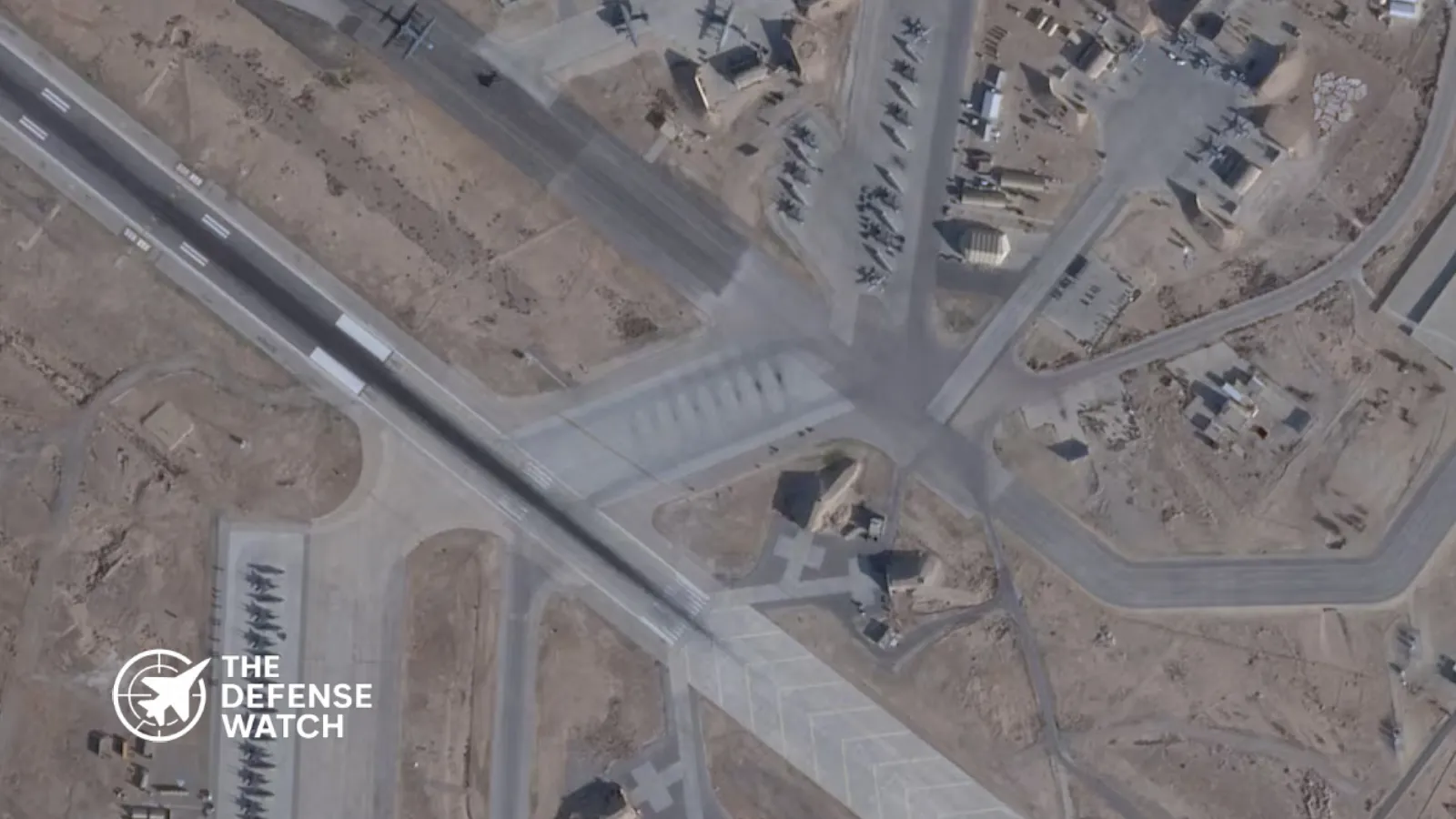
US forces at Qatar’s al-Udeid Air Base have moved Patriot air defense missiles onto mobile truck launchers as tensions with Iran have risen since January, satellite imagery shows, highlighting a shift in posture at America’s largest Middle East installation.
Satellite-based analysis indicates Patriot systems were placed on M983 Heavy Expanded Mobility Tactical Trucks (HEMTT) rather than semi-static launch sites, allowing quicker repositioning or rapid deployment in response to evolving regional threats.
The change in deployment coincides with increased aircraft presence and support assets at multiple US bases across the Middle East, according to imagery comparisons between early February and late January.
Pentagon officials have not confirmed whether the mobile configuration remains in place. Analysts say such platforms can reduce vulnerability and improve response options against ballistic or cruise missile threats in contested airspace.
Mobile Launchers and What They Mean
Patriot missiles are a core part of US air and missile defense. Mounting them on truck-based launchers lets forces move launchers quickly across a base or region rather than keeping them fixed at prepared sites. That flexibility can make them harder to target and allow rapid shifts in coverage.
William Goodhind, a forensic imagery analyst with Contested Ground, said satellite photos showed Patriots on HEMTT trucks at al-Udeid in early February. The mobility this provides gives units the ability to relocate quickly if needed.
Regional Buildup Seen in The Imagery
Analysis of early February satellite images shows added US military aircraft and equipment in Qatar and other parts of the Middle East compared with mid-January. At al-Udeid, aircraft including RC-135 reconnaissance planes, C-130 Hercules transports and KC-135 tankers were more numerous.
Similar increases were noted at Muwaffaq Salti Air Base in Jordan and Prince Sultan Air Base in Saudi Arabia, as well as at facilities in Oman and the Indian Ocean island of Diego Garcia.
These movements suggest readiness adjustments across multiple allied facilities as concerns about potential escalation with Iran persist.
Tensions With Iran and Broader Context
Tensions between the US and Iran have grown in recent months over Tehran’s nuclear program, ballistic missile developments, and support for allied militias across the Middle East. US leaders have publicly warned of possible military action if diplomatic efforts fail to curb Iran’s weapons programs.
Iran’s military has indicated it could target US bases if directly attacked, though it frames its actions as defensive. Tehran says it has replenished missile stocks and maintains underground missile facilities near Tehran and other strategic areas.
The satellite imagery makes clear that the Pentagon and US Central Command are watching developments closely while balancing deterrence and diplomatic channels.
What This Means for US Forces
Placing Patriot systems on mobile platforms at a principal base like al-Udeid reflects a cautious posture. The shift gives air defense units options to adapt coverage rapidly and move assets to meet threats or reduce exposure to attack.
It also underscores the central role of forward bases in US regional strategy, enabling airlift, intelligence, surveillance and reconnaissance, refueling operations, and missile defense in an increasingly tense security environment.