Table of Contents
Strategic Reconnaissance, Not Strategic Strike
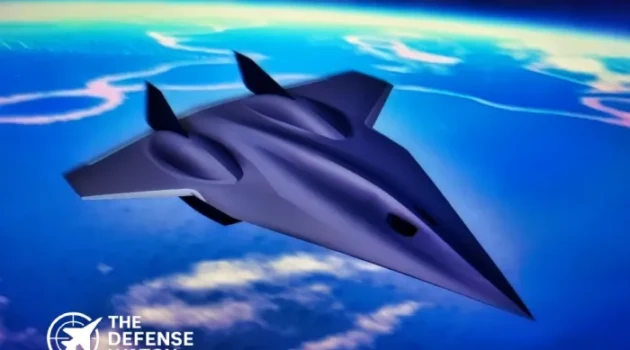
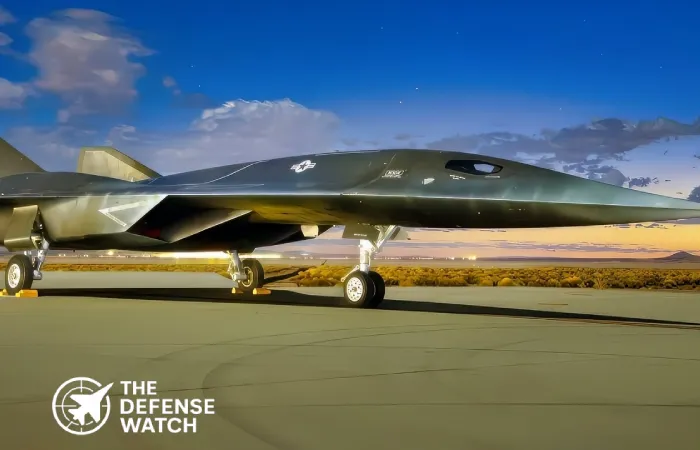
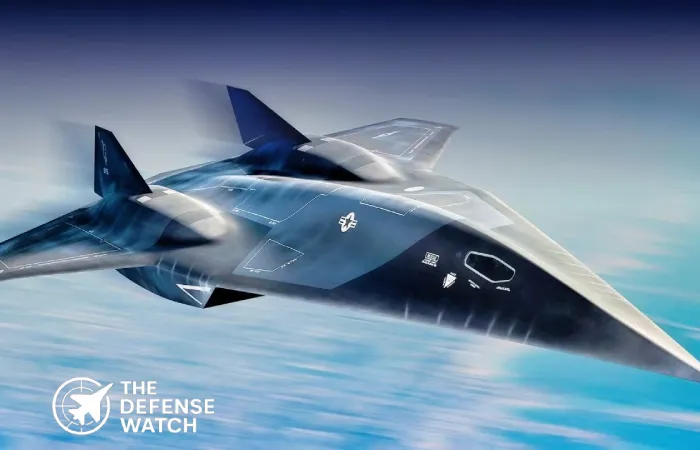
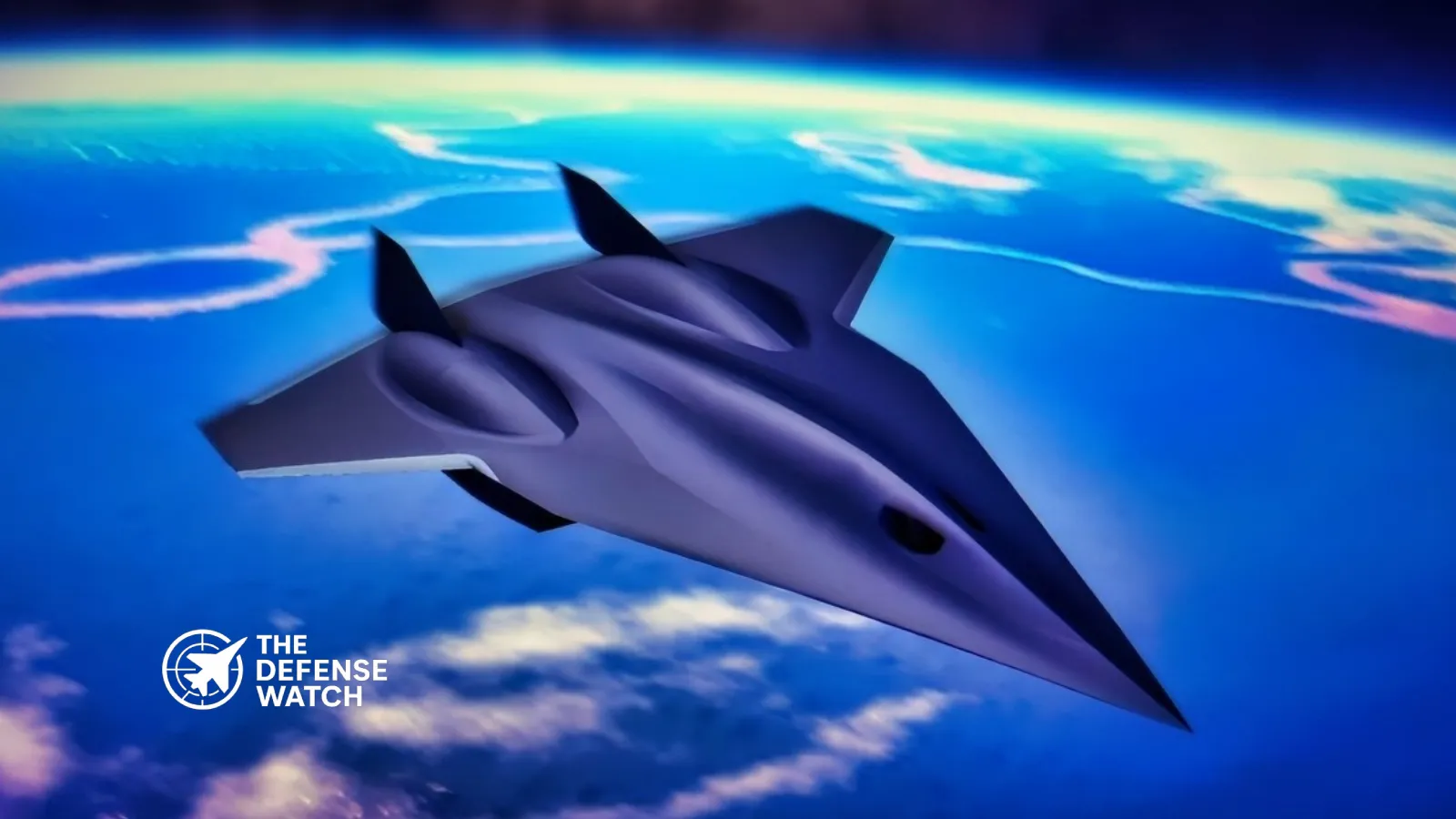
The United States Air Force continues evaluating next-generation capabilities as peer competitors advance their military technologies. Among the most intriguing classified programs is Lockheed Martin’s SR-72 Darkstar, a hypersonic reconnaissance platform designed to operate at speeds exceeding Mach 6. While defense analysts and aviation enthusiasts speculate about the aircraft’s potential as a bomber, emerging strategic assessments suggest the SR-72 Darkstar hypersonic aircraft will likely remain focused on intelligence, surveillance, and reconnaissance missions rather than strike operations.
As of February 2026, the SR-72 exists primarily as a Skunk Works technology demonstrator rather than a formal acquisition program. Despite recurring speculation about weaponizing the platform, fundamental engineering constraints and evolving Air Force doctrine point toward a different operational role—one that leverages the aircraft’s unprecedented speed for targeting rather than delivering ordnance.
The Cold War Legacy That Shaped Hypersonic Development
The SR-72 concept draws its lineage directly from the legendary SR-71 Blackbird, which served as the Air Force’s premier strategic reconnaissance asset from the 1960s until its retirement in 1998. The SR-71 achieved survivability through raw performance, flying at altitudes above 85,000 feet and speeds exceeding Mach 3.2—capabilities that rendered it effectively untouchable by Cold War-era surface-to-air missiles.
However, the Blackbird never carried weapons. Its mission centered exclusively on penetrating denied airspace to gather intelligence through sophisticated sensor packages. As satellite technology matured and unmanned aerial vehicles proliferated, the SR-71’s unique capabilities became less essential, leading to its decommissioning.
The SR-72 Darkstar hypersonic aircraft represents an evolutionary leap beyond the SR-71’s capabilities, potentially reaching speeds between Mach 5 and Mach 6 through revolutionary combined-cycle propulsion systems. According to available information from Lockheed Martin’s Skunk Works division, the aircraft would employ both turbine and scramjet engines to achieve hypersonic flight while maintaining operational reusability—a critical advancement over expendable hypersonic missiles.
Engineering Realities of Hypersonic Flight
The physics of sustained hypersonic flight impose severe constraints that fundamentally limit the SR-72’s utility as a bomber platform. At speeds exceeding Mach 5, aircraft structures experience extreme thermal loads, with leading edges and control surfaces potentially reaching temperatures above 3,000 degrees Fahrenheit. These thermal management requirements demand specialized materials and cooling systems that consume significant internal volume and weight capacity.

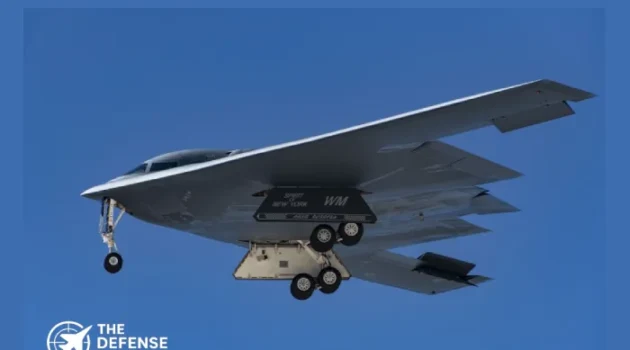
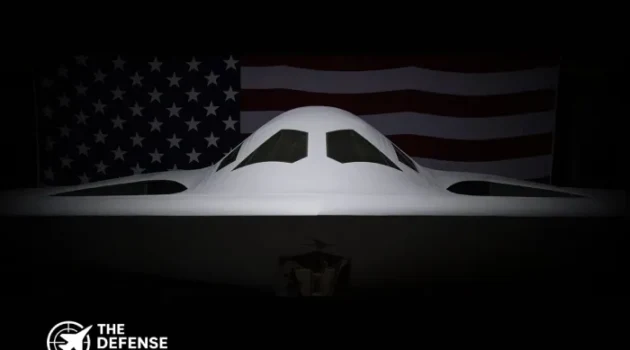
Image Credit: Creative Commons. Moreover, the aerodynamic design optimized for hypersonic efficiency leaves minimal space for internal weapons bays. Unlike subsonic stealth bombers such as the B-2 Spirit or the emerging B-21 Raider, which can accommodate substantial ordnance loads within relatively spacious fuselages, the SR-72’s slender, streamlined configuration prioritizes fuel capacity and structural integrity over payload volume.
- (adsbygoogle = window.adsbygoogle || []).push({});
Industry analysts estimate the SR-72 could potentially carry only two to four internally-mounted weapons—likely air-to-ground missiles or small-diameter bombs. This limited magazine depth creates a fundamental mismatch between the platform’s operational costs and its strike capacity. Each sortie would require extraordinary logistical support, specialized maintenance, and likely cost tens of millions of dollars to deliver a weapons load comparable to what a single F-35 Lightning II can carry.
The Strategic Calculus Against Hypersonic Bombing
US Air Force bomber modernization strategy has consistently prioritized two complementary capabilities: mass and precision. The B-21 Raider program aims to deliver substantial payload capacity with next-generation stealth characteristics, enabling penetrating strikes against heavily defended targets. Simultaneously, the service is developing hypersonic weapons technology through programs like the AGM-183A Air-Launched Rapid Response Weapon (ARRW) and the Hypersonic Attack Cruise Missile (HACM).
This bifurcated approach reflects a fundamental strategic insight: hypersonic speed and large bomb loads represent competing requirements that rarely coexist efficiently within a single airframe. The B-21 can carry dozens of precision-guided munitions deep into contested airspace, loiter over target areas, and prosecute multiple aim points during extended missions. Hypersonic missiles, launched from standoff ranges, provide speed and survivability for time-critical strikes against mobile or fleeting targets.
(adsbygoogle = window.adsbygoogle || []).push({});Converting the SR-72 into a bomber would create an expensive hybrid that excels at neither mission. As a strike platform, it would be overqualified in speed but critically underarmed in capacity. The aircraft would essentially function as a reusable hypersonic missile truck—a role more efficiently filled by conventional aircraft launching expendable hypersonic weapons.
Anti-Access/Area Denial Environments and Targeting Nodes
The true strategic value of the SR-72 Darkstar hypersonic aircraft emerges when considering modern Anti-Access/Area Denial (A2/AD) operational environments. Near-peer adversaries have invested heavily in integrated air defense systems, advanced fighter aircraft, and long-range surface-to-air missiles designed to keep American airpower at bay. In contested regions like the Taiwan Strait or Baltic approaches, traditional reconnaissance assets face significant survivability challenges.
The SR-72’s hypersonic sprint capability offers a potential solution to this reconnaissance gap. Operating at Mach 6, the aircraft could penetrate heavily defended airspace on brief, high-speed incursions to locate and classify high-value targets—mobile missile launchers, naval surface action groups, or relocatable command posts. This targeting data could then cue lethal fires from standoff platforms including submarines, surface combatants, long-range bombers, or ground-based missile batteries.
This concept of the SR-72 as a “Targeting Node” represents a force-multiplier approach. Rather than carrying weapons itself, the platform’s sensors would compress kill chains by providing real-time, high-fidelity target coordinates to weapons already positioned for launch. A single SR-72 mission could enable multiple simultaneous strikes across a theater, potentially achieving strategic effects far exceeding what the aircraft could accomplish carrying its own limited ordnance.
(adsbygoogle = window.adsbygoogle || []).push({});Defense analysts note this mission concept aligns with emerging Air Force doctrine emphasizing multi-domain operations and Joint All-Domain Command and Control (JADC2). The SR-72 would function as a high-speed intelligence layer within a networked kill web, trading its own striking power for the ability to unleash massed fires from distributed platforms.
Program Status and Development Questions
Significant uncertainty surrounds the SR-72’s actual development status. Lockheed Martin publicly acknowledged the program in 2013, releasing concept artwork and general performance parameters. However, no confirmed prototype sightings, test flight announcements, or specific budget allocations have emerged in subsequent years.
Aviation observers have noted unusual sonic signatures and radar tracks in restricted military operating areas that some speculate could indicate SR-72 testing. Yet without official confirmation, the program’s maturity remains unclear. Several factors suggest the initiative may focus on technology demonstration rather than full-scale production:
First, no formal Air Force requirement for a hypersonic reconnaissance aircraft has been publicly articulated. Unlike the B-21 bomber or Next Generation Air Dominance fighter programs, which emerged from defined capability gaps, the SR-72 lacks an official operational need statement.
(adsbygoogle = window.adsbygoogle || []).push({});Second, repeatedly delayed timelines suggest technical challenges with combined-cycle propulsion integration. Early predictions suggested initial operational capability by the mid-2020s—a milestone clearly not achieved.
Image Credit: Creative Commons. Third, the extraordinary development and operating costs of hypersonic platforms may limit the SR-72 to small prototype fleets even if technical hurdles are overcome. The Air Force might prefer investing resources in quantities of conventional assets and expendable hypersonic weapons rather than maintaining a small fleet of exquisite reconnaissance aircraft.
Alternative Hypersonic Strike Capabilities
The Air Force’s hypersonic weapons portfolio demonstrates the service’s preferred approach to achieving prompt global strike capability. The HACM program, now entering advanced development phases, will provide air-launched hypersonic cruise missiles capable of Mach 5+ speeds with sufficient range to strike from standoff positions. These weapons can be carried by existing platforms including B-52 Stratofortress, B-1B Lancer, and potentially fighter aircraft.
This arsenal aircraft concept—loading conventional bombers and fighters with advanced standoff weapons—delivers hypersonic strike capacity without requiring entirely new airframes. A single B-52 could potentially carry multiple HACMs, creating distributed lethality across the bomber fleet rather than concentrating capability in a handful of specialized platforms.
Additionally, the Air Force continues developing ground-launched and potentially sea-launched hypersonic systems, creating multiple delivery options that complicate adversary defensive planning. This proliferation strategy makes more operational and economic sense than developing a limited number of hypersonic aircraft each costing potentially hundreds of millions of dollars.
The Reconnaissance Value Proposition
If the SR-72 program advances beyond technology demonstration, its most likely operational role centers on intelligence gathering in denied environments. Several mission sets would justify the platform’s development costs:
Strategic Early Warning: Rapid deployment to crisis regions for initial reconnaissance before adversaries implement full air defense postures.
Mobile Target Prosecution: Tracking relocatable threats including road-mobile ICBMs, theater ballistic missile launchers, and naval formations operating under emission control.
Battle Damage Assessment: Post-strike reconnaissance requiring penetration of activated air defense networks to confirm effects and identify follow-on targets.
Electronic Intelligence Collection: Gathering signals intelligence on advanced air defense radars and communications networks that might not activate for slower reconnaissance assets.
(adsbygoogle = window.adsbygoogle || []).push({});Each of these missions emphasizes the SR-72’s speed and sensor capabilities rather than weapons delivery. The aircraft would function as a high-speed intelligence platform enabling the joint force rather than as an independent strike asset.
Analyzing the Cost-Effectiveness Question
Pentagon acquisition strategies increasingly emphasize cost-effectiveness and force structure affordability. Even if technically feasible, converting the SR-72 into a bomber raises fundamental resource allocation questions. Each SR-72 sortie would likely cost several times more than conventional bomber operations while delivering a fraction of the weapons capacity.
(adsbygoogle = window.adsbygoogle || []).push({});For the price of developing, acquiring, and operating a small SR-72 bomber fleet, the Air Force could potentially procure dozens of additional stealthy long-range strike weapons, expand conventional bomber production, or enhance existing platforms with improved sensors and electronic warfare systems. These alternative investments would likely provide greater operational flexibility and sustained combat power.
Furthermore, hypersonic reconnaissance missions could be flown less frequently than sustained bombing campaigns, potentially justifying higher per-sortie costs. A bomber variant, however, would face direct cost comparisons with platforms like the B-21 that offer superior payload capacity and operational versatility.
FAQs
Does the SR-72 Darkstar actually exist as a flying aircraft?Lockheed Martin confirmed the SR-72 as a Skunk Works development program in 2013, but no official test flights or prototype reveals have occurred publicly. The aircraft likely exists as a technology demonstrator exploring combined-cycle propulsion systems rather than a production-ready platform.
What speeds can the SR-72 achieve compared to the SR-71 Blackbird?While the SR-71 reached speeds above Mach 3.2, the SR-72 is designed to operate between Mach 5 and Mach 6—nearly twice as fast. This hypersonic performance requires revolutionary propulsion technology combining turbine and scramjet engines.
Why wouldn’t the Air Force want a hypersonic bomber?Hypersonic aircraft face severe payload limitations due to thermal management requirements and aerodynamic constraints. The SR-72 would carry only a fraction of the weapons capacity of conventional bombers while costing substantially more per sortie, making it economically inefficient as a strike platform.
What missions would the SR-72 perform if not bombing?The most likely SR-72 mission focuses on rapid reconnaissance in heavily defended airspace, locating time-sensitive targets like mobile missile launchers and then cueing strikes by other platforms including submarines, bombers, or surface ships equipped with long-range weapons.
How does the SR-72 compare to China and Russia’s hypersonic weapons?The SR-72 represents a reusable hypersonic platform designed for multiple missions, whereas most adversary hypersonic systems are expendable weapons. This reusability offers potential economic advantages for reconnaissance roles but creates cost challenges for strike missions where single-use weapons may be more efficient.
When might the SR-72 enter operational service?No official timeline exists. Early projections suggested the mid-2020s for initial capability, but those milestones passed without public announcements. If the program continues, operational deployment likely remains years away pending resolution of technical challenges with hypersonic propulsion and thermal management systems.
Get real time update about this post category directly on your device, subscribe now.

- (adsbygoogle = window.adsbygoogle || []).push({});