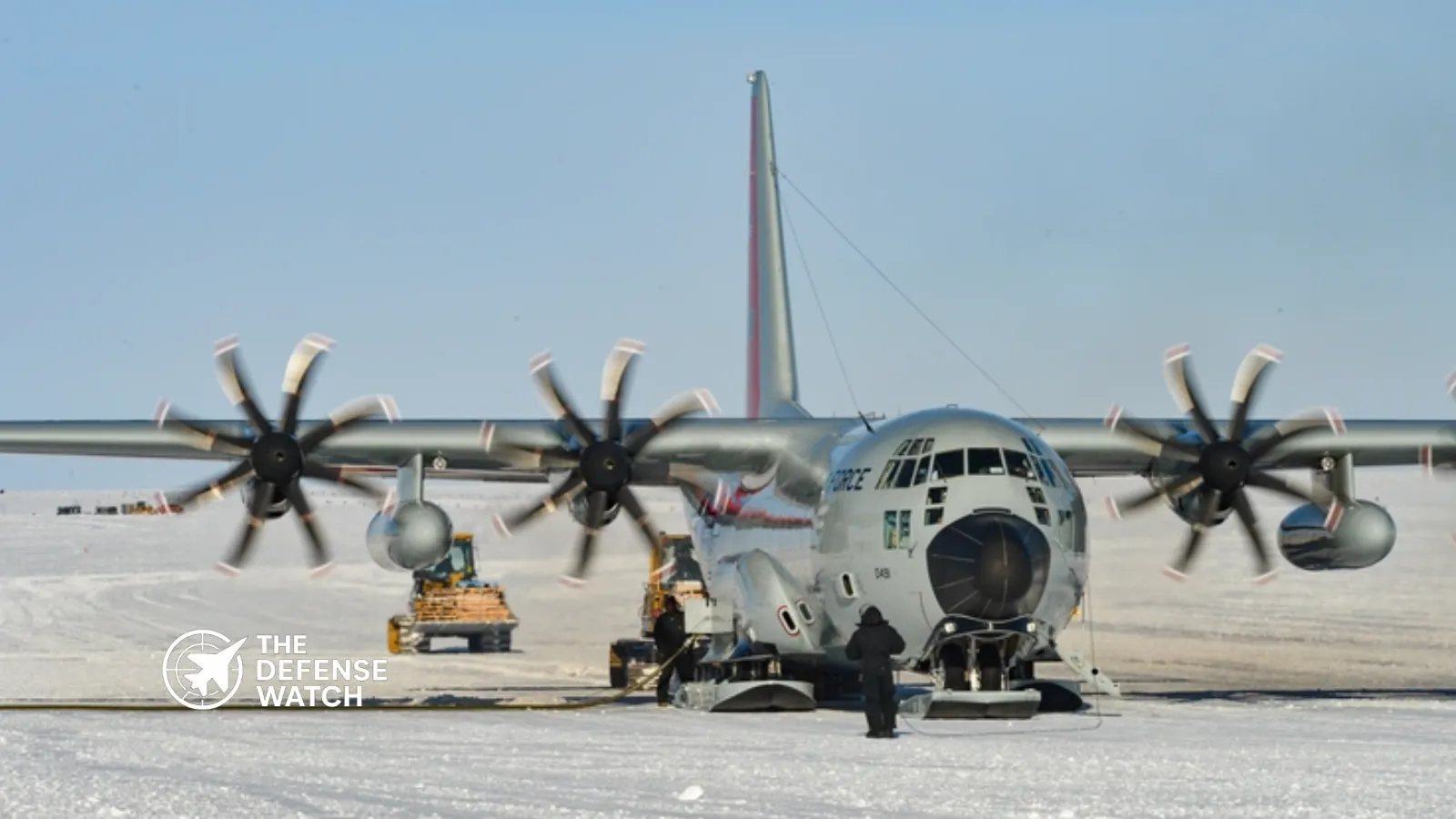
The RAF Antarctic mission has reinforced UK Chile cooperation by delivering personnel and equipment in support of operations on the southern continent. The flight, conducted by the Royal Air Force in coordination with Chilean partners, highlights the growing role of military aviation in sustaining Antarctic presence while strengthening defense relationships between London and Santiago.
According to reporting by UK Defence Journal and official statements from the UK Ministry of Defence, the mission focused on logistical support rather than combat activity, aligning with international agreements governing Antarctic operations.
Strategic Context of the RAF Antarctic Mission
The RAF Antarctic mission forms part of a wider UK effort to maintain reliable access to Antarctica, a region critical for scientific research, climate monitoring, and international cooperation. The United Kingdom has maintained a continuous Antarctic presence for decades, primarily through the British Antarctic Survey, with military aviation providing essential lift capability.
Chile plays a central role in Antarctic logistics due to its geographic proximity and established infrastructure. Cooperation between the RAF and the Chilean Air Force allows both nations to operate more efficiently in extreme environments where weather, distance, and limited infrastructure create persistent challenges.
Authoritative sources including the UK Ministry of Defence have emphasized that such missions are routine but strategically important, ensuring continuity of research and adherence to international obligations.
Aircraft and Capabilities Used
The mission was conducted using RAF transport aircraft optimized for long range and austere environment operations. While specific aircraft details were not fully disclosed, the RAF regularly employs platforms such as the A400M Atlas and C 130 variants for polar logistics.
These aircraft provide key advantages for Antarctic missions:
• Long range endurance suitable for intercontinental flights
• Ability to operate from semi prepared or icy runways
• High payload capacity for personnel, fuel, and scientific equipment
The operation also demonstrated interoperability with Chilean facilities, including shared planning, ground support, and coordination procedures.
UK Chile Defense and Aviation Cooperation
UK Chile cooperation in Antarctica reflects a broader defense relationship that includes training exchanges, professional military education, and joint exercises. Chile has extensive experience operating in polar conditions and maintains multiple Antarctic bases, making it a valuable partner for allied nations with research and logistical interests in the region.
For the UK, cooperation with Chile enhances operational resilience while reducing costs and risks associated with unilateral operations in extreme environments. For Chile, collaboration with a NATO member reinforces international partnerships and technical exchange.
Defense analysts note that these activities remain consistent with the Antarctic Treaty System, which promotes peaceful use, scientific cooperation, and transparency.
Importance of Antarctica for Defense and Security Planning
While Antarctica is governed by strict international agreements, defense planners increasingly view polar logistics as a test bed for operating in extreme conditions. Skills developed during Antarctic missions translate directly to humanitarian assistance, disaster response, and high latitude operations elsewhere.
The RAF Antarctic mission demonstrates the service’s ability to project air mobility across vast distances, coordinate with foreign partners, and sustain operations in some of the harshest conditions on Earth.
Official Statements and Sources
The UK Ministry of Defence confirmed that the mission supported cooperative Antarctic activity and reinforced bilateral ties with Chile. Chilean defense authorities echoed the emphasis on logistics and scientific support, noting the value of shared expertise in polar aviation.
UK Defence Journal reported that the mission represents a continuation of established cooperation rather than a new policy shift, underscoring stability and predictability in UK Antarctic engagement.
Outlook for Future Antarctic Cooperation
Looking ahead, UK Chile cooperation in Antarctica is expected to continue as both nations maintain commitments to scientific research and responsible presence on the continent. Military aviation will remain a key enabler, particularly as climate conditions place greater demands on logistics and infrastructure.
The RAF Antarctic mission serves as a practical example of how defense capabilities support broader national objectives without undermining the peaceful framework governing Antarctica.