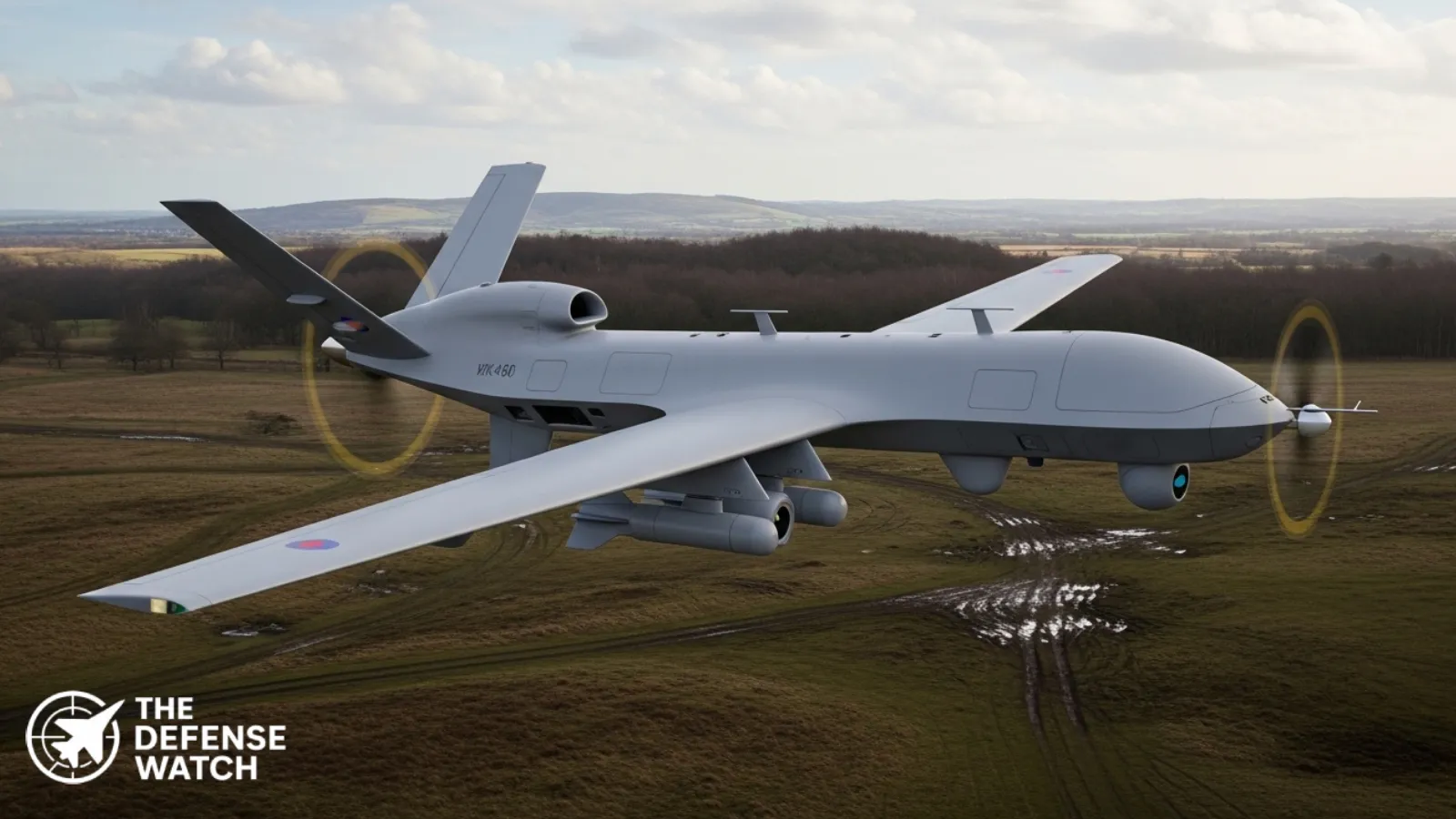
British Army Confirms Watchkeeper Replacement Under Project Corvus
The UK Army will replace its ageing Watchkeeper unmanned aerial system with a modern intelligence, surveillance, target acquisition, and reconnaissance (ISTAR) platform under Project Corvus, the Ministry of Defence has confirmed. Project Corvus is expected to deliver an advanced replacement capability by late 2026, ahead of Watchkeeper’s planned retirement in March 2027.
Project Corvus: Next-generation UAS for Persistent Surveillance
The Corvus programme aims to field a new uncrewed aerial system capable of 24-hour persistent surveillance and reconnaissance across divisional and corps-level operations. With funding and acquisition priced at roughly GBP 130 million, the requirement includes persistent land and maritime ISTAR, low-latency data sharing with joint and coalition networks, and operation in environments where global navigation satellite systems may be denied or degraded.
Defence Minister Luke Pollard told lawmakers that the transition to Corvus will draw on operational lessons and recent advances in unmanned systems technology, reflecting evolving threats and battlefield demands.
The replacement project is designed to be operated by 47 Regiment Royal Artillery, the unit that has historically flown the Watchkeeper fleet.
Watchkeeper Retirement and Rationale
The British Army’s Thales Watchkeeper WK450 entered service in 2019 as a tactical ISTAR platform but has faced persistent challenges over its lifecycle. Originally slated for retirement by March 2025, the retirement has been extended to March 2027 to support a managed withdrawal while Corvus is delivered.
Watchkeeper was developed in a joint venture between Thales UK and Elbit Systems, based on the Hermes 450 design, but its technology and performance have lagged behind newer unmanned systems. The UK MoD in late 2024 said it would prioritize new, more cost-effective drones over gifting the older Watchkeeper fleet to partners such as Ukraine.
Operational and Industrial Context
Project Corvus seeks to modernize British Army ISTAR capabilities amid broader trends in unmanned systems deployment. Industry engagement began in 2025 with a preliminary market engagement notice outlining capability needs and inviting input from potential suppliers.
Requirements emphasize deployability, cost-effectiveness, and supportability without major changes to existing doctrine. Prior MoD notices suggested a minimum deployable capability by the end of 2025, with competitive procurement to follow.
Some industry observers note interest from established unmanned systems producers, although specific contenders for Corvus have not been publicly announced.
What Comes Next
The UK MoD aims to complete Corvus deliveries by November 2026, giving the Army time to transition ahead of Watchkeeper’s March 2027 retirement. The new system is expected to offer persistent ISTAR in contested settings and align with joint and coalition operations.
Operational timelines will depend on procurement progress and testing against UK requirements. Corvus represents a key pillar in British efforts to modernize unmanned reconnaissance an