Northrop Grumman Finalizing Major Production Agreement
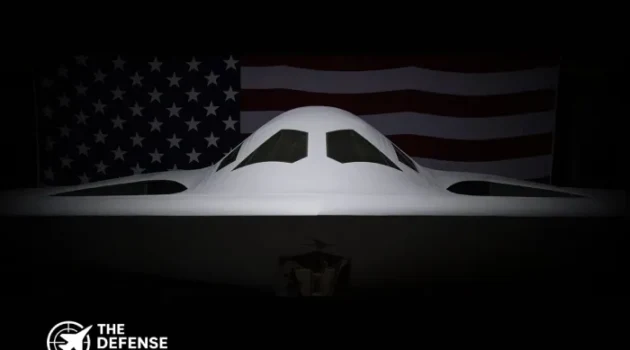
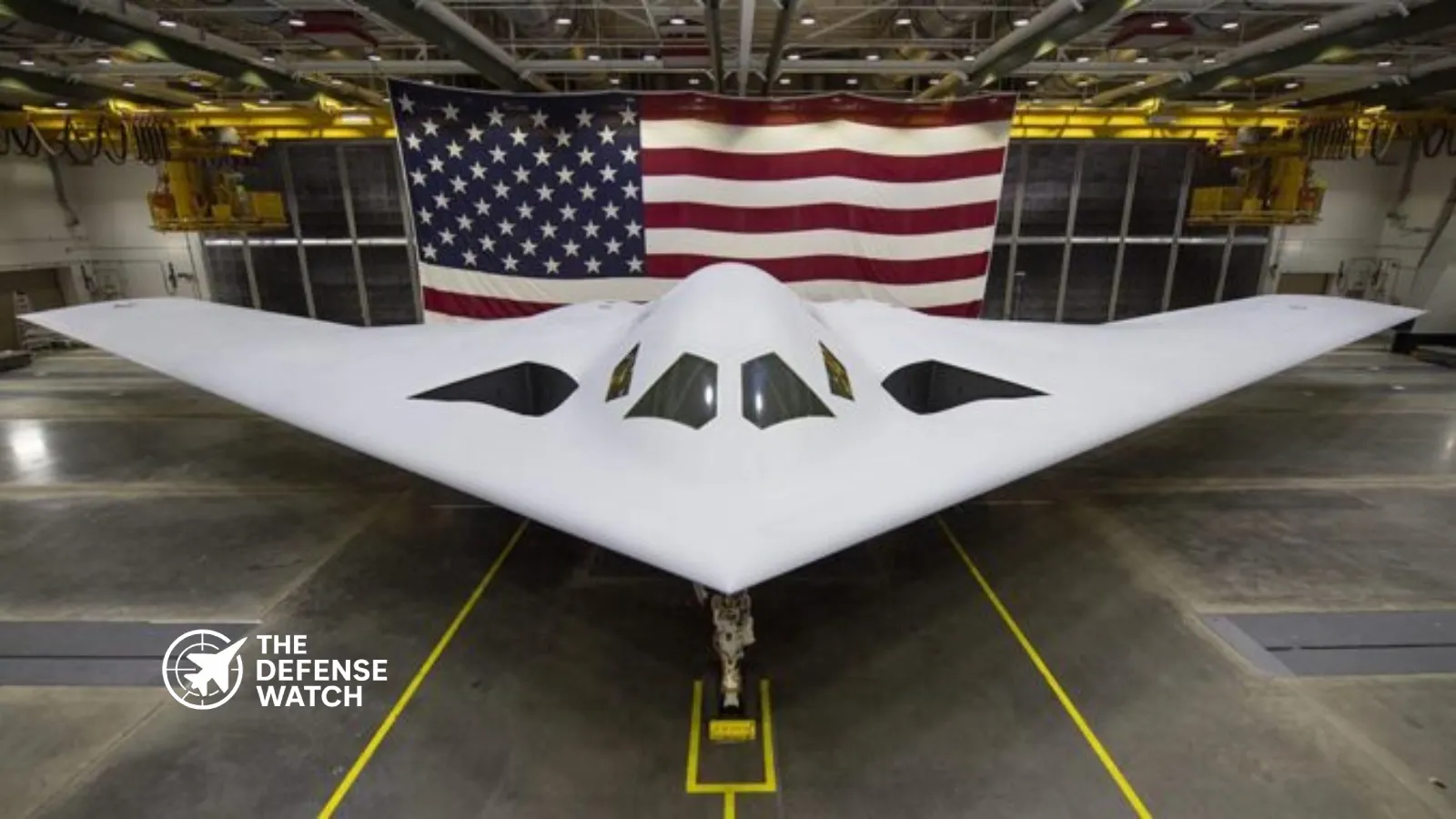
Northrop Grumman expects to finalize an agreement with the Air Force to accelerate B-21 Raider production expansion by the end of March, according to company CEO Kathy Warden during a Jan. 27 earnings call.
The announcement confirms that negotiations for one of the U.S. military’s most critical modernization programs are entering their final phase. Congress approved $4.5 billion for expanding production capacity for the B-21 as part of a reconciliation package passed in July 2025, and defense officials have been working to structure the contract terms since then.
“We continue to work closely with the Air Force on plans to increase the production rate of the program,” Warden stated. Our priority is to establish a mutually beneficial agreement that accelerates the delivery of this game-changing capability to our nation.”
The current fiscal quarter concludes March 31, 2026, establishing a firm timeline for contract finalization.
Massive Investment in Bomber Capacity
The production expansion contract represents substantial financial commitment from both parties. The Air Force outlined plans in its 2026 budget request to spend all $4.5 billion from the reconciliation bill this fiscal year: nearly $2.4 billion in research and development and $2.1 billion in procurement.
Northrop Grumman is also making significant internal investments to support increased manufacturing throughput. Warden revealed that Northrop plans to invest between $2 to $3 billion over multiple years for “facilitizing for that acceleration”, though specific details about these facility upgrades were not disclosed.
The defense contractor previously announced in April 2025 that it had invested $477 million in a “process change” designed to enable higher production rates for the advanced stealth bomber.
Low-Rate Initial Production Advances
Parallel to expansion negotiations, the B-21 program continues advancing through its planned production phases. Warden confirmed that Northrop received the contract for the third lot of low-rate initial production in the final quarter of 2025, as well as a contract for advanced procurement for the fifth lot.
The low-rate initial production phase is expected to encompass 21 aircraft distributed across five lots, establishing the manufacturing foundation before full-rate production begins.
Flight testing is also progressing on schedule. The CEO highlighted the first flight of a second B-21 test aircraft as evidence of program momentum, building on the successful maiden flight of the initial test platform.
Classification Limits Public Disclosure
Specific details about production metrics and long-term program objectives remain highly classified. The Air Force has consistently declined to reveal exact production rates or whether the expansion aims to exceed the current program of record of 100 aircraft or simply deliver that baseline quantity on an accelerated timeline.
Defense industry sources have previously suggested the B-21 production rate operates around seven aircraft annually, though official confirmation remains restricted.
An Air Force spokesperson provided limited comment, stating: “The B-21 program of record has not changed. We are in low-rate initial production. We don’t have additional details to share at this time.”
Congressional Funding Adjustments
Despite overall program progress, lawmakers recently modified the B-21’s fiscal 2026 baseline budget allocation. Congressional appropriators cut $620 million from procurement and added $409 million for research and development for a net reduction of $211 million, citing “classified adjustments” without elaborating on specific rationale.
These budget shifts are separate from the $4.5 billion reconciliation package dedicated to production expansion, which remains intact.
Sentinel ICBM Program Faces Delays
While the B-21 bomber program accelerates, Warden provided sobering updates on the Air Force’s other major nuclear modernization effort—the Sentinel intercontinental ballistic missile system.
The Sentinel program is undergoing comprehensive restructuring following a “Nunn-McCurdy breach” triggered by significant cost overruns and schedule delays. If the program had continued on its trajectory, it would have been 81 percent over budget and three years late.
We still believe that the program will be in development for several years and not transitioning into production until later in the decade,” Warden explained, adding that production transition falls “outside of that two-to-three-year window at this point.
The Pentagon cleared Sentinel to continue in July 2024 but rescinded its previous approval for engineering and manufacturing development, mandating the current restructure before the program can advance.
Strategic Significance of B-21 Expansion
The B-21 Raider represents the cornerstone of the Air Force’s future strategic bomber fleet and nuclear deterrence posture. The aircraft’s stealth characteristics, advanced sensors, and open-architecture design position it to operate in highly contested environments against peer adversaries.
Accelerating production delivery directly supports the Department of Defense’s priority to field next-generation capabilities faster amid intensifying great power competition. The bomber is designed to eventually replace aging B-1 and B-2 fleets while complementing upgraded B-52 Stratofortress bombers.
Industry analysts anticipate the March contract announcement will provide greater clarity on delivery timelines and potential force structure implications, though classification constraints will likely limit public disclosure of operational details.
The production expansion initiative reflects broader Pentagon efforts to strengthen America’s deterrence capabilities and ensure air dominance against advanced anti-access/area-denial threats in the 2030s and beyond.