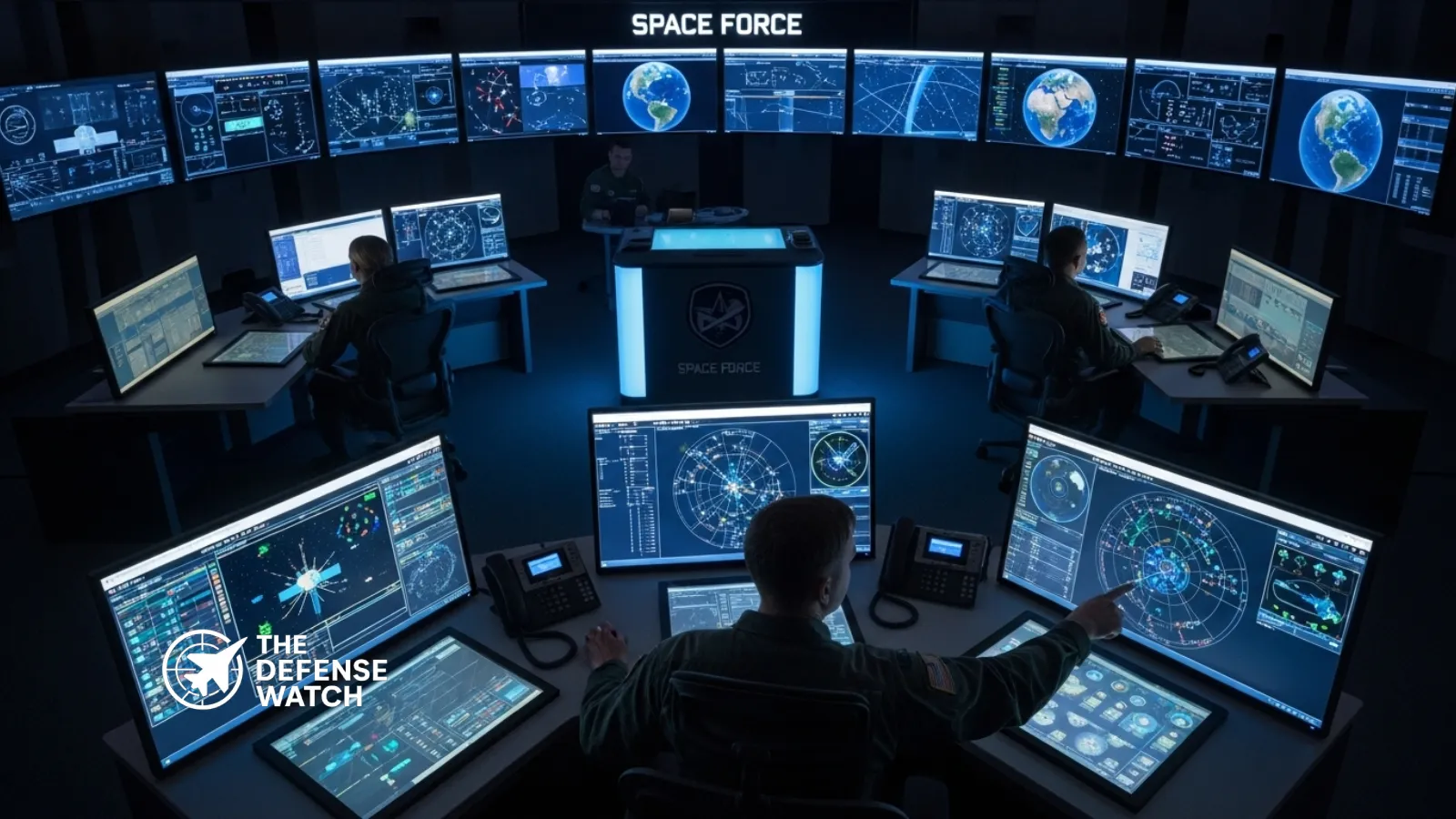
Space Force Leadership Outlines Ambitious Growth Strategy for Fiscal Year 2027
Space Force FY27 budget increase discussions are accelerating as service leaders prepare for significant funding growth and personnel expansion in the upcoming fiscal year, according to senior officials speaking at recent defense forums. The United States Space Force is positioning itself for a transformative period of growth as congressional leaders signal strong support for expanded space domain capabilities amid increasing competition from China and Russia.
Chief of Space Operations General Chance Saltzman and senior Space Force officials have begun briefing congressional committees on plans that would mark one of the most substantial budget increases since the service’s establishment in December 2019. The proposed expansion encompasses both modernization initiatives and a notable increase in guardian personnel to support growing operational demands across space missions.
Personnel Expansion Takes Center Stage in Budget Planning
The Space Force personnel expansion plans represent a critical component of the FY27 budget proposal, with service leaders emphasizing the need for additional guardians to manage increasingly complex space operations. Current Space Force end strength stands at approximately 8,600 active-duty guardians, a figure that officials acknowledge remains insufficient for the expanding scope of space missions.
According to statements from Space Force leadership, the service is seeking authorization to grow its active-duty force by several hundred positions in FY27, with particular emphasis on cyber operations specialists, space systems operators, and intelligence analysts. This growth would support expanded operations at key installations including Buckley Space Force Base in Colorado, Vandenberg Space Force Base in California, and Patrick Space Force Base in Florida.
“We need the right people with the right skills in the right places,” General Saltzman stated during recent congressional testimony, underscoring the connection between personnel growth and mission effectiveness in the increasingly contested space domain.
Budget Increase Targets Critical Modernization Priorities
The guardian force structure growth 2027 initiative aligns with broader modernization efforts that Space Force leaders have identified as essential for maintaining American space superiority. The anticipated budget increase would fund several critical capability areas beyond personnel costs.
Key investment priorities include:
Space domain awareness systems to track growing numbers of satellites and potential threats in orbit, with funding allocated for next-generation ground-based radars and space-based surveillance capabilities. The Space Force currently tracks more than 47,000 objects in Earth orbit, a number that continues to grow with commercial satellite constellation deployments.
Resilient satellite communications architecture development, building on the proliferated low-Earth orbit constellation approach that distributes critical capabilities across numerous smaller satellites rather than relying on a few large, vulnerable platforms.
Offensive and defensive space control capabilities designed to protect American space assets while holding adversary systems at risk, though specific program details remain classified due to operational security concerns.
Ground infrastructure modernization at key Space Force installations, including upgraded mission control facilities and cybersecurity enhancements to protect space operations networks from sophisticated adversary threats.
Congressional Support Builds for Space Domain Investment
Military space operations funding boost proposals have received increasingly favorable reception from congressional defense committees on both sides of the aisle. Lawmakers have expressed growing concern about Chinese and Russian counterspace capabilities, including anti-satellite weapons, electronic warfare systems, and on-orbit maneuvering satellites capable of threatening American space assets.
The House Armed Services Committee’s Strategic Forces Subcommittee, which maintains jurisdiction over Space Force programs, has signaled openness to significant funding increases for space capabilities. Similarly, Senate appropriators have indicated support for robust space domain investments as part of broader efforts to maintain technological advantages over near-peer competitors.
(adsbygoogle = window.adsbygoogle || []).push({});This congressional backing represents a notable shift from earlier years when some lawmakers questioned whether the Space Force required substantial budget growth as a newly established service. Growing awareness of space as a critical warfighting domain has reshaped the political landscape surrounding space defense funding.
Balancing Growth with Integration Challenges
Despite the positive momentum surrounding Space Force modernization budget priorities, service leaders acknowledge significant challenges in rapidly expanding both personnel and capabilities while maintaining operational effectiveness. The Space Force must balance ambitious growth plans against the practical realities of recruiting, training, and retaining highly specialized technical personnel in a competitive labor market.
Space systems operators and cyber specialists with the clearances and technical expertise required for Space Force missions command premium compensation in the private sector, creating retention challenges that budget planners must address through competitive pay, bonuses, and quality-of-life improvements.
Additionally, the service faces infrastructure constraints at key installations that could limit how quickly new personnel can be effectively integrated into operational units. Expanding guardian numbers without corresponding investments in facilities, training pipelines, and equipment would risk diluting operational effectiveness.
FY27 Timeline and Budget Submission Process
The formal FY27 budget request is expected to be submitted to Congress in February 2026, following standard Department of Defense budget development timelines. Space Force leaders have been conducting preliminary briefings with congressional staff and key committee members to socialize major initiatives before the official submission.
Once submitted, the budget will undergo detailed review by the House and Senate Armed Services Committees during authorization hearings, followed by appropriations committee consideration of specific funding levels. Final congressional action typically occurs in late 2026, though continuing resolutions often delay full appropriations into the fiscal year itself.
Space Force officials have emphasized the importance of timely budget passage to avoid disruptions to planned personnel accessions and modernization contract awards. Continuing resolutions limit the service’s ability to start new programs or significantly increase production rates on existing initiatives.
Strategic Context Driving Space Force Expansion
The push for increased Space Force funding and personnel occurs against a backdrop of intensifying space competition with China and Russia. Both adversaries have demonstrated counterspace capabilities that threaten American satellites supporting everything from GPS navigation to intelligence collection and military communications.
China’s People’s Liberation Army Strategic Support Force has conducted multiple tests of direct-ascent anti-satellite missiles and co-orbital threat systems. Russia has similarly demonstrated on-orbit weapons capabilities and maintains robust ground-based anti-satellite systems capable of threatening satellites in low-Earth and geosynchronous orbits.
Beyond traditional military threats, the rapid commercialization of space creates new challenges for Space Force domain awareness missions. Tracking and characterizing thousands of commercial satellites while identifying potential threats among legitimate space operations requires substantial personnel and technical capabilities that current force structure cannot fully support.
See also: [Understanding Modern Space Domain Awareness Capabilities] [How Commercial Space Growth Impacts Military Operations]
Looking Ahead to Implementation
As Space Force leaders finalize FY27 budget proposals, attention will shift to implementation strategies that can effectively translate funding increases into operational capabilities. Success will require not only congressional appropriations but also efficient contract execution, successful recruiting campaigns, and careful program management.
(adsbygoogle = window.adsbygoogle || []).push({});The service has begun pre-positioning for rapid growth by expanding recruiting efforts at universities with strong aerospace engineering and computer science programs, partnering with industry to develop training pipelines for critical specialties, and identifying facility expansion requirements at key installations.
Whether the ambitious Space Force FY27 budget increase materializes as planned will depend on congressional action over the coming months, broader federal budget constraints, and the service’s ability to demonstrate effective stewardship of increased resources. Space Force leaders remain optimistic that growing recognition of space as a critical warfighting domain will translate into sustained support for the capabilities and personnel necessary to secure American interests in orbit.