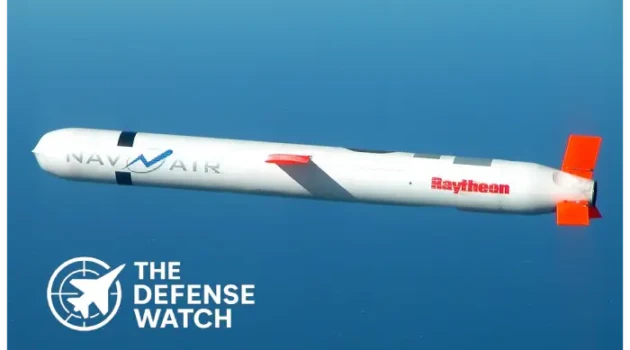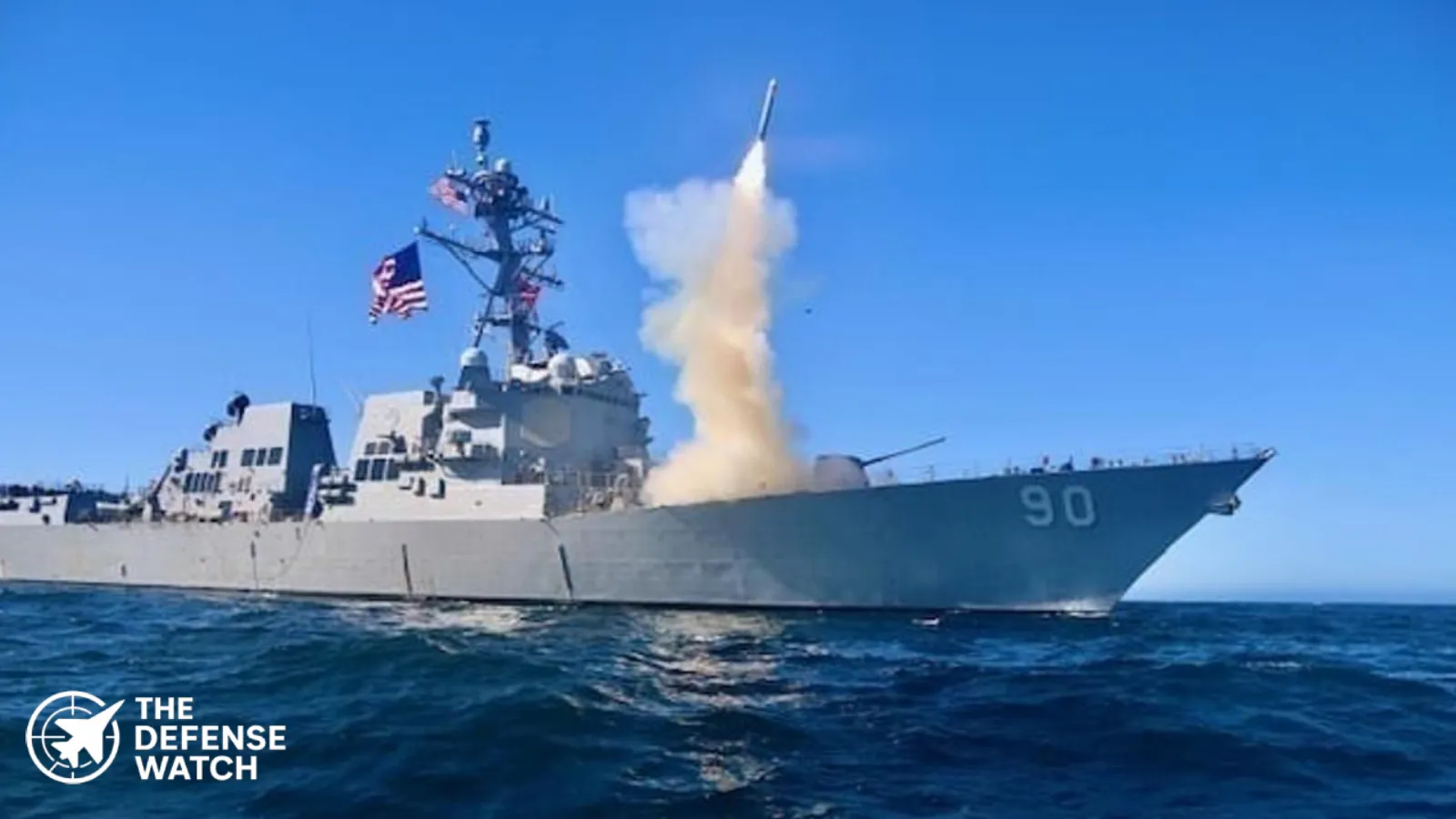
Raytheon has secured a major Tomahawk missile modernization contract as the U.S. Navy moves to extend the service life and readiness of its long range strike inventory. The Navy awarded Raytheon Co. a contract modification valued at $380.8 million, bringing the total definitized value of the program to $476.5 million, according to a U.S. Department of Defense contract announcement.
The award reinforces the Tomahawk missile’s role as a core element of U.S. naval strike capability, while highlighting the Navy’s focus on sustainment, recertification, and modernization rather than near term replacement.
Contract Details and Scope
The contract modification, identified as P00010 under contract number N0001925C0071, is structured as a fixed price incentive and firm fixed price agreement. It definitizes earlier work and expands the scope to cover Lot Five and Lot Six Tomahawk missile recertification and modernization.
Key elements of the contract include:
- Recertification and modernization of Tomahawk missiles from Lot Five and Lot Six
- Depot level operations and sustainment activities
- Procurement of recertification hardware
- Delivery of Tomahawk spares and replacement components
- Support for rotable pool assets to improve fleet availability
The work supports both U.S. service requirements and Foreign Military Sales customers, reflecting the missile’s continued relevance across allied naval forces.
Naval Air Systems Command at Patuxent River, Maryland, is the contracting activity.
Work Locations and Schedule
Contracted work will be distributed across a broad industrial base in the United States and Canada, underscoring the program’s economic footprint and supply chain complexity.
Primary work locations include:
- Tucson, Arizona, 30 percent
- Boulder, Colorado, 28 percent
- Pontiac, Michigan, 11 percent
- Lincoln, Nebraska, 6 percent
- Clearwater, Florida, 6 percent
- Irvine, California, 5 percent
- East Camden, Arkansas, 3 percent
- Keyser, West Virginia, 2 percent
Smaller portions of work will occur in Arizona, Arkansas, California, and Ontario, Canada, along with other continental U.S. locations.
The Navy expects contract performance to continue through April 2029, aligning with long term fleet sustainment plans for surface combatants and submarines equipped with Tomahawk missiles.
Funding Breakdown
Funding for the Tomahawk missile modernization contract comes from multiple procurement accounts across fiscal years 2024 and 2025, as well as Foreign Military Sales funding.
Obligated amounts at the time of award include:
- $7.3 million from fiscal 2024 Army missile procurement funds
- $4.8 million from fiscal 2024 Marine Corps procurement funds
- $202.1 million from fiscal 2024 Navy weapons procurement funds
- $155.0 million from fiscal 2025 Navy weapons procurement funds
- $99.4 million from Foreign Military Sales funds
Of the total obligated amount, $214.2 million is set to expire at the end of the current fiscal year.
The contract was not competed, reflecting Raytheon’s role as the original equipment manufacturer and sole integrator for the Tomahawk missile system.
Strategic Importance of the Tomahawk Program
The Tomahawk missile remains one of the U.S. Navy’s most flexible and widely deployed strike weapons. Capable of land attack missions from both surface ships and submarines, the missile provides commanders with a long range, precision strike option without risking manned aircraft.
Modernization and recertification efforts are essential as the Navy seeks to maintain credible strike capacity amid rising global competition. Rather than retiring older missile lots, the Navy has opted to extend their operational life through refurbishment, software updates, and component replacement.
According to Navy budget documents and Congressional testimony, Tomahawk upgrades support improved reliability, maintainability, and compatibility with evolving command and control systems.
Raytheon’s Role and Industrial Base Impact
Raytheon, now operating as part of RTX, has been the prime contractor for the Tomahawk program for decades. The company is responsible for missile production, integration, sustainment, and life cycle support.
This latest Tomahawk missile modernization contract further cements Raytheon’s position as a central player in U.S. naval strike systems. It also sustains high skill manufacturing and engineering jobs across multiple states, aligning with Pentagon goals to preserve critical defense industrial capabilities.
Defense officials have consistently emphasized the importance of maintaining production lines and sustainment expertise for proven weapons systems, especially as demand for precision munitions continues to grow.
Broader Navy Modernization Context
The Tomahawk investment comes as the Navy balances new weapon development with upgrades to existing platforms. While hypersonic weapons and next generation missiles are under development, officials have stressed that mature systems like Tomahawk will remain in service well into the next decade.
Modernization programs allow the Navy to manage costs, maintain readiness, and avoid capability gaps while newer systems progress through testing and integration.
In this context, the Raytheon Tomahawk missile modernization contract reflects a pragmatic approach to force structure and long range strike planning.