

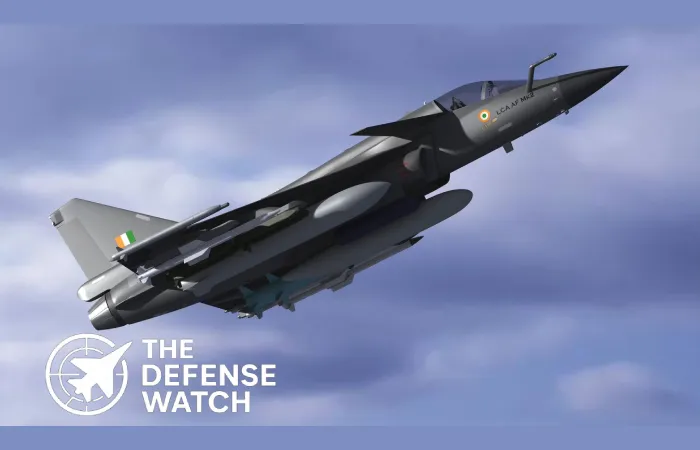
On November 21, 2025, an Indian Air Force (IAF) HAL Tejas light combat aircraft crashed during a demonstration flight at the Dubai Air Show, according to multiple media reports. The incident occurred around 2:10 PM local time at Al Maktoum International Airport, drawing onlookers as a plume of thick black smoke rose from the crash site.
The IAF confirmed the crash, stating that the pilot sustained fatal injuries. A court of inquiry has been constituted to determine the cause of the accident.
Background: The Tejas Fleet and Program
The LCA Tejas, developed by Hindustan Aeronautics Limited (HAL) in partnership with the Aeronautical Development Agency (ADA), is a lightweight, single-engine multirole fighter.
- It is central to India’s “Make in India” defense strategy, intended to reduce reliance on foreign fighters.
- Previous Tejas variants, like the Mk-1A, include upgrades such as AESA radar, advanced electronic warfare suites, and aerial refueling capability.
- In September 2025, India reportedly placed fresh orders with HAL for 97 Tejas jets, with deliveries expected to begin in 2027.
Preceding Controversy: Oil Leak Claims Debunked
Just days prior, social media circulated videos claiming a Tejas Mk-1 was leaking oil during the airshow.
- India’s Press Information Bureau (PIB) countered these claims, clarifying that the footage showed routine drainage of condensed water from the aircraft’s Environmental Control System (ECS) and On-Board Oxygen Generating System (OBOGS), especially common in humid environments.
- The Ministry of Defence described the leak narrative as “misleading” and “propaganda-driven.”
Analysis: Implications for Defense and Global Aerospace
1. Impact on India’s Aerospace Credibility
The Tejas crash during a high-profile international show is a major blow to India’s effort to market the aircraft to global customers. The incident could fuel reluctance among potential buyers, undermining export ambitions.
2. Safety and Reliability Spotlight
While the PIB dismissed earlier leak allegations as routine, the crash now raises serious questions about flight safety—especially for aerobatic maneuvers. If investigation finds design or maintenance flaws, it could trigger further scrutiny over HAL’s quality control and the Tejas’ reliability.
3. Export Strategy Risks
The Tejas is an important part of India’s defense export push. A public crash at an international trade show could erode confidence among foreign partners and delay or cancel pending deals.
4. Risk Management for International Airshows
Air show demonstration flights are inherently risky, and this accident underscores how live demonstrations expose manufacturers and air forces to reputational hazards. West-aligned defense buyers often compare such mishaps against Western platforms with proven track records.
5. Regional Security Implications
India continues to invest in the Tejas amid strategic competition with rivals like China and Pakistan. A crash raises concerns about sustainability of indigenous platforms and may pressure India to accelerate modernization or rely more on imported jets.
Conclusion: What Comes Next
India’s Tejas crash at the Dubai Air Show marks a tragic and potentially pivotal moment for its indigenous fighter program. The court of inquiry now underway will be closely watched by both domestic and international stakeholders. Depending on the outcome, this could prompt a reassessment of Tejas’s export viability, lead to engineering or training reforms, or influence India’s broader aerospace strategy.
Looking ahead, if the probe reveals systemic issues, India may need to bolster its quality assurance, pilot training, and safety protocols to reassure both its air force and prospective customers. On the other hand, a clear technical explanation and transparent findings could help mitigate reputational damage and preserve the Tejas program’s momentum.

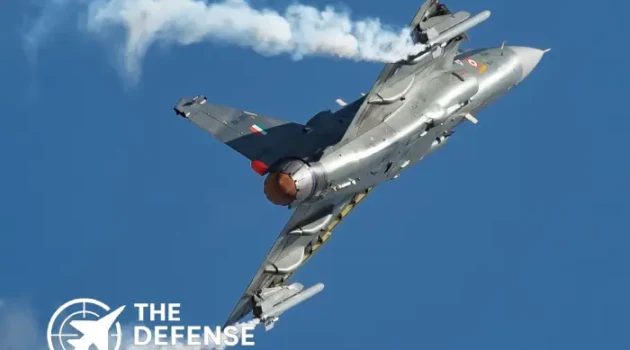
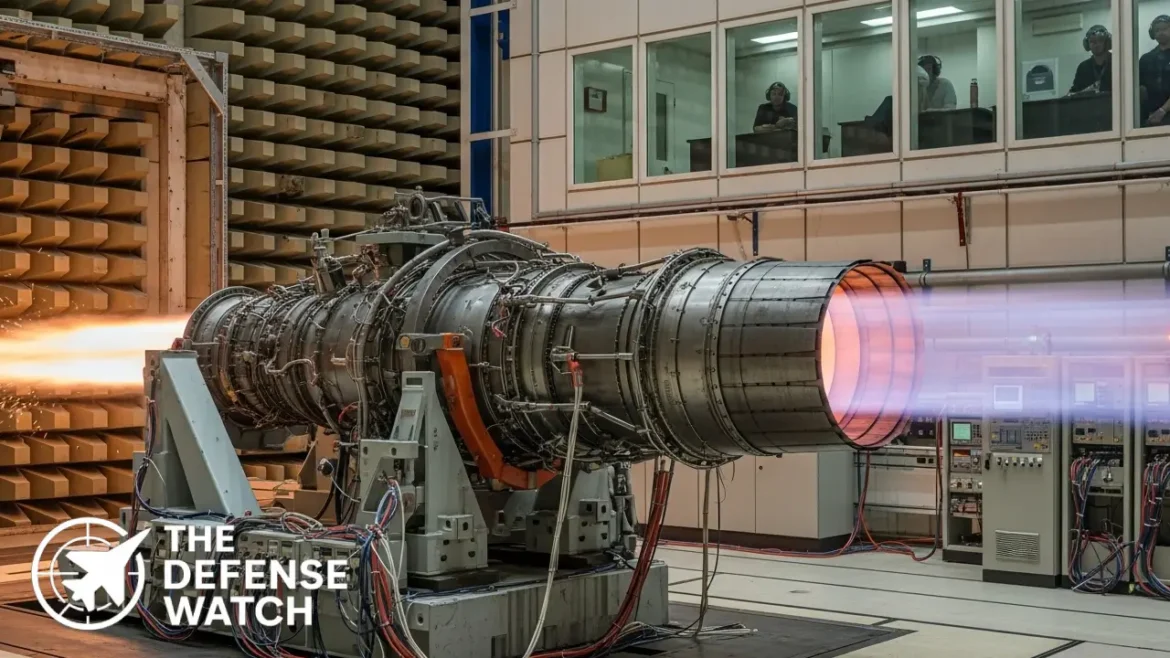
India’s defense manufacturing ecosystem is accelerating efforts to create an independent 110kN aero engine, with multiple private-sector companies seeking Ministry of Defence (MoD) support to develop a high-thrust propulsion solution outside the existing Gas Turbine Research Establishment (GTRE)–Safran joint venture. The emerging initiative, discussions for which advanced in recent months across New Delhi and Bengaluru, signals a growing push toward long-term propulsion self-reliance for India’s fighter aircraft programs.
Background: A Strategic Need for High-Thrust Propulsion
India’s pursuit of a domestic high-thrust turbofan stems from operational and industrial demands tied to the Tejas Light Combat Aircraft (LCA) program, future Advanced Medium Combat Aircraft (AMCA), and increasing emphasis on export competitiveness. While GTRE’s Kaveri derivative programs have delivered limited progress and the GTRE–Safran partnership is working toward a 110kN class engine with blade technology transfer by 2027, private firms believe parallel development is essential to reduce dependency and diversify design risk.
The term 110kN aero engine increasingly serves as a benchmark requirement, capable of powering medium-weight fighters in the 5th-generation class with improved thrust-to-weight ratios, supercruise potential, and higher thermal tolerance.
Private Sector Push: An Independent Pathway
According to industry sources, several leading Indian private aerospace manufacturers have approached the MoD requesting formal endorsement, seed funding, and access to defense testing infrastructure to pursue a clean-sheet 110kN turbofan design. Their proposals reportedly emphasize modular architecture, digital twin development, and high-temperature materials aimed at reducing life-cycle costs and improving growth potential.
Executives familiar with the discussions said companies aim to avoid duplicating GTRE’s ongoing work and instead propose a separate domestic track with global consultancy partnerships.
A senior industry representative noted that the private sector “is ready to assume a significant portion of risk and investment, provided there is clarity on long-term procurement needs and MoD’s willingness to certify and onboard indigenous propulsion systems.”
HAL’s Scaling Plans Add Momentum
State-run Hindustan Aeronautics Limited (HAL), which is scaling Tejas Mk1A production and preparing for prototypes of Tejas Mk2, has been supportive of any propulsion program that creates domestic redundancy. The demand for engines is expected to grow sharply as HAL expands fighter production capacity to meet domestic and export orders.
The parallel Safran technology transfer program—focused on high-pressure turbine blade manufacturing—remains critical for India’s ability to indigenously sustain a 110kN aero engine by 2027. But industry strategists argue that an additional private-sector program could accelerate learning curves and reduce long-term reliance on foreign OEMs.
Government Considerations and Policy Climate
The MoD has previously signaled readiness to support private-sector engine programs via the Technology Development Fund and the Innovations for Defence Excellence (iDEX) scheme, though no large-scale propulsion project has yet been awarded. Officials say a decision on the new proposals may align with the next iteration of India’s defense indigenization roadmap.
Under the current policy, major engine development projects are categorized as “high criticality strategic programs,” requiring Cabinet-level approvals and multi-decade commitments. Private-sector leaders are urging the government to adopt a dual-track model: one centered on GTRE–Safran, and one on domestic private capabilities.
Expert View: A Multi-Track Engine Strategy
Defense analysts say bidding for an independent 110kN aero engine reflects a maturing of India’s aerospace ecosystem. According to propulsion experts, creating multiple development streams mitigates technological risk and builds domestic competition, which is standard practice in the US, France, and UK during major engine programs.
“India will need at least two to three viable domestic engine houses over the next decade if it wants to field next-generation fighters without foreign constraints,” said a former Indian Air Force engineering officer. He added that engine development cycles typically span 10–15 years, making early investment crucial.
What’s Next
If approved, the independent private-sector propulsion program could begin component-level testing by the late 2020s, with full engine demonstrators expected in the early 2030s. The push also aligns with India’s broader defense export ambitions, where indigenous engines are seen as essential for avoiding restrictive end-user licensing.
As India advances toward greater aerospace autonomy, the 110kN aero engine initiative—both public and private—remains central to the country’s vision of deploying fully indigenous fighter aircraft in the decades ahead.