

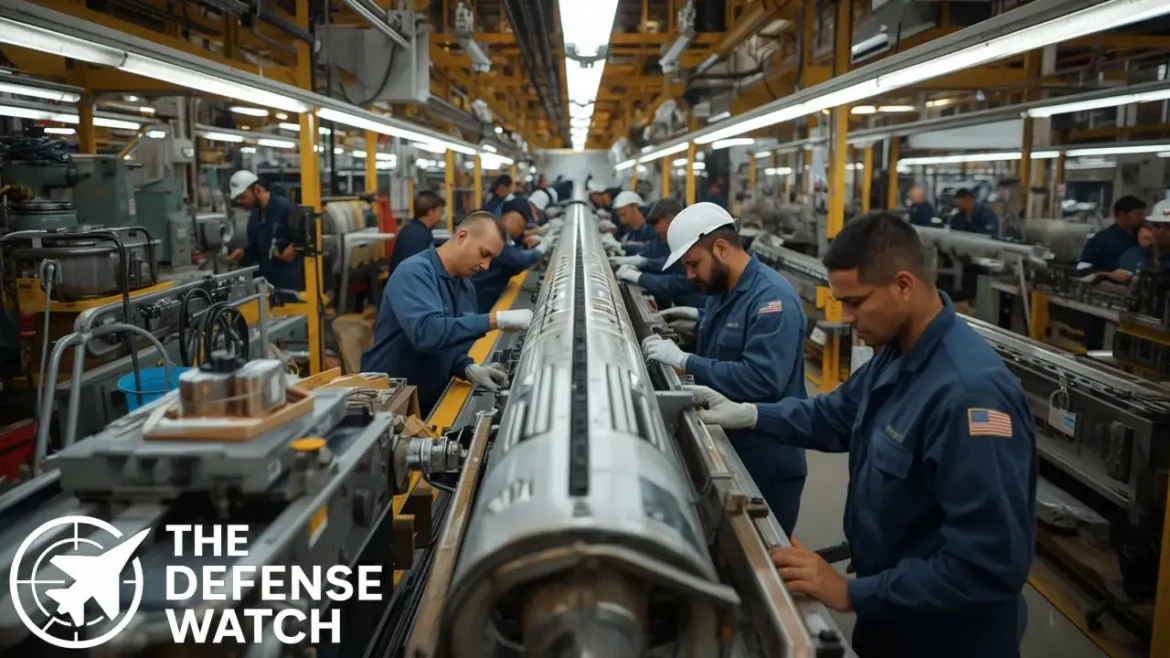
Rising Pressure on U.S. Defense Supply Chains
The supply chain for U.S. weapon manufacturers is under mounting pressure as defense contractors race to keep pace with surging global demand for advanced military systems. From precision-guided munitions to hypersonic weapon components, the Pentagon and its suppliers are contending with critical bottlenecks in raw materials, manufacturing capacity, and skilled labor.
The ongoing war in Ukraine, heightened tensions in the Indo-Pacific, and escalating defense budgets across NATO have sharply increased the demand for U.S.-made arms. But industry executives warn that America’s defense industrial base remains vulnerable to disruptions in areas ranging from microelectronics to solid rocket motors.
Key Vulnerabilities in the Supply Chain
The most acute challenges lie in three segments:
- Munitions and Propellants: The U.S. Army and industry partners are expanding facilities to produce artillery shells and rockets, but shortages of energetics and aging infrastructure continue to slow progress.
- Microelectronics and Semiconductors: Defense manufacturers still depend heavily on global semiconductor supply chains, many centered in Asia. This raises concerns about resilience in a potential conflict with China.
- Rare Earths and Critical Minerals: Components for missiles, radars, and fighter aircraft rely on rare earth elements, many of which are processed in China — creating a strategic vulnerability.
According to a Congressional Research Service report, the Pentagon has identified over 300 “single points of failure” across its defense supply chain.
Industry Efforts to Boost Capacity
Major defense primes, including Lockheed Martin, Raytheon Technologies, and Northrop Grumman, have increased investments in advanced manufacturing and workforce development. Meanwhile, the Pentagon has used the Defense Production Act to accelerate the supply of rocket motors, drone systems, and Stinger missiles.
In recent months, the Department of Defense has also awarded multibillion-dollar contracts aimed at expanding domestic production of artillery shells and missile interceptors. Several public-private initiatives are underway to reduce dependency on foreign suppliers for critical minerals and to strengthen partnerships with allied nations.
Global Demand Driving Strain
U.S. arms exports have surged as European allies replenish stocks after transferring equipment to Ukraine. The Indo-Pacific theater is also driving orders for air defense systems, long-range strike weapons, and naval platforms. According to the Stockholm International Peace Research Institute, U.S. defense exports increased by nearly 14% in 2024 compared to the previous five-year average.
This rising demand has created longer lead times. In some cases, foreign partners must now wait several years for deliveries of Patriot missile systems or advanced fighter jets, underscoring the limits of U.S. production capacity.
Analysis: The Strategic Risk of Fragile Supply Chains
While Washington has recognized the risks of an overstretched industrial base, solving these issues will require long-term investment. Analysts note that the U.S. is attempting to rebuild a Cold War–era production model for a modern, digitally connected defense economy — a task that cannot be achieved quickly.
A fragile supply chain poses risks not only to U.S. military readiness but also to alliances that depend on timely deliveries of American-made systems. If bottlenecks persist, adversaries could exploit delays, particularly in a high-intensity conflict where resupply speed could determine outcomes.
Outlook
Industry experts argue that strengthening the supply chain for U.S. weapon manufacturers will require a mix of federal funding, private-sector innovation, and greater collaboration with allied industrial bases. With global defense demand showing no signs of slowing, the question is not whether the U.S. will expand its defense manufacturing — but whether it can do so fast enough to meet both national and allied needs.
FAQs
Because global demand for weapons has surged due to the Ukraine war, Indo-Pacific tensions, and NATO rearmament, straining production lines.
Key vulnerabilities include munitions, semiconductors, and critical minerals such as rare earths.
By using the Defense Production Act, awarding new contracts, and investing in domestic manufacturing capacity.
Delays in production and delivery timelines impact allies relying on U.S. systems, especially in Europe and Asia.
Experts say building resilience will take years of investment in infrastructure, supply diversification, and workforce development.
Note: The images are AI-generated.