
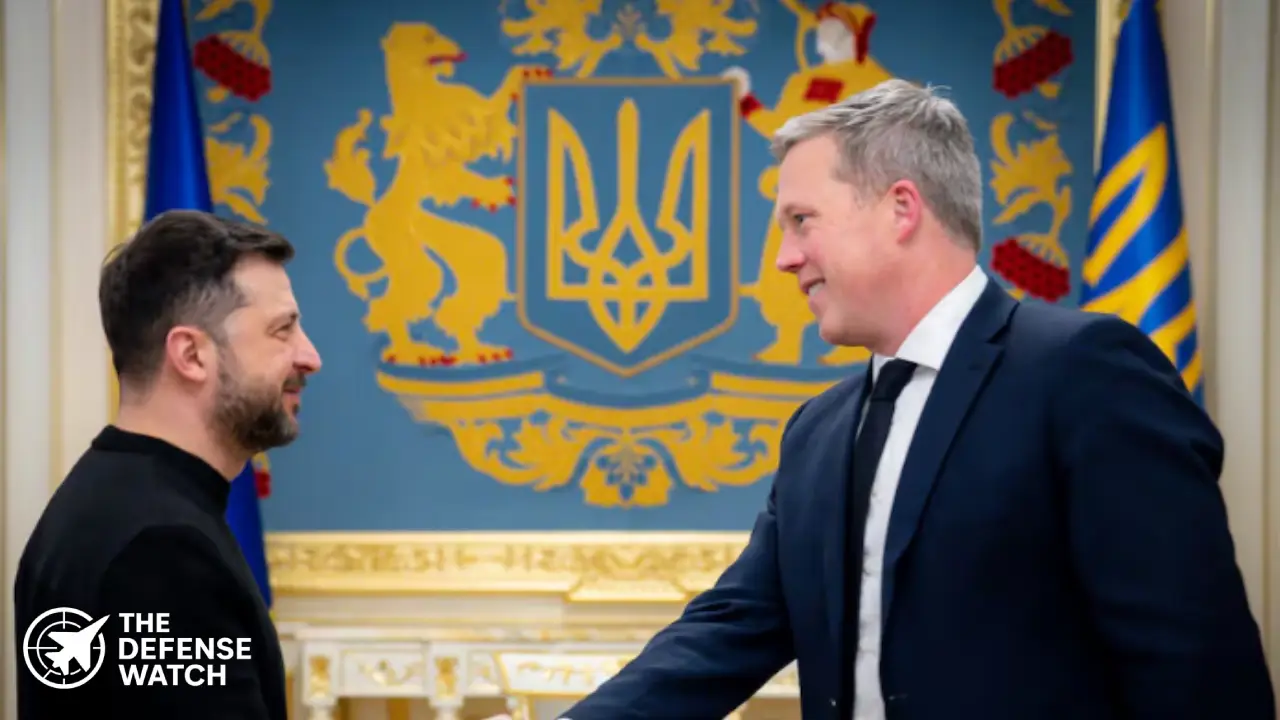
The US Army Secretary has unexpectedly become a central figure in ongoing Ukraine peace talks, according to developments reported on Nov. 26 in Brussels, where diplomatic channels continue shaping pathways toward de-escalation. The involvement marks a notable shift in the role traditionally held by civilian diplomatic envoys and State Department personnel in conflict negotiation frameworks.
Background: Evolving US Role in Ukraine Negotiations
Since the start of Russia’s full-scale invasion in 2022, Washington has acted as Kyiv’s leading defense supporter and security guarantor within NATO structures. While military assistance, training programs, and equipment transfers have dominated policy discussions, diplomatic engagement has typically been managed through the White House National Security Council and the State Department.
The increased participation of the US Army Secretary signals an alignment of defense policy, military logistics, alliance structures, and negotiation mechanisms. It also reflects Ukraine’s continued reliance on US military support as part of its broader strategic positioning in talks.
Strategic Influence and Coordination
According to Defense News reporting, officials cited the US Army Secretary’s role in coordinating security assurances, reconstruction planning, and future force integration as core reasons for the expanded portfolio. Defense planners emphasized that negotiations now require detailed knowledge of Ukrainian military capability development and interoperability goals.
A NATO official quoted in the reporting noted that military-technical considerations are now inseparable from diplomatic dialogue, stating that “force structure, sustainment capability, and long-term defense integration have become part of negotiation conditions.”
US defense representatives also highlighted ongoing modernization assistance, combined training pipelines, and future transition planning as contributing factors that positioned the Army Secretary as a relevant stakeholder.
Expert Perspectives
Security analysts say the development demonstrates a shift in how modern conflicts drive diplomatic processes. Rather than separating political and military tracks, current negotiations incorporate logistics, procurement cycles, and alliance coordination.
Defense policy scholars note that Ukraine’s prospective long-term security guarantees require institutional synchronization with US and NATO defense frameworks—areas where Army leadership maintains significant influence.
Others suggest the move reflects Washington’s intent to streamline channels between defense support and political end-states, particularly as US policymakers evaluate long-term commitments.
Implications and What Comes Next
The US Army Secretary’s presence in peace discussions may shape future US-Ukraine defense cooperation models, NATO posture decisions, and European security planning. The development also reinforces Washington’s role as a principal architect in any negotiated settlement framework.
As talks continue, observers will monitor whether the expanded role becomes a precedent for future Pentagon participation in diplomatic environments or remains unique to the Ukraine conflict context.
Get real time update about this post category directly on your device, subscribe now.

4 comments
[…] The White House said the bombardment was intended to seriously degrade Iran’s nuclear capabilities. US President Trump claimed that these critical enrichment facilities had been “completely and totally obliterated,” and issued a warning that further attacks could follow if Tehran resisted peace negotiations. […]
[…] has emerged as a key facilitator in efforts to locate, finance, and refurbish compatible S-300 interceptors for transfer […]
[…] to a multinational force would require parliamentary approval and depends on progress in diplomatic talks with Ukraine and partner […]
[…] intelligence directorate under director Igor Kostyukov. In that capacity, he has been involved in key strategic duties, including coordinating relations between the Defense Ministry and paramilitary elements. He […]