
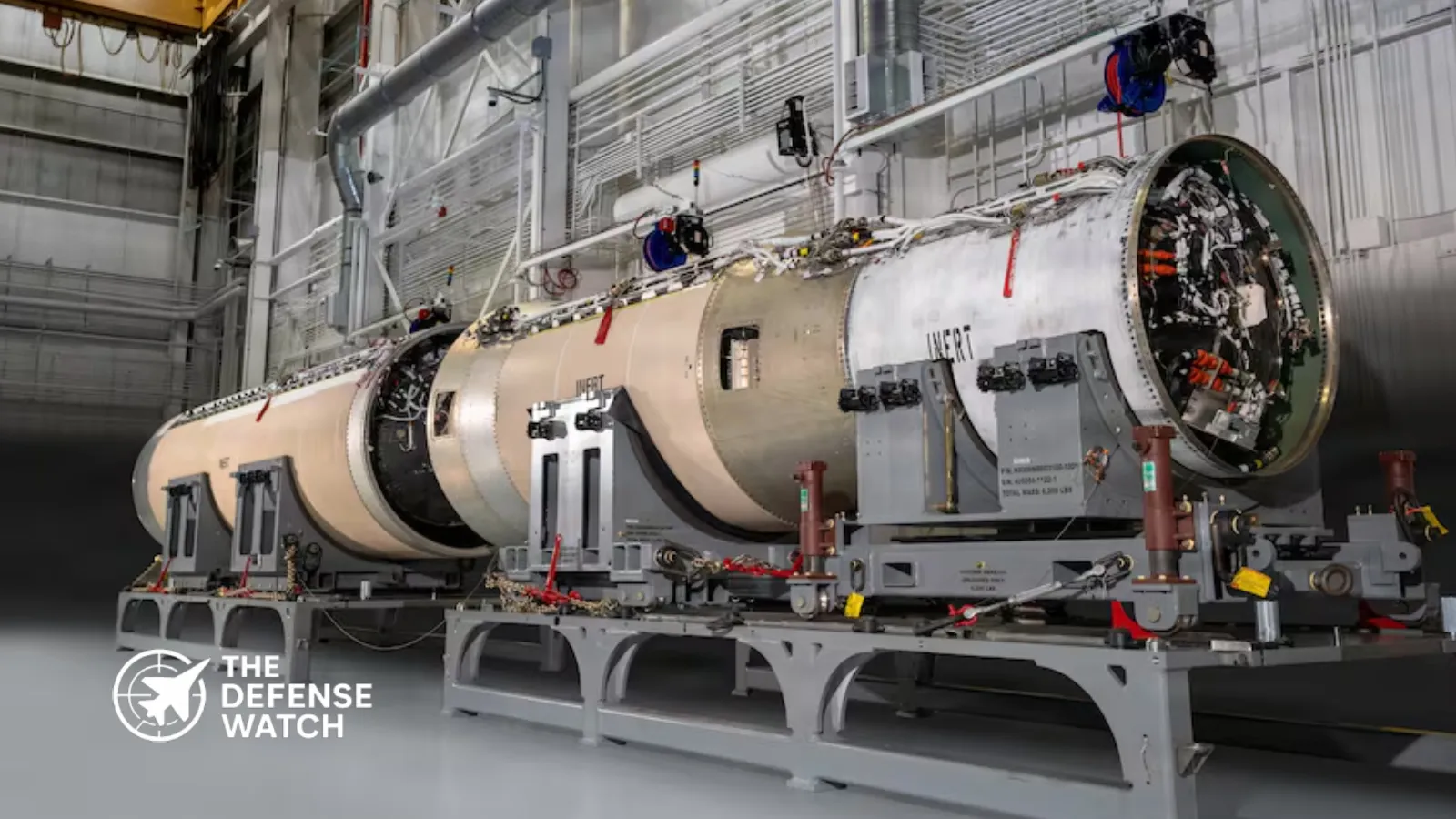
- ► The LGM-35A Sentinel ICBM is expected to reach initial operational capability in the early 2030s, the U.S. Air Force confirmed on February 17, 2026.
- ► The Sentinel program restructure is projected to be complete by the end of 2026, along with a new Milestone B acquisition decision.
- ► Original program cost was estimated at $77.7 billion; it ballooned to approximately $160 billion before a critical Nunn-McCurdy breach was declared in January 2024.
- ► The Pentagon’s revised cost estimate with a restructured acquisition strategy stands at approximately $140.9 billion.
- ► Gen. Dale White was appointed as Direct Reporting Portfolio Manager (DRPM) to cut bureaucracy and accelerate delivery of the Sentinel and other major Air Force programs.
- ► Sentinel is intended to replace the Cold War-era LGM-30G Minuteman III, which has been in service for over 50 years and is well past its designed service life.
- ► The original IOC target of 2029 slipped first to 2030, and is now pushed further into the early 2030s.
U.S. Air Force Sets Early 2030s Rollout For LGM-35A Sentinel Nuclear Missile After Major Overhaul
The U.S. Air Force confirmed on February 17, 2026, that its next-generation LGM-35A Sentinel nuclear missile is now projected to reach initial operational capability in the early 2030s — a further delay from earlier targets, but one the service says reflects a more credible, data-driven acquisition path following a sweeping program restructure.
The announcement marks the latest chapter in the troubled development of the Northrop Grumman-built intercontinental ballistic missile, which is central to America’s ground-based nuclear deterrent and designed to replace the aging LGM-30G Minuteman III — a system first fielded more than 50 years ago.
A Program Mired in Cost Overruns
When the Pentagon first awarded Northrop Grumman the Sentinel contract, the program carried a projected price tag of roughly $77.7 billion. That figure subsequently ballooned to an estimated $160 billion — more than double the original estimate — driven primarily by the enormous cost of constructing a new network of missile silos and launch control centers spread across thousands of miles of Great Plains terrain.
The cost spiral triggered a formal Nunn-McCurdy critical breach declaration in January 2024, a threshold that under federal law requires the Pentagon to notify Congress and justify whether the program should continue. After a detailed review, the Defense Department concluded in July 2024 that the Sentinel was too critical to national security to cancel — but ordered the Air Force to restructure the program and put it on a sustainable financial footing.
As part of that restructure, the original Milestone B approval — granted in September 2020 to authorize entry into engineering and manufacturing development — was formally revoked, requiring the program to re-earn that authorization under a revised acquisition framework.
Restructure on Track, New Milestone B Expected This Year
The Air Force said Tuesday that the Sentinel program restructure is now expected to conclude by the end of 2026, at which point the service anticipates receiving a new Milestone B decision. Officials described the program as having “leveraged considerable progress over the last 12 to 18 months” and said a “transformed acquisition strategy” is enabling the team to move with greater speed and discipline.
Air Force Secretary Troy Meink underscored the strategic urgency of the program. “Modernizing our nuclear deterrent is a critical priority,” Meink wrote on X. “The Sentinel program is on a data-driven path to deliver this capability, replacing a 1970s-era system to guarantee Peace through Strength for decades to come.”
A final updated cost figure for the restructured program was not immediately released. However, a U.S. official confirmed to Defense News that the Milestone B process will include an independent cost estimate from the Pentagon’s Office of Cost Assessment and Program Evaluation (CAPE). The Pentagon’s 2024 revised estimate, conducted under the restructured acquisition approach, put the program’s total cost at approximately $140.9 billion.
New Leadership Mechanism Designed to Cut Bureaucracy
A significant structural change behind the renewed confidence in Sentinel’s trajectory is the appointment of Gen. Dale White as the Air Force’s Direct Reporting Portfolio Manager (DRPM) — a role created by Defense Secretary Pete Hegseth in August 2025 specifically to oversee the service’s most consequential major acquisition programs.
Beyond the LGM-35A Sentinel and the legacy Minuteman III, White’s portfolio includes the F-47 sixth-generation fighter and the B-21 Raider stealth bomber — programs that collectively represent the backbone of future U.S. air and nuclear power.
The DRPM has the direct authority to make decisions, informed by integrated inputs across the enterprise and in alignment with the mission priorities set by the Secretary of War and the Secretary for the Air Force,” White stated. “That construct allows us to resolve tradeoffs quickly and move with the speed required to deliver credible deterrence, while preserving the discipline this mission demands.”
Following his appointment, White and his team conducted a comprehensive review of the Sentinel program before arriving at the current early 2030s IOC projection.
Why Sentinel Matters for U.S. Nuclear Strategy
The LGM-35A Sentinel nuclear missile is not simply a modernization effort — it is a foundational pillar of the U.S. strategic triad, which also includes submarine-launched ballistic missiles and nuclear-capable bombers. The ground-based leg of the triad, housed in hardened silos across Montana, Wyoming, North Dakota, Colorado, and Nebraska, provides a survivable and promptly responsive deterrent.
The Minuteman III missiles currently occupying those silos were designed in the 1960s and have been extended and upgraded well beyond their original design lives. The Air Force has maintained that the aging airframes and electronics cannot be reliably sustained indefinitely, and that a clean-sheet replacement — rather than further life extension — is the appropriate path forward.
The Sentinel program, despite its well-documented cost and schedule challenges, remains the only program of record for that replacement. There is no credible alternative currently in development.
Timeline Slip Raises Questions, But Program Survives
The IOC target for Sentinel has now shifted three times. The original goal of 2029 slipped to 2030, and the Air Force’s latest statement pushes it further — into a range described only as the “early 2030s.” While the service did not specify a single target year, the phrasing suggests a window of 2031 to 2033.
Defense analysts and congressional observers have previously raised concerns about the compounding schedule and cost risks inherent in the program, particularly given the complexity of silo construction and the technical requirements of fielding a new ICBM. The Air Force’s decision to require new silos — rather than reuse existing Minuteman III infrastructure — added significantly to both cost and construction timelines, though officials have maintained that new silos are necessary for reliability and safety.
The revised acquisition strategy, the DRPM oversight structure, and the expected new Milestone B decision by end of 2026 represent the Air Force’s attempt to demonstrate to Congress and the Pentagon that the program is being managed with greater rigor than before.
What Comes Next
With the restructuring phase expected to close out this year, attention will turn to the Milestone B re-authorization process and the accompanying independent cost estimate from CAPE. That estimate will be closely scrutinized by both the Office of the Secretary of Defense and Capitol Hill.
Beyond that, the Air Force will need to demonstrate sustained execution against a revised schedule and cost baseline — a challenge that has proved elusive for the program to date. Northrop Grumman’s performance in the engineering and manufacturing development phase, once officially re-authorized, will be the critical variable in determining whether the early 2030s IOC target holds.
For now, the U.S. Air Force is projecting cautious confidence: the LGM-35A Sentinel nuclear missile is moving forward, with a cleaner acquisition structure and more direct oversight than at any point in its turbulent history.
Get real time update about this post category directly on your device, subscribe now.
