

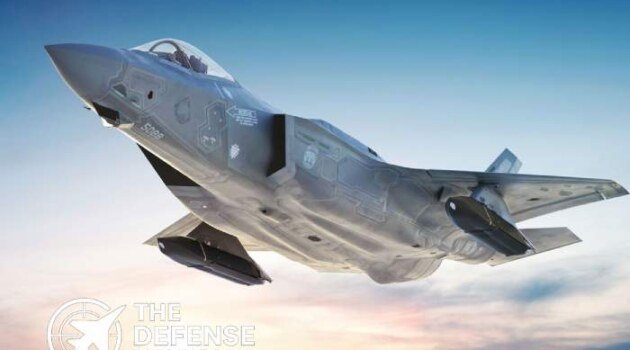
Türkiye is considering the return of its Russian-made S-400 air defense systems as part of renewed efforts to rejoin the U.S.-led F-35 fighter jet program. The development, reported in late 2025, marks one of the clearest signals yet that Ankara may be willing to revisit a defense decision that reshaped its relationship with Washington and NATO allies.
The discussions are still at an exploratory stage and no formal decision has been announced. Turkish officials have framed the issue as part of broader talks with the United States on defense cooperation, sanctions relief, and future military procurement.
Background to the S-400 and F-35 Dispute
Türkiye was removed from the F-35 program in 2019 after it took delivery of the S-400 air defense systems from Russia. The United States argued that operating the S-400 alongside NATO aircraft posed intelligence and security risks, particularly for the stealth features of the F-35.
Following the S-400 acquisition, Washington imposed sanctions under the Countering America’s Adversaries Through Sanctions Act, targeting Türkiye’s defense procurement agency. Ankara has consistently stated that the S-400 purchase was driven by urgent air defense needs after failing to secure favorable terms for U.S. Patriot systems at the time.
The Turkey S-400 F-35 dispute has since become a central issue in U.S.-Turkish defense relations.
Signals of a Policy Shift
Recent remarks from Turkish officials suggest Ankara is reassessing options that could unblock cooperation with the United States. One option under discussion is the physical return or long-term storage of the S-400 systems outside Türkiye, potentially under third-party oversight.
While Ankara has not confirmed any final plan, officials have emphasized that Türkiye remains committed to NATO and wants to restore trust with allies. The possibility of returning the systems is being evaluated alongside other confidence-building measures.
For Washington, the status of the S-400 remains a key condition for any discussion about Türkiye’s return to the F-35 program or lifting existing sanctions.
Strategic Importance of the F-35 for Türkiye
Before its removal, Türkiye was a Level 3 partner in the F-35 program and planned to acquire at least 100 aircraft. Turkish companies were also involved in manufacturing hundreds of F-35 components, contributing to the global supply chain.
The loss of access to the fifth-generation fighter created a capability gap for the Turkish Air Force, which has since relied on upgraded F-16s and domestic projects such as the KAAN next-generation fighter. Despite progress on local programs, the F-35 remains a benchmark for air superiority within NATO.
Reentry into the program would significantly enhance Türkiye’s air power and interoperability with U.S. and allied forces.
U.S. Position and Policy Considerations
U.S. officials have reiterated that the presence of S-400 air defense systems in Türkiye is incompatible with the operation of the F-35. Any move to rejoin the program would require verifiable steps to remove the systems from Turkish control.
At the same time, Washington has shown interest in stabilizing relations with Ankara, particularly given regional security challenges in the Black Sea, Middle East, and Eastern Mediterranean. Congressional approval would still be required for any major shift in U.S. policy toward Türkiye.
The Turkey S-400 F-35 issue is therefore as much a political decision as a technical one.
Expert and Security Perspectives
Defense analysts note that returning the S-400 systems would carry political costs for Ankara, both domestically and in its relations with Moscow. However, they also point out that restoring access to Western defense technology could outweigh those costs over the long term.
Experts describe the current talks as a test of whether both sides are willing to compromise after years of strained relations. Any agreement would likely involve phased steps, inspections, and legal assurances to satisfy U.S. security concerns.
What Comes Next
No timeline has been announced for a decision, and negotiations could extend well into 2026. Even if Türkiye proceeds with returning the S-400 systems, rejoining the F-35 program would require lengthy reviews and political approval in Washington.
Still, the renewed dialogue suggests a shift toward pragmatic engagement. For NATO, resolving the Turkey S-400 F-35 dispute could strengthen alliance cohesion at a time of heightened global security pressures.
Get real time update about this post category directly on your device, subscribe now.


3 comments
[…] mission, which runs from July 1, 2025, to June 30, 2026, underscores Türkiye’s central contribution to the alliance’s amphibious and rapid-reaction posture. The current phase involves a transit from the Mediterranean […]
[…] carrier deployment coincides with fresh U.S. sanctions imposed on nine vessels and their management companies, according to U.S. Treasury statements […]
[…] its military role, the ALTAY program is a flagship industrial project for Turkey’s defense sector. Serial production supports domestic suppliers across armor systems, electronics, fire […]