

Executive Summary:
The Pentagon has intensified pressure on Canada over defense spending levels and delays surrounding Ottawa’s review of its planned F-35 fighter jet acquisition. The dispute follows Washington’s decision to pause participation in a long-standing bilateral defense forum, highlighting wider tensions over NATO commitments, Arctic security, and North American defense modernization.
Canada F-35 Review Draws Pentagon Scrutiny
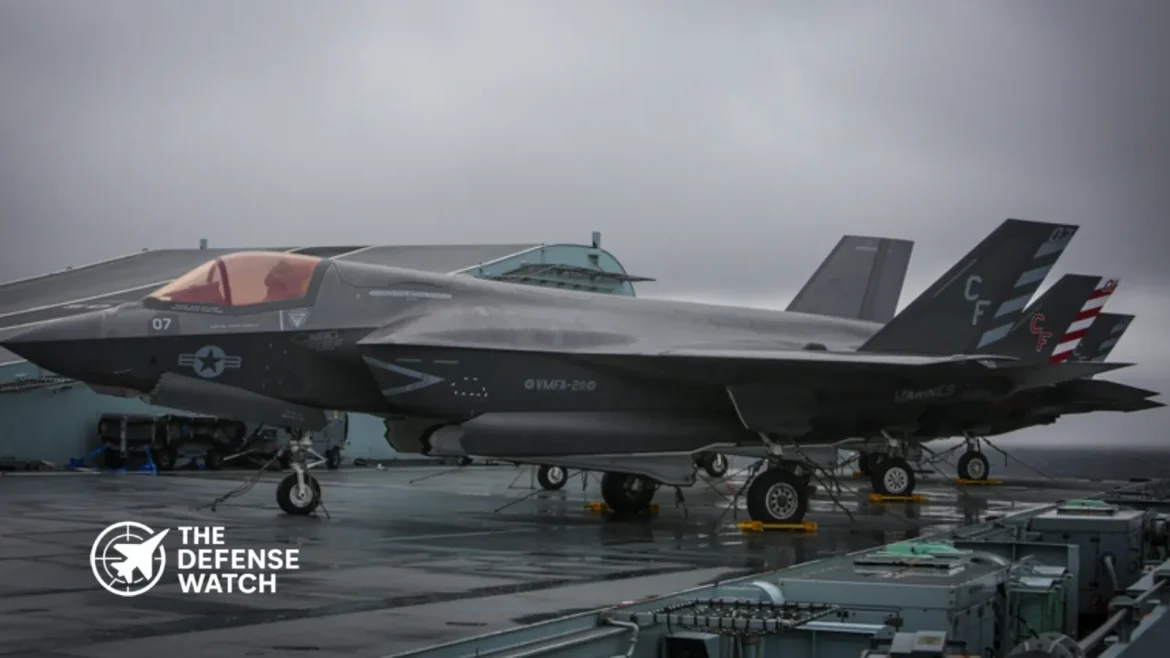
Canada’s ongoing review of its planned acquisition of Lockheed Martin F-35 fighter jets has become a growing source of friction between Ottawa and Washington, according to U.S. defense officials. The issue escalated after the Pentagon suspended participation in the U.S.-Canada Permanent Joint Board on Defense (PJBD), a bilateral defense advisory body established in 1940.
A senior Pentagon official told Reuters that Canada has not yet made the “hard decisions and tradeoffs” required to become what Washington considers a “credible” security partner in North American defense. The criticism focused on two major concerns: Canada’s military spending trajectory and delays in completing its review of the F-35 fighter acquisition program.
Ottawa signed an agreement in 2023 to acquire 88 F-35A fighters in a deal valued at roughly C$19 billion. However, the Canadian government has continued reviewing the broader procurement strategy amid political concerns over long-term dependence on U.S. defense systems.
Pentagon Pushes NATO Spending Targets
The dispute comes as the United States increases pressure on NATO allies to raise defense spending. Pentagon officials reportedly want Canada to outline a roadmap toward spending 3.5% of GDP on core defense by 2035, significantly above NATO’s current 2% benchmark.
Canada has argued that it is already making major investments in continental defense. Ottawa plans to spend approximately $87 billion over the next two decades on NORAD modernization, Arctic surveillance, infrastructure upgrades, and missile warning capabilities.
Prime Minister Mark Carney downplayed the Pentagon’s suspension of PJBD participation, saying broader defense cooperation between the two countries remains intact through NORAD operations and joint military coordination.
Still, the Pentagon’s decision signals frustration within Washington over what U.S. officials see as slow movement on Canadian defense commitments at a time of rising geopolitical competition in the Arctic and Indo-Pacific regions.
Arctic Security Increasingly Shapes U.S.-Canada Defense Relations
The Arctic has become a central strategic concern for both the United States and Canada. U.S. defense planners increasingly view the region as critical for missile defense, early warning systems, maritime routes, and strategic competition involving Russia and China.
This shift is influencing pressure on allies to modernize aging fleets and expand operational readiness. Canada’s CF-18 fighter fleet is approaching the end of its service life, making the F-35 review strategically important for future NORAD operations.
The Pentagon has emphasized that the pause in PJBD participation will not directly affect NORAD missions. However, officials warned that the effectiveness of continental defense depends on proportional contributions from both countries.
Canada Balances Sovereignty And Defense Procurement
The Canada F-35 review is also tied to broader political debates inside Ottawa regarding defense sovereignty and procurement diversification. Swedish-made Saab Gripen fighters remain under discussion as a possible alternative or supplementary option to the F-35 fleet.
Canadian officials have increasingly explored closer defense and economic partnerships with European and Indo-Pacific partners as concerns grow over reliance on U.S. systems and political unpredictability in Washington.
That debate has intensified online and among defense observers following the Pentagon’s decision to pause bilateral defense board participation. Community discussions across defense-focused forums have reflected rising Canadian concerns about procurement independence and long-term operational control of U.S.-built platforms.
At the same time, the F-35 remains the cornerstone of allied fifth-generation airpower across NATO. The aircraft’s stealth capabilities, sensor fusion, and interoperability continue to make it a leading platform for coalition operations.
Broader Defense Spending Debate Continues
The dispute arrives amid broader U.S. efforts to expand military modernization spending under President Donald Trump. Washington’s proposed defense budget includes major investments in fighter aircraft, naval expansion, missile defense, and autonomous systems.
For Canada, the pressure now centers on whether Ottawa can balance alliance obligations, domestic political concerns, industrial priorities, and Arctic security requirements while completing one of its largest military procurement programs in decades.
The outcome of the Canada F-35 review is likely to shape North American defense cooperation for years to come.
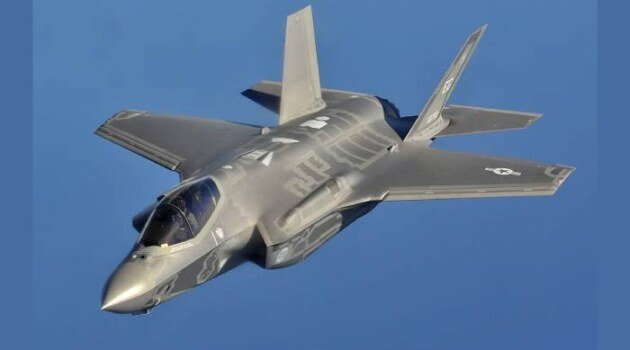
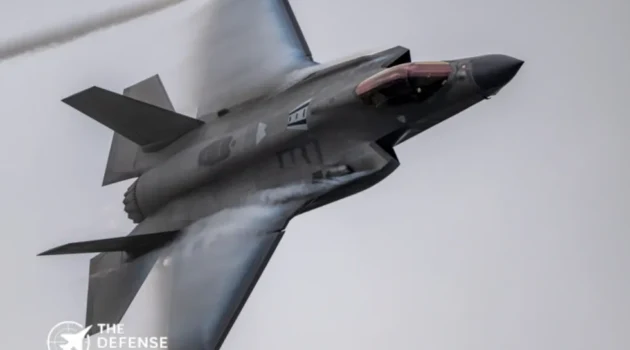

Türkiye is considering the return of its Russian-made S-400 air defense systems as part of renewed efforts to rejoin the U.S.-led F-35 fighter jet program. The development, reported in late 2025, marks one of the clearest signals yet that Ankara may be willing to revisit a defense decision that reshaped its relationship with Washington and NATO allies.
The discussions are still at an exploratory stage and no formal decision has been announced. Turkish officials have framed the issue as part of broader talks with the United States on defense cooperation, sanctions relief, and future military procurement.
Background to the S-400 and F-35 Dispute
Türkiye was removed from the F-35 program in 2019 after it took delivery of the S-400 air defense systems from Russia. The United States argued that operating the S-400 alongside NATO aircraft posed intelligence and security risks, particularly for the stealth features of the F-35.
Following the S-400 acquisition, Washington imposed sanctions under the Countering America’s Adversaries Through Sanctions Act, targeting Türkiye’s defense procurement agency. Ankara has consistently stated that the S-400 purchase was driven by urgent air defense needs after failing to secure favorable terms for U.S. Patriot systems at the time.
The Turkey S-400 F-35 dispute has since become a central issue in U.S.-Turkish defense relations.
Signals of a Policy Shift
Recent remarks from Turkish officials suggest Ankara is reassessing options that could unblock cooperation with the United States. One option under discussion is the physical return or long-term storage of the S-400 systems outside Türkiye, potentially under third-party oversight.
While Ankara has not confirmed any final plan, officials have emphasized that Türkiye remains committed to NATO and wants to restore trust with allies. The possibility of returning the systems is being evaluated alongside other confidence-building measures.
For Washington, the status of the S-400 remains a key condition for any discussion about Türkiye’s return to the F-35 program or lifting existing sanctions.
Strategic Importance of the F-35 for Türkiye
Before its removal, Türkiye was a Level 3 partner in the F-35 program and planned to acquire at least 100 aircraft. Turkish companies were also involved in manufacturing hundreds of F-35 components, contributing to the global supply chain.
The loss of access to the fifth-generation fighter created a capability gap for the Turkish Air Force, which has since relied on upgraded F-16s and domestic projects such as the KAAN next-generation fighter. Despite progress on local programs, the F-35 remains a benchmark for air superiority within NATO.
Reentry into the program would significantly enhance Türkiye’s air power and interoperability with U.S. and allied forces.
U.S. Position and Policy Considerations
U.S. officials have reiterated that the presence of S-400 air defense systems in Türkiye is incompatible with the operation of the F-35. Any move to rejoin the program would require verifiable steps to remove the systems from Turkish control.
At the same time, Washington has shown interest in stabilizing relations with Ankara, particularly given regional security challenges in the Black Sea, Middle East, and Eastern Mediterranean. Congressional approval would still be required for any major shift in U.S. policy toward Türkiye.
The Turkey S-400 F-35 issue is therefore as much a political decision as a technical one.
Expert and Security Perspectives
Defense analysts note that returning the S-400 systems would carry political costs for Ankara, both domestically and in its relations with Moscow. However, they also point out that restoring access to Western defense technology could outweigh those costs over the long term.
Experts describe the current talks as a test of whether both sides are willing to compromise after years of strained relations. Any agreement would likely involve phased steps, inspections, and legal assurances to satisfy U.S. security concerns.
What Comes Next
No timeline has been announced for a decision, and negotiations could extend well into 2026. Even if Türkiye proceeds with returning the S-400 systems, rejoining the F-35 program would require lengthy reviews and political approval in Washington.
Still, the renewed dialogue suggests a shift toward pragmatic engagement. For NATO, resolving the Turkey S-400 F-35 dispute could strengthen alliance cohesion at a time of heightened global security pressures.
