
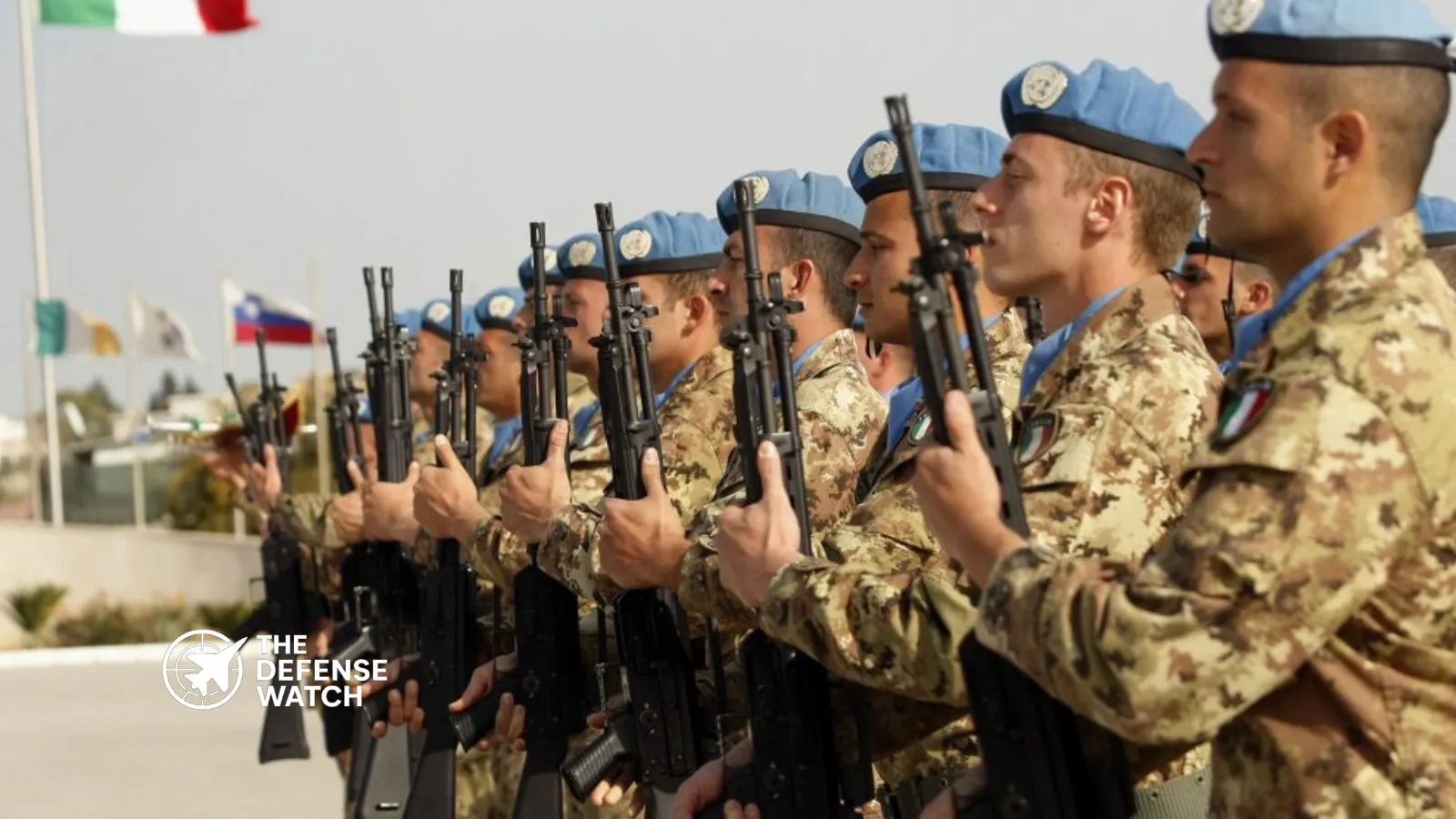
- ► Italy is considering adding up to 100,000 personnel to its armed forces, according to a government document reported by Reuters.
- ► The proposal would significantly raise troop levels above current authorized strength across land, air, and naval services.
- ► The move reflects broader European efforts to reinforce deterrence amid heightened security concerns.
- ► Italy remains a key NATO member with responsibilities on the alliance’s southern flank and Mediterranean theater.
- ► Any expansion would require political approval and sustained funding under Italy’s defense budget framework.
Italy Armed Forces Expansion Under Review
Italy armed forces expansion plans are under consideration following a government document that outlines a potential increase of up to 100,000 personnel, according to a report by Reuters.
The document signals a possible shift in Rome’s defense posture at a time when European security dynamics remain strained. While no final decision has been announced, the scale of the proposed increase would mark one of the most significant manpower adjustments in recent Italian military history.
Italy’s current authorized force structure, which has undergone reductions over the past decade, was designed around leaner, professional units. Expanding by 100,000 troops would require structural reforms, recruitment drives, and sustained financial commitments.
Strategic Context: NATO And European Security
Italy is a founding member of NATO and plays a central role in alliance operations across Southern Europe and the Mediterranean. It contributes to air policing missions, naval deployments, and multinational battlegroups.
In recent years, NATO has emphasized readiness, force generation, and high availability formations in response to Russia’s war in Ukraine and broader instability along Europe’s periphery. Several European states have already announced increases in defense spending and personnel levels.
Within this context, Italy armed forces expansion discussions align with a broader continental trend toward strengthening conventional deterrence.
Manpower, Readiness, And Operational Gaps
Italy’s armed forces currently consist of the Army, Navy, Air Force, and Carabinieri. Over the past decade, reforms aimed at professionalization reduced overall troop numbers while prioritizing deployable units.
However, force reductions have at times strained readiness cycles. High operational tempo in overseas missions, maritime security patrols, and NATO commitments has placed pressure on available manpower.
If implemented, the proposed 100,000 troop increase could address several structural gaps:
- Reinforcing territorial defense capabilities
- Expanding rapid reaction units
- Supporting logistics and sustainment formations
- Strengthening cyber and support roles
From a planning perspective, manpower expansion is only one element. Equipment modernization, infrastructure upgrades, and training capacity would also need parallel investment.
Budgetary Considerations
Italy has gradually increased defense spending in line with NATO’s 2 percent of GDP guideline, though it has historically spent below that threshold. Expanding personnel numbers on the scale outlined would have long term fiscal implications.
Personnel costs account for a significant share of Italy’s defense budget. Salaries, pensions, healthcare, housing, and training all contribute to recurring expenditures.
Any meaningful Italy armed forces expansion would therefore require parliamentary backing and multi year financial planning. Without sustained funding, force growth risks becoming structurally imbalanced, with personnel levels rising faster than equipment modernization.
Mediterranean Focus And Southern Flank
Italy’s geostrategic position places it at the center of Mediterranean security dynamics. Maritime routes, migration flows, and instability in North Africa all shape Rome’s defense planning.
An expanded force structure could strengthen Italy’s capacity to respond to crises along NATO’s southern flank. Naval and amphibious units in particular play a central role in projecting stability and supporting alliance operations.
Rome also maintains expeditionary capabilities and has contributed to missions in the Balkans, the Middle East, and Africa. Increasing manpower may offer greater rotational flexibility and reduce operational strain on existing units.
Political And Institutional Path Ahead
At this stage, the Italy armed forces expansion proposal remains part of a government document and has not been enacted into law. Parliamentary debate and interministerial coordination would be required before implementation.
Defense reform in Italy has historically involved careful negotiation between the Ministry of Defense, the Treasury, and political stakeholders. Force structure changes often unfold over multi year timelines.
According to Reuters, the document reflects internal planning considerations rather than an immediate deployment order. The final outcome will depend on fiscal constraints, political consensus, and evolving security assessments.
Analysis: Structural Shift Or Strategic Adjustment
The scale of the proposed increase suggests more than a routine adjustment. Adding up to 100,000 personnel would significantly reshape Italy’s defense profile.
Yet manpower alone does not define combat effectiveness. Modern military power depends on integrated capabilities, including advanced aircraft, naval platforms, cyber defense, and command networks.
If aligned with modernization programs, Italy armed forces expansion could enhance deterrence credibility within NATO. If not matched by equipment and readiness investment, the initiative could face structural inefficiencies.
Ultimately, the proposal underscores a broader European recalibration of defense policy. As security challenges evolve, force size is once again becoming central to strategic debate.
For Italy, the question is not only how many troops it fields, but how effectively they are trained, equipped, and integrated into alliance operations.
Get real time update about this post category directly on your device, subscribe now.
