
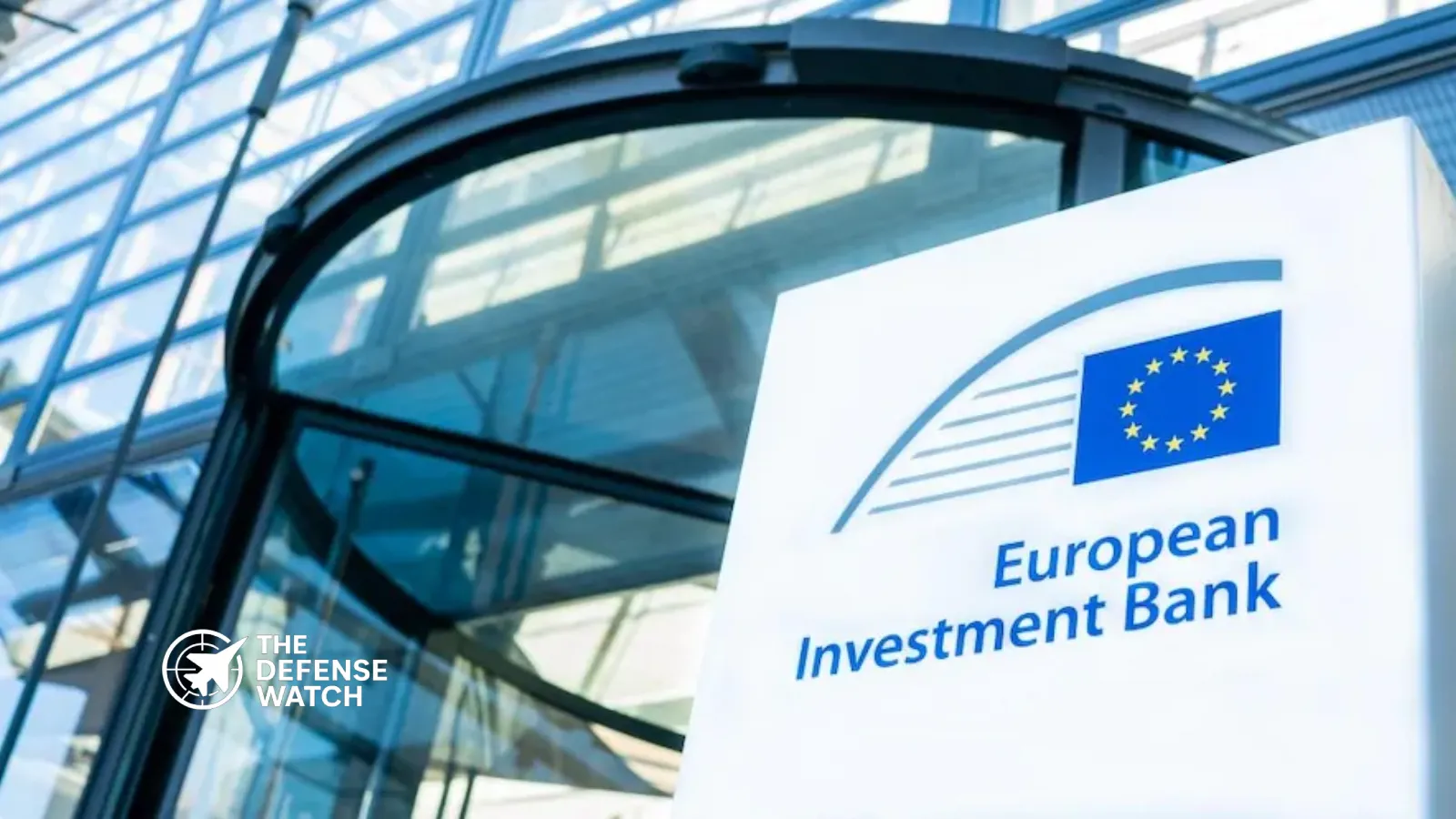
- ► European Investment Fund commits €50 million under InvestEU Defence Equity Facility.
- ► Funding supports Join Capital Fund III targeting European deeptech and dual use startups.
- ► Focus areas include advanced materials, AI, space, robotics, and security technologies.
- ► Investment aims to close financing gaps for sensitive and strategically critical sectors.
- ► Move reflects broader EU push to strengthen technological sovereignty and defense readiness.
European Investment Fund Commits €50 Million Under InvestEU Defence Equity Facility
The InvestEU Defence Equity Facility received a €50 million boost from the European Investment Fund, marking a significant step in Europe’s effort to scale dual use and defense focused deeptech companies.
According to an official release from the European Investment Fund, the commitment will support Join Capital Fund III, a venture capital vehicle targeting early stage European deeptech firms with applications across both civilian and defense markets.
The investment is backed by the European Union under the InvestEU program, specifically through its Defence Equity Facility window. The mechanism is designed to address long standing funding gaps for startups developing sensitive or strategically critical technologies.
Strategic Context: Why The InvestEU Defence Equity Facility Matters
The InvestEU Defence Equity Facility is part of a broader European effort to strengthen industrial resilience and technological sovereignty. For years, European defense startups have faced limited access to private capital due to regulatory complexity, export controls, and investor caution around military applications.
By channeling capital through the European Investment Fund, the EU aims to de risk private investment and send a signal that defense and dual use innovation are now core policy priorities.
Join Capital Fund III will focus on early stage companies developing advanced technologies such as artificial intelligence, autonomous systems, robotics, space infrastructure, advanced materials, and secure communications. These sectors are increasingly viewed as critical to both economic competitiveness and military capability.
From a defense perspective, the move aligns with parallel EU initiatives such as the European Defence Fund and national modernization programs across member states. While the United States has long relied on a mature venture capital ecosystem to fuel dual use breakthroughs, Europe has historically lagged in scaling similar firms.
The InvestEU Defence Equity Facility attempts to close that gap.
Policy Shift Toward Dual Use Acceptance
The €50 million commitment reflects a noticeable shift in EU political and financial attitudes toward defense technology. Previously, institutional investors often avoided companies with military exposure, citing environmental, social, and governance constraints.
However, Russia’s war in Ukraine and heightened geopolitical competition have altered that calculus. European policymakers now frame dual use innovation as essential to security and resilience.
The European Investment Fund’s participation provides credibility and risk sharing that can attract additional private investors. Under the InvestEU structure, EU budget guarantees help reduce downside exposure, making it easier for venture funds to operate in sensitive sectors.
For defense planners, this matters. Many emerging capabilities such as autonomous drones, AI enabled battlefield management systems, space based ISR, and quantum secure communications originate in small venture backed firms rather than traditional primes.
Without capital access, those companies struggle to scale production or transition from prototype to operational deployment.
Implications For European Defense Industry
The InvestEU Defence Equity Facility may not rival U.S. defense venture flows in scale, but it marks institutional normalization of defense investment at the EU level.
If sustained, the model could strengthen Europe’s industrial base in several ways:
First, it supports indigenous supply chains in critical technologies, reducing dependence on non EU providers.
Second, it increases competition and innovation within the European defense market, which remains fragmented across national lines.
Third, it provides earlier lifecycle funding, enabling startups to mature before seeking larger growth capital rounds.
For U.S. observers, the development highlights a structural change in Europe’s approach to defense financing. Rather than relying solely on state procurement budgets, the EU is attempting to mobilize private capital alongside public guarantees.
That hybrid model mirrors aspects of the American ecosystem, where venture capital, Pentagon contracts, and private sector demand intersect.
What Comes Next
The European Investment Fund’s €50 million commitment to the InvestEU Defence Equity Facility is likely to be one of several similar transactions as Brussels expands its defense oriented financial instruments.
The real test will be execution. Capital availability alone does not guarantee scalable defense capability. Regulatory harmonization, export alignment, and procurement reform remain critical.
Still, the signal is clear. Europe is actively building a more structured pipeline for defense and dual use innovation financing.
For startups operating in AI, space, cyber, advanced manufacturing, and autonomous systems, the InvestEU Defence Equity Facility may represent a new phase of predictable institutional backing.
Get real time update about this post category directly on your device, subscribe now.
