The U.S. Navy has awarded DRS Systems Inc. a $19.78 million contract order to expand testing infrastructure for its Distributed Aperture Infrared Countermeasure (DAIRCM) system, an aircraft protection suite designed to detect and counter infrared-guided missile threats.
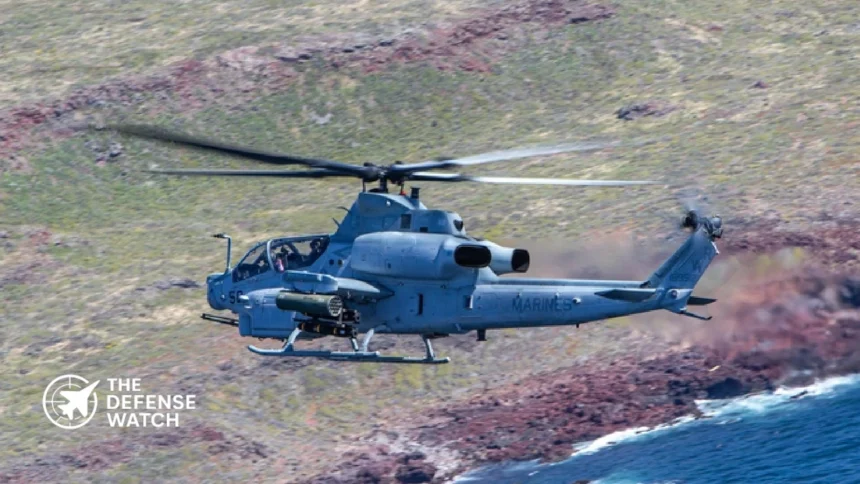
The November 23, 2026, award covers five far-field test stations, additional laser equipment, fiber-optic components and integration hardware supporting the AN/AAQ-45 DAIRCM program. The equipment package also includes components specifically identified for integration with the Marine Corps’ AH-1Z Viper attack helicopter.
Naval Air Systems Command (NAVAIR), based at Patuxent River, Maryland, issued the firm-fixed-price order to DRS Systems under an existing basic ordering agreement, N0001924G0001. The order carries contract number N0001927F1006 and has an expected completion date of November 2027.
What the $19.78 Million Order Covers
The procurement focuses on test equipment and supporting components rather than a direct purchase of additional operational helicopter countermeasure systems.
The Navy’s order includes:
| Equipment | Quantity |
|---|---|
| Far-field test stations | 5 |
| Fiber-optic cable assembly kits for AH-1Z integration | 2 |
| Fiber adapter sets | 4 |
| Laser Two assemblies | 2 |
| Laser Two sources | 8 |
| Associated hardware and data deliverables | As required |
The five far-field test stations are particularly relevant because they expand the infrastructure available to support DAIRCM testing.
The Navy has not publicly specified the individual performance requirements, testing throughput or expected production increase associated with these stations. However, the equipment package is intended to expand testing capacity for the wider DAIRCM effort.
The distinction matters. Increasing test capacity can support production and integration activities, but the contract announcement does not establish a specific increase in completed DAIRCM units or aircraft deliveries.
Why DAIRCM Matters to AH-1Z Survivability
The AN/AAQ-45 Distributed Aperture Infrared Countermeasure system is an aircraft survivability suite developed for smaller and medium-sized military aircraft, particularly rotary-wing platforms with demanding size, weight and power requirements.
Its defensive architecture combines several functions:
- Missile warning and infrared threat detection.
- Laser warning.
- Hostile-fire indication.
- Directed infrared countermeasures designed to disrupt incoming infrared-guided missiles.
Unlike conventional expendable countermeasures that release flares, DAIRCM uses a directed-energy infrared countermeasure approach. Its warning sensors and processing equipment identify potential threats and support the system’s response.
The U.S. Department of Defense’s Director, Operational Test and Evaluation (DOT&E) reported in its FY2020 annual report that testing demonstrated the system’s capability against the required man-portable air-defense system threats identified in the relevant urgent operational needs requirement.
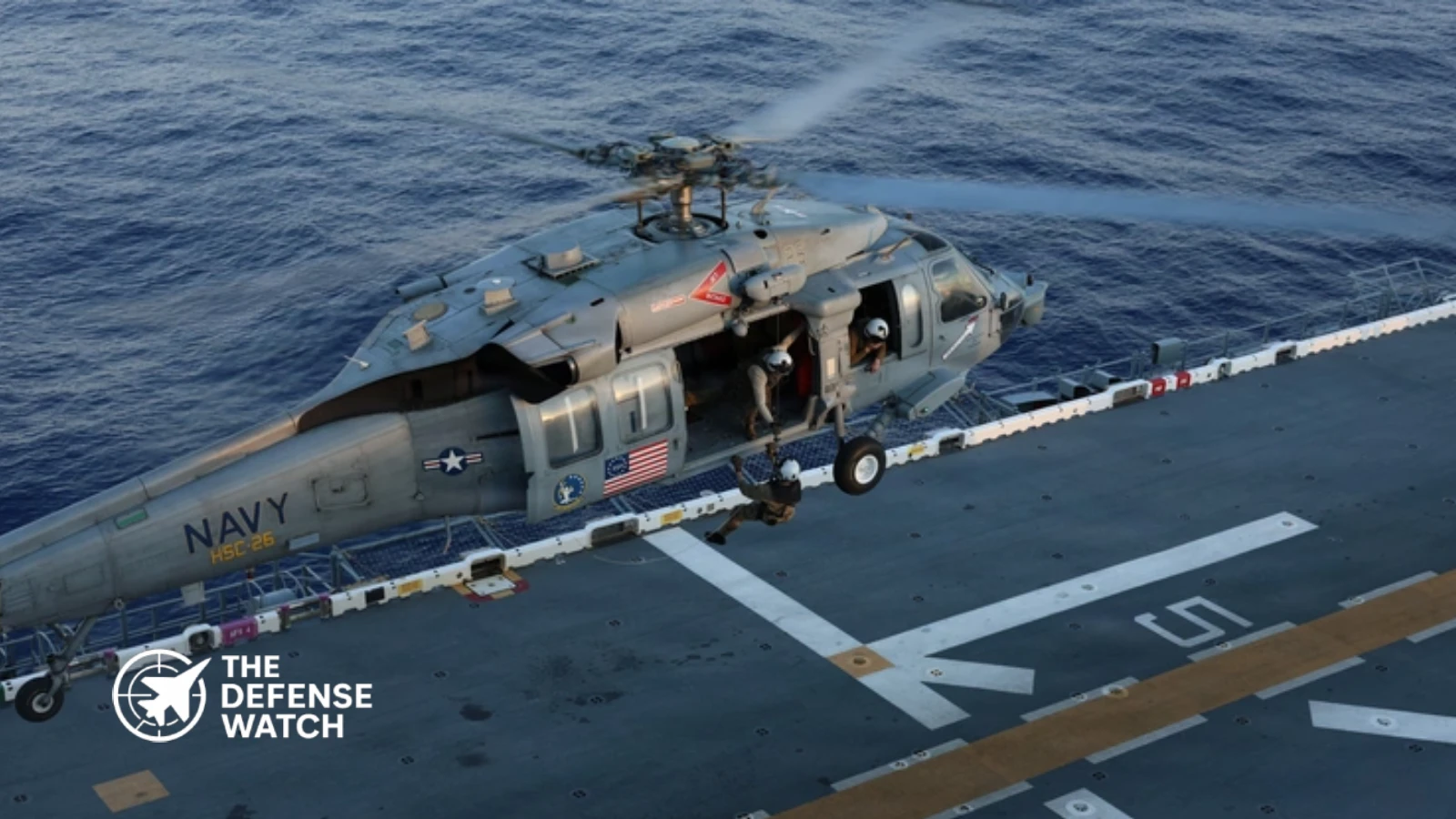
The report also documented testing on the MH-60S, UH-1Y and AH-1Z helicopters. It recorded a Marine Corps fielding decision for the AH-1Z and UH-1Y in February 2020.
For the AH-1Z, the system provides an additional layer of protection against infrared-guided weapons, which remain a concern for helicopters operating at relatively low altitudes and within range of ground-based air defenses.
A Larger DAIRCM Production Effort
The new testing equipment order follows a much larger Navy procurement effort involving DRS Systems.
In March 2026, the Navy awarded DRS Systems a $533.29 million contract for DAIRCM production and associated support. That contract covered production of weapons-replaceable and shop-replaceable assemblies, including specified sensors, processors, laser equipment and fiber-optic components.
It also included engineering support, multispectral test sets, field service representatives and test-station upgrades. The production contract supports the Navy and Army and has an expected completion date of April 2030.
The November order is separate from that larger production agreement. Its focus is on additional testing equipment and AH-1Z integration components.
Taken together, the two awards show that the Navy is addressing both equipment production and the supporting infrastructure needed to test and integrate DAIRCM hardware.
This is important because aircraft protection systems involve more than installing sensors and countermeasure equipment. Their components must function as an integrated package, and testing capacity is necessary to support equipment evaluation, integration and production activities.
Contract Funding and Procurement Details
The $19,783,659 order will be funded through two Navy appropriations.
| Funding source | Amount |
|---|---|
| FY2027 Aircraft Procurement, Navy | $18,107,705 |
| FY2026 Research, Development, Test and Evaluation, Navy | $1,675,954 |
| Total | $19,783,659 |
The full amount is scheduled to be obligated at the time of award.
Work will be distributed across two locations:
- San Diego, California: 60%
- Dallas, Texas: 40%
The order was not competitively procured.
An earlier Navy solicitation notice for this testing equipment requirement identified DRS as the sole designer, developer and manufacturer of the relevant equipment. It also stated that the government did not possess a technical data package for the AN/AAQ-45 suitable for competitive procurement.
This provides procurement context for the decision to continue working with DRS, although the contract announcement itself does not provide a new detailed justification for the award.
Testing Capacity Is a Key Part of Aircraft Protection Modernization
The latest order does not announce a new DAIRCM variant, additional aircraft installations or a change in the system’s operational capabilities.
Its importance lies in the supporting infrastructure.
As the Navy and Marine Corps continue procuring aircraft survivability equipment, sufficient testing resources are necessary to evaluate components and support integration across different helicopter platforms.
The AH-1Z-specific fiber-optic assembly kits also show that the new procurement includes equipment directly associated with integrating the countermeasure system into the Marine Corps attack helicopter.
With completion scheduled for November 2027, the contract adds another supporting element to the Navy’s wider DAIRCM production and integration effort.
Whether the additional stations will shorten testing timelines or increase production throughput has not been publicly established.
Enjoying our coverage?
Make The Defense Watch a preferred source on Google to see more of our geopolitical and defense insights when relevant to you.