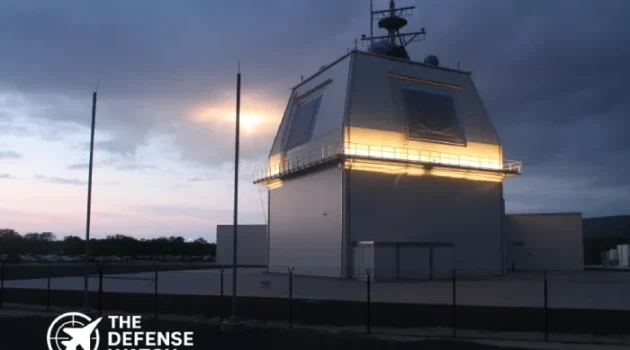
US Japan SPY 7 Radar Manufacturing Activated For Aegis System Equipped Vessels
The US Japan SPY 7 radar partnership has formally entered the manufacturing phase, marking a key milestone in bilateral missile defense cooperation tied to Aegis system equipped vessels.
According to information released by industry and defense officials, the activation of manufacturing centers on localized production and integration of the AN/SPY-7(V)1 radar for Japan’s next generation Aegis platforms. The effort supports both operational readiness and long term supply chain resilience.
The radar will be produced in cooperation with Lockheed Martin and Japanese industry partners as part of Tokyo’s broader missile defense modernization plan.
What The SPY 7 Radar Brings To Aegis Platforms
The SPY 7 is an advanced solid state radar designed for ballistic missile defense, air surveillance, and integrated fire control. It is built on scalable Gallium Nitride technology, enabling higher sensitivity, improved discrimination, and better tracking of complex missile threats.
Japan selected SPY 7 for its new Aegis system equipped vessels following earlier plans for land based Aegis Ashore sites. The maritime configuration is intended to provide persistent coverage while offering greater flexibility.
The radar integrates with the Aegis Combat System, which forms the backbone of US and allied naval missile defense architecture. Aegis enables simultaneous tracking and engagement of multiple air and missile threats.
According to program details previously released by Lockheed Martin and Japan’s Ministry of Defense, SPY 7 is optimized for ballistic missile defense missions, including detection and tracking of medium and intermediate range ballistic missiles.
Strengthening US Japan Missile Defense Cooperation
The US Japan SPY 7 radar manufacturing initiative reflects deepening defense industrial integration between the two allies. Japan has long operated Aegis destroyers equipped with earlier SPY radar variants, but local production of SPY 7 marks a step forward in industrial collaboration.
The move aligns with commitments under the US Japan security alliance, which remains a central pillar of regional stability in the Indo Pacific. Missile defense cooperation has expanded steadily in response to evolving regional threat dynamics.
Officials have repeatedly emphasized the importance of interoperable systems. By aligning SPY 7 production and integration standards, both nations aim to ensure seamless operational compatibility across fleets.
The manufacturing activation also supports Japan’s broader defense posture reforms, including increased defense spending and new counterstrike capabilities.
Industrial Footprint And Technology Transfer
Under the arrangement, Japanese industry will play a growing role in component production and system integration. This includes radar module assembly and potential sustainment activities over the lifecycle of the system.
Lockheed Martin has described SPY 7 as a modular radar architecture adaptable for naval and land based configurations. Beyond Japan, variants of SPY 7 have been selected by other allied nations for advanced air and missile defense missions.
Local production helps mitigate supply chain risks and reduces long term maintenance dependence on overseas facilities. It also aligns with Japan’s stated objective of strengthening its domestic defense industrial base.
Operational Role On Japan’s Aegis System Equipped Vessels
Japan’s new Aegis system equipped vessels are expected to provide continuous ballistic missile defense coverage around the archipelago. These ships will supplement existing Aegis destroyers operated by the Japan Maritime Self Defense Force.
The SPY 7 radar will serve as the primary sensor for long range detection and tracking, feeding data into intercept systems capable of engaging incoming threats in midcourse or terminal phases.
Through integration with the broader Aegis architecture, SPY 7 supports layered missile defense. This includes coordination with interceptor missiles and command and control networks.
The US Navy has extensive experience operating Aegis equipped ships, and interoperability remains a core objective. The shared radar lineage enhances joint operational planning and combined exercises.
Broader Regional Implications
The activation of SPY 7 radar manufacturing comes amid heightened missile development activity across the Indo Pacific. Regional actors continue to field advanced ballistic and cruise missile systems, increasing the demand for sophisticated detection and tracking capabilities.
Missile defense cooperation between Washington and Tokyo has expanded over the past decade, including joint development of interceptor technologies and sensor networks.
The SPY 7 program reinforces a broader strategic alignment focused on deterrence and collective defense. By deepening technology sharing and industrial coordination, both governments aim to sustain long term readiness.
Program Outlook
While officials have not publicly detailed full production timelines, manufacturing activation signals the transition from planning and design to sustained industrial output.
Future milestones are expected to include radar module delivery, system integration testing, and sea trials aboard Japan’s Aegis system equipped vessels.
As the US Japan SPY 7 radar program advances, it is likely to remain a focal point of allied missile defense cooperation in the region.
Get real time update about this post category directly on your device, subscribe now.