
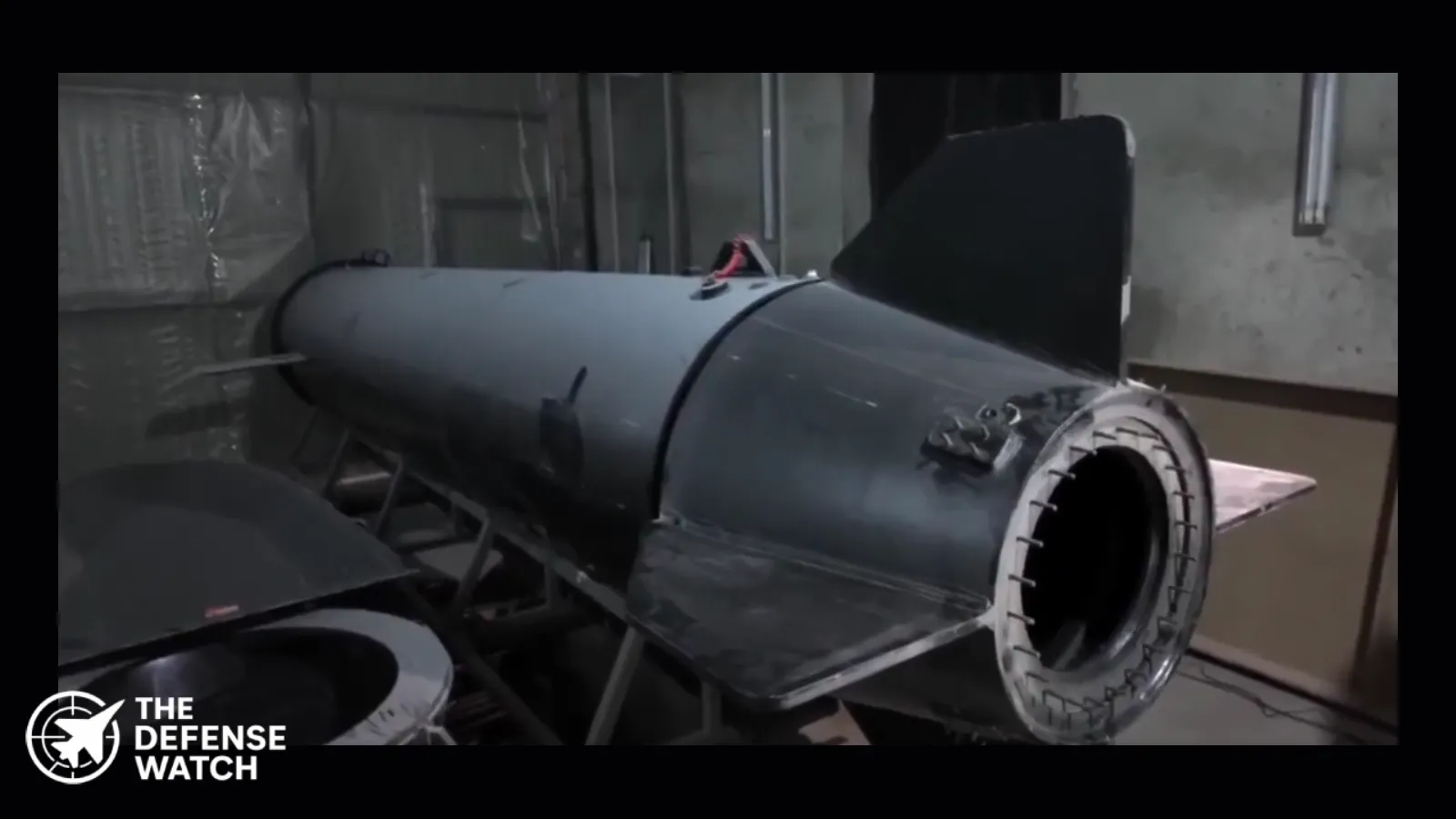
Marichka underwater drone marks a new phase in Ukraine’s naval warfare strategy
Ukraine has unveiled the Marichka underwater drone, a domestically produced autonomous maritime strike system designed to operate at long range and deliver heavy explosive payloads against naval and coastal targets. The system has been announced as ready for operational use by Ukrainian developer Aquatechnics, marking a notable expansion of Kyiv’s underwater warfare capabilities amid the ongoing conflict with Russia.
According to information released by the company and Ukrainian media, the Marichka underwater drone is designed to target ports, bridges, large surface combatants, and amphibious landing vessels at distances of up to 1000 kilometers. The announcement reinforces Ukraine’s continued emphasis on asymmetric naval capabilities following the success of earlier surface and semi submersible naval drones in the Black Sea.
Development and Operational Concept
The Marichka underwater drone has been developed as a fully autonomous system capable of long duration missions beneath the surface. Aquatechnics states that the platform relies on an inertial navigation system, allowing it to operate without external signals and reducing vulnerability to electronic warfare or satellite denial environments.
Unlike surface drones, which can be detected visually or by radar, an underwater platform operating at low acoustic signatures presents a more complex detection challenge. The company claims the drone is powered by noiseless electric engines designed to minimize acoustic emissions, allowing it to remain undetected during transit and while loitering near target areas.
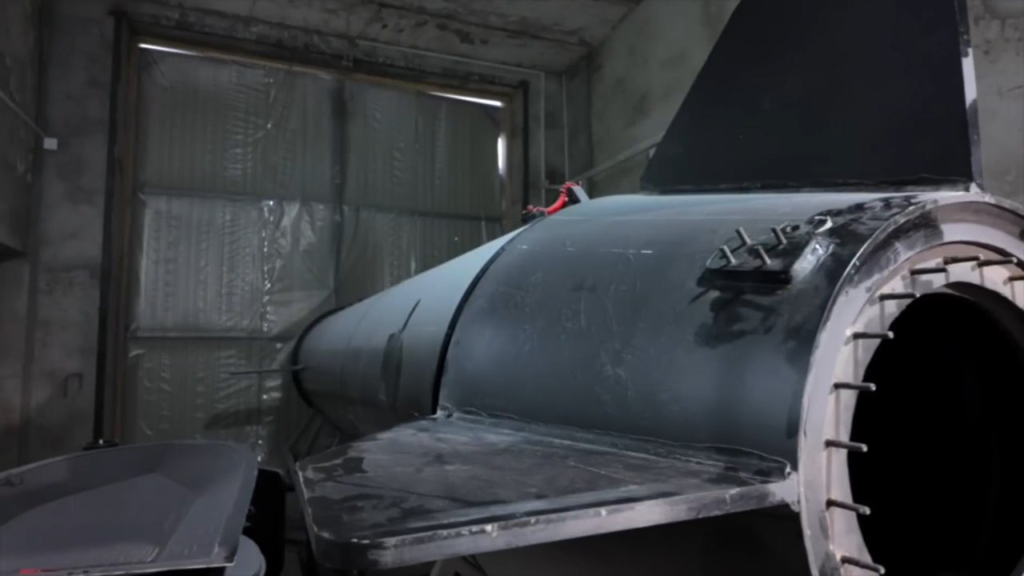
Aquatechnics further states that Marichka can pause movement and remain stationary on the seabed or at depth for extended periods, potentially days or weeks, before resuming its mission. This capability suggests a design optimized for delayed strike operations and maritime area denial rather than rapid attack alone.
Technical Specifications Provided by Developer
Based on information released by Aquatechnics and Ukrainian defense focused outlets, the Marichka underwater drone is described with the following characteristics.
The drone reportedly carries a combat charge exceeding 1000 kilograms, indicating a payload mass comparable to large naval mines or heavyweight torpedoes. Its cruising speed is listed at approximately 10 kilometers per hour, consistent with endurance focused underwater platforms rather than high speed intercept systems.
The stated operational range of 1000 kilometers positions Marichka among the longest range autonomous underwater strike systems publicly acknowledged by a non major naval power. The drone is described as capable of using different explosive configurations depending on mission requirements, though no further technical detail has been disclosed.
Ukrainian officials have not released information on production numbers, unit cost, or deployment timelines. The performance claims have not been independently verified by external observers.
Role in Ukraine’s Naval Strategy
Ukraine has increasingly relied on unmanned maritime systems to compensate for the absence of a large conventional navy. Since 2022, Ukrainian surface drones have been used to attack Russian warships, logistics vessels, and port infrastructure, contributing to the withdrawal of several Russian naval assets from occupied Crimean ports.
The introduction of the Marichka underwater drone indicates a deliberate move toward deeper undersea strike capabilities. An autonomous underwater platform expands Ukraine’s ability to threaten high value maritime targets in defended ports and narrow waterways where surface drones face increased risk from physical barriers and defensive fire.
From a strategic perspective, underwater drones also complicate defensive planning for adversaries, requiring investments in sonar coverage, anti diver systems, and undersea surveillance that are difficult to deploy comprehensively across large coastal areas.
Comparison With Existing Naval Drones
Ukraine has previously fielded surface based maritime drones such as the Sea Baby and Magura V5, which have been widely documented attacking Russian vessels in the Black Sea. These systems prioritize speed and direct impact against exposed targets.
Marichka appears to occupy a different operational niche. Its emphasis on endurance, stealth, and heavy payload suggests a role closer to that of a mobile underwater mine or loitering torpedo rather than a fast attack craft. This diversification mirrors broader global trends in naval warfare, where unmanned underwater vehicles are increasingly used for strike, reconnaissance, and seabed warfare missions.
Western navies, including those of the United States and NATO allies, have invested heavily in large displacement unmanned underwater vehicles for intelligence and strike support roles. Ukraine’s development indicates that similar concepts are being adapted under wartime conditions using domestic industrial capacity.
Industrial and Technological Context
Aquatechnics is part of a growing ecosystem of Ukrainian defense technology firms that have emerged or expanded rapidly since the start of the full scale invasion. Ukraine’s defense industry has increasingly focused on rapid prototyping, domestic production, and battlefield driven innovation rather than traditional acquisition cycles.
Ukrainian officials have repeatedly emphasized the importance of sovereign production for critical systems, particularly those vulnerable to export controls or supply chain disruptions. Underwater drones represent a segment where domestic development can provide strategic leverage without reliance on foreign suppliers.
No information has been released regarding foreign assistance or technology transfer related to Marichka’s development.
Operational Risks and Limitations
While the announced specifications are significant, underwater drones face inherent operational challenges. Navigation accuracy over long distances without external updates, endurance limits imposed by battery capacity, and vulnerability to seabed obstacles or countermeasures all shape real world effectiveness.
Inertial navigation systems can accumulate positional drift over extended missions, potentially reducing strike accuracy unless combined with terminal guidance. Aquatechnics has not disclosed whether Marichka incorporates additional navigation aids or target acquisition sensors.
Despite these constraints, even limited deployment could force adversaries to allocate resources to undersea defense, producing strategic effects beyond the number of systems fielded.
Strategic Implications
The unveiling of the Marichka underwater drone underscores Ukraine’s continued emphasis on innovation in unmanned warfare across air, land, and sea domains. By expanding into autonomous underwater strike systems, Kyiv signals intent to contest maritime spaces that have traditionally favored larger navies.
For regional security in the Black Sea, the development adds another layer of complexity to naval operations and port security planning. For defense observers, Marichka highlights how mid sized states under pressure are accelerating adoption of undersea autonomous weapons once limited to major naval powers.
Get real time update about this post category directly on your device, subscribe now.
