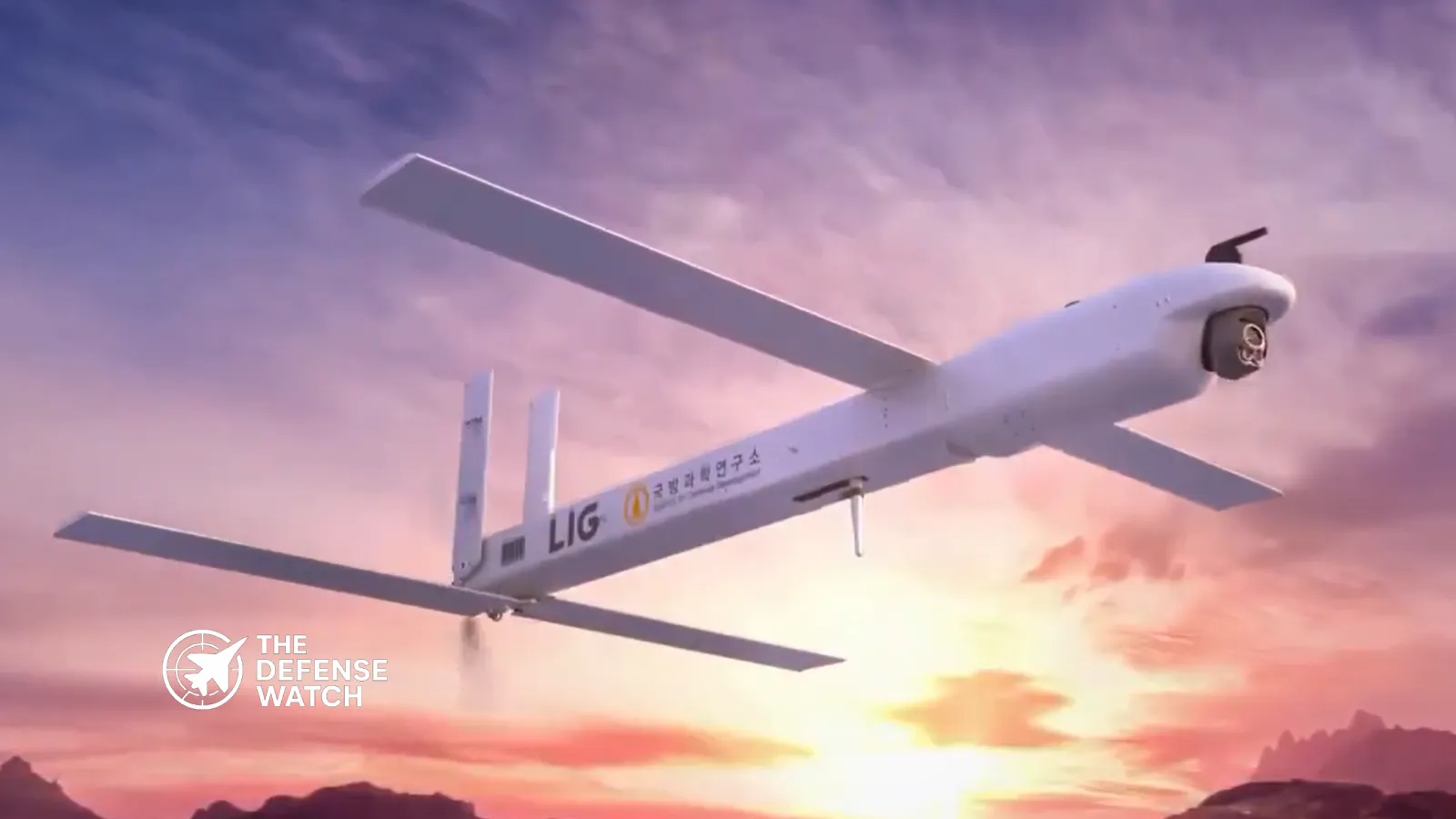
- South Korea’s Agency for Defense Development plans to complete the S-9 swarm drone development in October.
- The S-9 system uses dozens of coordinated drones equipped with AI-based automatic target recognition capabilities.
- The drone swarm can conduct reconnaissance, strike, re-attack, and recovery missions in coordinated formations.
- South Korean defense contractor LIG Nex1 is developing the system alongside ADD as part of the S-series drone program.
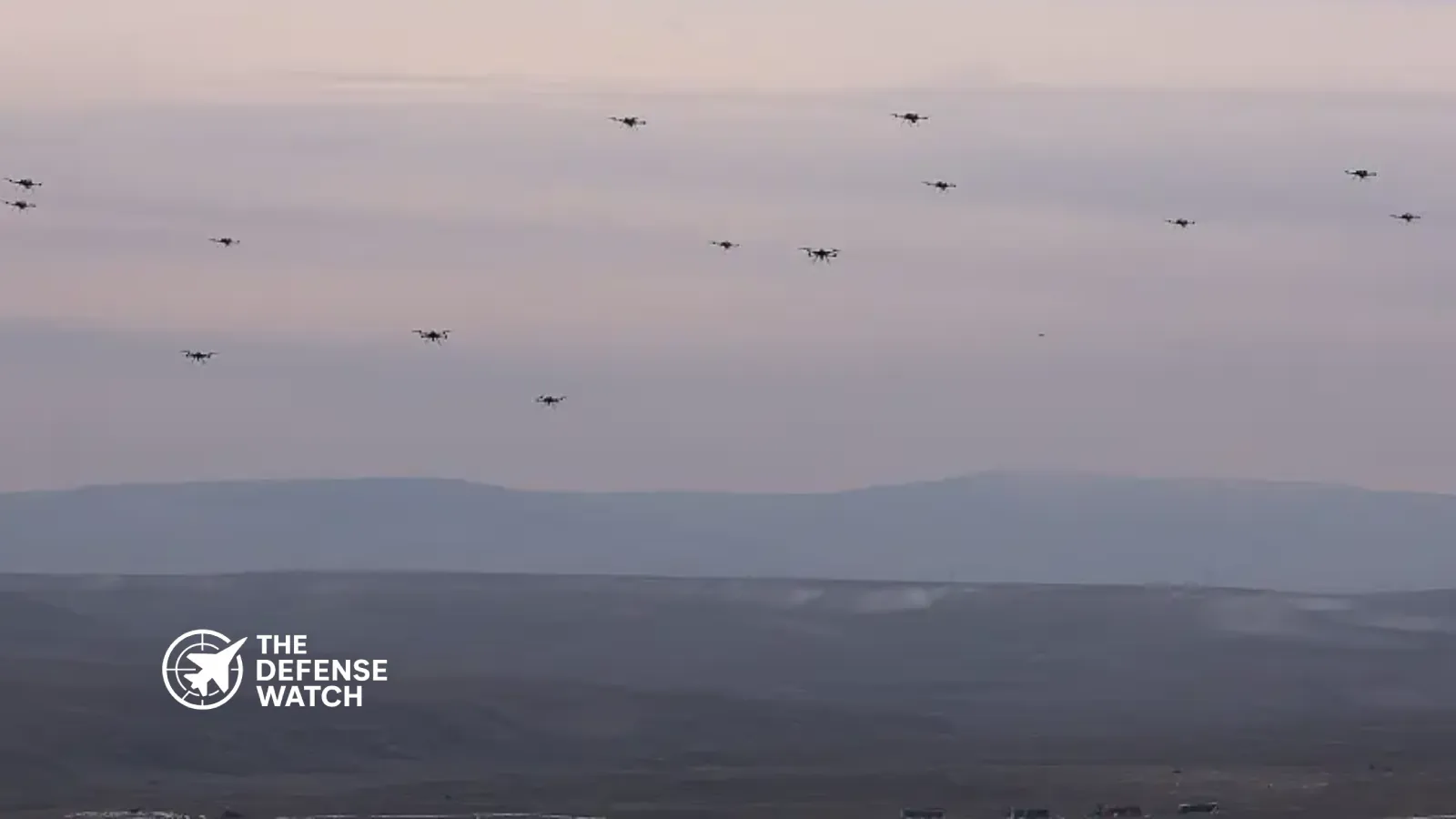
- The system can also operate in a rocket artillery style mass launch configuration for saturation attacks.
South Korea’s S-9 Swarm Drone Program Approaches Development Milestone
South Korea’s S-9 swarm drone program is approaching a key development milestone as the country’s Agency for Defense Development (ADD) plans to complete the system’s development in October this year. The project, developed in cooperation with South Korean defense contractor LIG Nex1, represents a significant step toward operational autonomous drone swarm capabilities within the Republic of Korea’s military modernization strategy.
The S-9 is part of ADD’s broader S-series unmanned systems initiative, which focuses on deploying coordinated drone formations capable of reconnaissance, strike operations, and autonomous targeting using artificial intelligence.
If successfully deployed, the S-9 swarm drone could provide South Korea with a new class of low-cost, scalable strike capability designed to overwhelm adversary defenses through mass and coordination.
The Big Picture
Drone swarm technology is emerging as one of the most significant transformations in modern warfare. Militaries worldwide are investing in autonomous or semi-autonomous unmanned systems capable of operating in coordinated groups rather than as individual platforms.
Swarm systems allow commanders to deploy dozens, or potentially hundreds, of small drones simultaneously. These systems can perform reconnaissance, electronic warfare, and precision strike missions while complicating enemy air defense responses.
South Korea’s S-9 swarm drone program reflects this global trend. Countries including the United States, China, Israel, and Türkiye are pursuing similar technologies designed to combine artificial intelligence with distributed unmanned systems.
For South Korea, the operational logic is particularly clear. The Korean Peninsula features dense air defenses, hardened military infrastructure, and a large concentration of artillery and missile assets. Swarm drones offer a potential method to penetrate or saturate these defensive networks.
What’s Happening
The S-9 swarm drone is currently under development by the Agency for Defense Development in cooperation with LIG Nex1, one of South Korea’s leading defense electronics and missile system manufacturers.
According to available information, the system is designed to deploy several dozen drones that can operate in coordinated formations. The drones rely on artificial intelligence based automatic target recognition technology, allowing them to identify, track, and engage targets with limited operator intervention.
Key capabilities reported for the S-9 system include:
Reconnaissance and surveillance missions
Precision strike operations
Re-attack capability after an initial strike attempt
Drone recovery operations
Mass launch deployment similar to rocket artilleryDemonstration footage suggests the drones can be launched in large groups, enabling a rapid saturation attack profile that mirrors the operational concept of multiple launch rocket systems.
The program remains under development, with ADD targeting completion in October. Additional testing phases are expected before operational deployment with South Korean armed forces.
Why It Matters
The S-9 swarm drone highlights a shift in how militaries approach precision strike and reconnaissance missions.
Traditional strike platforms such as fighter aircraft or cruise missiles are expensive and often limited in number. Drone swarms offer a more scalable alternative. A large number of smaller unmanned systems can achieve similar operational effects at lower cost while creating greater complexity for enemy defenses.
Autonomous target recognition also reduces the workload for human operators. Instead of controlling each drone individually, commanders can assign mission parameters while the swarm coordinates internally.
In high intensity conflicts, this capability could enable rapid suppression of enemy air defenses, radar systems, artillery units, or command nodes.
South Korea’s interest in swarm technology reflects the growing importance of distributed and autonomous warfare systems across the Indo-Pacific region.
Strategic Implications
The development of the S-9 swarm drone could strengthen South Korea’s deterrence posture on the Korean Peninsula.
North Korea maintains a large arsenal of artillery, ballistic missiles, and hardened military facilities positioned near the Demilitarized Zone. Swarm drones could provide a flexible capability for reconnaissance and rapid strike missions against these targets.
A coordinated swarm could also complicate North Korean air defense systems, which are primarily designed to counter conventional aircraft and ballistic missile threats.
Beyond the Korean Peninsula, the S-9 program demonstrates South Korea’s growing role as a developer of advanced unmanned and AI-enabled military technologies. The country has increasingly positioned its defense industry as a major exporter of advanced systems ranging from artillery to fighter aircraft.
Swarm drone technologies could eventually follow the same path, particularly as global demand for autonomous systems continues to grow.
Competitor View
China has already invested heavily in swarm drone research and has demonstrated large-scale drone swarm launches in military exercises and defense exhibitions.
Beijing’s military planners view drone swarms as a key component of future networked warfare concepts. The People’s Liberation Army has explored swarm deployments for reconnaissance, maritime strike missions, and electronic warfare operations.
Russia has also expanded its use of loitering munitions and unmanned strike systems following battlefield experiences in Ukraine.
In this context, South Korea’s S-9 program reflects a broader technological competition surrounding autonomous weapons systems and AI-enabled targeting.
Capability Gap
The S-9 swarm drone appears designed to address several operational challenges faced by modern militaries.
Air defense systems are becoming increasingly capable, particularly against traditional aircraft and large missiles. Smaller, distributed drones present a much harder target set for defensive systems designed to intercept limited numbers of high value threats.
Swarm drones can also provide persistent surveillance over contested areas where crewed aircraft may face significant risk.
However, swarm systems face several limitations. Autonomous coordination requires resilient communications networks and strong electronic warfare protection. Enemy jamming, cyber attacks, or signal disruption could degrade swarm performance.
Command and control frameworks will also determine how effectively human operators can supervise large autonomous formations during complex missions.
What To Watch Next
Several key milestones will determine the future trajectory of the S-9 swarm drone program.
First, the completion of development in October will likely be followed by operational testing with South Korean military units.
Second, integration with broader command and control networks will be critical. Swarm drones become significantly more effective when linked to real-time intelligence and targeting data from other military systems.
Finally, South Korea may explore export opportunities if the technology matures successfully. The country has increasingly marketed advanced defense systems to global partners seeking modern but cost-effective capabilities.
The Bottom Line
South Korea’s S-9 swarm drone program signals the country’s growing investment in AI-enabled autonomous warfare systems designed to deliver scalable, coordinated strike capability in future conflicts.
â– KEY FACTS AT A GLANCE- â–º Red Cat Holdings announced Allen Control Systems has joined the Red Cat Futures Initiative to advance autonomous counter-drone and precision defense integration.
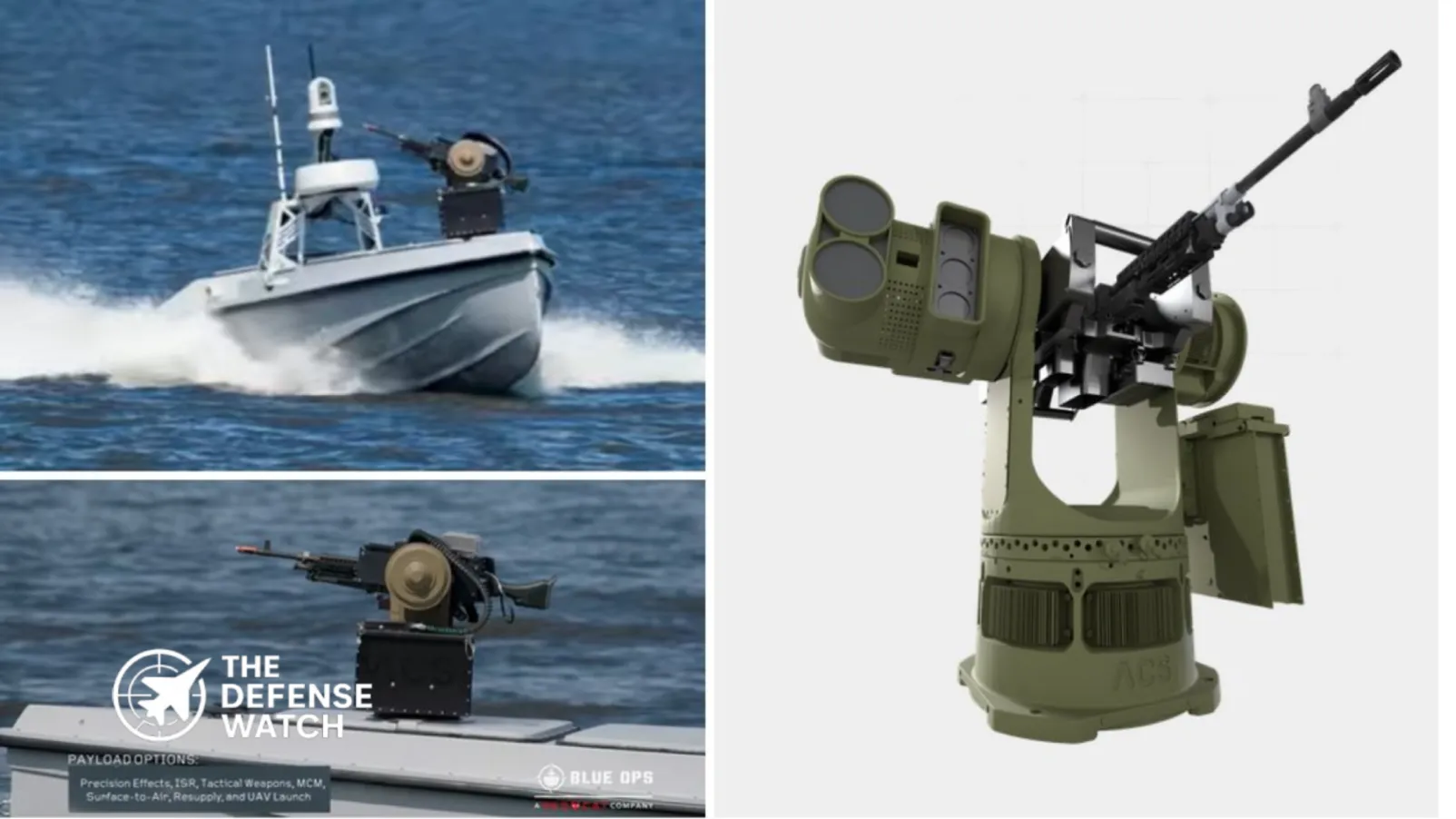
- â–º ACS Bullfrog AI-driven robotic weapon station will be evaluated for integration across Red Cat secure ISR and command and control platforms.
- â–º First planned integration pairs Bullfrog with Red Cat Blue Ops uncrewed surface vessels.
- â–º The Futures Initiative consortium aims to accelerate fielding of advanced autonomous and AI-enabled systems for military use.
- â–º Collaboration highlights focus on interoperable, U.S.-made defense technologies for American and allied forces.
Allen Control Systems Joins Red Cat Futures Initiative To Expand Autonomous Counter-Drone Capabilities
Allen Control Systems joining the Red Cat Futures Initiative marks a new step in integrating autonomous counter-drone systems into U.S. made unmanned platforms.
In a March 2 announcement from Salt Lake City, Red Cat Holdings, Inc. confirmed that Allen Control Systems has entered its industry consortium aimed at accelerating next generation autonomy for defense applications.
The partnership centers on integrating ACS Bullfrog, an AI enabled robotic weapon station, into Red Cat platforms across multiple domains. The first integration will take place within Blue Ops, Red Cat’s maritime division, where Bullfrog will be paired with uncrewed surface vessels.
Integration Across Domains
Red Cat describes its Futures Initiative as a collaborative effort designed to connect robotics and autonomy firms to reduce integration friction and speed operational deployment.

Under the agreement, Bullfrog will be evaluated for integration with Red Cat secure ISR platforms and its command and control architecture. Initial work will focus on maritime applications, but both companies indicate potential expansion across air and land systems.
Red Cat subsidiaries include Teal Drones and FlightWave Aerospace, both of which produce unmanned aerial systems for military and government use. The company has also expanded into maritime operations through Blue Ops, supporting uncrewed surface vessel development.
Bullfrog Autonomous Weapon Station
ACS flagship product, Bullfrog, is designed to transform legacy or modern weapons into precision autonomous systems. According to the company, the system combines artificial intelligence, computer vision, and proprietary control software to enable precise target engagement, particularly against small unmanned aerial systems.
The demand for counter drone systems has grown sharply in recent conflicts, including in Ukraine and the Middle East, where low cost drones have demonstrated their ability to disrupt traditional force structures. The U.S. Department of Defense has repeatedly identified counter UAS capability as a modernization priority in recent strategy documents.
By pairing Bullfrog with uncrewed surface vessels, the partnership aims to extend mobile counter drone protection into maritime environments. That approach reflects a broader Pentagon push toward layered, distributed defense systems capable of operating at the tactical edge.
Strategic Implications For U.S. Defense Industry
The Allen Control Systems and Red Cat Futures Initiative partnership reflects a wider shift in the U.S. defense industrial base toward modular, interoperable autonomy.

Rather than developing closed proprietary systems, defense firms are increasingly forming ecosystems designed to integrate sensors, weapons, and platforms across domains. This reduces duplication and shortens development timelines.
The emphasis on American manufactured systems also aligns with ongoing efforts to strengthen supply chain resilience. U.S. lawmakers and defense officials have highlighted the need to reduce reliance on foreign components, particularly in unmanned systems.
Red Cat’s Family of Systems approach, led by its Black Widow small unmanned aircraft platform, seeks to offer interoperable solutions spanning air and maritime operations. Integrating Bullfrog into this architecture could provide a scalable counter drone capability across multiple operational environments.
Operational Outlook
While the announcement outlines integration goals, it does not specify deployment timelines or contract values. As with many autonomy initiatives, operational fielding will depend on testing, certification, and potential procurement decisions by U.S. or allied defense agencies.
Still, the Allen Control Systems entry into the Red Cat Futures Initiative signals continued momentum behind autonomous counter drone defense systems, particularly those designed for distributed and expeditionary operations.
With small unmanned threats becoming a persistent feature of modern conflict, partnerships that combine sensing, targeting, and precision engagement into integrated platforms are likely to remain a focus area for U.S. defense planners.
Marichka underwater drone marks a new phase in Ukraine’s naval warfare strategy
Ukraine has unveiled the Marichka underwater drone, a domestically produced autonomous maritime strike system designed to operate at long range and deliver heavy explosive payloads against naval and coastal targets. The system has been announced as ready for operational use by Ukrainian developer Aquatechnics, marking a notable expansion of Kyiv’s underwater warfare capabilities amid the ongoing conflict with Russia.
According to information released by the company and Ukrainian media, the Marichka underwater drone is designed to target ports, bridges, large surface combatants, and amphibious landing vessels at distances of up to 1000 kilometers. The announcement reinforces Ukraine’s continued emphasis on asymmetric naval capabilities following the success of earlier surface and semi submersible naval drones in the Black Sea.
Development and Operational Concept
The Marichka underwater drone has been developed as a fully autonomous system capable of long duration missions beneath the surface. Aquatechnics states that the platform relies on an inertial navigation system, allowing it to operate without external signals and reducing vulnerability to electronic warfare or satellite denial environments.
Unlike surface drones, which can be detected visually or by radar, an underwater platform operating at low acoustic signatures presents a more complex detection challenge. The company claims the drone is powered by noiseless electric engines designed to minimize acoustic emissions, allowing it to remain undetected during transit and while loitering near target areas.

Aquatechnics further states that Marichka can pause movement and remain stationary on the seabed or at depth for extended periods, potentially days or weeks, before resuming its mission. This capability suggests a design optimized for delayed strike operations and maritime area denial rather than rapid attack alone.
Technical Specifications Provided by Developer
Based on information released by Aquatechnics and Ukrainian defense focused outlets, the Marichka underwater drone is described with the following characteristics.
The drone reportedly carries a combat charge exceeding 1000 kilograms, indicating a payload mass comparable to large naval mines or heavyweight torpedoes. Its cruising speed is listed at approximately 10 kilometers per hour, consistent with endurance focused underwater platforms rather than high speed intercept systems.
The stated operational range of 1000 kilometers positions Marichka among the longest range autonomous underwater strike systems publicly acknowledged by a non major naval power. The drone is described as capable of using different explosive configurations depending on mission requirements, though no further technical detail has been disclosed.
Ukrainian officials have not released information on production numbers, unit cost, or deployment timelines. The performance claims have not been independently verified by external observers.
Role in Ukraine’s Naval Strategy
Ukraine has increasingly relied on unmanned maritime systems to compensate for the absence of a large conventional navy. Since 2022, Ukrainian surface drones have been used to attack Russian warships, logistics vessels, and port infrastructure, contributing to the withdrawal of several Russian naval assets from occupied Crimean ports.
The introduction of the Marichka underwater drone indicates a deliberate move toward deeper undersea strike capabilities. An autonomous underwater platform expands Ukraine’s ability to threaten high value maritime targets in defended ports and narrow waterways where surface drones face increased risk from physical barriers and defensive fire.
From a strategic perspective, underwater drones also complicate defensive planning for adversaries, requiring investments in sonar coverage, anti diver systems, and undersea surveillance that are difficult to deploy comprehensively across large coastal areas.
Comparison With Existing Naval Drones
Ukraine has previously fielded surface based maritime drones such as the Sea Baby and Magura V5, which have been widely documented attacking Russian vessels in the Black Sea. These systems prioritize speed and direct impact against exposed targets.
Marichka appears to occupy a different operational niche. Its emphasis on endurance, stealth, and heavy payload suggests a role closer to that of a mobile underwater mine or loitering torpedo rather than a fast attack craft. This diversification mirrors broader global trends in naval warfare, where unmanned underwater vehicles are increasingly used for strike, reconnaissance, and seabed warfare missions.
Western navies, including those of the United States and NATO allies, have invested heavily in large displacement unmanned underwater vehicles for intelligence and strike support roles. Ukraine’s development indicates that similar concepts are being adapted under wartime conditions using domestic industrial capacity.
Industrial and Technological Context
Aquatechnics is part of a growing ecosystem of Ukrainian defense technology firms that have emerged or expanded rapidly since the start of the full scale invasion. Ukraine’s defense industry has increasingly focused on rapid prototyping, domestic production, and battlefield driven innovation rather than traditional acquisition cycles.
Ukrainian officials have repeatedly emphasized the importance of sovereign production for critical systems, particularly those vulnerable to export controls or supply chain disruptions. Underwater drones represent a segment where domestic development can provide strategic leverage without reliance on foreign suppliers.
No information has been released regarding foreign assistance or technology transfer related to Marichka’s development.
Operational Risks and Limitations
While the announced specifications are significant, underwater drones face inherent operational challenges. Navigation accuracy over long distances without external updates, endurance limits imposed by battery capacity, and vulnerability to seabed obstacles or countermeasures all shape real world effectiveness.
Inertial navigation systems can accumulate positional drift over extended missions, potentially reducing strike accuracy unless combined with terminal guidance. Aquatechnics has not disclosed whether Marichka incorporates additional navigation aids or target acquisition sensors.
Despite these constraints, even limited deployment could force adversaries to allocate resources to undersea defense, producing strategic effects beyond the number of systems fielded.
Strategic Implications
The unveiling of the Marichka underwater drone underscores Ukraine’s continued emphasis on innovation in unmanned warfare across air, land, and sea domains. By expanding into autonomous underwater strike systems, Kyiv signals intent to contest maritime spaces that have traditionally favored larger navies.
For regional security in the Black Sea, the development adds another layer of complexity to naval operations and port security planning. For defense observers, Marichka highlights how mid sized states under pressure are accelerating adoption of undersea autonomous weapons once limited to major naval powers.
Türkiye completes first live fire drone swarm test
Türkiye has conducted its first live fire drone swarm operation using Kargu loitering munitions, marking a major milestone in the country’s autonomous weapons development. The test, executed by Turkish defense firm STM, involved the coordinated launch and strike of 20 Kargu systems operating as a single swarm.
According to STM, the live fire event demonstrated Türkiye’s ability to deploy multiple loitering munitions simultaneously, coordinate them autonomously, and engage designated targets under operational conditions.
A milestone for Türkiye’s drone swarm capability
The successful test represents the first confirmed instance of a live fire drone swarm attack conducted by Türkiye. While the country has previously demonstrated individual loitering munition launches and coordinated UAV operations, this event marks the first time multiple Kargu systems were used together in a synchronized strike scenario.

Image Source : STM STM stated that the operation validated key elements of swarm warfare, including coordinated navigation, target assignment, and engagement timing. Each Kargu loitering munition was able to operate independently while remaining linked to the broader swarm architecture.
Defense analysts note that swarm capability is increasingly viewed as a critical component of future battlefield operations, particularly for suppressing air defenses, targeting mobile threats, and overwhelming traditional point defense systems.
Kargu loitering munition overview
The Kargu loitering munition is a man portable rotary wing system developed by STM for tactical use by ground forces. It is designed for intelligence, surveillance, reconnaissance, and precision strike missions.
Key characteristics of the Kargu system include vertical takeoff and landing capability, electro optical and infrared sensors, and a high explosive warhead optimized for anti personnel and light vehicle targets. The platform is designed to operate in both human in the loop and autonomous modes.
STM has previously confirmed that Kargu incorporates artificial intelligence based image processing and target recognition features, allowing it to operate in complex environments with limited operator input.
See also: Türkiye expands loitering munition production for special operations forces
How the drone swarm test was conducted
During the live fire demonstration, 20 Kargu loitering munitions were launched in a coordinated sequence. The systems reportedly shared mission data, deconflicted flight paths, and executed their strike profiles in a controlled manner.
While STM did not release detailed engagement parameters, the company confirmed that the swarm successfully completed its mission objectives and struck designated targets. The test also assessed communication resilience and mission continuity under simulated operational conditions.
Army Recognition reported that the exercise validated swarm level command and control, a key requirement for future autonomous operations.
Strategic implications for regional and global defense
Türkiye’s successful drone swarm test places it among a small group of countries actively testing live fire autonomous swarm capabilities. Defense experts view this as a significant step beyond traditional remotely piloted UAV operations.

Image Source : STM Swarm based loitering munitions offer several operational advantages, including redundancy, adaptability, and the ability to overwhelm defenses through mass and coordination. These systems are particularly relevant in contested environments where electronic warfare and air defense threats are present.
For NATO partners and regional actors, the demonstration highlights Türkiye’s continued investment in indigenous defense technologies and its growing role as a developer of advanced unmanned systems.
Ethical and operational considerations
The use of autonomous loitering munitions has drawn international attention due to concerns over human control and compliance with the laws of armed conflict. STM has previously stated that Kargu can be operated with human authorization and is designed to meet applicable legal and ethical standards.
The live fire swarm test did not indicate whether the systems were operating fully autonomously or under supervised control. However, defense observers emphasize that transparency around command authority will remain a key issue as swarm technologies mature.
Türkiye’s broader UAV modernization push
The drone swarm test aligns with Türkiye’s broader strategy to expand its unmanned systems portfolio across air, land, and maritime domains. Turkish firms have already gained international recognition for platforms such as Bayraktar TB2, Akinci, and Kizilelma.
STM’s work on Kargu and swarm technologies complements these efforts by focusing on tactical level autonomous strike systems intended for ground forces and special operations units.
As military planners worldwide increasingly prioritize unmanned and autonomous capabilities, Türkiye’s latest test underscores its ambition to remain competitive in this rapidly evolving field.