
Navy Achieves Milestone With Partner-Launched Autonomous Vessel
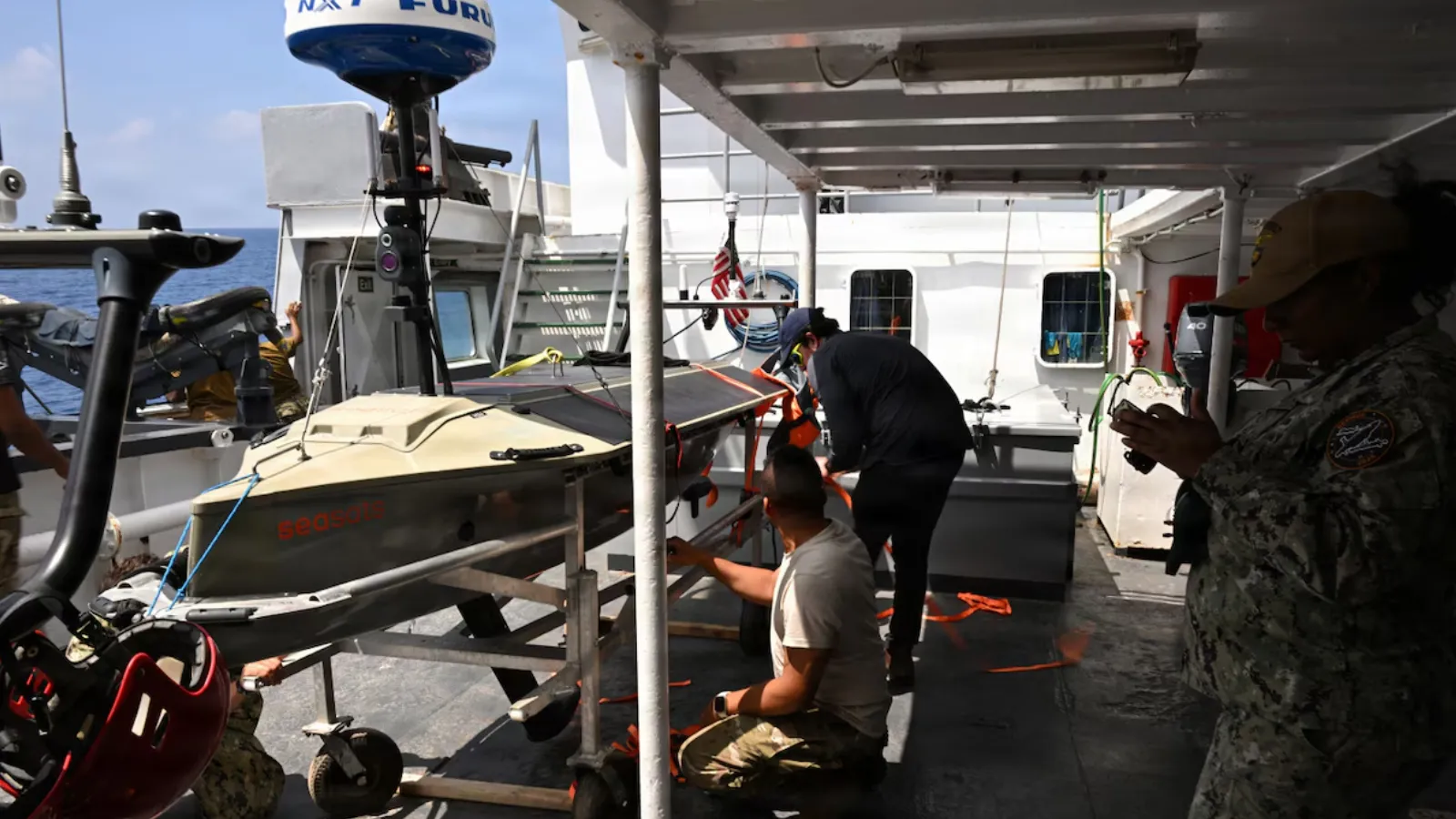
The U.S. Navy’s Commander Task Force 66 successfully launched the Lightfish unmanned surface vessel from a Seychelles Coast Guard vessel on February 9, marking the first time the autonomous system has been deployed from a partner nation’s ship during maritime operations.
The historic deployment occurred during Cutlass Express 26 off the coast of Seychelles in the Indian Ocean, demonstrating enhanced interoperability between U.S. forces and African maritime partners. The operation tested the Lightfish’s capabilities in open ocean conditions with limited connectivity, advancing the Navy’s autonomous systems integration strategy.
According to Navy Lt. Bryna Loranger, CTF 66 operations officer, the deployment represents a significant step forward in collaborative maritime domain awareness. The exercise combined U.S. technological capabilities with Seychelles Coast Guard assets and infrastructure to enhance expeditionary robotic autonomous systems capabilities in the U.S. Africa Command area of responsibility.
Expanding Unmanned Maritime Capabilities
Commander Task Force 66, established in May 2024, operates as the U.S. 6th Fleet’s first all-domain task force dedicated to integrating robotic and autonomous systems with naval, joint, and NATO partners across European and African theaters. The task force currently maintains 22 unmanned surface vessels and expects to double its operational capacity as additional assets reach readiness.
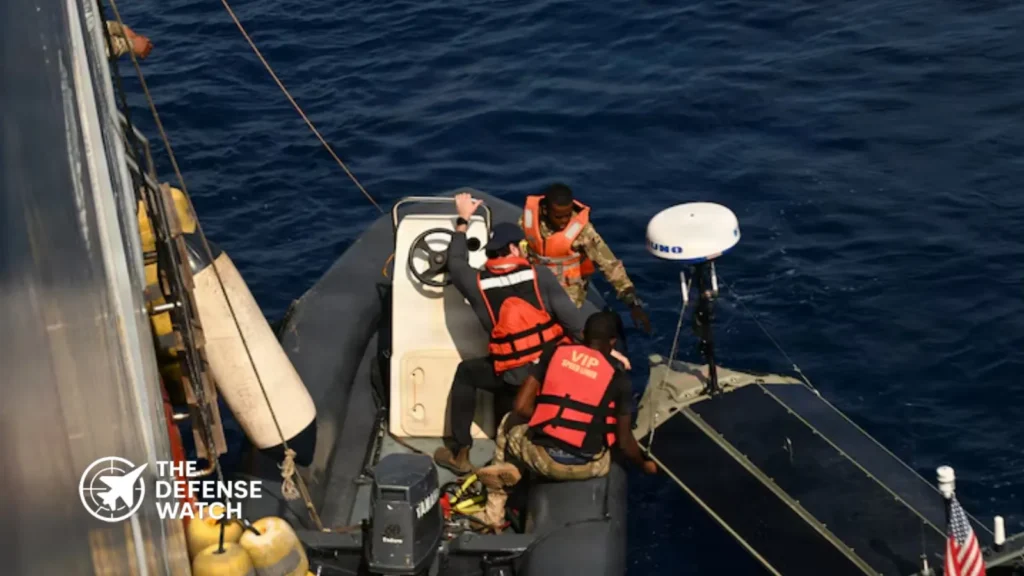
The Lightfish deployment during Cutlass Express 26 was part of an unmanned systems training event designed to promote knowledge transfer and build partner capacity in autonomous maritime operations. Shane Condon, a civilian contractor working with CTF 66, worked alongside Seychelles Coast Guardsmen to execute the launch, demonstrating the practical application of unmanned systems in partner nation operations.
Navy Rear Adm. Kelly Ward, director of strategic effects for CTF 66, emphasized the strategic importance of integrating unmanned tactics directly into operations. The task force leverages artificial intelligence and advanced technologies to maintain presence across Africa’s maritime zones while detecting illegal activity and countering threats in the gray zone.
Strategic Implications For Maritime Security
The successful partner nation deployment advances the Navy’s approach to modern maritime challenges, where information systems, technology, and economic vulnerabilities are increasingly weaponized by adversaries operating outside traditional warfare domains. CTF 66’s unmanned systems serve as force multipliers, enhancing maritime domain awareness and deterrence capabilities.
Cutlass Express 26 brings together 19 partner nations and allies through shore-based training events and at-sea operations. The exercise includes medical training, visit board search and seizure procedures, maritime interdiction operations, and counter-illegal fishing tactics. The multi-national collaboration provides participating nations opportunities to synchronize responses to real-world maritime security scenarios.
The exercise framework allows CTF 66 to operate large numbers of unmanned systems at scale through strong international partnerships. These collaborative relationships enable the task force to preposition and deploy assets in host countries, extending operational reach and response capabilities across the African maritime domain.
Technology Integration And Future Operations
The Lightfish deployment validates CTF 66’s technological integration strategy and demonstrates the feasibility of operating advanced autonomous systems from partner nation platforms. The unmanned surface vessel operates with sophisticated sensors and communications systems designed to function in contested electromagnetic environments with degraded connectivity.
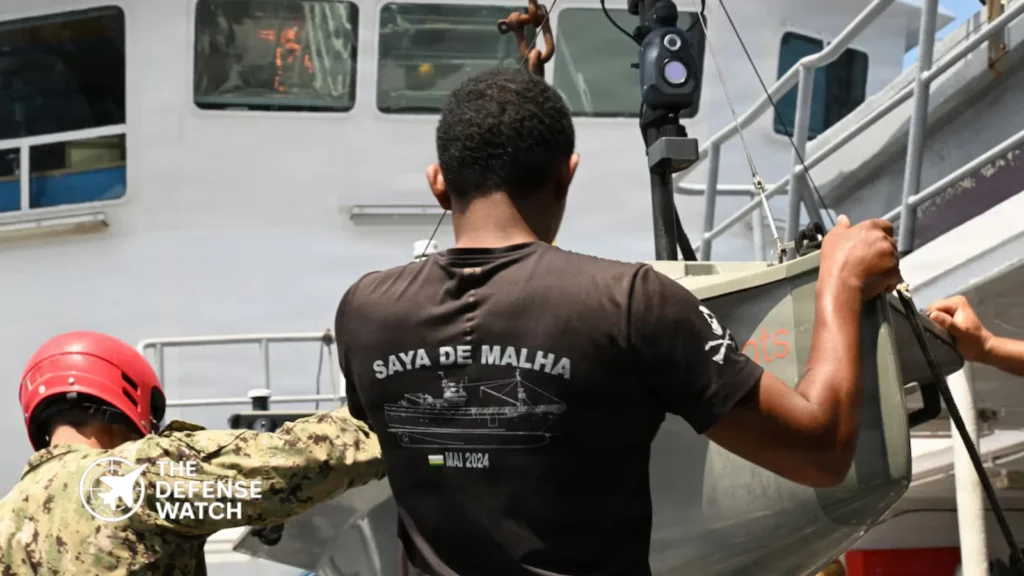
Navy Cmdr. Michael Aragon, assigned to CTF 66, worked with Seychelles Coast Guard personnel during pre-launch preparations, highlighting the technical knowledge transfer occurring through the partnership. Navy Petty Officer 2nd Class Melissa Adams and Seychelles Coast Guard Capt. Julian Morel participated in the operation, demonstrating the multi-national crew coordination required for unmanned systems deployment.
The task force continues developing unmanned technologies to enhance how militaries integrate naval platforms across all domains. Since establishment, CTF 66 has driven innovation in autonomous systems employment, testing concepts that inform broader Navy and joint force unmanned operations strategies.
Regional Maritime Security Enhancement
The Indian Ocean deployment advances U.S. Africa Command’s comprehensive maritime security strategy by providing collaborative opportunities among African forces and international partners. The Seychelles location offers strategic access to critical sea lanes and maritime traffic routes requiring persistent monitoring and security presence.
Cutlass Express 26 represents one of three regional express series exercises sponsored by U.S. Africa Command and enabled by U.S. 6th Fleet. The exercise series builds partner capacity, promotes interoperability, and addresses shared maritime security concerns across the African continent.
The unmanned systems integration demonstrated during the exercise enhances freedom of navigation operations and strengthens international maritime law enforcement capabilities. Partner nations gain access to advanced technologies and operational concepts that improve their ability to secure territorial waters and exclusive economic zones.
Operational Readiness And Deterrence
CTF 66’s expanding fleet of unmanned surface vessels provides scalable options for maritime presence operations, intelligence gathering, and tactical employment across the European and African theaters. The vessels operate semi-autonomously or autonomously depending on mission requirements, reducing crew exposure to hazardous environments while maintaining operational effectiveness.
The task force’s ability to deploy systems from partner nation vessels expands operational flexibility and demonstrates coalition integration of emerging technologies. This capability proves particularly valuable in resource-constrained environments where distributed operations and partner coordination enhance overall maritime security posture.
As CTF 66 continues expanding its unmanned vessel inventory and operational concepts, the task force enhances deterrence and lethality across assigned areas of responsibility. The Lightfish deployment validates technical capabilities while strengthening international partnerships essential for long-term maritime security cooperation.
The successful Cutlass Express 26 unmanned systems operation establishes precedents for future collaborative deployments and accelerates the integration of autonomous technologies into routine maritime operations with partner nations across the African continent and beyond.
Get real time update about this post category directly on your device, subscribe now.
