
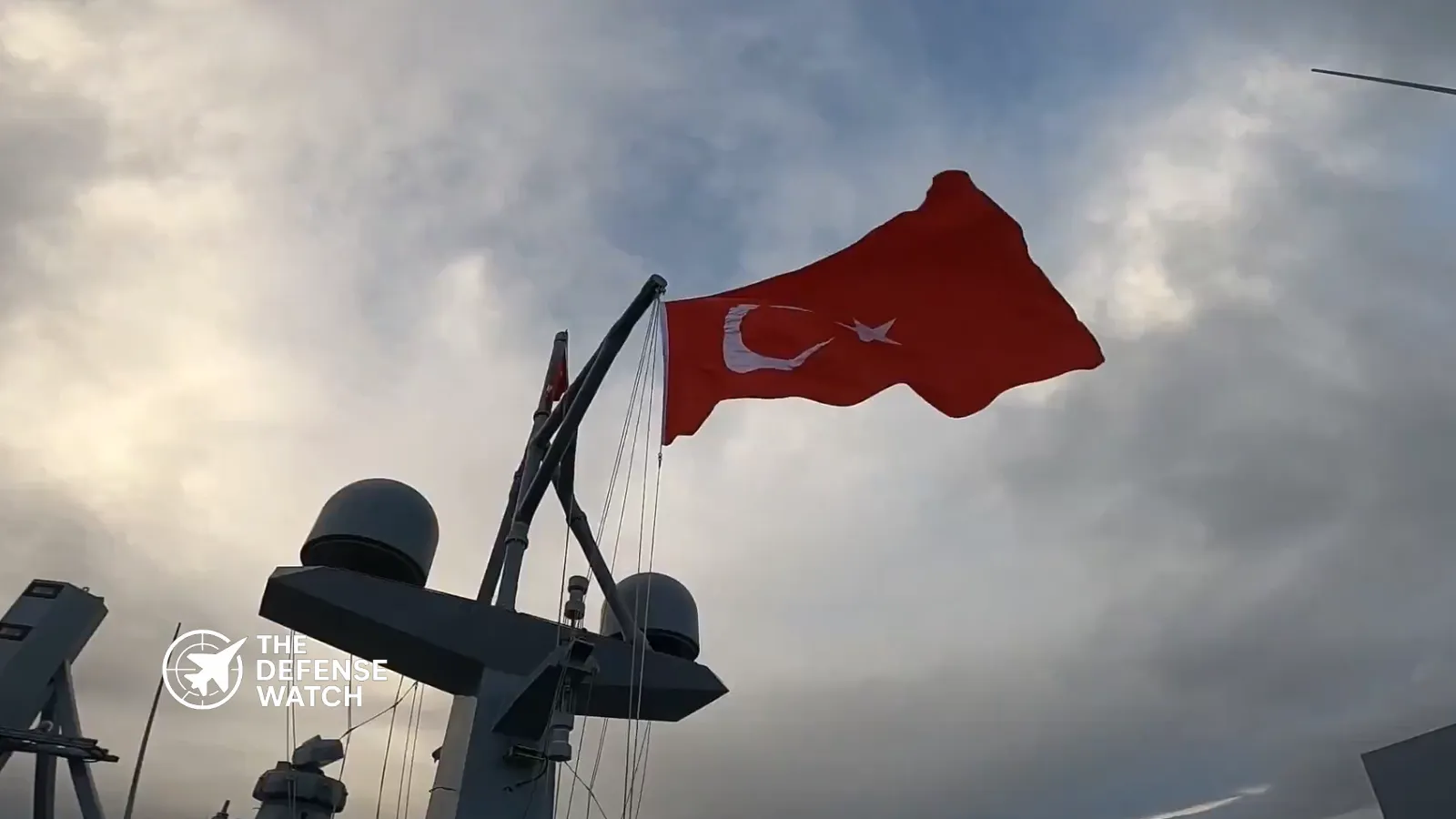
Türkiye Maritime Task Force Deploys for Steadfast Dart 2026
The Türkiye Maritime Task Force has begun its long range deployment from home waters toward the Baltic Sea as part of NATO Exercise Steadfast Dart 2026, underscoring Ankara’s role within the Allied Reaction Force and its commitment to collective defense.
The transit, conducted under the Anadolu Turkish Maritime Task Force framework, marks a significant naval movement from the Eastern Mediterranean into Northern European waters at a time of heightened focus on NATO readiness and rapid reinforcement capabilities.
According to official Turkish Ministry of National Defense statements, the deployment is designed to demonstrate alliance cohesion, interoperability, and credible deterrence across multiple maritime theaters.
NATO Steadfast Dart 2026 and the Allied Reaction Force
Steadfast Dart 2026 is one of NATO’s flagship high readiness exercises, intended to test the activation, deployment, and sustainment of the Allied Reaction Force across land, air, maritime, cyber, and space domains.
The exercise builds on NATO’s post Madrid force posture reforms, which replaced the NATO Response Force with the more scalable and rapidly employable Allied Reaction Force. This structure enables NATO to respond to emerging crises with tailored force packages rather than a single standing formation.
Türkiye’s participation through a forward deployed maritime task force reflects its dual role as both a regional naval power and a key contributor to NATO’s southern and eastern flanks.
NATO officials have consistently emphasized that Steadfast Dart is not directed at any specific adversary, but rather focused on readiness, mobility, and command integration under Article Five scenarios.
Composition and Role of the Anadolu Maritime Task Force
While Ankara has not released a full public order of battle for the task force, Anadolu Maritime Task Force deployments typically include a mix of frigates, auxiliary support vessels, and embarked naval aviation elements.
Turkish Navy surface combatants frequently involved in NATO exercises include the Barbaros class and Gabya class frigates, both upgraded with modern combat management systems, advanced sensors, and NATO standard data links.
These vessels are designed for air defense, antisubmarine warfare, maritime security operations, and command and control roles, making them well suited for Allied Reaction Force integration.
The deployment also provides an opportunity for Turkish crews to operate in colder water environments and congested Northern European sea lanes, conditions that differ significantly from the Mediterranean and Aegean operating areas.
Strategic Significance of the Baltic Sea Transit
The movement of a Turkish naval task force from the Eastern Mediterranean to the Baltic Sea carries both operational and strategic weight. It highlights NATO’s ability to shift forces rapidly across internal lines of communication, reinforcing deterrence through visible presence and mobility.
The Baltic Sea remains a critical focus area for NATO, particularly following Finland and Sweden’s accession to the alliance. Maritime operations in the region now involve a broader range of Allied navies and require tighter coordination across air, surface, and undersea domains.
Türkiye’s participation signals alliance solidarity and demonstrates that NATO’s collective defense commitments extend beyond immediate regional boundaries.
Defense analysts note that such deployments also support burden sharing by ensuring that no single group of allies carries the full weight of forward presence missions.
Türkiye’s Broader Naval Modernization Context
The Steadfast Dart 2026 deployment comes amid an ongoing period of modernization for the Turkish Navy. Ankara continues to invest in indigenous shipbuilding programs, advanced sensors, and network centric warfare capabilities.
Key initiatives include the MILGEM program, which has delivered Ada class corvettes and Istanbul class frigates, as well as future plans for air defense destroyers under the TF two thousand program.
These efforts aim to enhance Türkiye’s ability to operate independently while remaining fully interoperable with NATO partners. Participation in large scale alliance exercises provides critical validation of these capabilities in real world operational settings.
Allied Interoperability and Operational Testing
Exercises like Steadfast Dart serve as practical tests of command structures, logistics chains, and digital connectivity across allied forces. Maritime components are particularly important, as naval forces often provide the first visible signal of alliance response during crises.
The Turkish Maritime Task Force is expected to conduct joint maneuvers, communications drills, and maritime security operations alongside allied navies from Northern Europe and North America.
Such activities help identify gaps in procedures, equipment compatibility, and sustainment planning, allowing NATO to refine its response posture ahead of real world contingencies.
Outlook
As Steadfast Dart 2026 unfolds, the presence of the Türkiye Maritime Task Force in the Baltic Sea will remain a visible indicator of NATO’s evolving force structure and multinational integration.
For Ankara, the deployment reinforces its position as a capable maritime contributor across multiple theaters, while for NATO, it underscores the alliance’s emphasis on speed, flexibility, and collective deterrence in an increasingly complex security environment.
Get real time update about this post category directly on your device, subscribe now.
