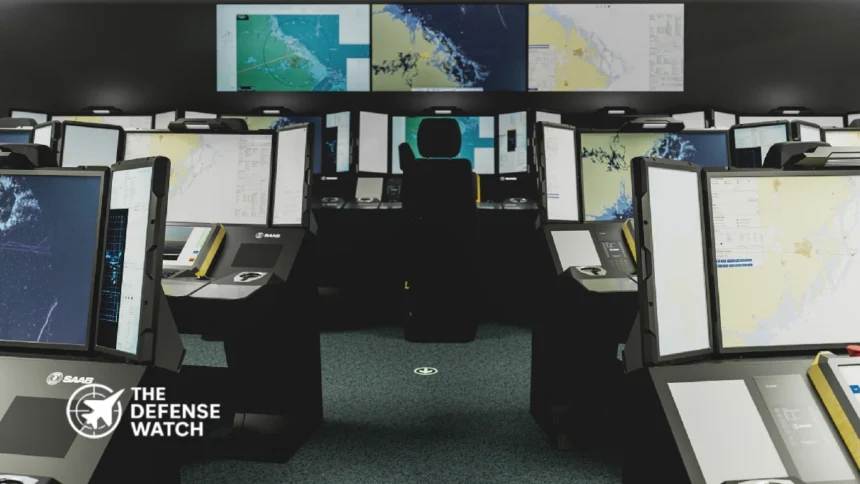
Saab has introduced a next-generation version of its 9LV naval combat system, updating the architecture used to manage shipboard sensors, weapons and command functions as navies prepare for increasingly complex maritime threats.
- A Data-Centric Architecture Separates Combat Functions From New Applications
- Ceros Fire Control and the Role of 9LV
- NATO Interoperability and Multi-Domain Operations
- Designed for Crewed and Uncrewed Naval Fleets
- Saab’s Existing 9LV Naval Market
- What the New Architecture Could Mean for Naval Modernization
Announced on November 3, 2026, the Swedish defense company says the updated system combines its 9LV Combat System, Combat Management System (CMS) and Fire Control System (FCS), including Ceros fire-control technology. The design focuses on faster information exchange, improved cybersecurity and the ability to introduce new capabilities without compromising mission-critical combat functions.
The announcement comes as naval forces face a wider range of threats, including anti-ship missiles, uncrewed aerial vehicles, electronic warfare and increasingly connected maritime surveillance networks. These threats place greater demands on the systems that collect sensor information, assess potential targets and coordinate defensive responses.
Saab’s latest 9LV architecture is intended to address these requirements while allowing warships to incorporate new technologies throughout their operational lives.
A Data-Centric Architecture Separates Combat Functions From New Applications
One of the central changes in the next-generation 9LV is its data-centric architecture.
Saab says the system uses a standardized information model to organize and distribute information across connected naval systems. This approach is intended to give operators access to a consistent tactical picture while allowing different sensors, weapons and command applications to exchange information.
The architecture also introduces zero-trust cybersecurity principles. Under this model, connected systems and applications are not automatically trusted simply because they operate within the same network. Access and communications must be controlled and verified.
For naval combat systems, this is particularly relevant because modern warships increasingly depend on interconnected digital networks to support radar operations, weapons control, communications and platform management.
A cyber incident affecting these networks could interfere with information availability or disrupt operational functions. Separating mission-critical combat capabilities from less critical applications is intended to reduce the risk that changes to one part of the system will compromise the entire combat architecture.
Saab also says the upgraded design separates core combat functions from flexible, cloud-native applications.
This distinction is important. Cloud-native software can support faster application development and updates, but shipboard combat systems must also operate under strict requirements for availability, reliability and controlled access.
The company has not publicly detailed the precise software deployment model, network segmentation arrangements or certification requirements of the new architecture. Its announcement therefore establishes the intended design approach, rather than independently demonstrating its performance under cyberattack.
Ceros Fire Control and the Role of 9LV
The 9LV family combines several functions that determine how a naval platform detects, evaluates and responds to threats.
Its Combat Management System provides the central operational framework, bringing together information from different sensors and coordinating the use of available weapons.
The Fire Control System supports the engagement process, helping operators select and coordinate weapons against identified threats.
Ceros is part of Saab’s fire-control offering. Its existing 9LV Fire Control System documentation identifies the CEROS 200 and EOS 500 as fire-control directors used within the wider system architecture.
These components support the sensor-to-shooter process, connecting target information with weapon engagement functions.
Saab’s published 9LV FCS capabilities include support for air-defense coordination, surface-defense coordination and engagements involving multiple incoming threats. The company also describes integration with naval guns, surface-to-air missiles and other available weapons.
However, Saab’s November 3 announcement does not provide a detailed breakdown of the specific Ceros configuration or identify a new radar, electro-optical sensor or weapon integration package. The launch should therefore be understood as an architectural and system-level update, rather than confirmation of a completely new fire-control director.
NATO Interoperability and Multi-Domain Operations
Another important element of the updated 9LV is its emphasis on interoperability.
Modern naval operations rarely involve an individual warship operating independently. Surface combatants increasingly exchange information with maritime patrol aircraft, helicopters, shore-based command centers, submarines and allied naval formations.
Saab says the next-generation 9LV is aligned with NATO objectives for interoperability and tactical information exchange.
The system is designed to support information sharing across naval, air and land forces, helping commanders contribute to a common operational picture and coordinate activities with allied units.
This capability has practical importance for coalition operations. A warship participating in a multinational task group may need to receive information from external surveillance platforms, share its own sensor data and coordinate responses with other forces.
The ability to exchange information is not, however, the same as automatic interoperability.
Successful integration also depends on compatible communications networks, data standards, security arrangements, national release policies and the integration of individual platforms.
Saab has not identified specific NATO interfaces, tactical data-link configurations or participating national systems for the newly announced version.
Designed for Crewed and Uncrewed Naval Fleets
Saab is also positioning the updated 9LV for future fleets that combine traditional warships with uncrewed maritime platforms.
The company says the architecture can scale from large multi-mission combatants to smaller naval vessels and support future hybrid fleet concepts involving both crewed and uncrewed systems.
This reflects a growing operational interest in distributing surveillance, reconnaissance and other missions across multiple platforms.
Uncrewed surface and underwater vehicles can potentially extend a fleet’s surveillance coverage, operate in areas where sending a crewed vessel would be less desirable and provide additional sources of information to commanders.
However, integrating these platforms into a naval combat network involves more than establishing a communications connection. Their sensor data must be processed, assessed and incorporated into the command structure without overwhelming operators or introducing unreliable information.
The ability to manage different platforms through a common combat architecture could therefore become increasingly important as navies expand their use of autonomous systems.
Saab has not disclosed the number or types of uncrewed platforms supported by the new 9LV configuration, nor has it announced a specific autonomous mission package.
Saab’s Existing 9LV Naval Market
The next-generation announcement builds on an established naval combat-system business.
Saab describes 9LV as a modular system that can be integrated into new warships or introduced through midlife modernization programs. Its existing product portfolio supports patrol vessels, frigates, larger surface combatants and submarines.
According to Saab, the company has delivered more than 250 combat systems to over 20 navies worldwide. These figures are manufacturer-reported and cover its broader naval combat-system business.
Recent programs illustrate how the architecture is being applied to different naval requirements.
In February 2025, Saab signed an agreement with Damen Naval to supply combat-system equipment for Colombia’s Plataforma Estratégica de Superficie frigate program.
The package includes:
- 9LV Combat Management System.
- 9LV Fire Control System.
- Ceros 200 fire-control director.
- EOS 500 electro-optical fire-control director.
- Sea Giraffe 4A radar.
- Additional Saab systems and equipment.
The frigate program is based on the Damen Naval SIGMA 10514 design, with construction assigned to Colombia’s COTECMAR shipbuilder in Cartagena. Saab’s announcement identified 2030 as the planned delivery year for the frigate.
The Australian naval program provides another example of 9LV’s wider role. Saab’s system forms the basis of Australia’s sovereign combat management system development, known as AusCMS, under the Royal Australian Navy’s long-term modernization efforts.
These programs demonstrate the system’s use in different national naval environments. They do not, however, establish that every existing 9LV customer will automatically receive the newly announced architecture.
What the New Architecture Could Mean for Naval Modernization
For navies planning warships with operational lives extending over several decades, the ability to upgrade combat software and integrate additional sensors is an important procurement consideration.
Traditional combat-system modernization can involve extensive engineering work because new capabilities must interact with existing hardware, software, communications equipment and weapons.
A more modular architecture could reduce the difficulty of introducing new applications and integrating additional equipment. Separating mission-critical functions from more flexible applications may also help limit the operational risks associated with software changes.
The benefits will depend on how Saab implements the architecture and how individual navies configure their systems.
Cybersecurity certification, software compatibility, network availability, operator training and integration with legacy equipment will remain important challenges. New applications must also be tested to ensure that updates do not create unexpected problems elsewhere in the combat system.
Saab’s announcement does not include pricing, a procurement agreement, a delivery schedule or a confirmed customer for the next-generation configuration. It also provides no independent performance data demonstrating improvements in engagement speed, cyber resilience or tactical decision-making.
For now, the main significance of the announcement is the direction of Saab’s naval combat-system development. Rather than focusing only on adding individual sensors or weapons, the company is emphasizing an architecture designed to accommodate software changes, connected platforms and future operational requirements while protecting essential shipboard combat functions.
The extent to which these design goals translate into measurable improvements will become clearer through customer selections, integration programs and operational use.