
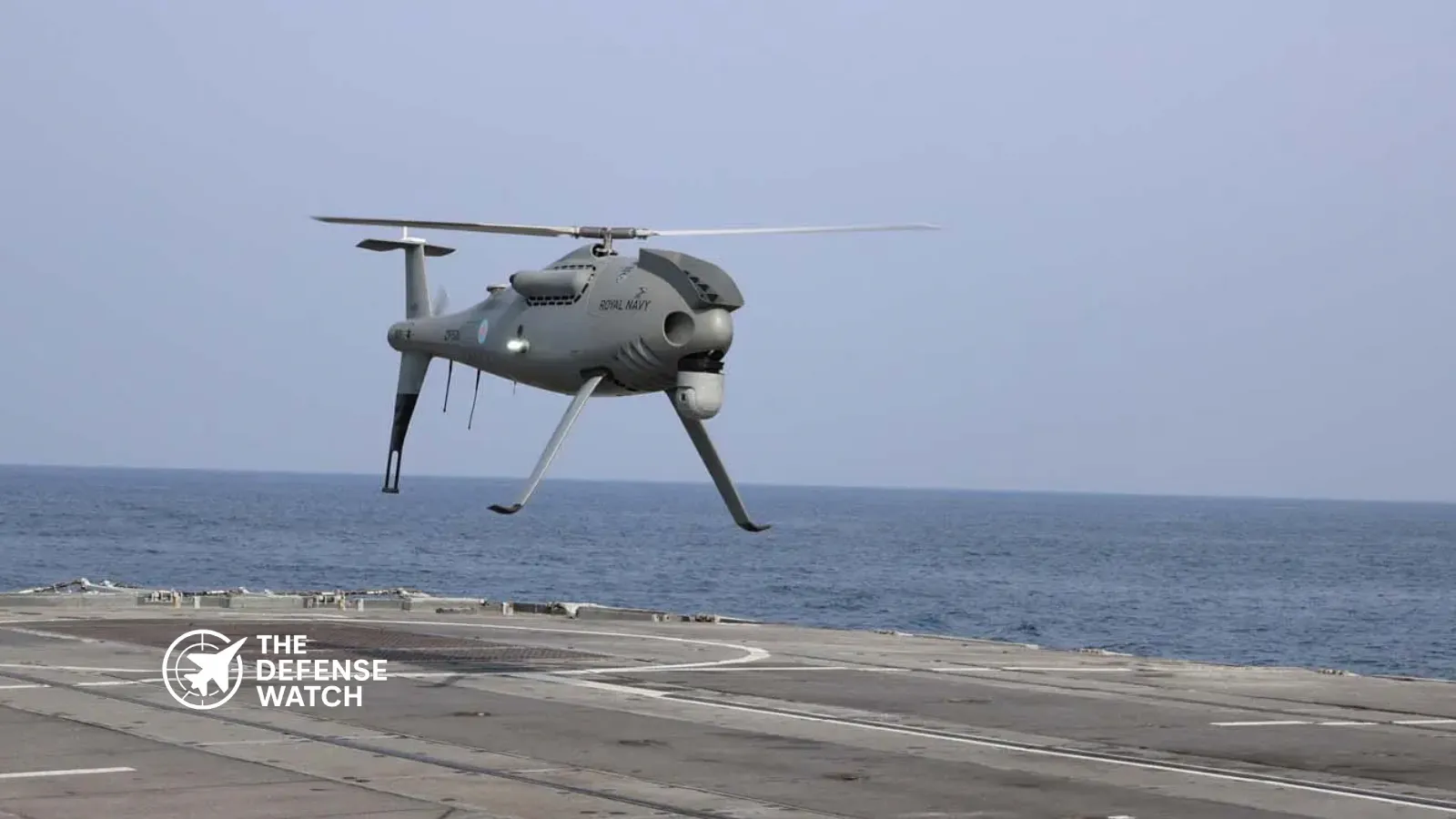
A Royal Navy drone pilot has been recognized with the first aircrew commendation ever awarded to a remote aircraft operator after preventing a £2.5 million Peregrine unmanned helicopter from crashing into the sea off the Gulf of Oman.
Quick Takeaways
Royal Navy’s 700X Naval Air Squadron flight commander Lieutenant Commander Adrian Hill intervened when an autonomous Peregrine drone suddenly dropped toward the water.
Hill took manual control, stabilized the aircraft at low altitude, and safely landed it aboard the UK frigate HMS Lancaster.
The rescue earned the pilot a “Green Endorsement” safety award, the first for a drone operator in Royal Navy or Royal Air Force history.
Peregrine Incident Details
The Peregrine, a 10-foot-long naval variant of the Schiebel S-100 Camcopter equipped with military sensors and systems, was conducting routine autonomous surveillance at about 60 feet above the sea when the anomaly struck.
According to the Royal Navy, the drone suddenly suffered a system error and dropped toward the water while preparing for recovery on HMS Lancaster.
Hill, already positioned to take manual control, reacted instantly. He engaged the flight controls and raised the drone to a safe altitude before completing a controlled deck landing.
In his statement, Hill said the drone was only one or two feet above the water when he noticed the descent and realized any impact would likely mean a total loss of the asset.
Historic Recognition
Hill’s Green Endorsement is described by the Royal Navy as the highest safety accolade in the Fleet Air Arm and Royal Air Force. Until this event, no remotely piloted aircraft operator had received a Green Endorsement.
Rear Admiral Anthony Rimington, head of the Fleet Air Arm, presented the commendation. The citation highlighted Hill’s sharp situational awareness, professional skill, and quick reactions that preserved a high-value aerial asset.
Broader Context: UK Naval Drone Operations
The Peregrine program reflects the Royal Navy’s increasing use of unmanned systems for maritime surveillance and operations. In recent years the Navy has expanded drone use for logistical tasks such as ship-to-ship deliveries and surveillance missions.
Other Royal Navy units have also advanced drone integration, including joint training with allied forces and developing autonomous crewless helicopters to complement traditional platforms.
Why It Matters
This award underlines a shift in naval aviation roles where remote pilots not only execute missions but also must be prepared to take split-second action in complex situations. Preserving high-cost unmanned assets helps maintain operational tempo and reduces lifecycle losses.
Quick, confident manual intervention in autonomous system failures underscores the need for skilled operators even as autonomy grows across defense aviation.
Get real time update about this post category directly on your device, subscribe now.
