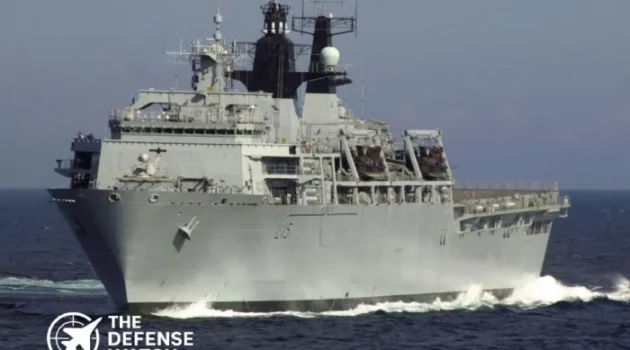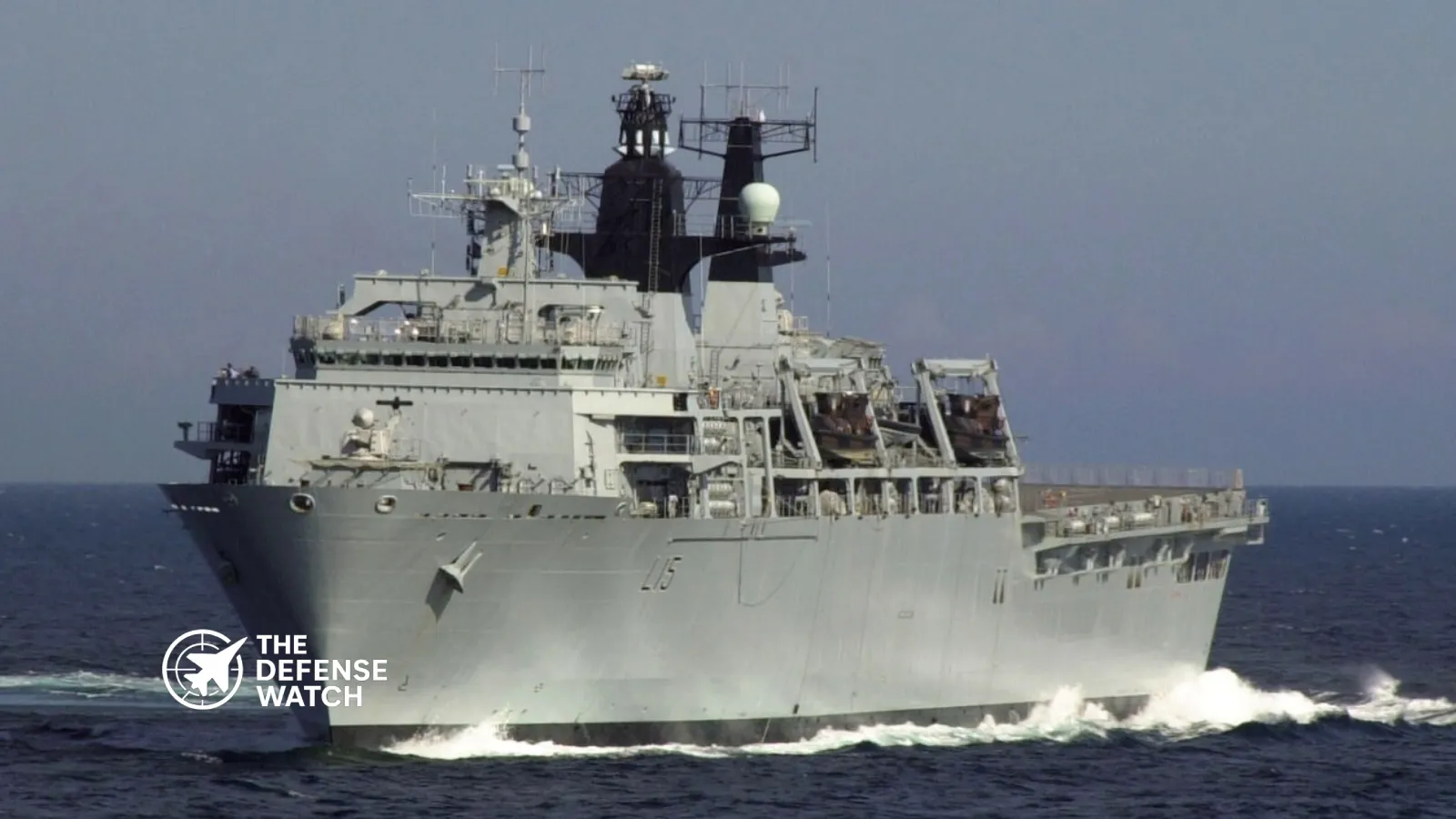
- ► HMS Albion is being used to support HMS Bulwark’s preparation for handover.
- ► Both vessels are Albion class landing platform dock ships designed for amphibious operations.
- ► Equipment and components are being transferred between the two ships.
- ► The move reflects broader Royal Navy restructuring of amphibious capabilities.
- ► The UK Ministry of Defence has not announced a final decision on long term amphibious force structure.
HMS Albion Used To Prepare HMS Bulwark For Handover
HMS Albion is being used to help prepare HMS Bulwark for handover, in a move that highlights ongoing changes within the Royal Navy amphibious fleet.
The two ships are the Royal Navy’s dedicated landing platform dock vessels. Both belong to the Albion class and are central to the United Kingdom’s ability to deploy Royal Marines, vehicles, and heavy equipment ashore during expeditionary operations.
Officials have confirmed that equipment and components from HMS Albion are being used to support HMS Bulwark’s readiness for transfer, as part of fleet management decisions.
The UK Ministry of Defence has not publicly detailed the full scope of the work. However, the move appears designed to ensure that HMS Bulwark remains operationally viable while broader amphibious restructuring continues.
The Role Of The Albion Class Ships
HMS Albion and HMS Bulwark serve as the UK’s primary amphibious assault ships. Commissioned in the early 2000s, the vessels were built to replace the older Fearless class and to provide a modern platform for amphibious warfare.
Each ship displaces around 19,000 tonnes and features a well dock capable of launching landing craft. They can embark Royal Marines, armored vehicles, and command staff, making them critical for joint expeditionary operations.
Historically, only one of the two ships has been held at high readiness at any given time, with the other placed at extended readiness to manage personnel and budget constraints.
The use of HMS Albion to support HMS Bulwark aligns with this rotational model, although it comes at a time when the UK is reviewing force structure and resource allocation across the fleet.
Wider Context: Amphibious Capability Review
The HMS Albion and HMS Bulwark handover process unfolds amid ongoing discussions about the future of UK amphibious capability.
In recent years, defense reviews have examined whether traditional large scale amphibious platforms remain the most efficient way to deliver maritime power. The Integrated Review and subsequent defense updates have emphasized agility, distributed operations, and littoral strike concepts.
The Royal Navy has introduced the Littoral Response Group concept, pairing amphibious shipping with escort vessels and aviation assets to provide rapid response options. These groups are designed to operate globally, particularly in regions such as the Indo Pacific and the High North.
At the same time, fiscal pressures and personnel shortages have placed constraints on fleet availability. The Ministry of Defence has sought to balance commitments to carrier strike operations with surface fleet demands and submarine programs.
Within this context, the HMS Albion and HMS Bulwark transition reflects practical fleet management decisions rather than a declared shift away from amphibious operations.
Operational And Industrial Implications
Maintaining one fully mission capable landing platform dock ensures that the UK retains core amphibious command and control capacity.
The ships are also closely tied to the operational model of the Royal Marines. The Corps has shifted toward a more specialized littoral strike role, focusing on smaller, dispersed units capable of operating in contested environments.
Amphibious platforms such as HMS Bulwark provide command facilities and logistics support essential for those missions.
Industrial considerations may also factor into decisions. Sustaining legacy platforms often requires redistributing spares and components to maintain operational readiness. Using HMS Albion to support HMS Bulwark suggests a pragmatic approach to resource management.
Strategic Significance
For NATO allies, UK amphibious capability contributes to collective maritime operations. The Royal Navy’s ability to deploy command elements and landing forces supports alliance planning in Europe’s northern flank and beyond.
The current HMS Albion and HMS Bulwark adjustments do not indicate the elimination of that capability. Instead, they highlight the tension between maintaining legacy heavy platforms and investing in future systems.
Defense analysts note that amphibious operations are increasingly linked with multi domain integration, including aviation, cyber, and space based support.
The UK’s future approach may blend traditional landing platform docks with more flexible support ships and aviation assets.
What Comes Next
The Ministry of Defence has not confirmed whether HMS Albion will return to full operational status after supporting HMS Bulwark’s handover preparations.
Future updates are likely to be shaped by budget allocations and strategic guidance issued in upcoming defense reviews.
For now, HMS Bulwark remains the focus of readiness efforts, with HMS Albion providing essential support during the transition phase.
Get real time update about this post category directly on your device, subscribe now.