

Historic Commissioning Marks New Era for PLAN Carrier Aviation
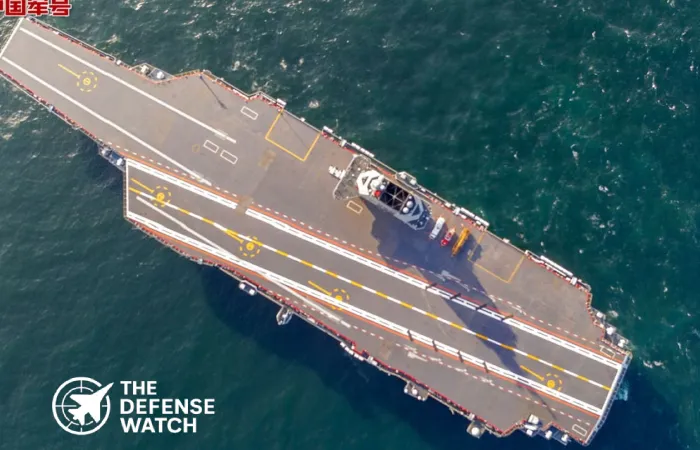
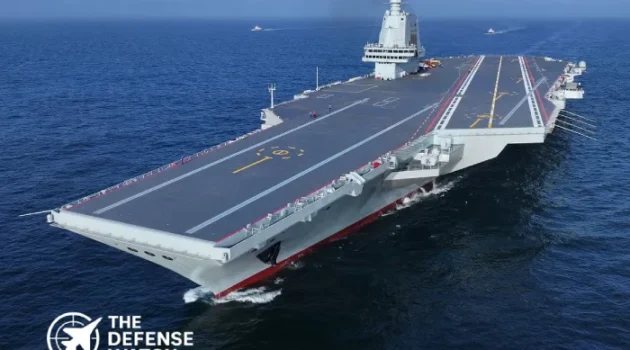
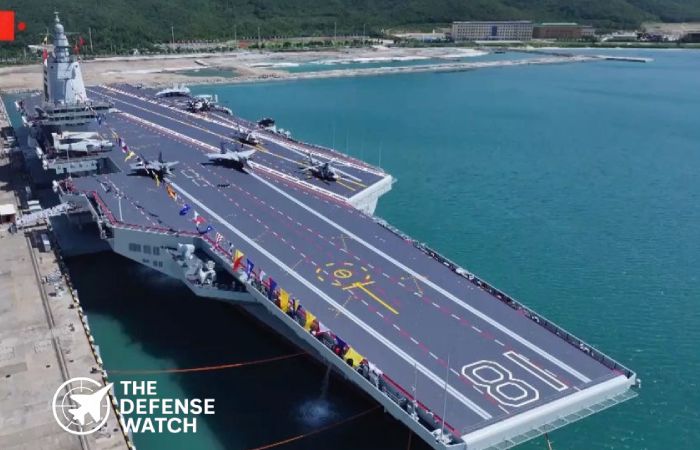
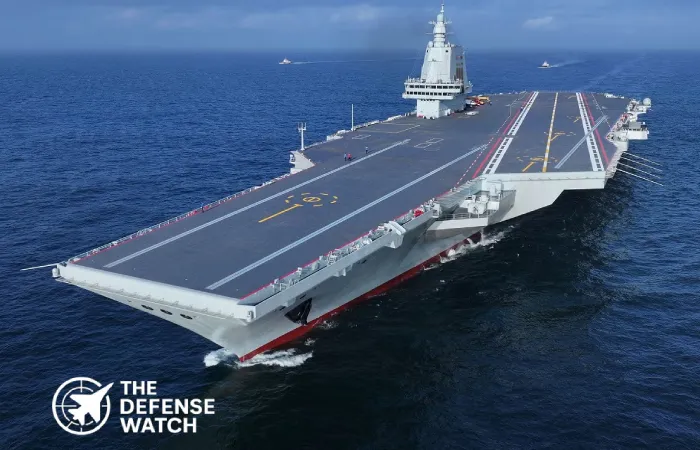
The People’s Liberation Army Navy reached a significant milestone with the commissioning of the Fujian, China’s third and most advanced aircraft carrier, at a ceremony in Sanya on November 5, 2025, attended by President Xi Jinping. The 80,000-ton flattop represents China’s first domestically designed carrier equipped with electromagnetic aircraft launch systems (EMALS), placing Beijing in an exclusive club alongside the United States in operating this cutting-edge technology.
The Fujian successfully demonstrated electromagnetic catapult launches of the J-15T fighter, J-35 stealth fighter, and KJ-600 early warning aircraft during its ninth sea trial in September 2025, proving the carrier achieved initial full-deck operational capability. The vessel completed nine sea trials totaling over 100 days at sea since May 2024, testing propulsion systems, navigation equipment, and the revolutionary catapult technology that differentiates it from China’s ski-jump equipped carriers.
Electromagnetic Catapults: A Game-Changing Capability
The Fujian’s EMALS represents a quantum leap in Chinese carrier aviation capability. Unlike conventional steam catapults, electromagnetic systems cause less stress to aircraft and ships, allow more precise speed control, and can launch a wider range of aircraft. This technology enables the carrier to launch heavier aircraft with full fuel and weapons loads, dramatically extending operational range and combat effectiveness.
The electromagnetic launch system is found only on the latest U.S. Navy Ford-class carriers and now the Fujian, giving China the ability to launch heavier aircraft like the KJ-600 early warning and control plane. The ability to operate fixed-wing airborne early warning aircraft represents a critical capability gap closure for Chinese carrier operations, previously limited to helicopter-based early warning systems.
The carrier’s air wing will operate a diverse mix of platforms. Aircraft to be deployed include the J-15T catapult-compatible fighter, the J-15D electronic warfare variant, the J-35 fifth-generation stealth fighter, and the KJ-600 early warning aircraft. This combination provides the PLAN with capabilities approaching U.S. carrier air wings in terms of offensive strike, defensive counter-air, electronic warfare, and battle management.
Shandong Demonstrates Operational Maturity
While the Fujian represents China’s technological cutting edge, the conventionally powered carrier Shandong has been demonstrating impressive operational tempo and combat readiness. In 2024, the Shandong achieved all-weather combat capacity while significantly reducing aircraft launch preparation times and improving consecutive sortie readiness.
During a July 2024 deployment to the Philippine Sea, the Shandong Carrier Strike Group conducted 240 fighter aircraft launches and recoveries and 140 helicopter operations over a nine-day period. Japanese Maritime Self-Defense Force ships closely monitored these operations, which occurred approximately 300 miles east of the Luzon Strait.

Chinese official media revealed that the Shandong has ensured the safe takeoff and landing of nearly 10,000 sorties of various carrier-based aircraft since commissioning five years ago. Military analysts note this operational experience is crucial for developing the doctrinal expertise and crew proficiency necessary for effective carrier operations.
The Shandong played a prominent role in aggressive exercises near Taiwan. During the April 2025 Strait Thunder 2025A exercise, the Shandong entered Taiwan’s military response zone and maneuvered within 24 nautical miles of Taiwan’s coast, the closest approach yet. The drill involved J-15 carrier-borne fighters conducting simulated strike operations and air superiority missions east of Taiwan.
Dual-Carrier Operations Signal Growing Capability
In late October 2024, the Shandong conducted dual aircraft carrier formation exercises with the Liaoning for the first time in the South China Sea, alongside escort vessels including destroyers, frigates, and replenishment ships. These exercises rehearsed advanced tactics such as one carrier practicing surface attacks while the other seized air superiority and conducted air defense operations.
In June 2025, Chinese carriers achieved three major milestones: the first simultaneous deployment of two carrier strike groups beyond the First Island Chain, with operations extending roughly 3,000 kilometers from Midway Island, and 27 consecutive days of carrier group operations in the Western Pacific. The Liaoning remained active for 24 days while the Shandong operated for 16 days, setting new endurance records for PLAN carrier operations.

During June 14-18, the two carriers likely conducted carrier-versus-carrier training exercises, maintaining a distance of 500-600 kilometers with the Liaoning generating 90 sorties on June 14 and 80 on June 17. These high sortie counts suggest intensive operational training designed to develop coordinated multi-carrier strike capabilities.
Mystery Ship Raises Questions About Naval Aviation Expansion
Satellite imagery captured in October 2024 revealed a mysterious new vessel with a large open flight deck under construction at Guangzhou Shipyard International on Longxue Island. The approximately 200-meter vessel features three island structures and flight deck markings for vertical takeoff and landing operations.
Video footage from November 26, 2024, showed the vessel sailing under its own power, notably displaying the China State Shipbuilding Corporation logo rather than PLAN insignia or hull numbers. The lack of military markings suggests the ship may serve dual civilian-military purposes.
The vessel’s structure is similar to the PLAN’s Type 075 Amphibious Assault Ship, with spaces that could indicate hangars and sections appearing to lead to elevators for moving equipment and aircraft. Experts speculate the ship could function as a drone carrier, test platform, or scientific research vessel with inherent military utility.
The design appears to match an unconfirmed Chinese government tender calling for a 200-meter test platform with 15,000-ton displacement, 25-meter runway width, 16-knot maximum speed, and twin-island configuration for specialized large deck operations. The rapid construction timeline—from first appearance in May 2024 to sea trials by November—demonstrates China’s impressive shipbuilding capacity.
Nuclear-Powered Carrier Development Accelerates
Beyond the Fujian, China is rapidly advancing development of its fourth aircraft carrier, with strong evidence suggesting nuclear propulsion. Recent satellite imagery from Dalian shipyard shows a distinct structural feature resembling a reactor containment compartment within a rapidly growing hull module.
Research by the Middlebury Institute identified a prototype nuclear reactor at Base 909 near Leshan in Sichuan Province, with satellite images from 2020-2023 revealing extensive construction including water intake infrastructure and reactor housing aligned with naval propulsion requirements.
The Type 004 carrier will likely feature a 100,000-ton displacement rivaling U.S. Nimitz and Ford-class supercarriers, with four electromagnetic catapults compared to the Fujian’s three. Nuclear propulsion would provide unlimited range and abundant electrical power for advanced sensors, high-power radars, and future directed energy weapons.
Sources indicate the Type 004’s reactor module was laid down in Q3 2024, followed by bow and stern integration in Q1 2025, with 70 percent completion achieved by late 2025. If construction continues at this pace, commissioning by 2029 appears achievable.
Strategic Implications and Force Projection
The PLAN has grown from 255 battle force vessels in 2015 to over 370 ships in 2024, with projections reaching approximately 400 by 2025 and 435 by 2030. This represents a roughly 50 percent expansion in a decade while modernizing most inventory.
By the 2030s, China plans to operate six aircraft carriers, with the submarine force expected to reach 80 units by 2035 featuring China’s first credible sea-based nuclear deterrent. The six operational Jin-class ballistic missile submarines represent a significant strategic capability enhancement.
Japanese Defense officials expressed wariness, with Chief Cabinet Secretary stating the commissioning underscores that China is extensively and rapidly strengthening military power without transparency. Regional allies are closely monitoring how quickly the Fujian becomes combat-ready and how aggressively China employs its expanded carrier capabilities.
Analysis: Closing the Gap But Challenges Remain
China’s carrier program represents remarkable progress from zero operational carriers in 2012 to three commissioned platforms with a fourth under construction in 2025. The technological leap to EMALS-equipped carriers demonstrates impressive engineering capabilities and China’s commitment to matching or exceeding foreign naval technology.
However, significant challenges remain in translating hardware into operational capability. Two former U.S. carrier officers indicated that despite incorporating EMALS technology, the Fujian’s air operations may run at only about 60 percent the rate of a 50-year-old U.S. Navy carrier due to flight deck configuration. Sortie generation rates depend not just on catapults but on aircraft handling, maintenance practices, crew training, and deck choreography refined over decades of U.S. carrier operations.
Analysts noted that sophisticated new equipment does not necessarily translate to military readiness, as China hasn’t fought a war since 1979, and carefully choreographed parades are effective at amplifying perceptions of strength. Real-world operational readiness may lag behind showcased capabilities.
The Fujian’s conventional propulsion limits global deployment compared to nuclear-powered U.S. carriers. Nuclear power gives U.S. carriers ability to remain at sea for as long as crew provisions last, while the Fujian must either make port calls or be met by tankers at sea to refuel. This constrains sustained operations far from Chinese ports and support infrastructure.
China’s carrier-based aviation lacks combat experience. While PLAN aviators have accumulated thousands of training sorties, they have never conducted carrier operations under combat conditions. The U.S. Navy’s carrier aviation community draws on continuous combat experience from decades of power projection operations worldwide.
The addition of nuclear-powered carriers in the 2030s will fundamentally transform PLAN global reach. Unlimited range, combined with advanced EMALS catapults and fifth-generation fighters, would enable China to sustain carrier operations anywhere in the Indo-Pacific and beyond without the logistical constraints that currently limit deployments.
China’s carrier development reflects broader strategic objectives extending well beyond Taiwan scenarios. The ability to conduct extended operations beyond the First and Second Island Chains, demonstrated by dual-carrier operations reaching toward Midway, signals intent to challenge U.S. naval dominance across the Pacific. Future nuclear carriers would enable presence operations in the Indian Ocean, supporting China’s Belt and Road Initiative and protecting maritime trade routes to the Middle East and Africa.
The mystery ship development and rapid expansion of amphibious capabilities suggest China is pursuing diverse platforms for power projection beyond traditional carrier strike groups. A distributed fleet architecture incorporating conventional carriers, nuclear supercarriers, amphibious assault ships, drone carriers, and unmanned surface vessels would provide operational flexibility and complicate adversary planning.
Conclusion
China’s aircraft carrier fleet expansion represents one of the most significant shifts in Indo-Pacific naval balance in decades. The Fujian’s commissioning with EMALS technology, the Shandong’s demonstrated operational maturity, emerging mystery platforms, and nuclear carrier development collectively signal China’s determination to field a true blue-water navy capable of global power projection by mid-century.
While quantitative growth is impressive—from zero to potentially six carriers within two decades—qualitative gaps in operational experience, crew proficiency, and combat-proven tactics remain. The PLAN is investing heavily in closing these gaps through intensive training, dual-carrier exercises, and far-seas deployments.
For the United States and regional allies, China’s carrier expansion necessitates sustained investment in capabilities to maintain technological edges, enhanced intelligence surveillance and reconnaissance to track PLAN operations, strengthened alliances and interoperability with partners, and development of new operational concepts optimized for distributed maritime operations in contested environments.
The commissioning of the Fujian marks not an endpoint but an inflection point in China’s naval modernization. The next decade will reveal whether China can translate hardware advantages into the operational proficiency, strategic acumen, and combat effectiveness necessary to truly rival the U.S. Navy as a global maritime power.
FAQs
How does China’s Fujian carrier compare to U.S. carriers?The Fujian at 80,000 tons is smaller than U.S. supercarriers (100,000+ tons) and conventionally powered rather than nuclear. However, it features EMALS catapults matching the latest U.S. Ford-class technology. The Fujian can carry an estimated 50-60 aircraft compared to 75+ on U.S. carriers, and its flight deck configuration may limit sortie generation rates to about 60 percent of U.S. capabilities.
What is the significance of EMALS technology on the Fujian?Electromagnetic Aircraft Launch Systems represent a generational leap over ski-jump ramps on China’s earlier carriers. EMALS enables launching heavier aircraft with full fuel and weapons loads, supports operation of critical fixed-wing early warning aircraft like the KJ-600, reduces stress on aircraft and ship structures, and allows precise control over launch speeds for different aircraft types.
How many aircraft carriers does China plan to operate?China currently operates three carriers: Liaoning, Shandong, and the newly commissioned Fujian. A fourth nuclear-powered Type 004 carrier is under construction at Dalian shipyard. Pentagon assessments project China will operate five to six carriers by the 2030s as part of its goal to field a “world-class” navy by 2049.
What is the mysterious ship spotted at Guangzhou Shipyard?Satellite imagery revealed a 200-meter vessel with a flight deck and three island structures under construction at Guangzhou Shipyard International. The ship displays China State Shipbuilding Corporation markings rather than military insignia, suggesting potential dual civilian-military use. Experts speculate it could serve as a drone carrier, test platform for VTOL operations, or scientific research vessel with inherent military utility.
How does the Shandong’s operational tempo compare to U.S. carriers?The Shandong has demonstrated impressive operational improvement, conducting 240 fighter sorties and 140 helicopter operations over nine days during 2024 deployments—averaging about 54 sorties per day. However, this still significantly trails U.S. Navy Nimitz-class carriers, which conduct approximately 120 sorties per day during sustained operations. The Shandong has accumulated nearly 10,000 aircraft sorties since commissioning in 2019.
Get real time update about this post category directly on your device, subscribe now.





2 comments
[…] 1945, this lesson hardened. Jets, radar, and long range aircraft made big gun ships vulnerable. A battleship could not shoot down every attacker. It also could not reach targets […]
[…] France Libre addresses several operational limitations of the current French carrier fleet. […]