
China’s Next-Generation Type 09V Nuclear Attack Submarine Appears At Bohai Shipyard
Bohai Shipbuilding has moved the first Chinese Type 09V nuclear-powered attack submarine into the launch bay at its Huludao facility, according to satellite imagery obtained by Naval News. The new nuclear attack submarine represents a significant advancement in China’s submarine capabilities, featuring design elements not previously seen on People’s Liberation Army Navy vessels.
Satellite images dated February 9, 2026, show the Type 09V SSN in a flooded drydock at the Bohai facility. The submarine’s appearance marks a milestone in China’s ongoing submarine modernization program, which has seen accelerated production of nuclear-powered vessels over the past several years.
Design Features Distinguish Type 09V From Previous Classes
The Chinese Type 09V nuclear submarine measures approximately 110-115 meters in overall length with an estimated beam of 12-13 meters. These dimensions represent a notable departure from previous Chinese nuclear submarine designs, particularly in terms of hull width. The increased beam suggests a submerged displacement of 9,000 to 10,000 tons, considerably larger than the approximately 7,000-ton Type 09III-family submarines.
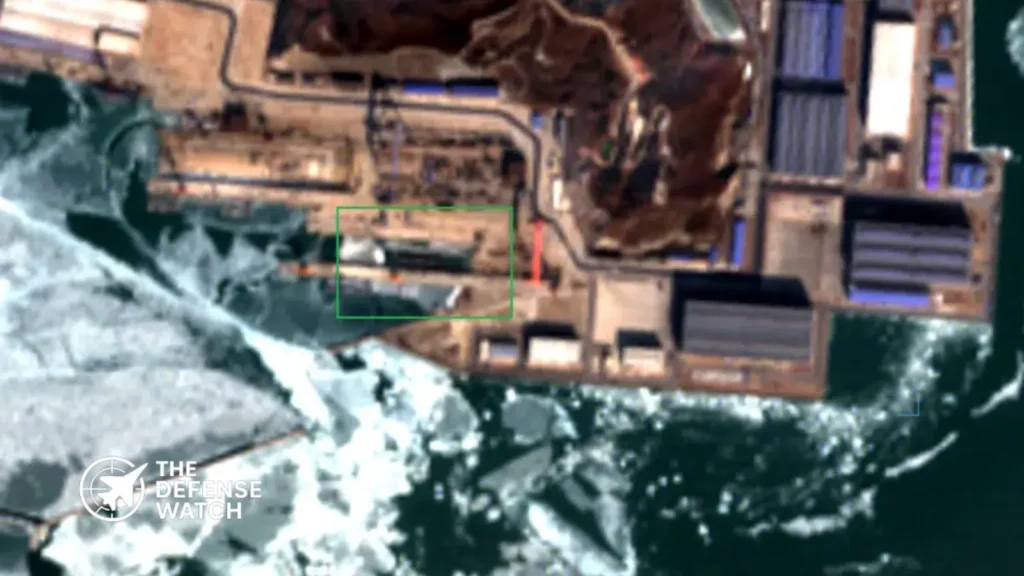
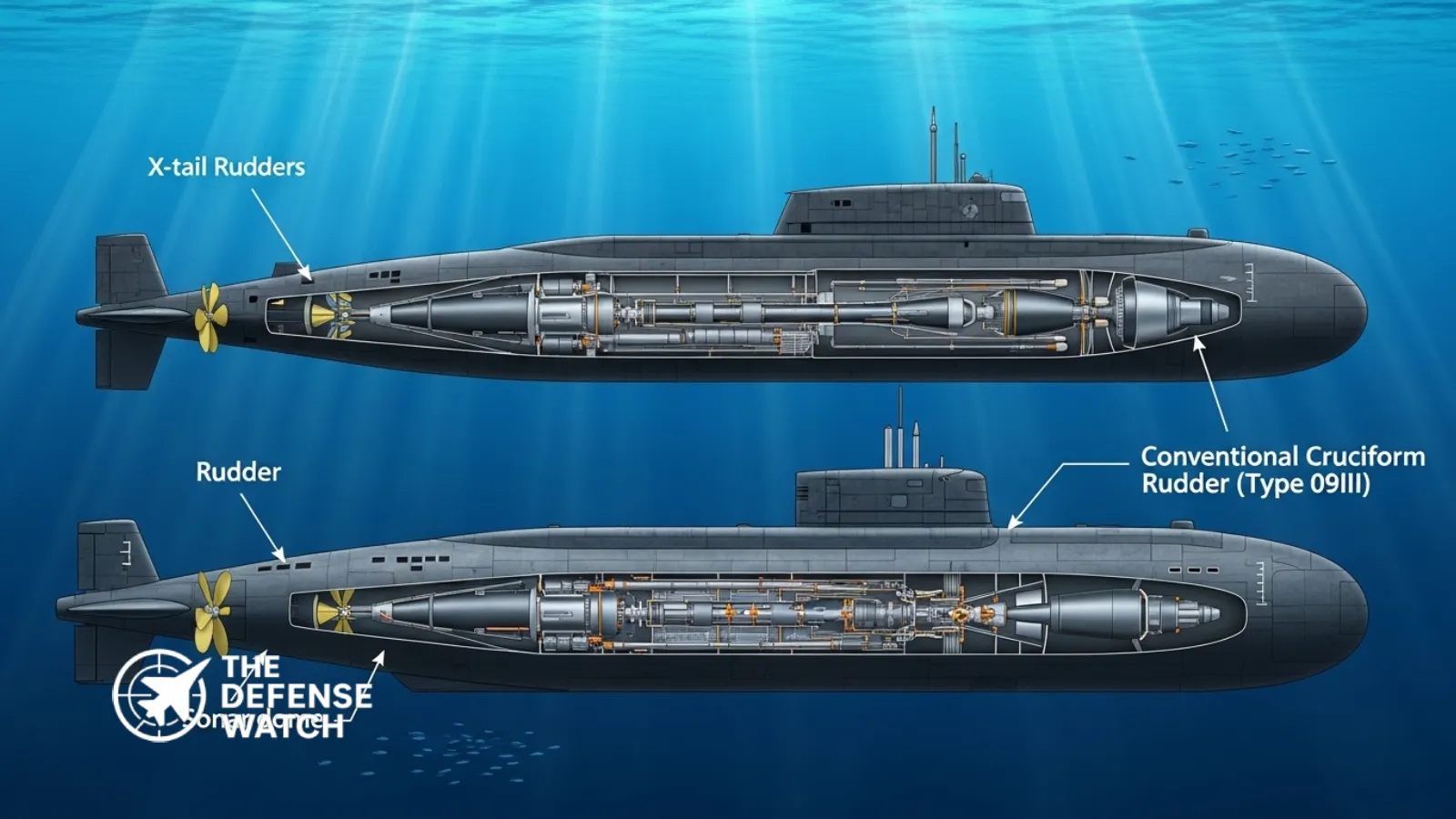
The most distinctive feature visible in satellite imagery is the prominent X-tail rudder arrangement with large control surfaces. This configuration represents the first use of X-form stern controls on a Chinese nuclear-powered submarine. The design choice aligns with modern submarine architecture trends favored by several Western navies for improved maneuverability and reduced acoustic signature.
Naval analysts note the X-tail configuration previously appeared on a smaller submarine design observed at Wuchang Shipbuilding in 2024, designated “Type 041” or “Zhou-class” by U.S. officials. The adoption of this arrangement on the Type 09V suggests China is implementing consistent design philosophies across its new-generation submarine programs.
Weapons Systems And Propulsion Configuration
Analysis of available satellite imagery indicates an unfinished compartment behind the sail that likely houses a vertical launch system for anti-ship and land-attack missiles. This arrangement would mirror the configuration on the preceding Type 09IIIB guided missile submarine, which reportedly carries 18 launchers in a three-abreast configuration.
The Type 09V almost certainly employs a pump-jet propulsion system rather than a traditional skewback propeller. This assessment aligns with the propulsion method used on the Type 09IIIB and meets performance expectations for a next-generation nuclear attack submarine design. Pump-jet propulsion offers reduced acoustic signatures compared to conventional propellers, a critical advantage for submarine operations.
The visible red-painted lower hull suggests reduced reserve buoyancy compared to earlier Chinese submarine designs. This characteristic may indicate a single-hull construction approach, departing from the double-hull arrangement used on all previous PLAN submarines. Single-hull designs maximize internal space efficiency but require more sophisticated hydrodynamic shaping.
Production Capacity And Strategic Implications
Since 2022, Bohai Shipbuilding has launched an estimated seven to eight Type 09IIIB guided missile nuclear submarines for the Chinese Navy. The facility’s demonstrated production capacity indicates China’s commitment to rapidly expanding its nuclear submarine fleet. The appearance of the Type 09V nuclear attack submarine suggests this expansion will continue with increasingly sophisticated designs.
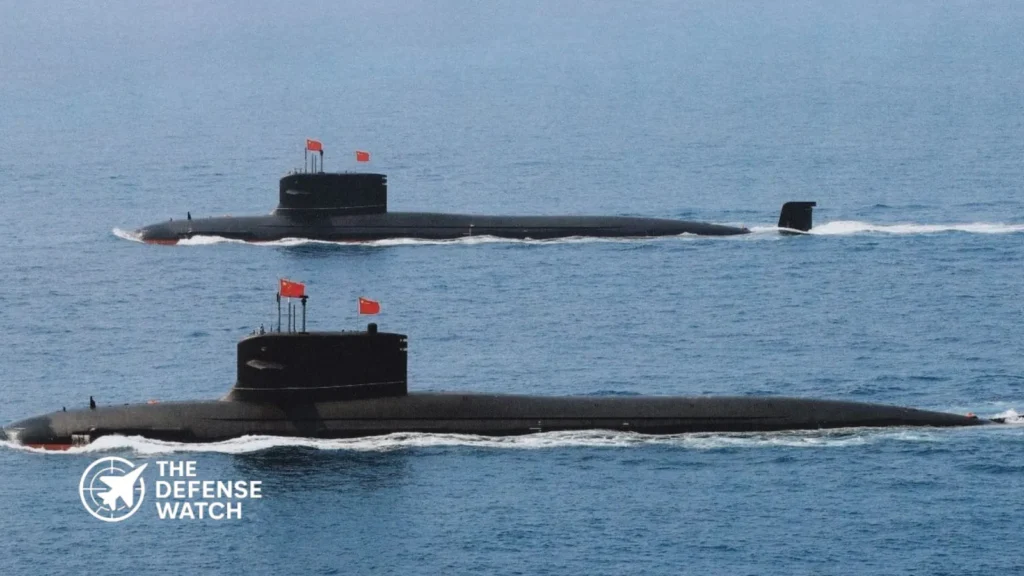
Defense analysts assess that Bohai Shipyard possesses substantial capacity for simultaneous production of multiple nuclear submarine classes. The wider beam of the Type 09V likely provides insights into China’s prospective Type 09VI ballistic missile submarine, which may adapt a derivative hull design.
Regional Responses To PLAN Submarine Expansion
The Chinese Type 09V nuclear submarine development is compelling regional responses from Indo-Pacific nations. Australia is pursuing a future fleet of nuclear-powered attack submarines under the AUKUS agreement with the United States and United Kingdom. Japan and South Korea have both considered nuclear submarine programs in recent defense policy discussions.
South Korea appears particularly likely to pursue its own nuclear attack submarine fleet, possibly with U.S. collaboration. Countries unable to operate nuclear-powered submarines are expected to enhance conventional submarine capabilities and invest in anti-submarine warfare systems.
The Type 09V represents China’s determination to field a modern, capable nuclear submarine force that can operate across the Indo-Pacific region. Regional navies are likely to increase investments in sea- and airborne ASW capabilities in response to the expanding PLAN submarine fleet.
Technical Specifications Remain Partially Undetermined
Several technical aspects of the Chinese Type 09V nuclear submarine remain speculative based on available satellite imagery. The torpedo tube arrangement, sonar array configuration, and exact missile armament specifications have not been confirmed through open-source intelligence.
The submarine’s dive plane configuration is not visible in current imagery. Naval analysts suggest the Type 09V may use retractable hull-mounted dive planes rather than the fairwater planes employed on previous Chinese submarines. This assessment contrasts with standard Chinese submarine design practice but aligns with modern SSN architecture.
The reactor type and power output remain unknown. Previous Chinese nuclear submarines have faced challenges with reactor noise levels and reliability. Whether the Type 09V incorporates new reactor technology represents a critical question for assessing its operational capabilities.
Comparative Analysis With Western Submarines
The Type 09V’s estimated displacement of 9,000-10,000 tons places it in a similar size category to the U.S. Navy’s Virginia-class submarines (7,800 tons) and the larger Russian Yasen-class (13,800 tons). The X-tail configuration is similar to that employed on Virginia-class submarines, suggesting Chinese designers are adopting proven Western design concepts.
The submarine’s length-to-beam ratio appears optimized for a balance between internal volume and hydrodynamic efficiency. This design philosophy reflects modern submarine architecture trends emphasizing reduced acoustic signatures and improved sensor integration.
Future PLAN Submarine Fleet Composition
The introduction of the Type 09V nuclear attack submarine indicates China’s submarine force will include multiple specialized classes rather than a single standardized design. The Type 09IIIB guided missile submarines provide land-attack and anti-surface warfare capabilities, while the Type 09V appears optimized for hunter-killer missions against enemy submarines and surface vessels.
China’s ballistic missile submarine force currently relies on the Type 09IVA (Jin-class) SSBN, which carries JL-2 submarine-launched ballistic missiles. The prospective Type 09VI SSBN may incorporate design elements from the Type 09V hull, potentially offering improved acoustic performance and deeper diving capabilities.
Implications For U.S. Naval Strategy
The Chinese Type 09V nuclear submarine represents a capability advancement that U.S. Navy planners must account for in force structure and operational planning. The submarine’s larger size suggests improved sensor suites, greater weapons payload, and extended operational range compared to previous PLAN attack submarines.
U.S. Indo-Pacific Command faces an expanding Chinese submarine threat that includes both nuclear and conventional platforms. The Type 09V adds to existing PLAN submarine capabilities that already include the Type 09III/09IIIA/09IIIB nuclear attack submarines and multiple classes of advanced conventional submarines including the Type 039A/B/C (Yuan-class).
The acceleration of Chinese submarine construction at Bohai and other facilities suggests the PLAN submarine fleet will continue growing in both quantity and quality throughout the 2020s and into the 2030s.
Get real time update about this post category directly on your device, subscribe now.
