
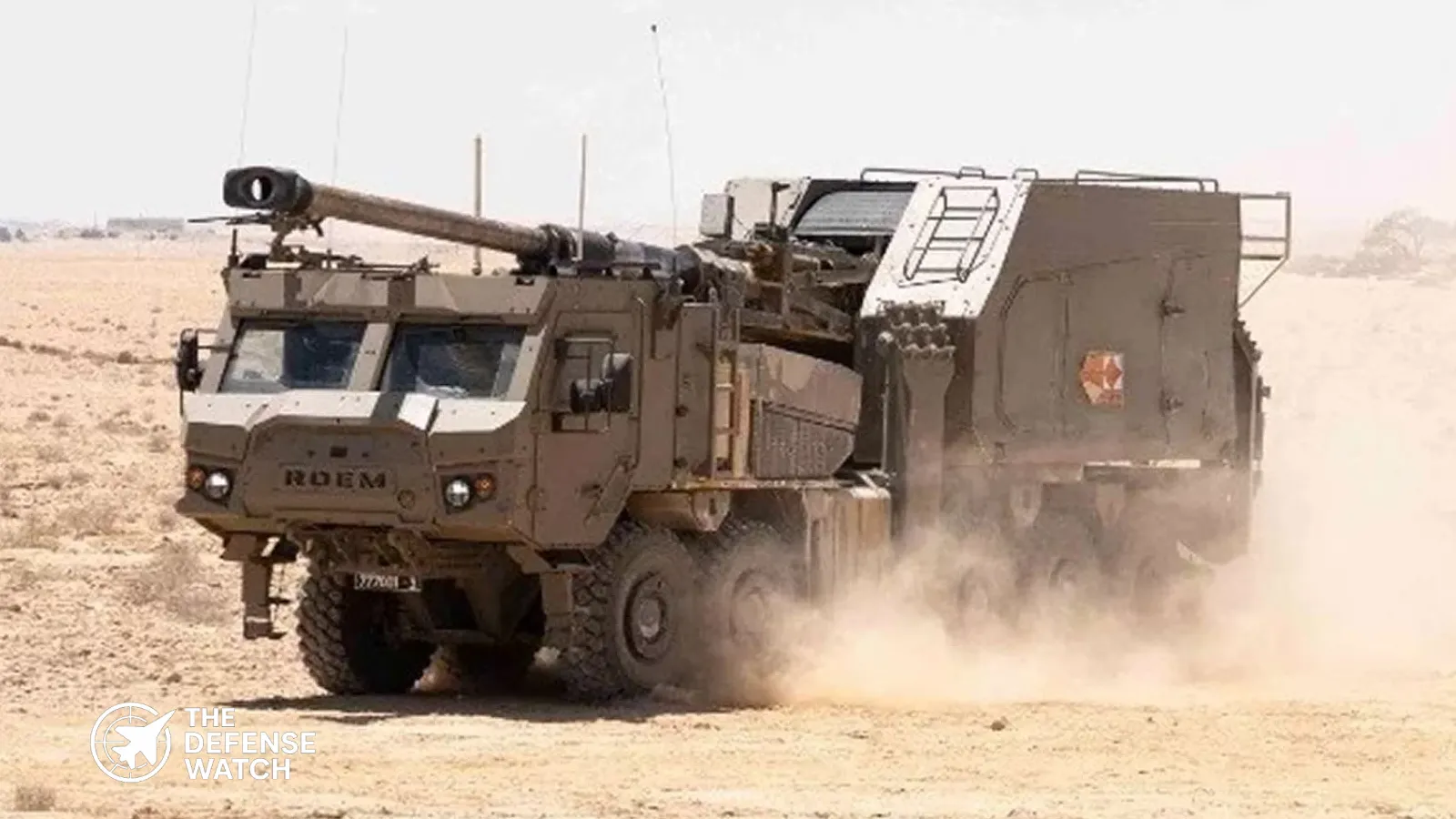
SIGMA 155 Roem Enters Israeli Service
The SIGMA 155 Roem artillery system has entered service with the Israel Defense Forces, marking a major step in replacing the long serving M109 self propelled howitzer. The new system reflects Israel’s push toward faster, more automated fires and reduced crew exposure on the modern battlefield.
According to reporting by Army Recognition, the SIGMA 155 Roem is designed as a fully automated 155 mm artillery platform. It combines high rates of fire with digital fire control and network integration, aligning Israeli artillery with current operational demands.
The system is expected to improve response time, accuracy, and survivability, key lessons drawn from recent high intensity conflicts.
Designed to Replace the M109
Israel has operated upgraded variants of the U.S. made M109 for decades. While reliable, the M109 requires larger crews and manual loading, which limits sustained fire and increases risk under counter battery threats.
The SIGMA 155 Roem addresses these limits through automation. The system uses an unmanned turret mounted on a tracked chassis, allowing the crew to operate from a protected compartment. Loading, laying, and firing are automated, reducing crew workload and exposure.
This shift mirrors a wider global trend, as armies seek to modernize tube artillery rather than rely solely on rockets or missiles.
Automation and Firepower
The SIGMA 155 Roem artillery system uses a 155 mm gun compatible with NATO standard ammunition. Automation enables rapid burst fire followed by quick displacement, a shoot and move approach critical against modern sensors and counter fire systems.
The platform is reported to support advanced fire missions, including multiple round simultaneous impact. This allows several shells fired at different trajectories to strike a target at the same time, increasing effect without increasing exposure time.
Digital fire control links the system to command networks, drones, and battlefield sensors. This improves target handoff and shortens the sensor to shooter timeline.
Crew Protection and Survivability
Crew survivability is a central design goal. By moving the crew away from the gun and ammunition handling process, the SIGMA 155 Roem reduces risk from blast, fragments, and counter battery fire.
The automated turret also lowers physical strain on crews, which supports sustained operations. In modern conflicts, artillery units often operate for extended periods under pressure, making automation a force multiplier.
Mobility remains key. Mounted on a tracked platform, the system is intended to keep pace with armored maneuver forces, unlike towed guns or lighter wheeled systems.
Fit Within Israeli Doctrine
Israeli artillery doctrine emphasizes speed, precision, and integration with intelligence and air assets. The SIGMA 155 Roem fits this approach by acting as part of a wider network rather than a standalone gun.
Israel has invested heavily in drones, sensors, and digital command systems. An automated artillery system that can rapidly receive and execute fire missions complements these investments.
The move also reflects lessons from regional conflicts, where artillery remains central to suppressing enemy forces, shaping maneuver, and providing responsive fire support.
Global Context and Comparisons
Several countries are fielding automated or semi automated artillery systems, including South Korea, Germany, and Sweden. Israel’s SIGMA 155 Roem places it firmly in this peer group, focusing on automation rather than sheer gun caliber.
Unlike wheeled systems optimized for expeditionary forces, Israel’s choice of a tracked platform reflects its terrain and operational needs. The emphasis is on survivability and integration with armored brigades.
Strategic Implications
Replacing the M109 with the SIGMA 155 Roem signals a long term commitment to tube artillery despite the rise of precision strike weapons. Guns remain cheaper per shot and better suited for sustained fire missions.
For Israel, the system strengthens deterrence by improving readiness and responsiveness without relying solely on air power. It also reduces manpower demands, an important factor for reserve heavy forces.
The program highlights how mid sized militaries are adapting legacy capabilities with automation rather than abandoning them.
What Comes Next
Further details on production scale and deployment timelines have not been fully disclosed. However, the entry of the SIGMA 155 Roem into service suggests the IDF is moving from testing to operational use.
As conflicts continue to show the value of artillery, systems like SIGMA 155 Roem are likely to shape how fires are delivered in future land warfare.
Get real time update about this post category directly on your device, subscribe now.
