
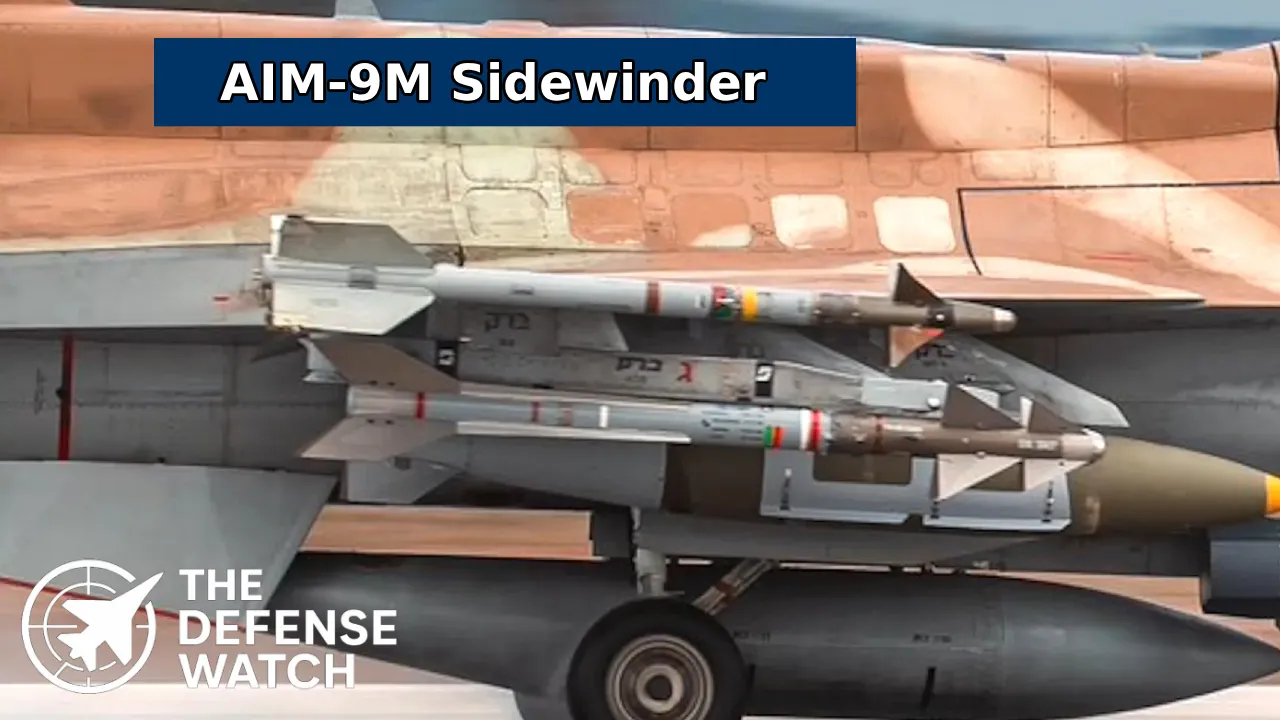
Israel Modifies Legacy AIM-9M Sidewinders to Better Engage Kamikaze Drones
In a significant move to enhance its drone defense capabilities, Israel has reportedly modified the infra-red (“heat-seeking”) seekers of its aging AIM-9M Sidewinder air-to-air missiles to more effectively intercept small, low-signature kamikaze drones. The changes, disclosed in a recent report, come amid rising drone threats — especially from long-range Iranian designs such as the Shahed-136.
What Happened — and When
According to a newly released analysis by the Foreign Policy Research Institute (FPRI), Israel carried out seeker modifications on its stockpile of AIM-9M Sidewinder missiles. These upgrades came as part of lessons learned following a wave of drone and missile attacks on April 13–14, 2024, during which the Israeli Defense Forces (IDF), supported by U.S. and allied aircraft, intercepted dozens of incoming unmanned aerial systems.
Although the precise technical nature of the modifications remains undisclosed, the report suggests the upgraded seekers significantly improve the missile’s ability to detect, track, and engage slow-flying, low-signature targets that were challenging for earlier variants.
Background: Why Modify the AIM-9M?
The AIM-9M Sidewinder is a decades-old short-range missile that traditionally relies on a non-imaging infrared seeker. While newer variants—like the AIM-9X—feature advanced imaging infrared (IIR) seekers, thrust-vectoring capabilities, and off-boresight targeting, many forces still operate large stocks of M-variant missiles due to their lower cost and widespread availability.
The FPRI report underscores a particular challenge posed by kamikaze drones such as the Shahed-136:
- They fly slowly, at speeds comparable to ground vehicles.
- They operate at low altitude, often near roadways, making radar-based detection more difficult due to “clutter” from terrain and other moving objects.
- Their infrared signature is small, complicating traditional IR-based targeting—unless the seeker is sensitive enough to discriminate them from ground clutter.
These factors reportedly rendered unmodified AIM-9M missiles less effective in shoot-down attempts, according to interviews with U.S. Air Force personnel cited in the FPRI report.
What the Report Says: Details of the Changes
- The FPRI analysis indicates that Israel has not publicly shared the seeker modifications with allies, including the United States.
- The modifications could involve both hardware and software changes, though the report does not distinguish which approach was used.
- It remains unclear whether “seeker” refers just to the infrared head or encompasses broader sub-systems, such as signal processing units or electronics.
- These upgraded AIM-9M missiles have reportedly been employed with considerable success against long-range one-way drones.
- Importantly, the report argues that sharing the seeker upgrades could be highly beneficial for countries that still use the AIM-9M, including the U.S., which continues to operate the variant.
Broader Context: Counter-Drone Strategies
Israel is not alone in adapting legacy systems for counter-drone roles. For instance:
- The U.S. Air Force has developed a specialized version of the APKWS II 70mm rocket, known as FALCO, which includes a proximity fuse optimized for aerial (“air-to-air”) engagements.
- More advanced missiles, like Israel’s AIM-9X, remain highly effective due to their imaging seekers, but they are more expensive and may not be available in large numbers on all aircraft.
The FPRI report recommends that, given the demonstrated improvements, Israel consider offering the modified AIM-9M technology to its allies — especially those that still rely on M-variant Sidewinders.
Policy and Strategic Implications
- For Israel, this upgrade represents an efficient way to repurpose existing missile inventory rather than procure wholly new air-to-air munitions.
- For partners and allies, particularly those with limited access to advanced missiles, the modified AIM-9M could provide a cost-effective but capable counter-drone option.
- There may be export or security considerations, as sharing seeker technology involves sensitive dual-use know-how.
What’s Next
- Further dissemination: Will Israel decide to share the modified seeker technology with its allies (e.g., the U.S., NATO partners, or Ukraine)?
- Operational evaluation: How widespread is the deployment of these upgraded missiles within the Israeli Air Force? Are they being used on multiple platforms or just a select few?
- Technological follow-up: Will other nations replicate this approach—i.e., retrofitting their older IR missiles—to meet evolving UAS threats?
- Counter-measures: As missile seekers improve, drone designers may aim to reduce IR signatures further, prompting a technological arms race in seeker design.
AIM-9M Sidewinder Missile – Full Specifications
AIM-9M Sidewinder Missile
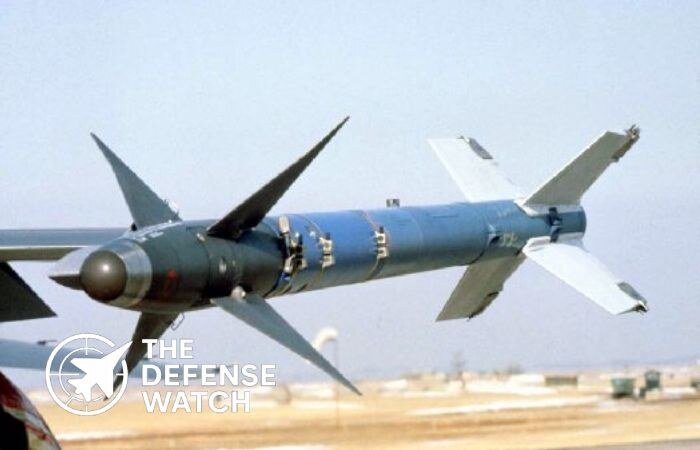

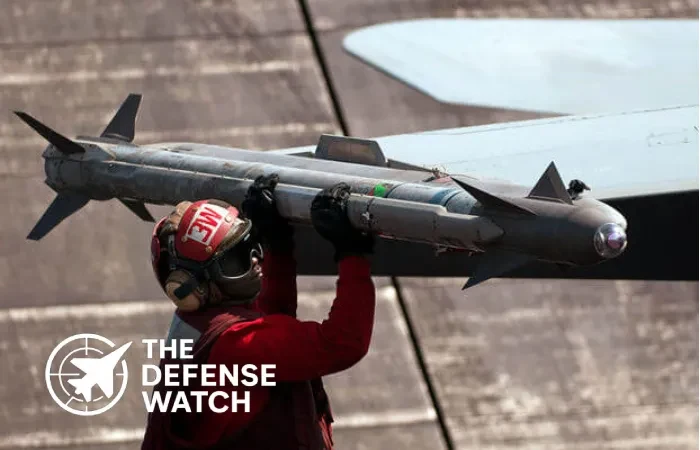
Full Specifications
1. General Information
| Name / Designation | AIM-9M Sidewinder |
| Type / Role | Short-Range Air-to-Air Missile |
| Country of Origin | United States |
| Manufacturer | Raytheon |
| Service Entry / Year Introduced | Mid-1980s |
| Operational Status | Active |
2. Performance & Range
| Range | Up to 18 km (Short Range) |
| Speed | Mach 2.5+ |
| Ceiling / Altitude Limit | Not publicly disclosed |
| Accuracy (CEP) | Infrared homing; high accuracy |
| Warhead Type | HE Continuous-Rod |
3. Guidance & Targeting
| Guidance System | Infrared Homing |
| Targeting Mode | Fire-and-Forget |
| Launch Platform Compatibility | F-16, F-15, F/A-18, AV-8B, etc. |
| Seeker Type | IR Seeker with CCM Enhancements |
4. Physical Characteristics
| Length | 2.87 m |
| Diameter | 0.127 m |
| Wingspan | 0.63 m |
| Launch Weight | ~85–90 kg |
| Propulsion | Solid-Fuel Rocket Motor |
5. Warhead & Payload
| Warhead Weight | ~9.4 kg |
| Explosive Type | High-Explosive Continuous-Rod |
| Detonation Mechanism | Proximity / Impact Fuse |
| Payload Options | Conventional |
6. Operational Use & Capabilities
| Operational Range Type | Short |
| Deployment Platform | Air |
| Target Types | Aircraft, Helicopters, UAVs |
| Combat Proven | Yes |
| Users / Operators | United States, NATO Partners |
PROS
- Highly reliable infrared fire-and-forget guidance
- Combat-proven with decades of operational history
- Wide compatibility with U.S. and allied aircraft
- Strong counter-countermeasure performance
- Low smoke motor improves aircraft survivability
CONS
- Older design compared to AIM-9X
- Limited off-boresight capability
- Less effective against modern stealth aircraft
- Requires favorable engagement angles
- Not equipped with imaging infrared technology
Table of Contents
AIM-9M Sidewinder Infrared Air-to-Air Missile
The AIM-9M Sidewinder remains one of the most recognizable and combat-proven short-range air-to-air missiles in U.S. aviation history. Designed for high-agility dogfighting and reliable target engagement, the missile has served as a core weapon on American fighter aircraft for decades. Known for its compact design, lethal warhead, and fire-and-forget infrared guidance, the AIM-9M represents a mature and trusted capability widely used across U.S. and allied forces.
Manufactured by Raytheon in the United States, the AIM-9M is an evolution of the earlier AIM-9L model, incorporating enhanced infrared counter-countermeasures, reduced smoke motor signatures, and improved seeker sensitivity. Its primary purpose is short-range aerial defense and offensive air-combat maneuvering, giving pilots a fast-reacting and highly reliable option during close-quarters engagements.
The AIM-9M features an infrared homing seeker, enabling passive tracking of target heat signatures without alerting the adversary. Operating at speeds exceeding Mach 2.5, it delivers rapid interception capability, while its effective range of up to 18 km allows for flexible engagement envelopes. Its 9.4-kg high-explosive continuous-rod warhead provides lethal damage against enemy aircraft, supported by a proximity fuse for optimized detonation.
Operational across numerous U.S. platforms—including the F-16, F/A-18, F-15, AV-8B, and various rotary-wing aircraft—the AIM-9M continues to serve despite the emergence of newer models like the AIM-9X. Its proven combat history, ease of integration, and dependable performance make it a long-standing asset in U.S. airpower.
AIM-9M Sidewinder Missile Price in United State
Pricing varies widely due to contract size and configuration, but U.S. defense procurement records place AIM-9M unit costs generally in the $200,000–$300,000 range, depending on upgrade packages and integration requirements.
FAQs
The AIM-9X is the newest, most advanced Sidewinder variant, featuring imaging infrared (IIR) guidance, high off-boresight capability, thrust-vectoring control, and compatibility with helmet-mounted cueing systems.
The AIM-9M, by comparison, uses an older IR seeker, has limited off-boresight performance, and lacks thrust-vectoring. The AIM-9X is significantly more maneuverable, more resistant to countermeasures, and capable of engaging targets far outside the forward missile envelope.
The AIM-9L was the first fully “all-aspect” Sidewinder, capable of locking onto targets from any angle. The AIM-9M builds on the AIM-9L design with:
Improved counter-countermeasures (CCM)
Reduced-smoke rocket motor for better pilot visibility
Enhanced IR seeker sensitivity
Greater reliability in cluttered environments
The M-variant is essentially a refined, more survivable version of the L-variant.
Yes. While the AIM-9X is now the primary U.S. short-range air-to-air missile, the AIM-9M remains in limited service, mainly in training, legacy aircraft, and allied air forces. Some U.S. units still maintain stockpiles for secondary roles.
Costs vary by contract year and upgrade package, but historical U.S. procurement data places the unit price between $200,000 and $300,000. Refurbished or life-extended versions can differ depending on configuration.
In War Thunder, the AIM-9M is typically represented as an upgraded infrared-guided missile with better flare resistance, higher tracking performance, and reduced smoke, compared to older Sidewinder variants. Players value it for its improved seeker and reliability, making it effective in close-range engagements, especially against maneuvering opponents.
Get real time update about this post category directly on your device, subscribe now.
Reviews
Sorry, reviews are closed for this product.
Get real time update about this post category directly on your device, subscribe now.
