

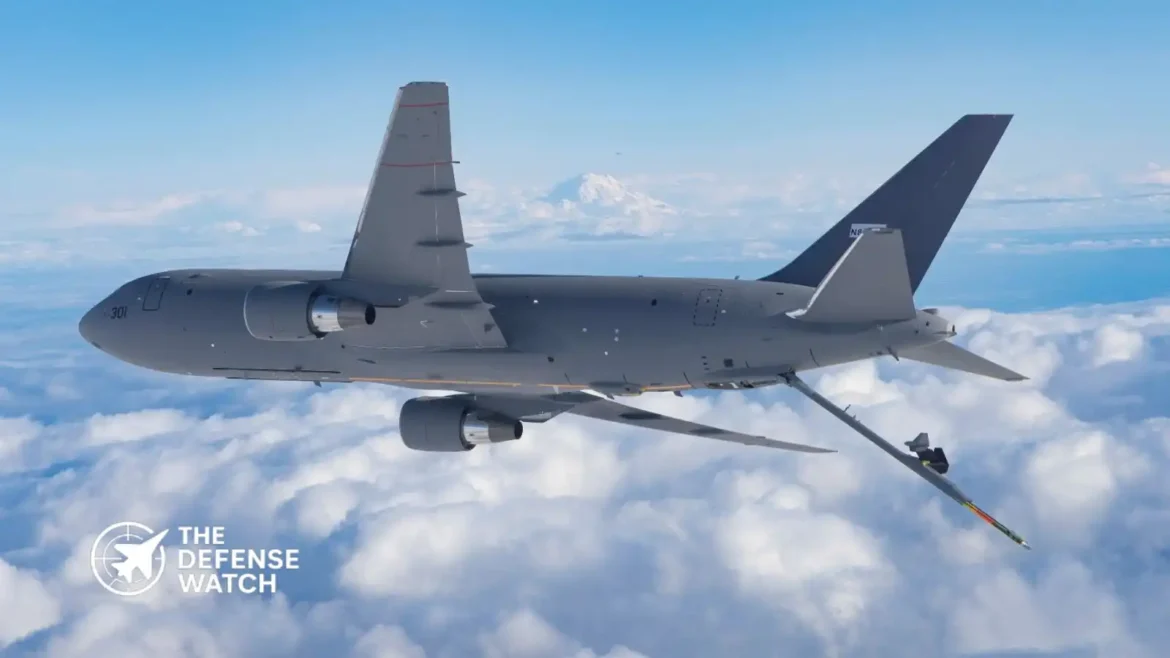
Executive Summary: The first Boeing KC-46A Pegasus, designated “Gideon” in Israeli service, successfully conducted its maiden sortie on May 5, 2026. This milestone marks a critical phase in the Israeli Air Force’s (IAF) efforts to replace its vintage KC-707 tankers and extend the operational reach of its strike groups amid escalating regional tensions.
Strategic Integration and Flight Testing
The inaugural flight, conducted at Boeing’s airfield in the United States, represents the first of six aircraft currently on order for the IAF. This maiden sortie validates the integration of Israeli-specific mission systems—including advanced indigenous electronic warfare (EW) suites and communication arrays—onto the standard 767-2C airframe.
The Israeli Ministry of Defense (MoD) confirmed that the aircraft is scheduled for delivery within one month, following final acceptance trials. The “Gideon” will serve as the backbone of Israel’s long-range logistics, providing the fuel capacity and defensive systems necessary for operations far beyond the nation’s borders.
Technical Comparison: Legacy vs. Next-Generation
The transition from the converted Boeing 707 (Re’em) to the KC-46A represents a generational leap in survivability and mission flexibility.
Enhanced Capabilities for the 21st Century
The KC-46A offers several force-multiplier advantages that the aging KC-707 and KC-130H fleets cannot match:
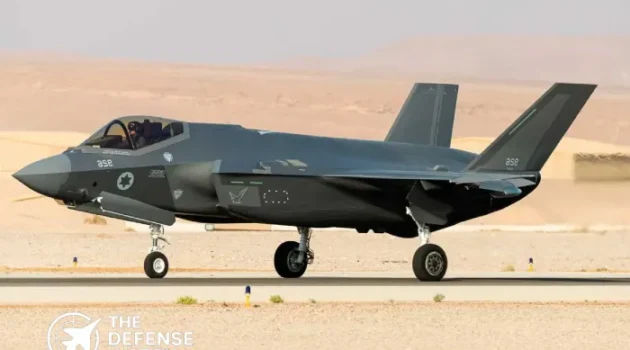
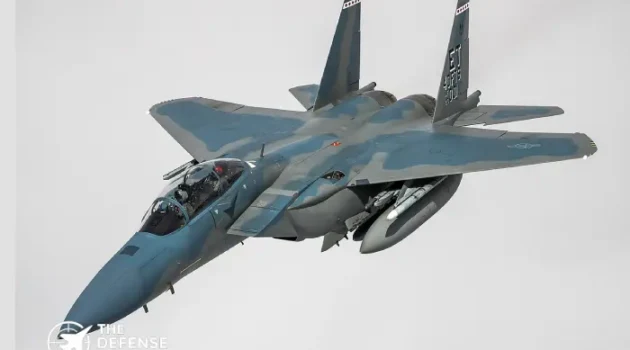
- Multi-Platform Compatibility: The “Gideon” is equipped with both the fly-by-wire refueling boom and the hose-and-drogue wing aerial refueling pods, allowing it to service the F-35I Adir, F-15IA, and various rotary-wing assets in a single mission.
- Survivability Suites: Unlike commercial conversions, the KC-46 is hardened against electromagnetic pulses (EMP) and features chemical-biological protection and advanced infrared countermeasures.
- Tactical Data Links: Integrated networking allows the tanker to act as a high-altitude data relay, bridging communications between fifth-generation fighters and ground command.
- Aeromedical Evacuation: The aircraft can be rapidly reconfigured to transport 54 passengers or 58 patients in a medevac role.
Strategic Context: Regional Deterrence
The maiden flight of the KC-46 occurs concurrently with the Israeli Ministerial Committee on Procurement’s approval to acquire two additional fighter squadrons: a fourth F-35I squadron and a second F-15IA (based on the F-15EX) squadron.
With an aging fleet of 13 primary tankers—many averaging nearly 50 years of service—the IAF’s long-range strike capability has faced increasing maintenance pressure. The introduction of the “Gideon” is widely viewed by defense analysts as a prerequisite for any potential long-range operations against hardened targets in the “Third Circle” (Iran). By significantly increasing the fuel offload available at distance, the KC-46 ensures that Israel’s fleet of 48 F-35I and 88 F-15 variants can maintain a persistent presence over distant theaters of operation.
Procurement Outlook
The US Government approved the sale of up to eight KC-46s in 2020, with Israel so far firming orders for six. The total value of the initial acquisition is estimated at $1.2 billion, funded primarily through Foreign Military Financing (FMF). Following the delivery of the first unit in June 2026, the remaining five aircraft are expected to be delivered through 2028, facilitating the phased retirement of the remaining KC-707 airframes.
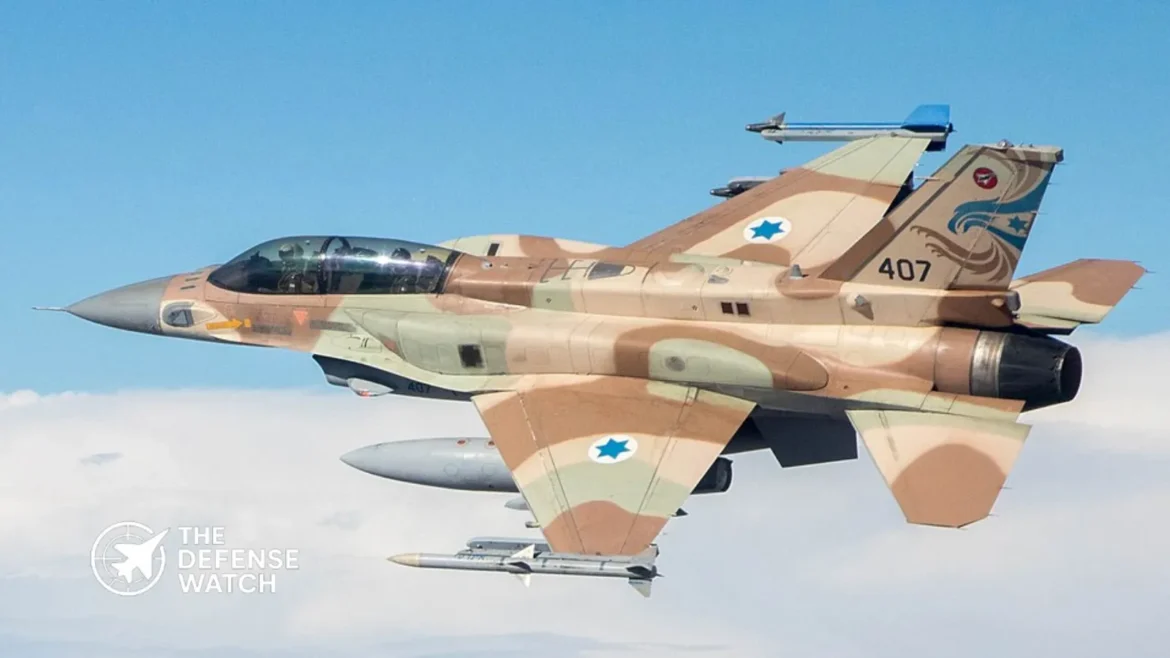
- ► The Israel Defense Forces conducted overnight strikes in southern Lebanon.
- ► Targets included weapon storage facilities and missile launchers linked to Hezbollah.
- ► The IDF said the infrastructure violated existing understandings between Israel and Lebanon.
- ► No immediate casualty figures were released by Israeli authorities.
- ► Border tensions between Israel and Hezbollah remain elevated.
IDF Strikes Hezbollah Infrastructure In Southern Lebanon
IDF strikes Hezbollah infrastructure in southern Lebanon overnight, targeting weapon storage facilities, missile launchers, and military sites, according to an official statement from the Israel Defense Forces.
The Israeli military said the sites were used by the Hezbollah to advance attacks against Israeli forces and the State of Israel. The strikes took place across several areas in southern Lebanon, though specific locations were not disclosed.
In its statement, the IDF said the presence of such infrastructure constituted a violation of the understandings between Israel and Lebanon. The military added that it would continue operating to remove threats along the northern border.
What The IDF Says Was Targeted
According to the IDF, the overnight operation focused on:
- Weapon storage facilities
- Missile launchers
- Military sites linked to Hezbollah operational planning
Israeli officials did not release details on the types of aircraft or munitions used. The IDF did not report Israeli casualties, and there was no immediate independent confirmation of damage assessments.
Hezbollah has not yet issued a formal statement on the reported strikes.
Strategic Context: Northern Border Tensions
The IDF strikes Hezbollah infrastructure come amid continued instability along the Israel Lebanon frontier. Since the escalation that followed the October 2023 war in Gaza, exchanges of fire between Israel and Hezbollah have occurred periodically.
Under UN Security Council Resolution 1701, adopted after the 2006 Lebanon War, armed groups other than the Lebanese Armed Forces and UNIFIL are not permitted to operate south of the Litani River. Israel has repeatedly accused Hezbollah of maintaining military infrastructure in violation of those terms.
The Lebanese government has often denied systematic violations, while Hezbollah maintains that its posture is defensive. UNIFIL has regularly reported tensions and incidents in its periodic briefings.
Operational Patterns And Military Implications
IDF strikes Hezbollah infrastructure in southern Lebanon follow a pattern of targeted air operations designed to degrade weapons stockpiles and launch capabilities before they can be used.
From a military standpoint, storage sites and launchers are high value targets. Destroying launchers reduces immediate firing capability. Striking storage facilities disrupts supply chains and limits sustained operations.
Such operations also signal deterrence. By publicly confirming these strikes, the IDF reinforces its stated red line against advanced weapons transfers and forward deployment near the border.
At the same time, each strike carries escalation risk. Hezbollah maintains a significant arsenal of rockets and missiles, according to assessments by the U.S. Defense Intelligence Agency and Israeli security officials. Any sustained exchange could expand beyond localized incidents.
Legal And Diplomatic Dimensions
The IDF framed the strikes as a response to violations of existing understandings between Israel and Lebanon. While no new formal agreement was cited, Israeli officials have consistently referenced Resolution 1701 and subsequent informal arrangements aimed at limiting Hezbollah activity near the border.
The Lebanese Armed Forces have limited capacity in southern Lebanon, and Hezbollah operates as both a political party and an armed organization. This dual role complicates enforcement mechanisms and diplomatic engagement.
Washington has continued to call for de escalation along the Israel Lebanon border. U.S. officials have supported diplomatic efforts aimed at preventing a broader regional conflict.
Regional Security Outlook
IDF strikes Hezbollah infrastructure in southern Lebanon reflect the fragile security environment across the region. With multiple fronts active and Iranian backed groups operating in Lebanon, Syria, Iraq, and Yemen, the northern Israeli front remains a key flashpoint.
Military analysts note that targeted strikes are intended to manage threats without triggering full scale war. However, miscalculation remains a persistent concern.
For now, Israeli officials say operations will continue as necessary to remove threats. Whether this round of strikes leads to further retaliation will depend on Hezbollah’s response and ongoing diplomatic efforts behind the scenes.

The Israel Defense Forces (IDF) are preparing to receive the Iron Beam laser interceptor system by the end of this month, a key step in advancing the nation’s multi-layered missile defense strategy. The system, developed by Israel Aerospace Industries (IAI), is expected to strengthen Israel’s capability to counter short-range rockets, mortars, and unmanned aerial threats.
Background: The Iron Beam Program
The Iron Beam is a directed-energy air defense system designed to complement Israel’s existing Iron Dome, David’s Sling, and Arrow missile networks. Utilizing high-energy laser technology, it can intercept incoming projectiles at lower altitudes, offering a cost-effective alternative to conventional interceptor missiles. The system has been under development for nearly a decade, with extensive testing demonstrating its potential for precise, rapid-response defense against saturation attacks.
According to IAI, the laser operates in the tens of kilowatts range and is capable of targeting threats at distances up to several kilometers. Unlike traditional interceptors, the Iron Beam does not rely on explosive warheads, significantly reducing collateral damage and operational costs.
Deployment Details and Capabilities
The upcoming deployment marks the first operational rollout of the Iron Beam within IDF units. Israeli defense officials confirm that the system will initially be stationed in high-risk areas prone to short-range rocket fire. While exact locations remain classified, the deployment aligns with Israel’s ongoing efforts to secure its southern and northern borders.
A senior IDF official stated, “Iron Beam adds a crucial layer to our missile defense architecture, providing rapid and precise interception against a wide range of aerial threats.” The system has already undergone multiple live-fire exercises, successfully neutralizing drone targets and short-range rockets.
The Iron Beam’s deployment will be integrated with the IDF’s existing command-and-control infrastructure, allowing seamless coordination with radar networks and other missile defense layers. This integration ensures early threat detection, target tracking, and automated interception, reducing response times significantly.
Strategic and Operational Impact
Analysts highlight that the operational deployment of laser-based interceptors represents a shift in modern air defense philosophy. While traditional missile interceptors remain effective, high-energy lasers provide virtually unlimited “shots” as long as power supply is maintained, reducing reliance on expensive missile stockpiles.
Moreover, the Iron Beam enhances Israel’s defensive posture amid regional instability and growing drone proliferation. The system’s ability to counter swarm attacks is particularly relevant given recent trends in the use of unmanned aerial systems by non-state actors.
Defense experts note that while laser systems have limitations, including weather sensitivity and range constraints, the Iron Beam’s deployment signals Israel’s commitment to maintaining a technological edge in air defense.
Looking Ahead
With the Iron Beam set to become operational by the end of the month, the IDF joins a select group of militaries worldwide exploring directed-energy solutions for missile defense. Continuous testing and eventual full-scale deployment are expected to further refine the system’s capabilities, ensuring reliable protection against a broad spectrum of aerial threats.
The coming months will provide insight into how the Iron Beam complements Israel’s broader missile defense ecosystem and its effectiveness under operational conditions.


Israel Modifies Legacy AIM-9M Sidewinders to Better Engage Kamikaze Drones
In a significant move to enhance its drone defense capabilities, Israel has reportedly modified the infra-red (“heat-seeking”) seekers of its aging AIM-9M Sidewinder air-to-air missiles to more effectively intercept small, low-signature kamikaze drones. The changes, disclosed in a recent report, come amid rising drone threats — especially from long-range Iranian designs such as the Shahed-136.
What Happened — and When
According to a newly released analysis by the Foreign Policy Research Institute (FPRI), Israel carried out seeker modifications on its stockpile of AIM-9M Sidewinder missiles. These upgrades came as part of lessons learned following a wave of drone and missile attacks on April 13–14, 2024, during which the Israeli Defense Forces (IDF), supported by U.S. and allied aircraft, intercepted dozens of incoming unmanned aerial systems.
Although the precise technical nature of the modifications remains undisclosed, the report suggests the upgraded seekers significantly improve the missile’s ability to detect, track, and engage slow-flying, low-signature targets that were challenging for earlier variants.
Background: Why Modify the AIM-9M?
The AIM-9M Sidewinder is a decades-old short-range missile that traditionally relies on a non-imaging infrared seeker. While newer variants—like the AIM-9X—feature advanced imaging infrared (IIR) seekers, thrust-vectoring capabilities, and off-boresight targeting, many forces still operate large stocks of M-variant missiles due to their lower cost and widespread availability.
The FPRI report underscores a particular challenge posed by kamikaze drones such as the Shahed-136:
- They fly slowly, at speeds comparable to ground vehicles.
- They operate at low altitude, often near roadways, making radar-based detection more difficult due to “clutter” from terrain and other moving objects.
- Their infrared signature is small, complicating traditional IR-based targeting—unless the seeker is sensitive enough to discriminate them from ground clutter.
These factors reportedly rendered unmodified AIM-9M missiles less effective in shoot-down attempts, according to interviews with U.S. Air Force personnel cited in the FPRI report.
What the Report Says: Details of the Changes
- The FPRI analysis indicates that Israel has not publicly shared the seeker modifications with allies, including the United States.
- The modifications could involve both hardware and software changes, though the report does not distinguish which approach was used.
- It remains unclear whether “seeker” refers just to the infrared head or encompasses broader sub-systems, such as signal processing units or electronics.
- These upgraded AIM-9M missiles have reportedly been employed with considerable success against long-range one-way drones.
- Importantly, the report argues that sharing the seeker upgrades could be highly beneficial for countries that still use the AIM-9M, including the U.S., which continues to operate the variant.
Broader Context: Counter-Drone Strategies
Israel is not alone in adapting legacy systems for counter-drone roles. For instance:
- The U.S. Air Force has developed a specialized version of the APKWS II 70mm rocket, known as FALCO, which includes a proximity fuse optimized for aerial (“air-to-air”) engagements.
- More advanced missiles, like Israel’s AIM-9X, remain highly effective due to their imaging seekers, but they are more expensive and may not be available in large numbers on all aircraft.
The FPRI report recommends that, given the demonstrated improvements, Israel consider offering the modified AIM-9M technology to its allies — especially those that still rely on M-variant Sidewinders.
Policy and Strategic Implications
- For Israel, this upgrade represents an efficient way to repurpose existing missile inventory rather than procure wholly new air-to-air munitions.
- For partners and allies, particularly those with limited access to advanced missiles, the modified AIM-9M could provide a cost-effective but capable counter-drone option.
- There may be export or security considerations, as sharing seeker technology involves sensitive dual-use know-how.
What’s Next
- Further dissemination: Will Israel decide to share the modified seeker technology with its allies (e.g., the U.S., NATO partners, or Ukraine)?
- Operational evaluation: How widespread is the deployment of these upgraded missiles within the Israeli Air Force? Are they being used on multiple platforms or just a select few?
- Technological follow-up: Will other nations replicate this approach—i.e., retrofitting their older IR missiles—to meet evolving UAS threats?
- Counter-measures: As missile seekers improve, drone designers may aim to reduce IR signatures further, prompting a technological arms race in seeker design.
AIM-9M Sidewinder Missile – Full Specifications
AIM-9M Sidewinder Missile
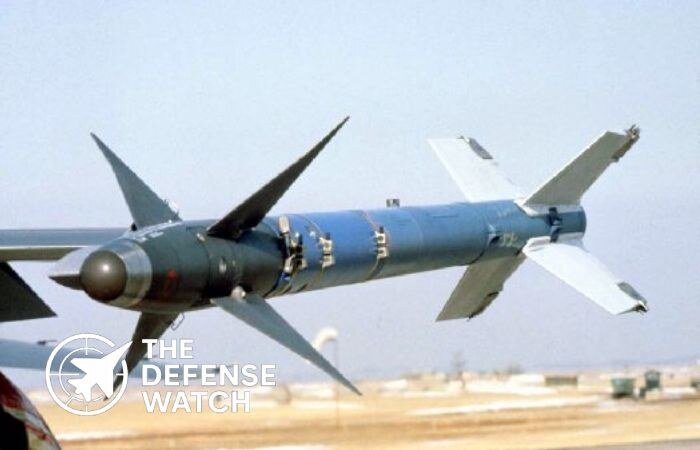

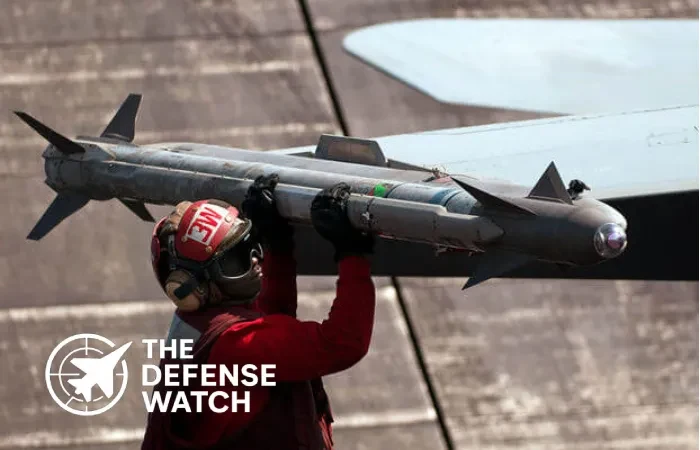
Defense Systems Full Specifications
1. General Information
| Name / Designation | AIM-9M Sidewinder |
| Type / Role | Short-Range Air-to-Air Missile |
| Country of Origin | United States |
| Manufacturer | Raytheon |
| Service Entry / Year Introduced | Mid-1980s |
| Operational Status | Active |
2. Performance & Range
| Range | Up to 18 km (Short Range) |
| Speed | Mach 2.5+ |
| Ceiling / Altitude Limit | Not publicly disclosed |
| Accuracy (CEP) | Infrared homing; high accuracy |
| Warhead Type | HE Continuous-Rod |
3. Guidance & Targeting
| Guidance System | Infrared Homing |
| Targeting Mode | Fire-and-Forget |
| Launch Platform Compatibility | F-16, F-15, F/A-18, AV-8B, etc. |
| Seeker Type | IR Seeker with CCM Enhancements |
4. Physical Characteristics
| Length | 2.87 m |
| Diameter | 0.127 m |
| Wingspan | 0.63 m |
| Launch Weight | ~85–90 kg |
| Propulsion | Solid-Fuel Rocket Motor |
5. Warhead & Payload
| Warhead Weight | ~9.4 kg |
| Explosive Type | High-Explosive Continuous-Rod |
| Detonation Mechanism | Proximity / Impact Fuse |
| Payload Options | Conventional |
6. Operational Use & Capabilities
| Operational Range Type | Short |
| Deployment Platform | Air |
| Target Types | Aircraft, Helicopters, UAVs |
| Combat Proven | Yes |
| Users / Operators | United States, NATO Partners |
PROS
- Highly reliable infrared fire-and-forget guidance
- Combat-proven with decades of operational history
- Wide compatibility with U.S. and allied aircraft
- Strong counter-countermeasure performance
- Low smoke motor improves aircraft survivability
CONS
- Older design compared to AIM-9X
- Limited off-boresight capability
- Less effective against modern stealth aircraft
- Requires favorable engagement angles
- Not equipped with imaging infrared technology
AIM-9M Sidewinder Infrared Air-to-Air Missile
The AIM-9M Sidewinder remains one of the most recognizable and combat-proven short-range air-to-air missiles in U.S. aviation history. Designed for high-agility dogfighting and reliable target engagement, the missile has served as a core weapon on American fighter aircraft for decades. Known for its compact design, lethal warhead, and fire-and-forget infrared guidance, the AIM-9M represents a mature and trusted capability widely used across U.S. and allied forces.
Manufactured by Raytheon in the United States, the AIM-9M is an evolution of the earlier AIM-9L model, incorporating enhanced infrared counter-countermeasures, reduced smoke motor signatures, and improved seeker sensitivity. Its primary purpose is short-range aerial defense and offensive air-combat maneuvering, giving pilots a fast-reacting and highly reliable option during close-quarters engagements.
The AIM-9M features an infrared homing seeker, enabling passive tracking of target heat signatures without alerting the adversary. Operating at speeds exceeding Mach 2.5, it delivers rapid interception capability, while its effective range of up to 18 km allows for flexible engagement envelopes. Its 9.4-kg high-explosive continuous-rod warhead provides lethal damage against enemy aircraft, supported by a proximity fuse for optimized detonation.
Operational across numerous U.S. platforms—including the F-16, F/A-18, F-15, AV-8B, and various rotary-wing aircraft—the AIM-9M continues to serve despite the emergence of newer models like the AIM-9X. Its proven combat history, ease of integration, and dependable performance make it a long-standing asset in U.S. airpower.
AIM-9M Sidewinder Missile Price in United State
Pricing varies widely due to contract size and configuration, but U.S. defense procurement records place AIM-9M unit costs generally in the $200,000–$300,000 range, depending on upgrade packages and integration requirements.
FAQs
The AIM-9X is the newest, most advanced Sidewinder variant, featuring imaging infrared (IIR) guidance, high off-boresight capability, thrust-vectoring control, and compatibility with helmet-mounted cueing systems.
The AIM-9M, by comparison, uses an older IR seeker, has limited off-boresight performance, and lacks thrust-vectoring. The AIM-9X is significantly more maneuverable, more resistant to countermeasures, and capable of engaging targets far outside the forward missile envelope.
The AIM-9L was the first fully “all-aspect” Sidewinder, capable of locking onto targets from any angle. The AIM-9M builds on the AIM-9L design with:
Improved counter-countermeasures (CCM)
Reduced-smoke rocket motor for better pilot visibility
Enhanced IR seeker sensitivity
Greater reliability in cluttered environments
The M-variant is essentially a refined, more survivable version of the L-variant.
Yes. While the AIM-9X is now the primary U.S. short-range air-to-air missile, the AIM-9M remains in limited service, mainly in training, legacy aircraft, and allied air forces. Some U.S. units still maintain stockpiles for secondary roles.
Costs vary by contract year and upgrade package, but historical U.S. procurement data places the unit price between $200,000 and $300,000. Refurbished or life-extended versions can differ depending on configuration.
In War Thunder, the AIM-9M is typically represented as an upgraded infrared-guided missile with better flare resistance, higher tracking performance, and reduced smoke, compared to older Sidewinder variants. Players value it for its improved seeker and reliability, making it effective in close-range engagements, especially against maneuvering opponents.