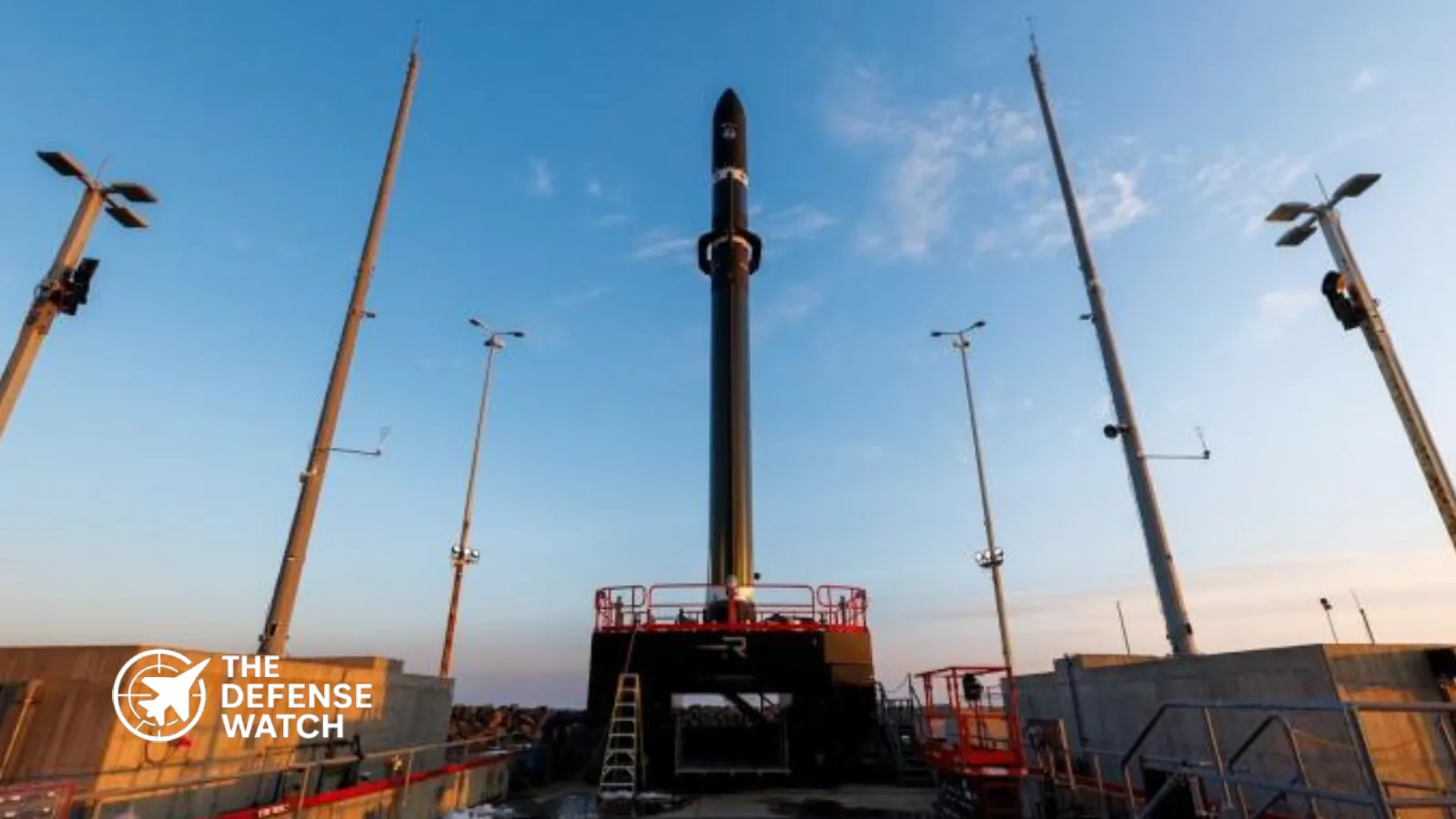
- ► Hypersonix Launch Systems’ DART AE completed its first-ever flight in late February 2025, reaching speeds exceeding Mach 5 after launch from NASA’s Wallops Island facility in Virginia.
- ► The 3.5-meter autonomous vehicle is powered by the SPARTAN scramjet — a fully 3D-printed, hydrogen-fueled engine capable of sustained thrust up to Mach 7 with zero CO₂ emissions.
- ► The mission, named “That’s Not A Knife” by Rocket Lab and “Cassowary Vex” by the U.S. Defense Innovation Unit, was conducted under the Pentagon’s HyCAT hypersonic testing program.
- ► DART AE was boosted into the upper atmosphere by Rocket Lab’s HASTE rocket from Launch Complex 2 at the Mid-Atlantic Regional Spaceport before its SPARTAN engine ignited for hypersonic flight.
- ► The flight followed Hypersonix’s A$46 million Series A funding round backed by Australia’s National Reconstruction Fund Corporation, Saab, High Tor Capital, and other investors.
Australia’s DART AE Completes First Hypersonic Flight In Landmark Test For U.S. Defense Program
Hypersonix Launch Systems has completed the first flight of its DART AE hypersonic aircraft, which reached speeds above Mach 5 after launching from NASA’s Wallops Island facility in Virginia. The achievement marks a pivotal moment not only for the Brisbane-based aerospace firm, but for the broader U.S.-allied hypersonic development ecosystem — and signals that allied industry is increasingly capable of delivering cutting-edge test platforms to American defense programs.
For a sector long dominated by U.S. and Chinese state programs, an Australian startup achieving sustained hypersonic scramjet flight under a Pentagon contract is no small matter.
The Mission: “That’s Not A Knife”
The mission saw DART AE carried into the upper atmosphere aboard Rocket Lab’s HASTE rocket, purpose-built for hypersonic test missions. At the planned deployment point, DART AE separated and the SPARTAN engine ignited, powering the aircraft through its hypersonic flight profile.
The flight was conducted under the U.S. Department of Defense’s Defense Innovation Unit, with Rocket Lab’s HASTE launch vehicle lifting off from Rocket Lab Launch Complex 2 at the Virginia Spaceport Authority’s Mid-Atlantic Regional Spaceport on Wallops Island.
The dual mission names reflect the collaborative nature of the program — “Cassowary Vex” designated by the DIU and “That’s Not A Knife” chosen by Rocket Lab, a nod to the Australian cultural reference that underscores the flight’s national significance.
What Is DART AE?
DART AE is an autonomous 3D-printed, hydrogen-fueled scramjet technology demonstrator and is the world’s first entirely 3D-printed airframe of a hypersonic launch vehicle. Its SPARTAN scramjet engine, powered by green hydrogen, provides the necessary thrust to propel DART at hypersonic speeds. This air-breathing engine emits zero CO₂ during flight.
The DART AE hypersonic system is 3.5 meters long and can travel up to a range of 1,000 kilometers at a speed of Mach 7. It can be launched via an unguided sounding rocket, a guided rocket, or air-launched.
Unlike solid-fuel or liquid-fuel ballistic test vehicles, DART AE’s scramjet design requires the vehicle to be accelerated to Mach 5 before the engine can sustain combustion — a key technical threshold that distinguishes scramjet-powered hypersonics from conventional boost-glide systems. The SPARTAN engine’s ability to self-ignite, throttle, and restart mid-flight represents a meaningful engineering advancement over prior scramjet demonstrators.
Why This Flight Matters For U.S. Defense
The launch is part of the Pentagon’s Defense Innovation Unit HyCAT program, which aims to develop affordable test platforms for hypersonic technologies. Hypersonix was selected for the program in March 2023, beating out more than 60 applicants.
The DIU’s HyCAT initiative reflects a deliberate shift in American defense acquisition strategy: rather than relying exclusively on large prime contractors for expensive, one-of-a-kind hypersonic demonstrators, the program seeks high-cadence, cost-efficient test assets from allied commercial industry. DART AE fits that model precisely.
Three flights are planned under the HyCAT program, with additional orders available without competitive tender once the technology is proven in flight. Kratos has committed to acquiring up to 20 DART AE systems from Hypersonix as part of an agreement following the successful demonstration.
That pipeline — backed by a U.S. defense contractor of Kratos’s stature — suggests DART AE is positioned not merely as a science experiment but as a candidate for operational-scale hypersonic test support in the years ahead.
The Technology Edge: Hydrogen-Fueled Scramjet
What distinguishes DART AE from competing hypersonic demonstrators is its propulsion architecture. The SPARTAN scramjet is 3D-printed and is designed to fly at speeds up to Mach 7. The aircraft will serve as a testbed for emerging and high-performance technologies.
Unlike conventional kerosene-fueled scramjets, SPARTAN is hydrogen-powered and designed to operate without moving parts. The absence of rotating components in the engine simplifies manufacturing, reduces failure points, and lowers the cost-per-flight — a critical consideration for a program designed around high-cadence testing.
The environmental angle also carries strategic weight. As defense establishments across NATO and the Indo-Pacific face increasing scrutiny over carbon footprints, a scramjet that produces only water vapor as exhaust offers both operational and political utility.
Co-founder Dr. Michael Smart, a former NASA research scientist and former Chair of Hypersonic Propulsion at the University of Queensland, emphasized that flight data is irreplaceable at these speeds. “At these speeds and temperatures, there is no substitute for flight data,” Smart said, noting that the flight allowed the team to test propulsion, materials, and control systems in real hypersonic conditions.
Funding and Industrial Scale-Up
The mission followed Hypersonix’s $46 million Series A funding round, backed by Australia’s National Reconstruction Fund Corporation and Queensland Investment Corporation. The round was led by High Tor Capital, a UK investor in national security and frontier technology, with European defense company Saab and Polish family office RKKVC also supporting the raise.
The composition of the investor group is telling. High Tor Capital’s focus on national security technology, Saab’s participation as a defense prime, and Australia’s sovereign manufacturing fund all signal that DART AE is viewed as strategically significant — not simply commercially interesting.
Hypersonix has linked the funding to expansion plans in Queensland and a faster flight-test cadence, and is also developing its next platform, VISR — Velos Intelligence, Surveillance and Reconnaissance. The company employs more than 50 people in Brisbane across aerospace engineering, advanced manufacturing, and testing roles.
What Comes Next: VISR and Delta Velos
Hypersonix is not stopping at DART AE. The company’s plans include developing the VISR and Delta Velos hypersonic vehicles. The 16-meter Delta Velos is designed to reach speeds between Mach 5 and 12 and can be used for satellite launches and low-Earth orbit resupply missions. The 8-meter VISR is designed to fly at speeds between Mach 5 and 10 and can land on a standard runway, intended for multiple applications including long-range military surveillance and high-speed cargo transport.
VISR in particular has direct military relevance. A reusable, runway-landing hypersonic surveillance platform capable of Mach 5–10 flight would address a critical gap in persistent high-speed ISR coverage — a capability that current satellite and subsonic ISR platforms cannot replicate in contested airspace.
Analysis: A Strategic Win for the U.S.-Australia Alliance
The DART AE first flight is more than a technical milestone — it is a data point in the broader strategic realignment of the Indo-Pacific defense industrial base. The AUKUS partnership has placed enormous emphasis on advanced capabilities, including hypersonics, as a pillar of deterrence. Australia’s ability to independently develop, manufacture, and fly hypersonic test vehicles — and do so under a U.S. DoD contract — demonstrates a degree of sovereign capability that strengthens the alliance’s collective deterrence posture.
For U.S. defense planners, access to allied hypersonic test assets diversifies the supply chain for critical test infrastructure. For Australia, it establishes a commercial pathway into the U.S. defense market that could generate significant export revenue and deepen technological interoperability.
The DART AE dataset will inform the design of Hypersonix’s next vehicles, with further flight tests expected as the company expands manufacturing and development in Queensland.
With two more HyCAT flights still on the schedule and a growing order pipeline through Kratos, Hypersonix is now firmly on the map as a credible hypersonic systems developer — one with direct ties to the U.S. defense innovation ecosystem.
Get real time update about this post category directly on your device, subscribe now.