Table of Contents
The skies above the Pacific have become the world’s most contested airspace, where two stealth giants represent opposing military superpowers. The J-20 vs F-22 debate isn’t just about aircraft specifications—it’s about the future of air superiority as tensions rise between the United States and China. The F-22 Raptor, America’s premier air dominance fighter since 2005, now faces its first true peer competitor: China’s J-20 Mighty Dragon, which entered service in 2017.
Understanding the J-20 vs F-22 comparison matters because these aircraft embody fundamentally different design philosophies and operational doctrines. As China expands its military reach across the South China Sea and Taiwan Strait, U.S. Air Force planners must understand exactly what capabilities the J-20 brings to potential conflict scenarios. This analysis cuts through the hype to examine what each fighter can actually accomplish.
Specifications Comparison Table
| Feature | F-22 Raptor | J-20 Mighty Dragon |
|---|---|---|
| Country | United States | China |
| First Flight | 1997 | 2011 |
| Service Entry | 2005 | 2017 |
| Length | 62 ft (18.9 m) | 66.8 ft (20.4 m) |
| Wingspan | 44.5 ft (13.6 m) | 42.9 ft (13.1 m) |
| Max Speed | Mach 2.25 (1,500 mph) | Mach 2.0 (1,305 mph) |
| Combat Range | 460 miles (740 km) | 1,200 miles (1,930 km) |
| Service Ceiling | 65,000 ft (19,800 m) | 65,600 ft (20,000 m) |
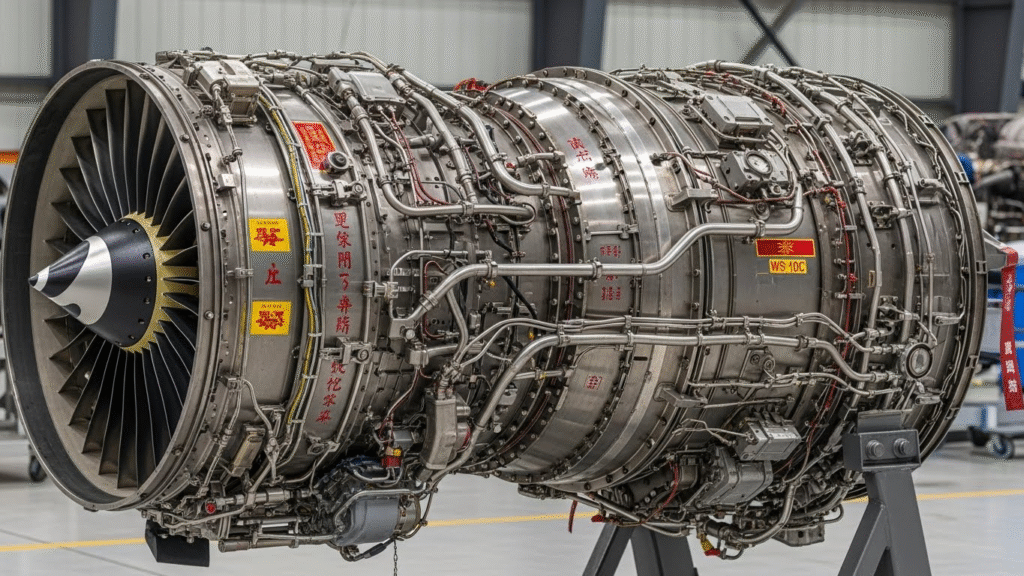
| Engine | 2× Pratt & Whitney F119 | 2× WS-10C (interim) |
| Thrust | 35,000 lbf each with afterburner | 32,000 lbf each (estimated) |
| Internal Weapons Bay | 6 air-to-air missiles | 6 air-to-air missiles |
| Unit Cost | $150 million (2009) | $110 million (estimated) |
| Total Produced | 187 aircraft | 200+ aircraft (ongoing) |
Design & Technology
Stealth Characteristics
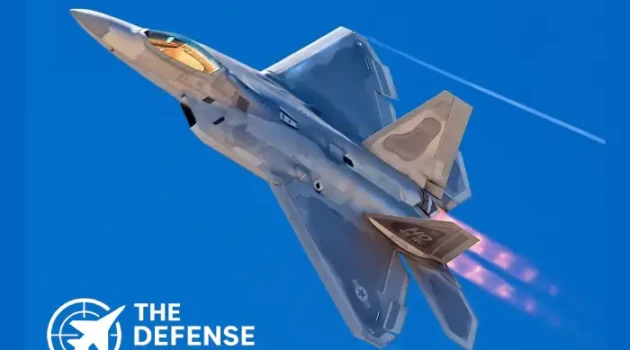
The F-22 vs J-20 stealth comparison reveals different engineering approaches to radar evasion. The F-22 pioneered production fighter stealth technology with its faceted airframe, specialized radar-absorbent materials, and internal weapons carriage. Every surface angle was optimized to deflect radar waves away from enemy sensors. The aircraft’s radar cross-section has been classified but is estimated at 0.0001 square meters from frontal aspects—roughly the size of a marble.
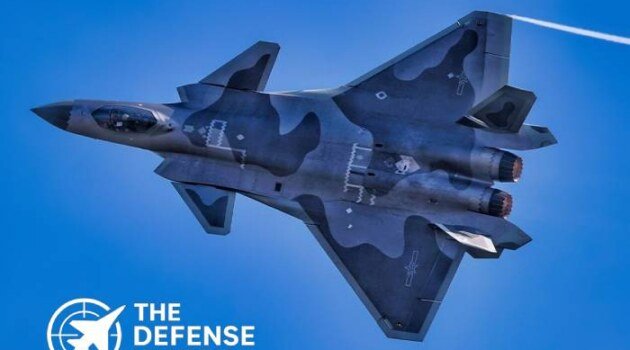
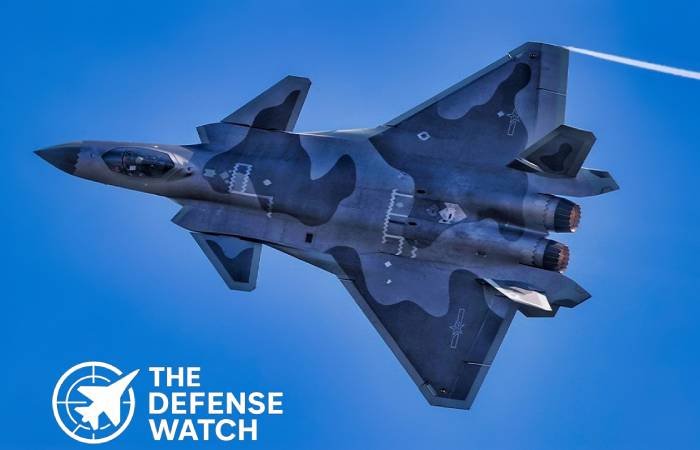
The J-20 adopted a longer, more slender fuselage design optimized for different mission parameters. Chinese engineers incorporated canards—small forward wing surfaces—that enhance maneuverability but potentially compromise stealth. Western analysts assess the J-20’s radar cross-section as larger than the F-22’s, though still significantly smaller than fourth-generation fighters. The J-20’s stealth coating reportedly requires less maintenance than early F-22 materials, suggesting China learned from observing American maintenance challenges.
Avionics and Sensors
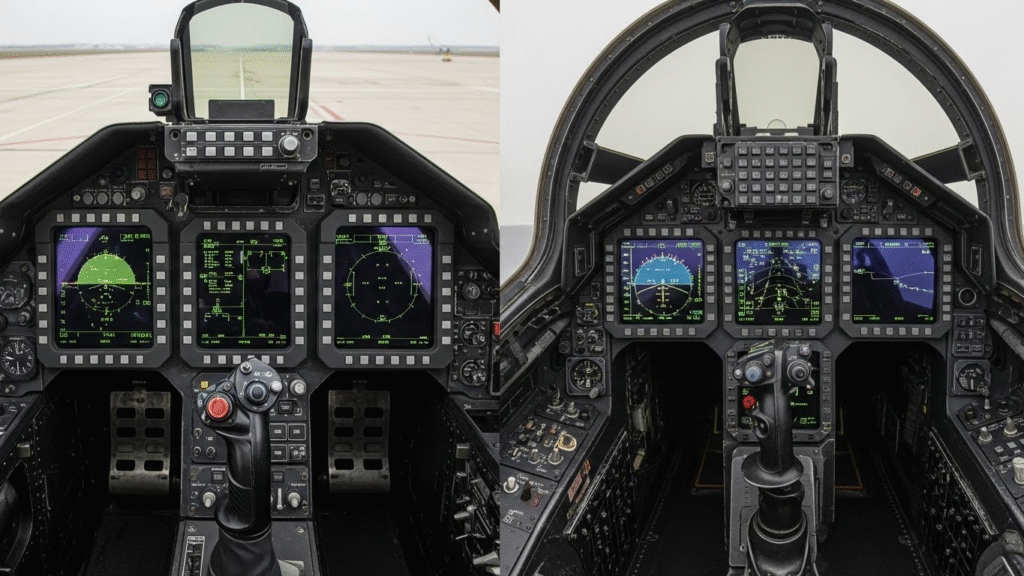
The F-22 features the AN/APG-77 active electronically scanned array (AESA) radar, capable of tracking multiple targets simultaneously while remaining difficult to detect. Its sensor fusion system integrates radar, infrared search and track, electronic warfare systems, and datalinks into a single tactical picture. The aircraft’s advanced electronic warfare suite can jam enemy radars while collecting intelligence on adversary systems.
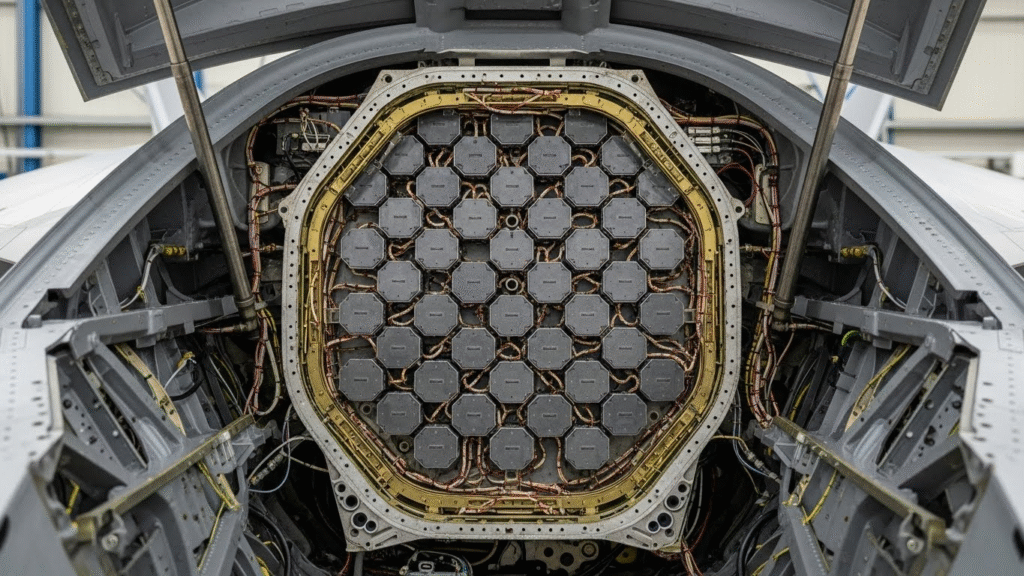
China equipped the J-20 with domestically produced AESA radar systems and an Electro-Optical Targeting System (EOTS) providing 360-degree infrared detection. The J-20’s larger nose accommodates a potentially larger radar array with greater detection range. Recent upgrades reportedly include improved electronic warfare capabilities and enhanced sensor fusion, though Western intelligence agencies remain uncertain about the system’s full capabilities compared to American counterparts.
Firepower & Performance
Weapons Loadout
In the J-20 vs F-22 comparison, both fighters prioritize internal weapons storage to maintain stealth profiles. The F-22 carries six AIM-120 AMRAAM radar-guided missiles in its main weapons bay, plus two AIM-9 Sidewinder heat-seeking missiles in side bays. For strike missions, the F-22 can carry two 1,000-pound GBU-32 Joint Direct Attack Munitions alongside two AMRAAMs. External hardpoints can accommodate additional weapons when stealth isn’t required, though this configuration is rarely used operationally.
The J-20 carries six PL-15 long-range air-to-air missiles in its ventral weapons bays. The PL-15, with an estimated range exceeding 120 miles, potentially outreaches the AIM-120D AMRAAM’s 100-mile range. The J-20 also carries PL-10 short-range missiles in side bays. Chinese sources claim the J-20 can carry air-to-ground munitions, though its primary role remains air superiority rather than strike missions.
Maneuverability and Speed
The F-22’s twin Pratt & Whitney F119 engines deliver exceptional thrust-to-weight ratio and enable supercruise—sustained supersonic flight without afterburners—at Mach 1.8. This capability allows the F-22 to rapidly reposition during combat while conserving fuel. The aircraft’s thrust vectoring nozzles provide exceptional agility in close-range dogfights, giving pilots advantages in turning combat.
The J-20 currently operates with interim WS-10C engines while China develops the more powerful WS-15 engines. Without thrust vectoring on production models, the J-20 likely lacks the F-22’s close-in maneuverability. However, the J-20’s canard-delta wing configuration provides excellent high-altitude performance and sustained turn rates. The aircraft’s larger size and fuel capacity enable longer patrol durations—critical for China’s anti-access area denial strategy.

Operational Range & Mobility
Combat Radius Differences
The most significant difference in the J-20 vs F-22 matchup lies in operational range. The F-22’s 460-mile combat radius reflects its design as an air superiority fighter meant to operate with tanker support. U.S. Air Force doctrine emphasizes forward basing and aerial refueling networks, allowing F-22s to project power across vast distances despite limited internal fuel.
The J-20’s 1,200-mile combat radius represents a strategic design choice. China lacks America’s global basing infrastructure and aerial refueling fleet, so the J-20 needed greater unrefueled range. This extended range allows J-20s to patrol the entire South China Sea or reach Taiwan and return without refueling. The longer legs also enable Chinese fighters to threaten U.S. bases in Japan and Guam.
Deployment Flexibility
The F-22 has demonstrated global reach through deployments to Europe, the Middle East, and throughout the Indo-Pacific region. U.S. Air Force squadrons regularly operate from allied bases in Japan, South Korea, and Guam. The aircraft’s maintenance requirements have decreased as support systems matured, though the F-22 still demands specialized facilities and skilled technicians.
The J-20 operates primarily from bases within Chinese territory, with deployments to Tibet demonstrating high-altitude performance capabilities. China has not deployed J-20s overseas, reflecting both limited foreign basing options and the aircraft’s role in homeland defense. The People’s Liberation Army Air Force maintains the J-20 as a strategic asset concentrated in areas facing potential conflict with U.S. forces.
Combat Effectiveness
Real-World Experience
The F-22 has accumulated nearly two decades of operational experience, including combat missions over Syria where it conducted strikes against ground targets and provided air superiority escort. While the F-22 hasn’t engaged in air-to-air combat, its pilots train constantly against fourth and fifth-generation adversaries. U.S. Air Force aggressor squadrons report the F-22 consistently dominates red air exercises, with kill ratios exceeding 20-to-1 in simulated combat.
The J-20 lacks combat experience, having never engaged in actual warfare. Chinese pilots have conducted extensive training, including exercises simulating Taiwan scenarios and air defense operations. Western intelligence assessments suggest J-20 pilots receive high-quality training, though they lack the institutional combat experience accumulated by U.S. Air Force personnel through decades of continuous operations worldwide.
Doctrine and Tactics
U.S. Air Force doctrine employs the F-22 as a penetrating counter-air platform that establishes air superiority by destroying enemy fighters and air defense systems. F-22s typically operate in coordination with F-35 Lightning IIs, EA-18G Growler electronic warfare aircraft, and tankers. The F-22’s data fusion capabilities make it a quarterback in contested airspace, directing other friendly aircraft while remaining undetected.
China’s operational doctrine positions the J-20 as a key component of integrated air defense systems. Chinese planners envision J-20s working alongside ground-based radar networks, surface-to-air missiles, and other aircraft types to deny U.S. forces access to contested regions. The J-20’s extended range allows it to strike high-value targets like tankers and airborne early warning aircraft that enable U.S. operations.
Cost & Export Value
Production and Pricing
The F-22’s unit cost of approximately $150 million, combined with research and development expenses, made it one of history’s most expensive fighters. Congress capped production at 187 aircraft, well below the Air Force’s desired 750 aircraft. U.S. law prohibits F-22 exports, meaning no allied nation can purchase the aircraft regardless of strategic relationships. This export ban was intended to protect sensitive technologies from potential compromise.
China’s J-20 costs an estimated $110 million per aircraft, though exact figures remain uncertain due to different accounting methods and state subsidies. The lower price reflects different labor costs, government-controlled production, and potential savings from incorporating observed foreign technologies. China has not offered the J-20 for export, keeping its most advanced fighter exclusively for domestic use while offering the FC-31 stealth fighter to international buyers.
Strategic Value
The F-22’s export ban limits its geopolitical impact to demonstrating U.S. technological superiority and providing unmatched capabilities to American forces. Allies receive F-35s instead, which while less capable in air-to-air combat, offer greater versatility and interoperability with coalition partners.
The J-20’s production continues expanding China’s fifth-generation fighter fleet, with some analysts projecting over 500 aircraft eventually. This numerical advantage could offset individual aircraft superiority in potential conflicts. China’s decision to keep the J-20 domestic while developing exportable alternatives suggests Beijing values technological secrecy over export revenue.
Analysis: Strengths and Weaknesses
F-22 Advantages
The F-22 maintains clear advantages in stealth refinement, sensor fusion maturity, pilot experience, and close-in maneuverability. Two decades of operational experience have refined tactics and training to maximize the aircraft’s capabilities. The F-22’s supercruise capability and thrust vectoring provide tactical flexibility unavailable to current J-20 variants. Integration with U.S. military networks gives F-22 pilots access to intelligence and coordination capabilities China cannot match.
The F-22’s primary weaknesses include limited production numbers, aging avionics that require modernization, higher operating costs, and limited range requiring tanker support. The aircraft also lacks some capabilities found on newer F-35s, including advanced helmet-mounted displays and certain electronic warfare systems.
J-20 Advantages
The J-20’s superior combat radius gives it strategic advantages in the Pacific theater, where distances favor longer-range aircraft. The potentially longer-range PL-15 missile could allow J-20 pilots to engage F-22s before entering AMRAAM range. Greater production numbers may enable China to achieve local numerical superiority in specific scenarios. The J-20’s newer design potentially incorporates lessons learned from observing F-22 operational challenges.

J-20 Fighter. Image Credit: Creative Commons. The J-20’s disadvantages include less mature stealth technology, unproven combat systems, limited pilot experience, potential engine performance gaps, and dependence on ground-based sensors due to questions about radar effectiveness. Western experts question whether J-20 sensor fusion matches American standards, potentially limiting situational awareness in complex combat environments.
Conclusion
The J-20 vs F-22 comparison reveals two excellent aircraft optimized for different strategic contexts. The F-22 Raptor remains the world’s premier air superiority fighter, with unmatched stealth refinement, proven systems, experienced pilots, and superior close-combat capabilities. In one-on-one engagements or scenarios emphasizing maneuverability and technological sophistication, the F-22 holds advantages.
However, the J-20 brings strategic capabilities specifically designed to challenge U.S. air operations in the Pacific. Its extended range threatens U.S. forward bases and support aircraft, while growing production numbers could overwhelm limited F-22 availability in protracted conflicts. The J-20 represents China’s first credible challenge to American air dominance since the Cold War’s end.
In a Taiwan scenario, J-20 advantages in range and numbers could partially offset F-22 technological superiority, especially if Chinese ground-based sensors support J-20 operations. In other theaters, particularly where U.S. forces operate with full tanker and allied support, the F-22 would dominate. The reality is that neither aircraft operates in isolation—their effectiveness depends on supporting systems, pilot training, tactical employment, and strategic context.
For U.S. defense planners, the J-20 validates investments in next-generation air dominance programs while highlighting the need to modernize existing F-22s and maintain sufficient fighter inventories. The stealth battle of the century ultimately depends less on individual aircraft capabilities than on how effectively each nation employs these weapons within broader military strategies.
FAQs
Which is better, the F-22 or J-20?The F-22 maintains technological advantages in stealth refinement, sensor maturity, and maneuverability, making it superior in direct combat. However, the J-20’s extended range and growing numbers provide strategic advantages in Pacific scenarios. The “better” aircraft depends on specific mission requirements and operational context.
Can the J-20 beat the F-22 in a dogfight?In close-range combat, the F-22’s thrust vectoring, superior thrust-to-weight ratio, and experienced pilots give it decisive advantages. The J-20 would likely avoid dogfighting and instead leverage longer-range missiles and numerical superiority. Modern air combat rarely involves traditional dogfights, favoring beyond-visual-range engagements.
How many J-20s vs F-22s are currently operational?The United States operates 187 F-22 Raptors with approximately 120-140 mission-capable at any time. China has produced over 200 J-20s with production continuing, potentially fielding 500 or more eventually. This numerical imbalance could prove significant in protracted conflicts despite individual aircraft advantages.
Does the J-20 have better stealth than the F-22?Western intelligence assessments conclude the F-22 maintains superior stealth characteristics, with a smaller radar cross-section from most aspects. The J-20’s canards and other design features likely compromise stealth compared to the F-22’s refined design. However, the J-20 still represents a significant stealth capability far exceeding fourth-generation fighters.
Why can’t allies buy the F-22 Raptor?U.S. law specifically prohibits F-22 exports to protect sensitive stealth technologies, advanced avionics, and other classified systems from potential compromise. Congress passed this restriction fearing that export aircraft could be studied by adversaries or that technical information might leak through foreign military channels. Allied nations receive F-35s instead, which incorporate export-friendly technology protections.
Get real time update about this post category directly on your device, subscribe now.