

Table of Contents
Israel Prepares to Operationalize Revolutionary Laser Defense Technology
Israel is poised to deploy the world’s first operational high-energy laser air defense system by the end of December 2025, marking a significant milestone in directed energy weapons technology. The Iron Beam vs Iron Dome comparison highlights fundamental differences in interception methodology, operational economics, and tactical flexibility that will reshape how the Israel Defense Forces counter aerial threats.
Danny Gold, head of Israel’s Directorate of Defense Research and Development, confirmed at the DefenseTech Summit that the Iron Beam system will achieve initial operational capability on December 30, 2025. The system, developed by Rafael Advanced Defense Systems and first unveiled in 2014, represents over a decade of research and testing in laser-based air defense technology.
The Iron Beam vs Iron Dome analysis reveals complementary capabilities rather than replacement systems. While Iron Dome has intercepted thousands of rockets and mortars since its 2011 deployment, Iron Beam introduces laser-based engagement that fundamentally changes the cost-benefit calculus of air defense operations.
Core Technology: Missiles Versus Directed Energy
The primary distinction in the Iron Beam vs Iron Dome comparison centers on interception methodology. Iron Beam employs high-energy lasers that travel at the speed of light, delivering concentrated thermal energy to incoming projectiles. The system uses multifunction beam directors and adaptive optics to maintain targeting precision, neutralizing threats within seconds of detection.
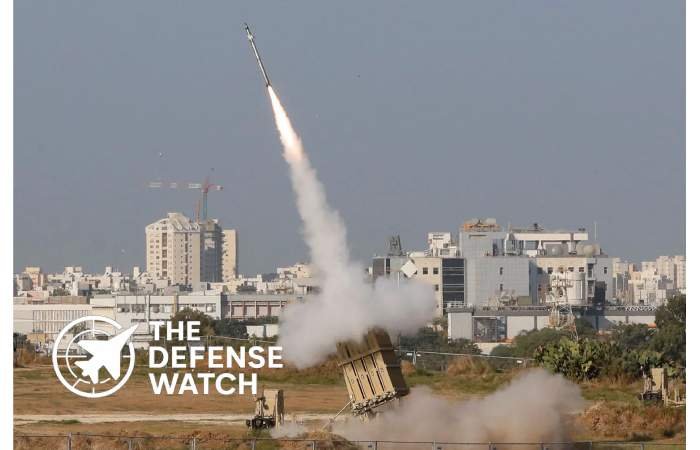
Iron Dome utilizes Tamir interceptor missiles launched from mobile batteries. Each interceptor must physically traverse the distance to its target, requiring flight times that range from several seconds to over a minute depending on engagement geometry. The system’s fire control radar tracks incoming threats and calculates intercept trajectories, directing missiles to kinetically destroy rockets, mortars, and unmanned aerial vehicles.

The Iron Beam laser system focuses intense heat on critical structural points of incoming projectiles, causing detonation, structural failure, or trajectory deviation. This precision engagement minimizes collateral damage and allows simultaneous targeting of multiple threats from a single emitter platform.
Iron Dome’s kinetic interception generates debris from both the interceptor and target, though the system is designed to engage threats over unpopulated areas when possible. The missile-based approach has demonstrated approximately 90 percent effectiveness across thousands of operational engagements since 2011.
Economic Calculus: Cost Per Engagement Analysis
The Iron Beam vs Iron Dome cost comparison reveals dramatic differences in operational economics. Iron Beam operates on electrical power, with Rafael Advanced Defense Systems reporting near-zero cost per interception. Each engagement consumes electricity to power the laser emitter, making sustained operations economically viable even against high-volume attacks or low-value targets like small drones.
Iron Dome interceptors cost approximately $40,000 per Tamir missile according to defense industry assessments. While highly effective, this cost structure creates economic asymmetries when engaging inexpensive rockets or mass drone swarms. A sustained rocket barrage requiring dozens of interceptors can rapidly deplete defense budgets and stockpiles.

The ‘Iron Beam’ laser-based air defense system is seen intercepting a target over southern Israel, March 2022. (Defense Ministry) The economic advantage of laser-based systems becomes particularly relevant in extended conflicts or against adversaries employing saturation tactics. Iron Beam can engage threats continuously as long as electrical power remains available, while Iron Dome requires regular resupply of interceptor missiles that must be manufactured, transported, and loaded into battery launchers.
Israel has faced criticism over defense expenditures during prolonged periods of rocket fire from Gaza and Lebanon. The Iron Beam system addresses these concerns by offering unlimited magazine depth at marginal operational cost, though initial system acquisition and maintenance expenses remain substantial.
Magazine Capacity and Sustained Operations
The Iron Beam vs Iron Dome comparison highlights fundamental differences in ammunition capacity. Iron Beam’s “magazine” consists of available electrical power, allowing continuous engagement limited only by power generation and thermal management. The system can theoretically fire dozens of shots per minute against multiple targets, with each engagement requiring only seconds of laser dwell time.
Iron Dome batteries carry between 20 and 80 Tamir interceptors depending on launcher configuration. Once depleted, the system requires reloading operations that temporarily reduce defensive capacity. During intense combat periods, Israel has experienced interceptor shortages that necessitated emergency resupply from U.S. stockpiles.
Rafael’s Iron Beam system includes variants with different power outputs optimized for specific threat types. The Lite Beam variant operates at 10 kilowatts for engaging smaller drones and mortars, while Iron Beam-M delivers over 50 kilowatts for harder targets at extended ranges. This scalability allows commanders to match system capabilities to threat environments without wasting capacity.
The sustained engagement capability proves particularly valuable against drone swarms, which have emerged as a primary tactical challenge across modern conflicts. Iron Beam can engage multiple small drones in rapid succession without ammunition concerns, while Iron Dome must carefully manage interceptor inventory when facing coordinated attacks involving dozens of unmanned systems.
Deployment Flexibility and Platform Integration
The Iron Beam vs Iron Dome operational comparison reveals significant differences in deployment flexibility. Iron Beam features modular design enabling installation on ground vehicles, naval vessels, and fixed installations. Rafael has demonstrated truck-mounted systems for mobile defense and discussed naval integration for protecting maritime assets from drone and missile threats.
Iron Dome primarily operates from truck-mounted launchers that can be relocated to meet changing threat priorities. The system includes radar and command units that must be positioned to provide coverage zones, creating logistical requirements for battery deployment. Naval variants like C-DOME and mobile configurations such as I-DOME extend operational flexibility, though the fundamental architecture remains oriented toward fixed or semi-mobile defensive positions.
The compact nature of laser emitters relative to missile launchers enables Iron Beam deployment in space-constrained environments including urban areas and forward operating bases. Future variants under development may achieve further size and weight reductions, enabling integration onto smaller platforms including unmanned ground vehicles.
Iron Dome’s operational track record includes deployments protecting Israeli cities, military installations, and critical infrastructure across varied terrain. The system has demonstrated rapid repositioning capabilities during conflicts, though movement of complete batteries requires significant logistical coordination including radar calibration and communications integration.
Engagement Speed and Precision Capabilities
The Iron Beam vs Iron Dome performance comparison shows distinct advantages in engagement timeline. Laser-based interception occurs at light speed, with beam-on-target achieved milliseconds after fire command. The system employs adaptive optics to compensate for atmospheric distortion, maintaining focus on target aimpoints throughout engagement sequences lasting three to five seconds.
Iron Dome interceptors require flight time to reach incoming threats, with engagement windows determined by target speed, trajectory, and range. The system demonstrates exceptional accuracy through advanced guidance systems and proximity fusing, but cannot overcome the fundamental physics of missile transit time. Against high-speed threats or those detected late in trajectory, available engagement time may be limited.
The precision of laser engagement allows Iron Beam to target specific components of incoming threats. Against larger drones or cruise missiles, the system can focus on control surfaces, propulsion systems, or warhead sections to ensure effective neutralization. This selective targeting capability provides commanders additional options beyond complete destruction.
Iron Dome employs fragmentation warheads that destroy incoming threats through blast effect and shrapnel. The system has demonstrated 90 percent interception success rates during operational use, with occasional failures attributed to target saturation, malfunction, or extreme trajectory parameters that complicate engagement geometry.
Environmental Limitations and Operational Constraints
The Iron Beam vs Iron Dome weather performance analysis identifies critical operational limitations for laser systems. High-energy lasers experience significant degradation in heavy cloud cover, rain, dust, and fog. Atmospheric moisture and particulates scatter and absorb laser energy, reducing effective range and potentially preventing successful engagements during adverse weather conditions.
Iron Dome operates effectively in all weather conditions, maintaining full capability during rainstorms, dust storms, and low visibility environments. The radar-guided missile system functions identically day or night, in clear or overcast conditions, providing assured defensive coverage regardless of meteorological factors.
Israel’s climate features extended dry periods favorable to laser operations, but winter rainfall and occasional dust storms from the Sahara create periods of reduced laser effectiveness. The Iron Beam system incorporates atmospheric sensors that assess engagement viability, but cannot overcome the fundamental physics of laser propagation through dense atmospheric conditions.
Military planners must account for these limitations when integrating Iron Beam into defensive architectures. The system provides exceptional capability during clear conditions but requires backup from missile-based interceptors when weather degrades laser performance. This weather dependency reinforces the complementary rather than replacement nature of the Iron Beam vs Iron Dome relationship.
Multi-Layered Defense Architecture Integration
Israeli defense strategy emphasizes layered air defense combining multiple systems optimized for different threat types and engagement altitudes. The Iron Beam vs Iron Dome comparison exists within this broader context that includes David’s Sling for medium-range threats and Arrow systems for ballistic missiles.
Iron Beam focuses on short-range threats including rockets, mortars, small drones, and anti-tank guided missiles. The system provides point defense for specific assets or areas, engaging threats that penetrate outer defensive layers or originate from close range. Its rapid engagement capability allows protection against time-sensitive targets that might evade longer-range systems.
Iron Dome covers ranges from four to 70 kilometers, intercepting short-range rockets and artillery that threaten populated areas. The system serves as the primary defense against the types of threats most commonly employed by Hezbollah and Hamas, with operational experience spanning thousands of engagements across multiple conflicts.
The integration of Iron Beam adds capability without displacing existing systems. During clear weather against suitable targets, Iron Beam provides cost-effective first-response capability. When atmospheric conditions degrade or threats exceed laser parameters, Iron Dome and other missile systems provide assured protection. This redundancy enhances overall defensive resilience.
Operational Deployment Timeline and Next-Generation Development
Israel’s December 30, 2025 deadline for Iron Beam initial operational capability represents a specific milestone in phased deployment. Defense officials have indicated that first-generation systems will focus on protecting high-value military installations and border areas, with expansion to broader coverage areas following operational validation.
Rafael Advanced Defense Systems continues developing enhanced variants including increased-power emitters and improved atmospheric compensation systems. Next-generation Iron Beam systems under development aim to address current limitations including extended range, improved bad-weather performance, and integration with unmanned platforms.
The Iron Dome system continues modernization through software updates, improved interceptors, and enhanced radar capabilities. Recent upgrades focus on countering emerging threats including advanced drones and maneuvering projectiles that complicate traditional interception approaches.
International interest in both systems remains substantial, with Iron Dome already exported to the United States and other nations evaluating acquisition. Iron Beam may follow similar export pathways pending successful operational validation and relaxation of technology transfer restrictions on sensitive directed energy weapons components.
Strategic Implications for Regional Security
The Iron Beam vs Iron Dome deployment pattern reflects evolving threat environments across the Middle East. Non-state actors increasingly employ mass drone tactics and rocket salvos designed to overwhelm traditional missile defenses through quantity rather than quality. Iron Beam’s unlimited magazine depth directly counters saturation strategies that rely on economic warfare through cheap munitions.
Regional adversaries continue developing more sophisticated threats including GPS-guided rockets, loitering munitions, and coordinated drone swarms. The combination of laser and kinetic interceptors provides Israeli forces flexible response options tailored to specific attack characteristics, potentially complicating enemy planning and reducing attack effectiveness.
The technological demonstration effect of operational laser weapons may accelerate similar programs in other nations. The United States, China, and several European countries maintain active directed energy weapons research, with Israel’s deployment potentially validating concepts that have remained largely experimental across other militaries.
Arms control implications remain unclear as directed energy weapons exist in regulatory ambiguity compared to conventional missile systems. The proliferation of effective laser air defense could reshape offensive tactics across future conflicts, potentially reducing the effectiveness of traditional rocket and mortar attacks that have characterized recent Middle Eastern conflicts.
Iron Beam vs Iron Dome: Technical Comparison Table
Specification Iron Beam Iron Dome Interception Method High-energy laser (directed energy) Tamir kinetic interceptor missiles Engagement Speed Speed of light (instantaneous) Missile flight time (seconds to minutes) Cost Per Interception Near-zero (electricity only) ~$40,000 per Tamir missile Magazine Capacity Unlimited (power-dependent) 20–80 interceptors per battery Effective Range Several kilometers (classified) 4–70 kilometers Target Types Drones, mortars, rockets, ATGMs Rockets, artillery, drones, cruise missiles Weather Limitations Degraded in rain, fog, dust, clouds All-weather capable Operational Status Initial deployment Dec 30, 2025 Operational since 2011 Success Rate Under operational evaluation ~90% (combat-proven) Platform Options Ground vehicles, naval vessels, fixed Truck-mounted, naval (C-DOME), mobile (I-DOME) Power Requirements 10 kW (Lite Beam) to 50+ kW (Iron Beam-M) Conventional launcher systems Resupply Needs Electrical power generation Physical interceptor missiles Collateral Damage Minimal (precision thermal targeting) Debris from interception Engagement Capacity Multiple simultaneous (power-limited) Limited by missile inventory Day/Night Operations 24/7 (weather permitting) 24/7 (all conditions) Developer Rafael Advanced Defense Systems Rafael Advanced Defense Systems Primary Role Point defense, high-volume threats Area defense, assured protection Export Status Not yet available Exported to U.S., others interested Analysis: Complementary Capabilities Reshape Air Defense Economics
The Iron Beam vs Iron Dome comparison ultimately reveals complementary rather than competitive systems designed for integrated operations. Iron Beam’s revolutionary economics enable guilt-free engagement of low-value targets that might be ignored due to interceptor costs, while Iron Dome provides assured all-weather protection against the full threat spectrum.
The December 2025 deployment will provide crucial operational data on laser weapon effectiveness in real combat conditions. Previous tests have occurred in controlled environments against predetermined targets, but actual combat introduces variables including coordinated attacks, electronic warfare, and adversary countermeasures designed specifically to degrade laser effectiveness.
Cost savings from laser engagement could enable Israel to sustain longer defensive operations during future conflicts without facing interceptor shortages that have complicated past military campaigns. The psychological effect on adversaries may also prove significant, as the near-unlimited defensive capacity reduces the tactical value of mass rocket attacks that have been primary weapons for groups like Hamas and Hezbollah.
Technological limitations including weather dependency and current range restrictions prevent Iron Beam from fully replacing traditional interceptors. The system works optimally in Israel’s generally arid climate but faces reduced effectiveness during winter months and dust events. Future technological advances may address these limitations, but current operational doctrine must account for environmental constraints.
The successful deployment of Iron Beam represents a milestone in directed energy weapons transitioning from experimental technology to operational systems. If the system performs as designed during combat operations, it will validate decades of research investment and potentially accelerate global adoption of laser-based air defense across military forces worldwide.
FAQs
Will Iron Beam completely replace Iron Dome in Israeli air defense?No, Iron Beam is designed to complement rather than replace Iron Dome. The laser system excels against smaller threats in clear weather conditions, while Iron Dome provides all-weather capability against the full threat spectrum. Israeli defense strategy emphasizes layered protection using multiple systems optimized for different scenarios.
What is the effective range of the Iron Beam laser defense system?While specific range figures remain classified, defense analysts estimate current Iron Beam variants engage threats at ranges of several kilometers. Range depends on atmospheric conditions, target characteristics, and laser power output. The 50+ kilowatt Iron Beam-M variant likely achieves greater effective range than the 10 kilowatt Lite Beam system.
How much does the Iron Beam system cost compared to Iron Dome?System acquisition costs for Iron Beam have not been publicly disclosed, though they likely exceed individual Iron Dome batteries due to sophisticated laser and optical components. However, Iron Beam’s near-zero cost per engagement dramatically reduces operational expenses compared to Iron Dome’s $40,000 per interceptor cost, creating long-term savings during sustained operations.
Can Iron Beam shoot down ballistic missiles?Current Iron Beam variants focus on short-range threats including drones, rockets, mortars, and anti-tank missiles. Ballistic missiles remain the responsibility of Arrow and David’s Sling systems within Israel’s layered defense architecture. Future high-power laser systems under development may eventually address certain classes of ballistic threats.
Why hasn’t the United States deployed operational laser air defense systems?The U.S. military operates several experimental directed energy weapons programs but has not yet declared any system operationally ready for combat deployment. American programs face similar technical challenges as Iron Beam including atmospheric limitations and power requirements, with ongoing testing aimed at validating performance before committing to full-scale deployment.
Get real time update about this post category directly on your device, subscribe now.



1 comment
[…] Systems: Rafael Advanced Defense Systems’ Iron Dome and potentially the David’s Sling medium-to-long-range system have emerged as strong contenders. […]