
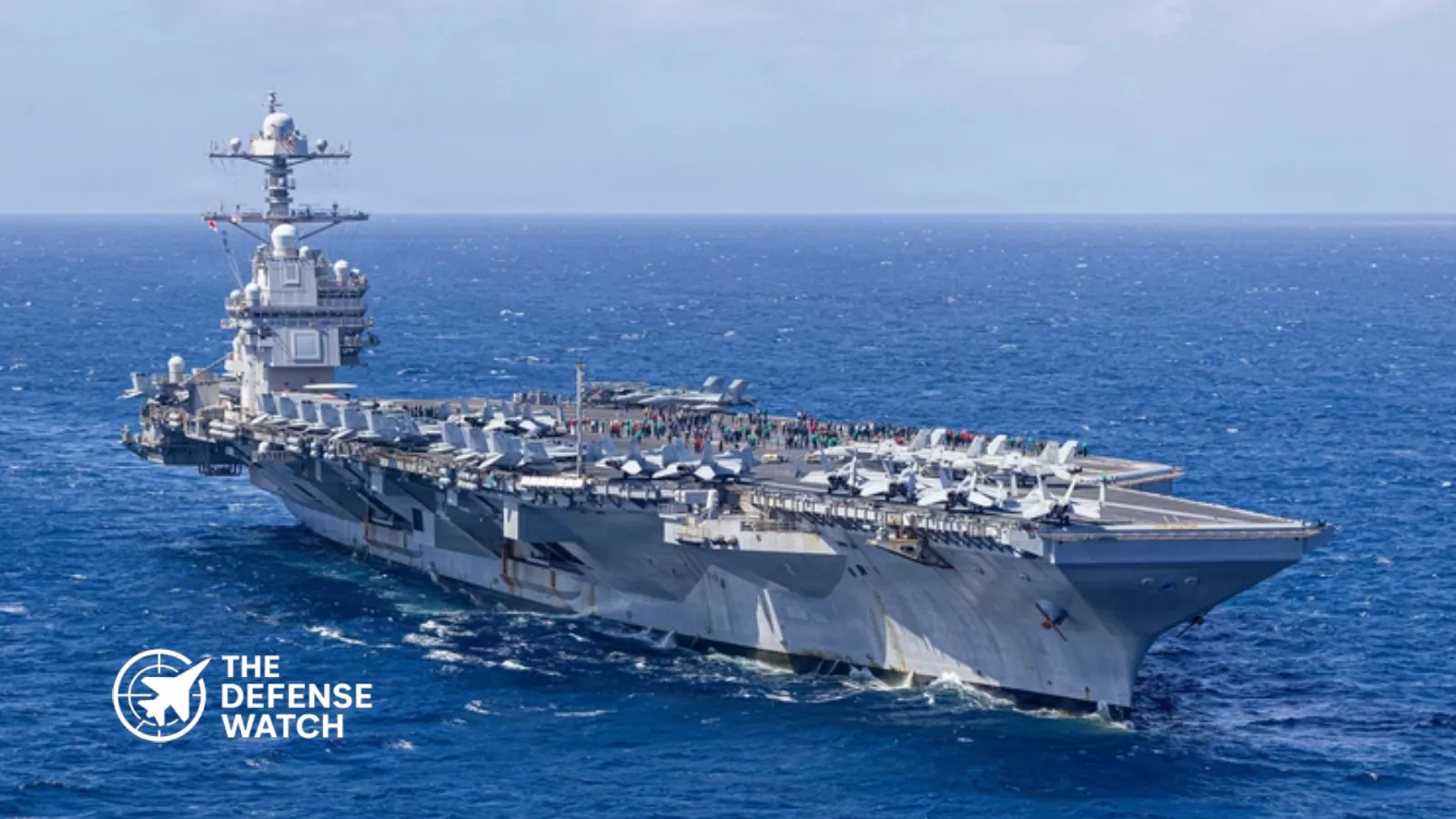
US Supercarrier USS Gerald R. Ford Heads Toward Middle East Amid Iran Tensions
The US Navy’s USS Gerald R. Ford supercarrier is underway from the Caribbean Sea toward the Middle East in a move aimed at strengthening American naval presence near Iran.
The redeployment will likely position two US carrier strike groups in or near the Arabian Sea, extending sustained air operation and deterrence capabilities across the region.
Carrier Movement and Force Posture
The USS Gerald R. Ford, the lead ship of its class, has been at sea since June 2025 and is one of the most capable warships in the US fleet, displacing about 100,000 tons and able to airlift more than 75 aircraft.
Its movement toward the Middle East comes as the USS Abraham Lincoln carrier strike group is already operating in the region with several guided missile destroyers. The addition of Ford’s strike group will expand the overall carrier presence.
US Strategic Context
Pentagon officials have not publicly confirmed details, but media and defence outlets report the deployment reinforces US naval power amid renewed tensions with Tehran. Regional governments have warned that any military miss-step could trigger wider instability.
President Joe Biden’s administration has emphasized deterrence and maritime security, while affirming diplomacy remains open, even as military assets reposition to respond to possible contingencies. A White House spokesperson noted that maintaining freedom of navigation and regional stability remains a priority. (Public statements, January 2026 press brief)
Capability and Mission Scope
By operating two carrier strike groups, the US Navy gains broader options for air operations, maritime security missions, and rapid response to crises. Carriers serve as mobile airfields with integrated command and control, supporting a range of missions from combat air patrols to humanitarian missions.
Carrier strike groups also include guided missile cruisers, destroyers, and support ships, adding layered air defence and anti-submarine capabilities that are important in contested waters like the Strait of Hormuz and Gulf of Oman.
Regional Security Dynamics
Tensions between the US and Iran have been a backdrop to extended deployments of US forces in the Middle East. US officials cite Iran’s support for proxy groups, missile and drone activity across the region, and threats to commercial shipping as factors influencing force posture. Independent analysts note that a robust naval presence is intended to deter attacks and reassure regional allies. (Defense and security briefings, January–February 2026)
What Comes Next
With the USS Gerald R. Ford en route and the USS Abraham Lincoln already positioned, the US Navy’s expanded footprint will be among the largest at sea near the Middle East in recent years. Observers say the forces could conduct continuous air operations if needed, reinforce deterrence against hostile actions, and support broader US strategy in the region.
US officials stress that diplomatic efforts remain active, even as military assets reposition.
Get real time update about this post category directly on your device, subscribe now.

