
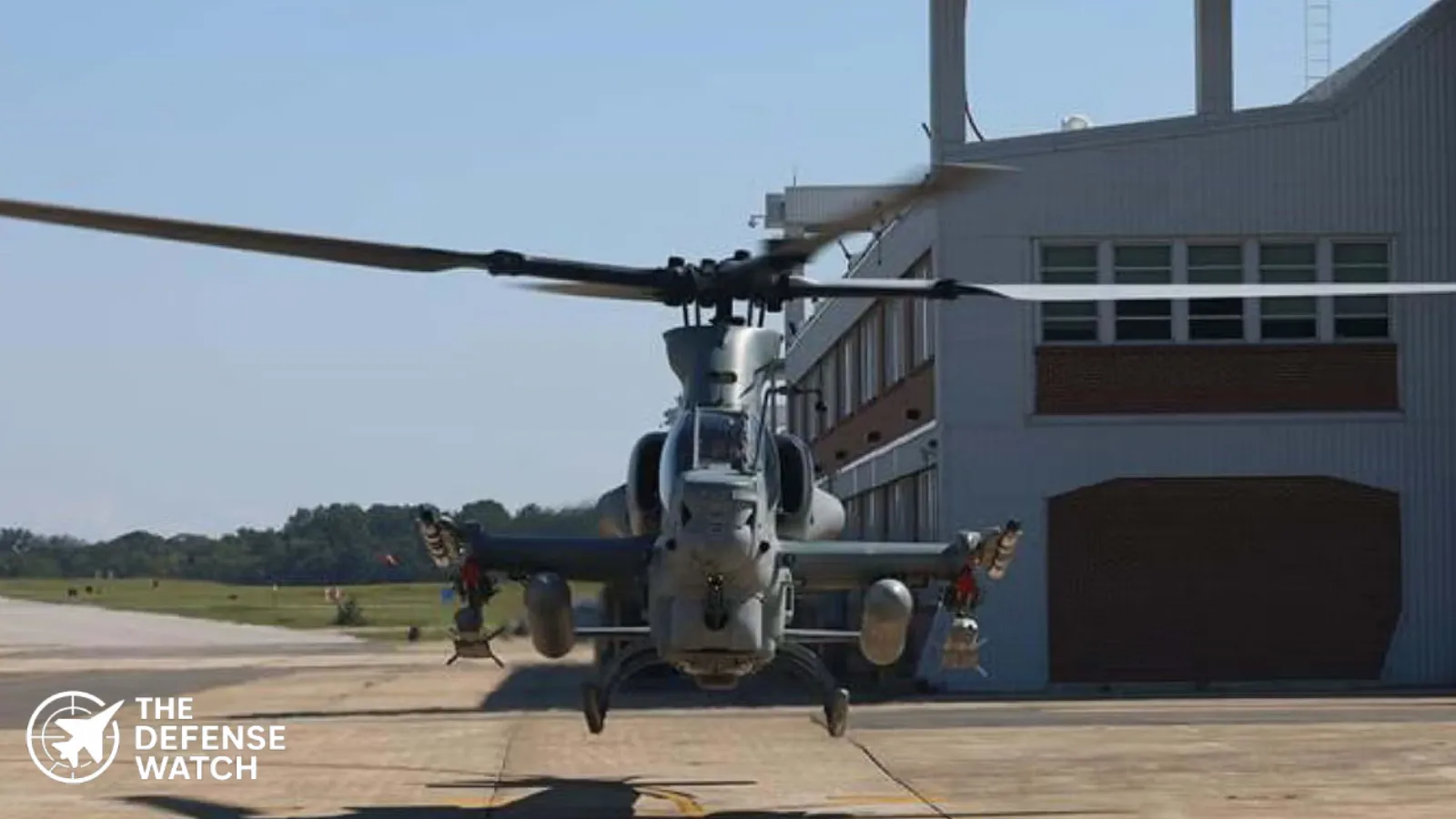
Marines Equip Viper Helicopters with Long-Range Strike Weapons
The US Marine Corps is moving to arm its AH-1Z Viper attack helicopters with long-range precision strike weapons under a new contract awarded by the US Navy’s Naval Air Systems Command (NAVAIR). The move marks a significant expansion of attack helicopter strike capability beyond the limits of existing systems like Hellfire and JAGM missiles.
Short-range rocket-launched missiles such as AGM-114R Hellfire and the Joint Air-to-Ground Missile (JAGM) typically operate at distances measured in tens of miles. The new systems aim to extend helicopter-launched strike reach to more than 200 nautical miles, giving Marines a striking option from outside many integrated air defenses.
L3Harris Wins Precision Attack Strike Munition Contract
On January 30, 2026, NAVAIR awarded L3Harris Technologies an $86.2 million contract under the Precision Attack Strike Munition (PASM) program to develop, test and deliver the Red Wolf long-range launched effects vehicle for Marine Corps rotary-wing platforms. The award was issued using Other Transaction Authority, a faster contracting method designed for prototyping and rapid capability maturation.
Under the agreement, L3Harris will supply missiles, support equipment, manuals, and training packages. Deliveries are expected to be completed by the end of fiscal 2027. While the total contract value is public, specific production quantities have not been disclosed.
What Red Wolf Brings to Marine Helicopters
Red Wolf is a launched effects vehicle intended to give the Marines’ AH-1Z Viper a true long-range precision strike option. Company and Pentagon sources say the system can engage targets at distances greater than 200 nautical miles with both kinetic and non-kinetic payloads. This is a substantial step beyond legacy helicopter missiles, which are typically limited to ranges under about 20 miles.
The PASM family, sometimes referred to as the “Wolf Pack,” includes the Red Wolf missile for kinetic strikes and the Green Wolf variant for electronic warfare and sensor disruption missions. Both are designed to operate in expeditionary and maritime environments, with Marines seeking a mix of effects while supporting carrier strike groups or amphibious operations.
Images released with the latest updates show the missiles mounted on AH-1Z Viper stub wings during testing, highlighting how these systems fit into the existing helicopter architecture without major airframe changes.
Context and Operational Impact
Marine Corps aviation leaders have long sought ways to extend rotary-wing strike power well beyond the short engagement envelopes of existing weapons. Tests dating back to 2024 showed prototypes of long-range attack missiles, sometimes described generically as Long-Range Attack Missiles (LRAM), being fired from AH-1Z platforms during live exercises.
The capability aligns with broader Pentagon efforts to provide distributed and affordable precision fires that can work inside complex anti-access/area-denial environments, especially in the Indo-Pacific region where extended reach is a priority.
The longer reach also offers new options for littoral strike and anti-surface warfare, giving Marine helicopter units a role in shaping battlespaces far from traditional close support tasks.
What Comes Next
With the Red Wolf now moving from demonstration to an acquisition program, Marines plan to integrate the weapons into operational units over the next several years. Formal fielding by 2027 means training, doctrine updates, and potential future upgrades will be key to unlocking the full capability.
Get real time update about this post category directly on your device, subscribe now.

