
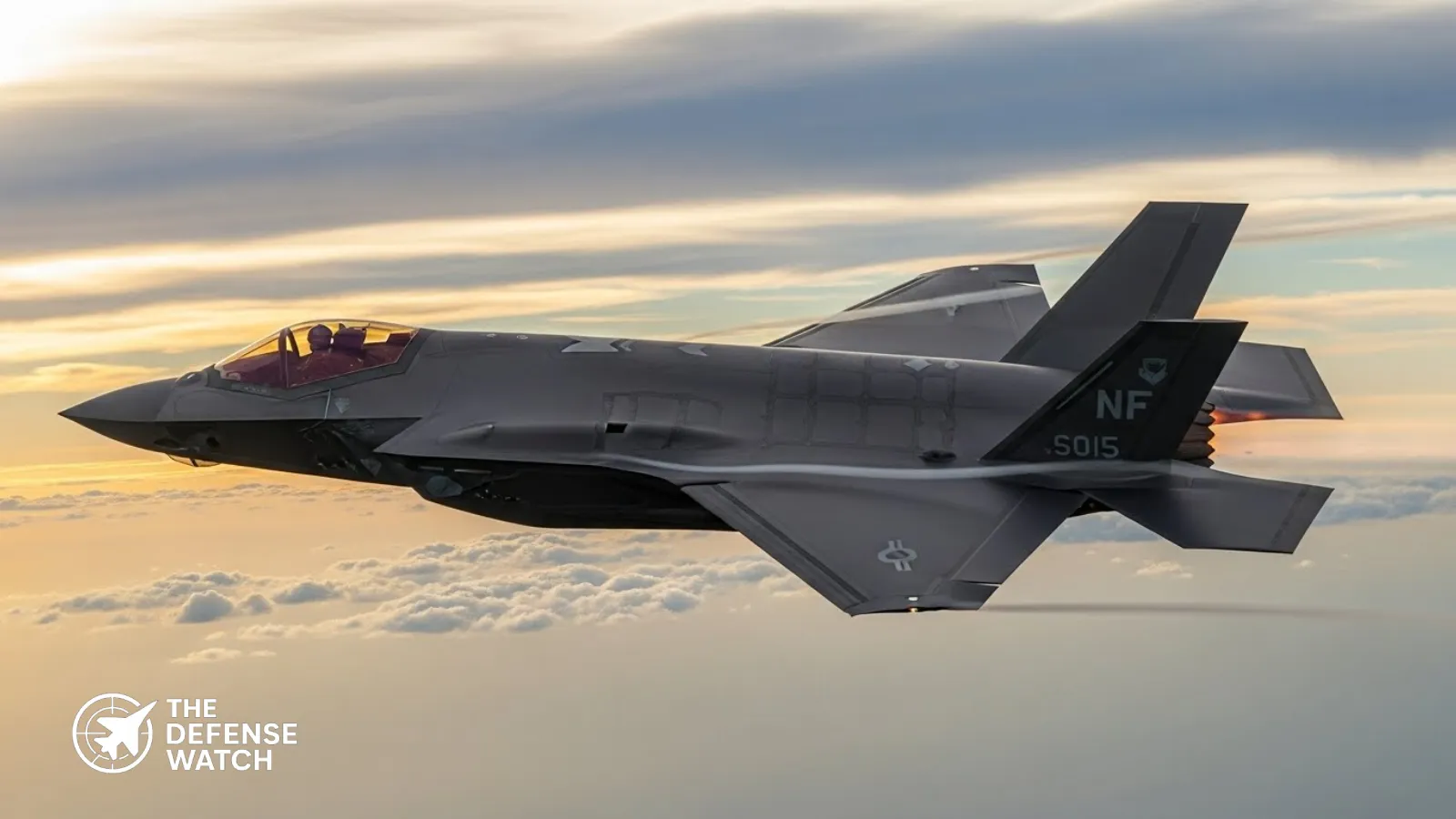
Switzerland will buy fewer Lockheed Martin F-35A Lightning II fighter jets than originally planned following a U.S. price increase tied to inflation and rising production costs, the Swiss Federal Department of Defense, Civil Protection and Sport announced Friday. The decision comes as Bern works to keep the fighter jet purchase within a 6 billion Swiss franc budget approved by voters.
Swiss Reduce F-35 Buy After Cost Increase
The Swiss government said in an official press release that additional costs linked to the F-35A contract make it financially unviable to acquire all 36 jets initially planned under the Air2030 modernization program. The statement did not specify a new total number of aircraft, only that the “maximum possible number” allowed under the approved funding will be purchased.
According to Swiss authorities, talks with U.S. officials this summer made clear that the contractually agreed fixed price could not be enforced and that costs had increased due to inflation, rising raw material prices, and other factors. The U.S. government attributed a roughly $610 million price increase to these pressures.
Switzerland had planned to begin F-35A deliveries in 2027, with aircraft entering service through 2030. The original plan called for replacing aging McDonnell Douglas F/A-18 Hornets that are scheduled to retire by 2030.
Air2030 Background and Budget Context
The F-35A procurement is part of Switzerland’s broader Air2030 strategy to modernize air defense. Under that plan, the government and voters agreed to finance not only new fighter jets but also new ground-based air defense systems and upgraded surveillance capabilities. The 6 billion Swiss franc ceiling was set in a national referendum, reflecting public support for modernizing the Swiss Air Force.
Initially approved in 2021 with a contract signed in 2022, the F-35A deal was expected to secure a fixed price for the Swiss order. However, communications from the U.S. Defense Security Cooperation Agency in 2025 indicated that the understanding of a fixed price was not shared, prompting negotiations and reviews of options by Swiss officials.
Price Increase and Contract Dispute
The dispute over price centers on the interpretation of contract terms and how inflation and supply chain issues factor into the final cost. A U.S. Department of Defense official told media that higher costs for airframes and engines have driven prices above initial estimates. The additional $610 million figure represents the Pentagon estimate of what it would cost Switzerland beyond the original Letter of Offer and Acceptance price.
Swiss authorities had earlier projected even larger cost increases of between 650 million and 1.3 billion Swiss francs, reflecting broader concerns about inflation and tariffs. Those figures played into earlier discussions in Bern about how to proceed if the fixed price could not be upheld.
Although the Department of Defense deferred questions about the reduced order back to the Swiss government, defense ministry officials have signaled they will work within the budget limit. Neither Lockheed Martin nor the F-35 Joint Program Office responded to requests for comment by press time.
Political and Budgetary Impacts
The decision to reduce the number of F-35s reflects broader tensions in defense procurement when voter mandates intersect with evolving program costs. Switzerland’s defense budget and planning processes will now have to balance the reduced fighter jet buy with other priorities, including ground-based air defense and surveillance upgrades.
Swiss Defense Minister Martin Pfister has previously cautioned that the government must adhere to the budget cap while ensuring that air defense capabilities remain sufficient. Observation from local reporting suggests that the final number of aircraft could be clarified as the defense ministry presents prioritization plans to the federal council early next year.
What’s Next for Swiss Air Defense
With the original 36 F-35A ceiling likely to be trimmed, Switzerland’s armed forces will need to adjust planning for airspace protection past the retirement of the Hornet fleet. Officials have indicated that further decisions on additional aircraft purchases beyond the immediate budget may return to parliament or even to a public referendum.
The Swiss government has ruled out canceling the F-35 purchase entirely, noting that without new fighter jets and updated air defense systems, the country’s ability to protect its airspace would be limited. The defense ministry has been tasked with reviewing requirements for 2026 and 2027 and presenting options by late January.
Get real time update about this post category directly on your device, subscribe now.

2 comments
[…] also: Armenia Expands Defense Procurement Beyond Traditional […]
[…] lessons learned from past acquisition programs. Rushing integration can create cascading delays and cost overruns. A phased plan, by contrast, allows the service to validate software, hardware interfaces, and […]