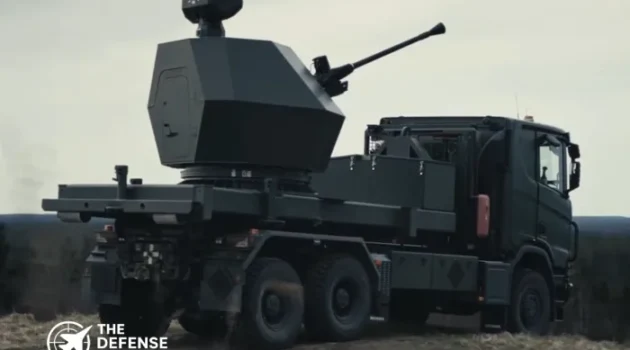
The Tridon Mk2 air defense system will be supplied to Ukraine under a new joint funding effort by Sweden and Denmark, aimed at strengthening short range air defense against drones and low flying threats.
Sweden has committed approximately 200 million euros and Denmark 50 million euros to jointly purchase Tridon Mk2 anti aircraft artillery systems from BAE Systems Bofors for the Armed Forces of Ukraine. The combined funding will support the formation of a new Ukrainian air defense battalion focused on countering unmanned aerial systems, including Shahed type one way attack drones.
According to official statements from Nordic defense authorities, the procurement is part of continued military assistance to Ukraine and reflects growing emphasis on affordable, gun based air defense to protect critical infrastructure and frontline units.
Nordic Funding and Program Structure
The funds are expected to cover the artillery systems, associated fire control elements, ammunition, and initial training and support packages. Ukrainian forces will organize the delivered systems into a dedicated air defense battalion, improving command and control at the tactical level.
Officials have highlighted that gun based systems like Tridon Mk2 offer a cost effective way to counter mass drone attacks, where the use of surface to air missiles can be economically unsustainable.
Tridon Mk2 System Overview
The Tridon Mk2 is a modernized 40 mm air defense artillery system developed by BAE Systems Bofors. It builds on the proven 40 mm gun family while integrating advanced sensors, digital fire control, and programmable ammunition.
The system is designed to engage a wide range of aerial threats, including small and medium UAVs, loitering munitions, helicopters, and low flying aircraft. It also retains a secondary surface role against lightly armored ground targets.
With a reported engagement range of up to 12.5 kilometers, the Tridon Mk2 provides extended reach compared to legacy anti aircraft guns. Its use of air burst and proximity fused ammunition improves effectiveness against small, fast moving drones.
Relevance to Ukraine War Requirements
Ukraine continues to face sustained attacks by Russian Shahed series UAVs and other unmanned systems targeting cities, energy infrastructure, and military positions. These attacks often involve large numbers of low cost drones intended to overwhelm air defenses.
The Tridon Mk2 air defense system is well suited to this environment. Gun based air defense allows Ukrainian forces to engage drones at lower cost per shot, preserving higher value missile interceptors for cruise missiles and aircraft.
The mobility of the system also supports flexible deployment to protect forward units, logistics hubs, and key infrastructure nodes. This aligns with Ukrainian efforts to create layered air defense coverage combining guns, missiles, and electronic warfare.
Industrial and Strategic Context
BAE Systems Bofors, based in Sweden, has a long history in artillery and naval gun development. The Tridon Mk2 represents the company’s push to modernize gun based air defense for contemporary threats, especially the rapid spread of UAVs.
For Sweden and Denmark, the deal supports domestic and regional defense industry while reinforcing political and military backing for Ukraine. It also reflects a broader European trend toward re investing in short range air defense after decades of reduced focus.
The procurement strengthens Nordic cooperation on defense assistance and demonstrates coordinated support within NATO aligned partners, even as Ukraine remains outside the alliance.
Broader Implications for European Air Defense
The decision to supply Tridon Mk2 systems highlights renewed interest in anti aircraft artillery across Europe. Many armed forces are reassessing legacy assumptions about air superiority and are seeking layered defenses that include guns, missiles, and sensors.
As drone threats continue to evolve, systems like Tridon Mk2 may see increased demand not only for Ukraine but also for national defense across NATO and partner countries.
The delivery timeline and exact number of systems have not been publicly disclosed, but the funding level suggests a meaningful contribution to Ukraine’s short range air defense capacity.
Get real time update about this post category directly on your device, subscribe now.