
Table of Contents
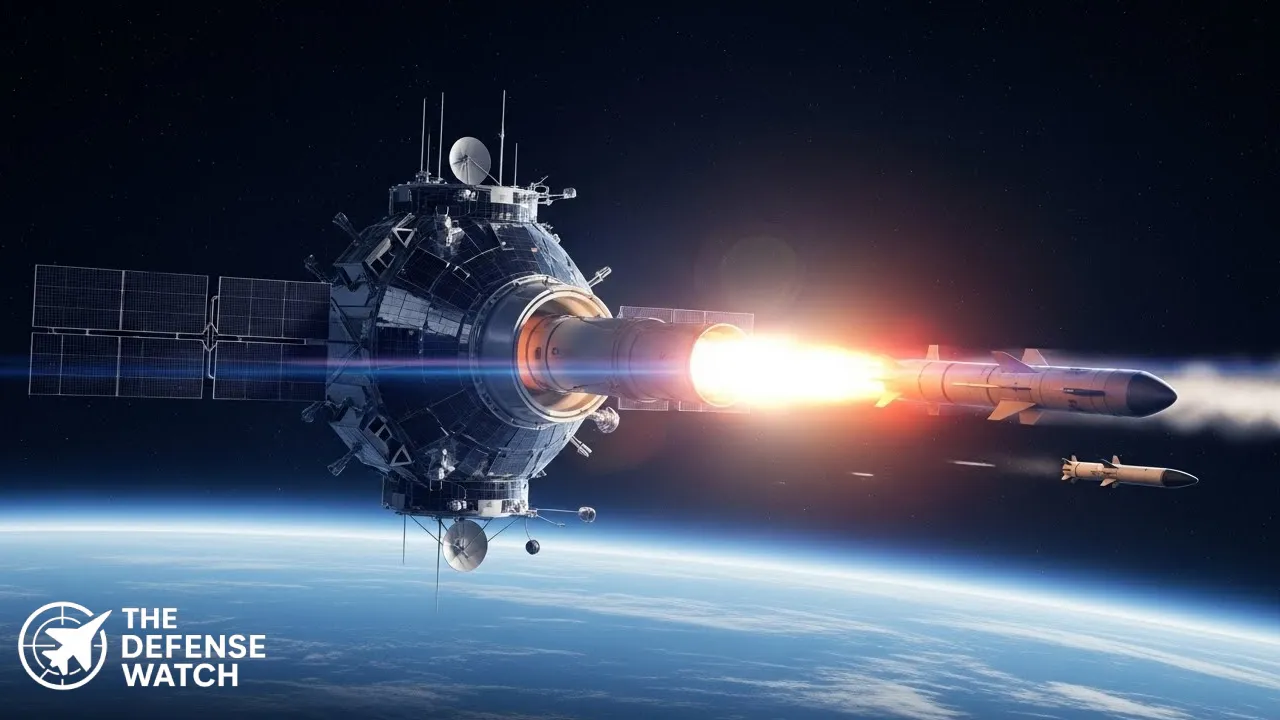
The U.S. Space Force (USSF) awarded the first batch of prototype contracts under the Golden Dome missile-defense initiative. The contracts — structured as “Other Transaction Agreements” (OTAs) — were awarded to multiple firms to develop space-based interceptors (SBIs).
A Space Force spokesperson confirmed the awards but declined to name the recipients, citing “enhanced security measures.” Contract values and performance periods remain undisclosed.
This is the first tangible contracting step toward building a space-layer for Golden Dome since the program was first unveiled in early 2025.
Context — What Is Golden Dome and Why It Matters
Golden Dome is a sweeping vision for a layered U.S. homeland missile-defense architecture — combining terrestrial radars and interceptors, air- and sea-based weapons, and now a space-based layer featuring satellites and interceptors in orbit.
The SBI element is among the most ambitious: it aims to destroy hostile ballistic, cruise, or hypersonic missiles during or shortly after launch, when they ascend through the atmosphere and into space — a phase many analysts consider the most vulnerable for an incoming missile, before it deploys countermeasures or multiples warheads.
If fully realized, Golden Dome would represent the first deployment of space-based offensive interceptors by the United States. Cost estimates vary widely: the administration has cited roughly US$175 billion, while independent analyses have projected as high as US$831 billion over decades.
Officials involved with Golden Dome have emphasized that achieving the goal will require a level of interagency cooperation and national commitment comparable to historic national projects, like the Manhattan Project.
What We Know (And Don’t) — Details of the Prototype Contracts
Award Mechanism: OTAs, Not Traditional Contracts
The Space Force used Other Transaction Agreements (OTAs), which are more flexible than standard federal procurement instruments and — crucially — do not mandate public disclosure under typical contracting thresholds. Because the awards reportedly are under a threshold (historically around US$9 million) they fall outside standard public-release requirements.
No Public Contract Values, Recipients Cloaked
The agencies did not disclose which companies received the awards or the contract amounts. That said, industry and media sources have identified likely candidates.
Unverified reporting suggests that companies such as Northrop Grumman, Lockheed Martin, True Anomaly, and Anduril may be involved. Some estimates cite contracts for certain contractors at about US$10 million each, though no confirmation has been provided.
Scope of Effort: Multiple Interceptor Variants & Fire Control Systems
The awarded prototype contracts are expected to cover multiple classes of space interceptors aimed at handling diverse threats — from rapidly ascending ballistic/hypersonic missiles to slower cruise or ballistic missiles at different stages of flight. The program reportedly asked industry to propose up to four different interceptor variants, though comments from inside the Pentagon suggest this may be reduced to three.
In addition to the interceptors themselves, contracts will likely include design work on fire-control systems capable of integrating data from satellites and directing interceptors toward targets — a critical piece of the Golden Dome kill chain.
What This Means — Strategic and Programmatic Implications
A Shift Toward Orbital Missile Defense
The contract awards mark a concrete shift from ground- and sea-based missile defense — a domain that has dominated U.S. planning since the Cold War — toward embedding defensive weapons in space. If scaled, Golden Dome could complement or even supplant existing systems by enabling intercepts immediately upon missile launch, before adversaries can deploy decoys or countermeasures.
Incentivizing Rapid Industry Innovation
By using OTAs and prize-based competition for prototype development, the Space Force is signaling an intent to speed up innovation and reduce bureaucratic drag. This could help accelerate demonstrations — perhaps even a first orbital intercept test — as early as 2028.
Risk, Cost and Technical Hurdles Remain Significant
Despite optimism, experts remain cautious. While the physics behind space-based intercepts may be proven in theory, challenges include making the system economically viable, building enough interceptors to offer a credible deterrent, and integrating space-based interceptors with the rest of the multilayered architecture.
Further, because the initial contracts are small and shrouded in secrecy, it may take months before the public sees any technical designs, mockups, or other indications of progress.
What Comes Next — What to Watch
- A formal release of a Request for Prototype Proposals (RPP) from the Space Force was expected in early December 2025, potentially followed by more OTA awards.
- Industry watchers and analysts will be watching for on-orbit demonstration timelines — with 2028 often cited as the target year for a first intercept test.
- As development proceeds, congressional oversight is likely to intensify — particularly regarding budget, long-term sustainment costs, and strategic implications of weaponizing space.
Why This Matters Now
The first prototype contracts awarded under Golden Dome represent more than a symbolic step: they mark the transition from concept to execution. As missiles evolve — with hypersonic glide vehicles, near-space missiles, and increasingly stealthy launch platforms — traditional missile defense systems face growing limitations. A space-based layer promises to re-shape the U.S. strategic architecture by hitting threats closer to their origin.
But doing so will require technology, funding, and a level of interagency and industrial coordination not seen since the Cold War’s most ambitious projects. Whether Golden Dome delivers on its promise — or becomes another high-cost program constrained by engineering and political realities — remains to be seen.
Get real time update about this post category directly on your device, subscribe now.


3 comments
[…] period for Bradley IFV upgrades. This follows earlier contracts, building on work begun with an initial award in […]
[…] U.S. Space Force received two substantial awards addressing critical space domain challenges. The Augmented Maneuver Vehicle for Satellites project […]
[…] ACV program, a position the company has held since winning the competitive selection in 2018. The initial contract awarded in June 2018 covered 30 vehicles valued at $198 million, with options for up to 204 additional […]