
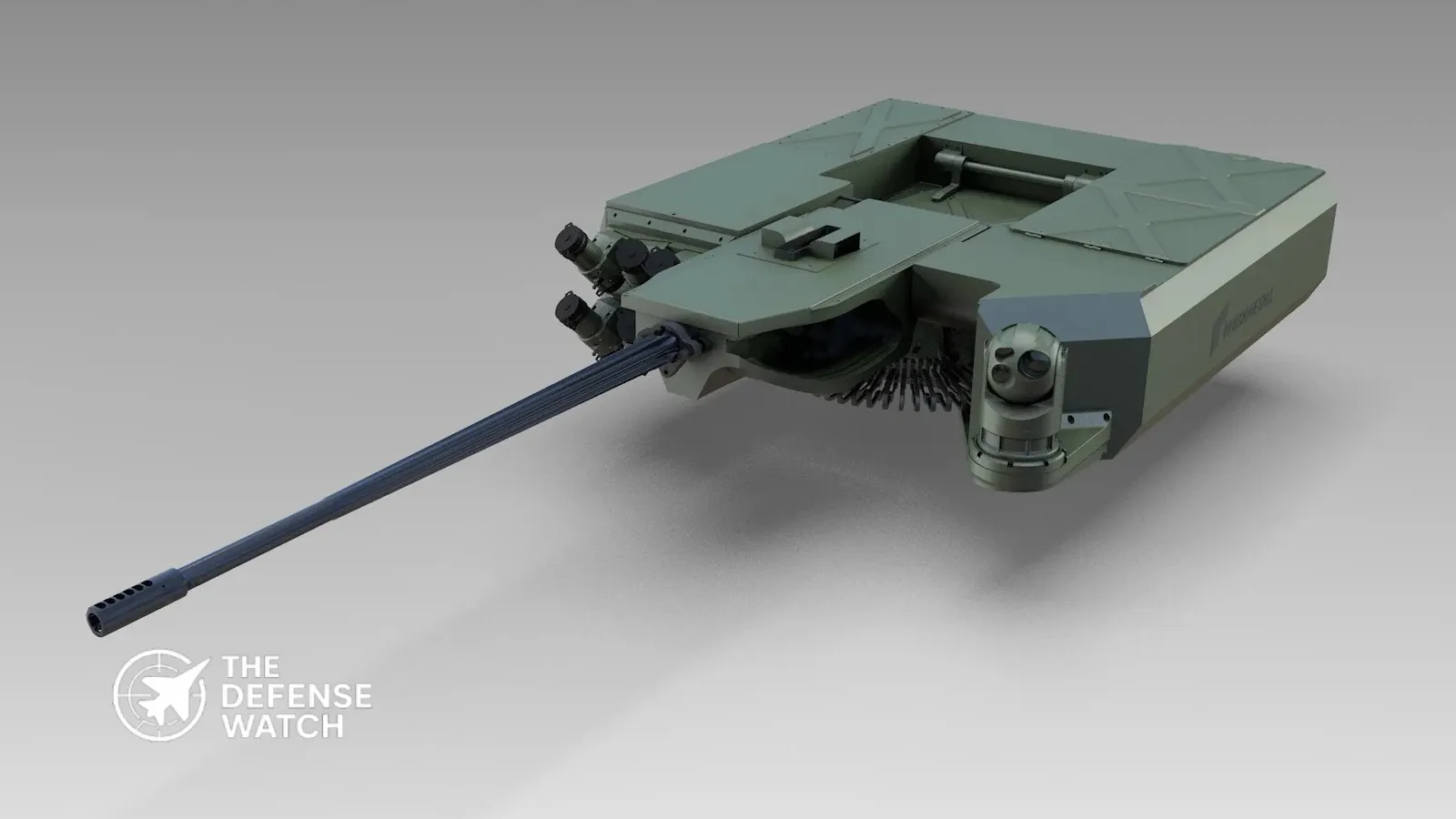
- ► Rheinmetall to deliver 274 CT 025 unmanned turrets for Luchs 2 reconnaissance vehicles by 2031.
- ► Contract value reported in the mid three digit million euro range.
- ► Turrets equipped with Oerlikon KBA 25 mm cannon, NATO standard 25 x 137 ammunition.
- ► Six advanced combat simulation training systems to support reconnaissance units.
- ► Luchs 2 vehicles planned to enter German Army service from 2029.
Rheinmetall Luchs 2 Contract Marks Major Step In German Army Modernization
The Rheinmetall Luchs 2 contract signals a major investment in the German Army reconnaissance vehicle fleet as Berlin accelerates land force modernization.
Germany’s Federal Office of Bundeswehr Equipment, Information Technology and In Service Support has moved forward with the next generation Luchs 2 program, naming General Dynamics European Land Systems, GDELS, as prime contractor. Under a new agreement signed in Kaiserslautern in early February 2026, GDELS awarded Rheinmetall a contract to supply turrets, main weapon systems and related simulators.
The total value is described as in the mid three digit million euro range. Entry into service is planned from 2029 onward.
274 CT 025 Unmanned Turrets
At the core of the Rheinmetall Luchs 2 contract are 274 modular CT 025 unmanned turrets, to be delivered by 2031. The majority of production will be handled by Rheinmetall Electronics GmbH in Bremen, marking the first large scale order for the newly developed CT 025 system.
The CT 025 for Luchs 2 is tailored specifically to German Army requirements. It features a fully digitized fire control system, inertial stabilization and a ballistic computer designed to enable accurate fire on the move. According to company statements, the turret is compatible with NATO Generic Vehicle Architecture standards, allowing integration into broader command and control networks.
The system also includes a stabilized sight capable of engaging ground targets and low flying aerial threats, including unmanned aerial vehicles. This reflects lessons from Ukraine and other recent conflicts, where reconnaissance units face persistent drone threats.
A turret hatch provides ballistic protection for crew operations, while ammunition storage has been optimized to meet weight limits and air transport requirements. The open system architecture enables integration into Rheinmetall Battlesuite digital infrastructure, allowing future software driven upgrades without major hardware changes.
From an operational standpoint, that modularity may prove as important as raw firepower. The Bundeswehr has faced criticism in recent years over slow upgrade cycles. An architecture designed for rapid software updates could reduce long term sustainment costs and improve adaptability.
Oerlikon KBA 25 mm Cannon For Multi Role Firepower
The Luchs 2 will be armed with the 25 mm Oerlikon KBA automatic cannon, produced by Rheinmetall Italia. Chambered in NATO standard 25 x 137 mm, the weapon is widely fielded, with more than 6,000 units reportedly manufactured.
The cannon offers three firing modes, single shot, 175 rounds per minute rapid fire, and 600 rounds per minute burst fire. Its dual feed mechanism allows operators to switch quickly between ammunition types, including proximity fuse rounds intended to counter drones.
With an effective range of up to 2,500 meters, the KBA 25 mm provides reconnaissance units with credible self defense capability against armored vehicles and aerial threats. Its relatively low recoil allows integration on lighter wheeled platforms, aligning with the Luchs 2 concept as a mobile reconnaissance vehicle rather than a heavy infantry fighting vehicle.
Strategically, standardizing the 25 mm system across multiple Bundeswehr platforms could generate efficiencies in training, maintenance and logistics. Rheinmetall has emphasized the goal of establishing a common cross platform main weapon infrastructure for the German armed forces.
Advanced Simulation And Training Systems
Beyond hardware, the Rheinmetall Luchs 2 contract includes six Combat Simulation Training Systems, known as AGFS. The reference system is scheduled for delivery in mid 2028, followed by five production systems upgraded to the same standard.
AGFS is designed around the train as you fight principle. It models vehicle systems, sensors and ballistic performance in a networked environment. The architecture builds on Rheinmetall simulation work for platforms such as the Puma infantry fighting vehicle and other German Army systems.
In live training environments, Rheinmetall will integrate its laser based AGDUS system, enabling force on force exercises using vehicle specific displays and controls. This approach mirrors broader NATO trends toward blended live, virtual and constructive training environments.
The inclusion of advanced simulation from the outset suggests the Bundeswehr aims to avoid the training gaps that have affected previous modernization efforts.
Broader Implications For European Defense Industry
The Rheinmetall Luchs 2 contract highlights growing cooperation between European land systems manufacturers. GDELS, a business unit of General Dynamics with operations across Europe, serves as prime contractor, while Rheinmetall provides core combat systems and training infrastructure.
For Germany, the program fits within a larger defense investment push following the 2022 Zeitenwende policy shift. Berlin has increased spending on armored vehicles, air defense and munitions to address readiness shortfalls identified by both NATO and domestic audits.
Reconnaissance units play a critical role in high intensity operations, providing target acquisition and situational awareness for artillery and maneuver forces. Enhancing their survivability and digital connectivity aligns with NATO’s emphasis on multi domain operations.
While full technical details of the Luchs 2 chassis have not been disclosed, the integration of a modern unmanned turret, NATO compliant architecture and drone counter capabilities indicates a platform designed for contested environments.
As deliveries ramp up through 2031, the Rheinmetall Luchs 2 contract will serve as a test case for Germany’s ability to translate increased defense budgets into fielded capability on schedule.
Get real time update about this post category directly on your device, subscribe now.
