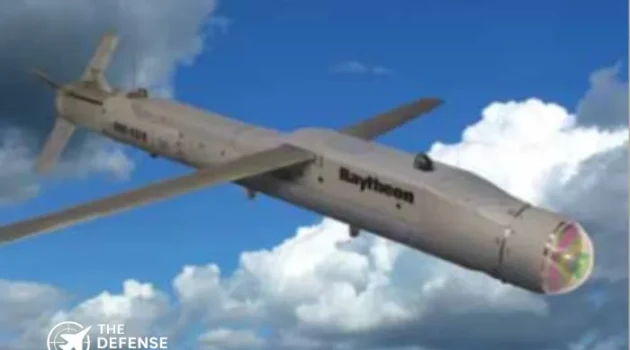
Raytheon SDB II Contract Expands Precision Strike Arsenal
The Raytheon SDB II contract marks a significant expansion in U.S. and allied precision strike capabilities, with a not-to-exceed value of $708.9 million awarded by the U.S. Air Force.
The contract covers production Lot 12 of the Small Diameter Bomb Increment II, along with associated test equipment, containers, and spares. Work will be carried out in Tucson, Arizona, and is scheduled for completion by March 6, 2030, according to the U.S. Department of Defense.
Managed by the Air Force Life Cycle Management Center at Eglin Air Force Base, Florida, the award reflects continued demand for advanced precision-guided munitions amid evolving operational requirements.
- Raytheon awarded a $708.9 million contract for SDB II production Lot 12 and test equipment.
- Work will be performed in Tucson, Arizona, with completion expected by March 2030.
- Contract includes munitions, containers, spares, and test equipment.
- Program supports Foreign Military Sales to eight allied nations across Europe and Asia.
- The award was issued as a sole-source contract by the U.S. Air Force.
Multi-Nation Demand Drives Production Scale
A key feature of the Raytheon SDB II contract is its strong international component. The program includes Foreign Military Sales to Belgium, Canada, Finland, Germany, Italy, Norway, the Republic of Korea, and Switzerland.
This broad participation underscores the growing reliance among allied nations on precision, network-enabled weapons that can operate effectively in contested environments.
From an operational standpoint, the SDB II, also known as the GBU-53/B StormBreaker, offers multi-mode guidance, enabling engagement of moving targets in adverse weather conditions. Its integration across multiple platforms enhances interoperability among NATO and partner air forces.
The inclusion of multiple allied buyers also helps sustain production economies of scale, lowering unit costs while ensuring long-term supply chain stability.
Funding Structure Reflects Multi-Year Procurement Strategy
The contract’s funding breakdown highlights a layered procurement approach across fiscal years. Initial obligations include:
- $128.2 million in FY2026 missile procurement funds
- $31.5 million in FY2026 weapons procurement
- $5.29 million in FY2025 procurement funding
- $1.87 million in operations and maintenance funds
- $171.5 million in Foreign Military Sales contributions
This diversified funding structure reflects both U.S. military requirements and partner nation commitments, ensuring steady production flow over the contract period.
Strategic Context: Precision Weapons in High-Density Conflict
The Raytheon SDB II contract comes at a time when precision-guided munitions are central to modern air warfare doctrine. Conflicts in recent years have highlighted the importance of weapons capable of striking mobile targets with minimal collateral damage.
Compared to legacy systems, the SDB II provides enhanced flexibility through its tri-mode seeker, combining radar, infrared imaging, and semi-active laser guidance. This allows operators to engage targets in GPS-denied or electronically contested environments.
From a strategic perspective, expanding SDB II production aligns with broader U.S. efforts to maintain a technological edge against near-peer adversaries. The weapon’s ability to support stand-off engagement reduces risk to manned aircraft while increasing mission effectiveness.
For allied nations, participation in the program ensures access to a proven, interoperable capability that can be integrated into existing air platforms without significant modification.
Sole-Source Award Raises Industrial Base Considerations
The contract was issued as a sole-source acquisition, reflecting Raytheon’s position as the primary manufacturer of the SDB II system.
While sole-source awards can streamline procurement timelines and ensure consistency in production, they also highlight ongoing challenges within the defense industrial base. Maintaining competition and resilience in munitions manufacturing remains a priority for the Pentagon, particularly as global demand for precision weapons continues to rise.
However, given the technical complexity of the SDB II and its established production line, a sole-source approach is consistent with past procurement decisions for advanced munitions programs.
Operational Impact Through 2030
With production extending through 2030, the Raytheon SDB II contract ensures sustained availability of a critical precision strike capability for both U.S. and allied forces.
The program supports not only inventory replenishment but also long-term modernization goals, particularly as air forces transition toward network-centric and multi-domain operations.
As demand for precision engagement grows across multiple theaters, the SDB II is positioned to remain a key component of Western airpower strategies.
Get real time update about this post category directly on your device, subscribe now.