
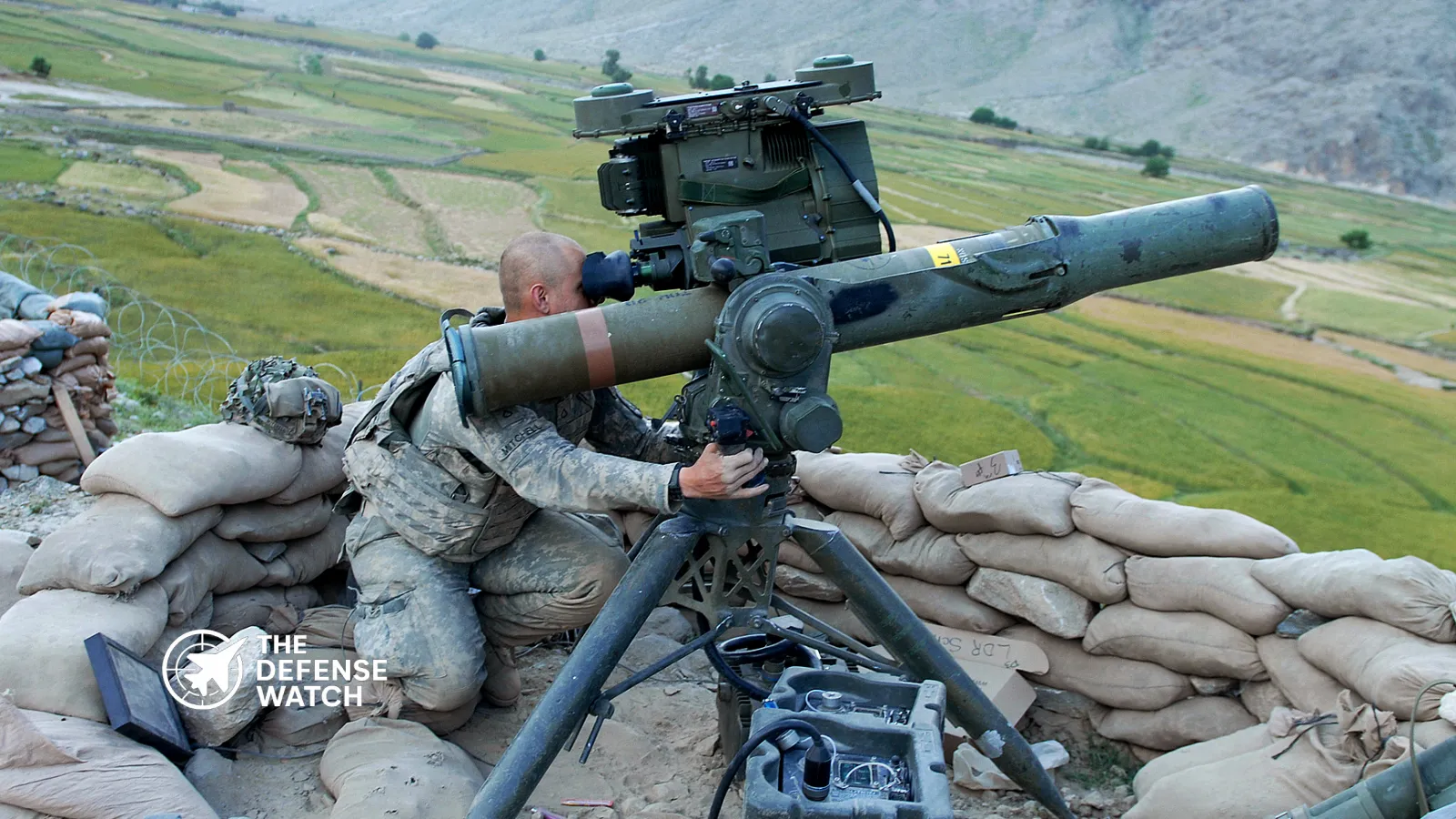
Raytheon expands Tube Launched Optically Tracked Wireless Guided Missiles production for US Army
Tube Launched Optically Tracked Wireless Guided Missiles remain a core part of the US Army anti armor inventory as Raytheon secures a major contract modification to expand procurement through the end of the decade.
Raytheon, based in Tucson, Arizona, has been awarded a 193,705,262 dollar modification to an existing US Army contract for the procurement of Tube Launched Optically Tracked Wireless Guided Missiles, according to official US Department of Defense contracting data. The modification, listed as P00019 under contract W31P4Q 23 C 0026, brings the total cumulative face value of the contract to the same amount.
The award reflects continued Army investment in proven infantry and vehicle mounted missile systems as part of broader conventional force modernization efforts.
Contract details and funding breakdown
The modification covers additional procurement quantities of Tube Launched Optically Tracked Wireless Guided Missiles, commonly referred to as TOW missiles, which have been in US service for decades and remain widely deployed across allied forces.
Work under the contract will be performed in Tucson, Arizona, with an estimated completion date of Sept 30, 2028. The long performance period suggests sustained production rather than a one time surge buy.
At the time of award, the Army obligated 46,762,368 dollars in fiscal 2024 other procurement Army funds, along with 2,679,094 dollars from fiscal 2025 other procurement Army accounts. Army Contracting Command at Redstone Arsenal, Alabama, is managing the contracting activity.
According to Pentagon contracting announcements, the obligation structure allows the Army to incrementally fund missile production while maintaining flexibility for future procurement decisions.
Why Tube Launched Optically Tracked Wireless Guided Missiles still matter
Despite growing attention on next generation precision weapons and long range fires, Tube Launched Optically Tracked Wireless Guided Missiles remain a reliable and adaptable system for US and allied ground forces.
The missile system provides heavy anti armor capability against main battle tanks, fortified positions, and low speed aerial threats. Its wire free guidance variants reduce vulnerability to countermeasures and allow for longer engagement ranges compared to earlier wire guided versions.
The US Army continues to deploy TOW systems across multiple platforms, including Bradley infantry fighting vehicles, Stryker variants, Humvee mounted launchers, and tripod configurations for dismounted units.
Defense analysts note that the system’s continued relevance stems from incremental upgrades rather than radical redesigns. These upgrades have improved guidance accuracy, range, and warhead effectiveness while keeping training and sustainment costs relatively low.
Raytheon’s role in US missile industrial base
Raytheon has been the prime contractor for the TOW missile family for decades, making the Tucson facility a critical node in the US missile industrial base.
The company’s Arizona operations support missile assembly, testing, quality assurance, and supply chain coordination. Sustained contracts such as this one help preserve skilled manufacturing labor and ensure production continuity for the Army and foreign military sales customers.
Industry observers view long term production contracts as increasingly important amid broader Pentagon efforts to stabilize munitions manufacturing after years of surge demand driven by global conflicts and security assistance programs.
The Department of Defense has repeatedly emphasized the need for predictable funding to maintain missile stockpiles and avoid production gaps that could weaken readiness.
Alignment with Army modernization priorities
The contract modification aligns with the Army’s focus on near term readiness while it develops future anti armor solutions. While programs exploring advanced top attack and extended range missiles continue, Army leadership has signaled that existing systems will remain essential through the late 2020s.
Tube Launched Optically Tracked Wireless Guided Missiles offer a mature capability that integrates easily into current force structures. This reduces risk compared to fielding entirely new systems under compressed timelines.
Army budget documents have consistently included funding lines for TOW procurement and sustainment, particularly for armored brigade combat teams and allied force interoperability.
The continued investment also supports coalition operations, as many NATO and partner nations operate the same missile system, simplifying logistics and training during joint deployments.
Broader context in global security environment
The renewed emphasis on conventional ground combat capabilities reflects lessons drawn from recent conflicts, where armored vehicles and fortified positions remain decisive factors.
Defense planners have observed that high end anti armor weapons are consumed at faster rates than previously expected during sustained operations. This has prompted a reassessment of stockpile requirements and production capacity.
By extending procurement of Tube Launched Optically Tracked Wireless Guided Missiles through 2028, the Army signals confidence in the system’s ability to meet current and foreseeable operational needs.
Analysts at institutions such as the Center for Strategic and International Studies have highlighted the importance of balancing advanced research with immediate force requirements, particularly as global demand for munitions increases.
What comes next
With work scheduled to continue for more than three years, Raytheon’s Tucson facility is expected to remain a key supplier of anti armor missiles for the Army and potentially for allied customers through foreign military sales channels.
While the Pentagon has not disclosed specific quantities associated with the modification, the contract value suggests a substantial production run aimed at replenishing inventories and supporting operational units.
Future budget cycles may include additional options or follow on modifications, depending on Army requirements and congressional appropriations.
For now, the award reinforces the enduring role of Tube Launched Optically Tracked Wireless Guided Missiles within the US Army arsenal and highlights the continued reliance on established defense manufacturers to meet pressing readiness demands.
Get real time update about this post category directly on your device, subscribe now.
