U.S. Army Accepts First XM8 Carbine Delivery
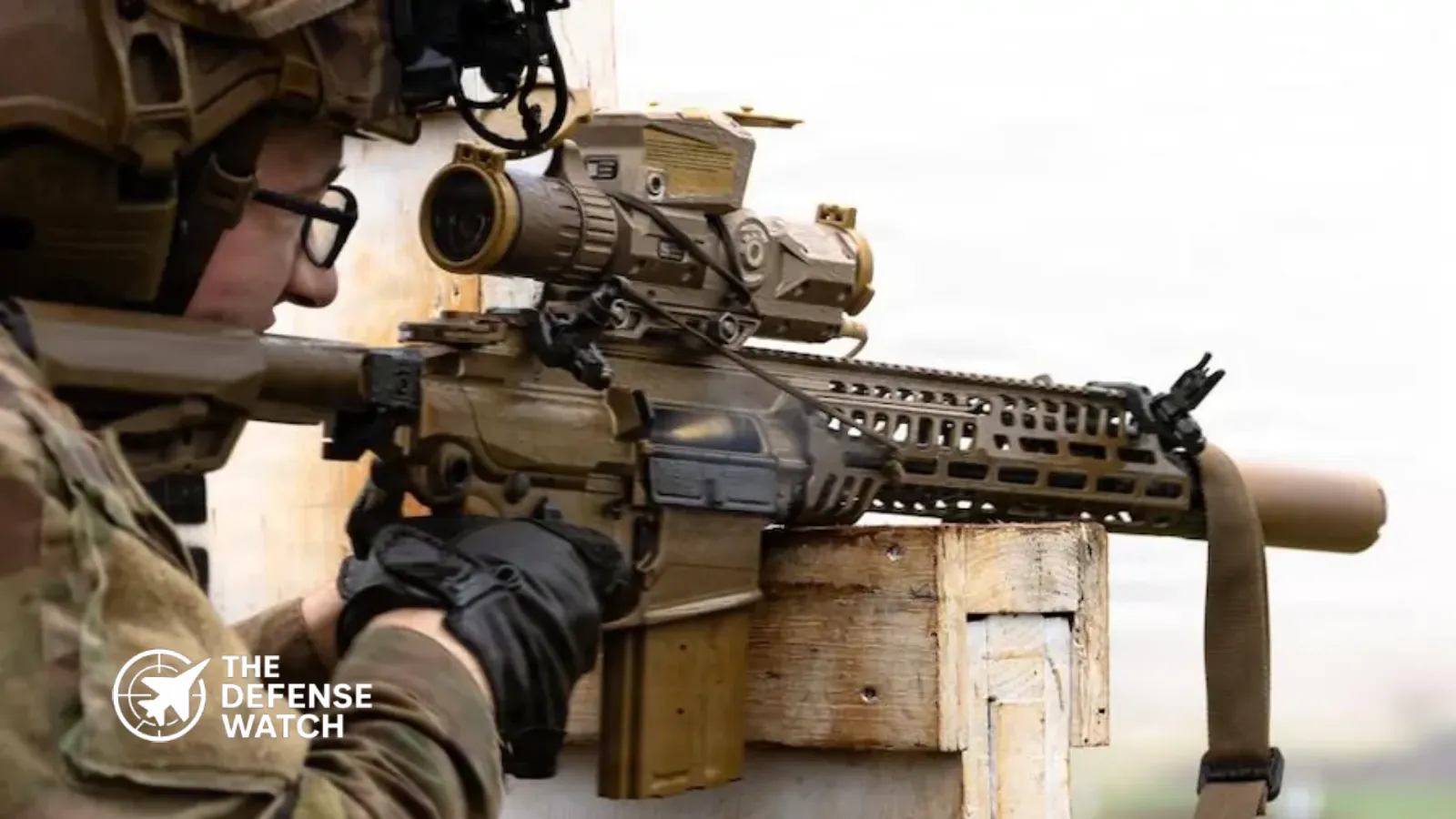
The XM8 carbine U.S. Army program has reached a key milestone with the acceptance of the first delivery from SIG Sauer, marking a renewed push to modernize frontline infantry capabilities.
The initial batch of XM8 carbines has been formally delivered to the U.S. Army, signaling progress in efforts to replace or supplement legacy small arms systems. The move comes as the Army continues to prioritize lethality, reliability, and adaptability in evolving combat environments.
While details on deployment timelines remain limited, the delivery confirms that the XM8 platform is moving from concept and evaluation toward operational integration.
- U.S. Army has accepted its first XM8 carbine delivery from SIG Sauer as part of ongoing infantry modernization efforts.
- The XM8 platform is designed to enhance reliability, modularity, and battlefield adaptability over legacy systems.
- The delivery supports broader efforts to upgrade small arms capability across frontline combat units.
- SIG Sauer continues to expand its role as a key supplier of next generation U.S. Army infantry weapons.
- The move reflects a strategic shift toward more advanced, modular, and future ready weapon systems.
A Renewed Push for Infantry Modernization
The XM8 carbine U.S. Army initiative reflects a broader modernization strategy aimed at addressing emerging threats and closing capability gaps in small arms performance.
For years, the Army has relied heavily on the M4 carbine platform. While proven in combat, the M4 faces limitations in range, lethality, and modular flexibility against near peer adversaries. The XM8, originally developed as part of earlier modernization efforts, has re-emerged as a potential solution to these challenges.
The system is designed with a modular architecture, allowing it to be configured for different mission profiles, including standard infantry use, designated marksman roles, and close quarters operations. This flexibility is increasingly important as U.S. forces prepare for multi domain operations across diverse theaters.
SIG Sauer’s Expanding Role
The SIG Sauer XM8 rifle delivery underscores the company’s growing footprint in U.S. military small arms programs. SIG Sauer has already secured major contracts in recent years, including the Next Generation Squad Weapon program, which introduced the XM7 rifle and XM250 automatic rifle.
By delivering the XM8 platform, SIG Sauer is reinforcing its position as a central player in the Army’s transition toward next generation infantry weapons.
This consolidation of suppliers may also streamline logistics and training, as multiple systems share design philosophies and operational concepts. However, it also places increased responsibility on a single manufacturer to meet performance and delivery expectations.
Operational Implications on the Battlefield
The introduction of the XM8 carbine U.S. Army system could have tangible effects on battlefield performance, particularly in terms of reliability and adaptability.
One of the key advantages often associated with the XM8 design is improved durability under harsh conditions. Past small arms programs have emphasized the need for weapons that can perform consistently in extreme environments, from desert heat to arctic cold.

Additionally, the XM8’s modular design supports rapid customization. Units can adjust configurations based on mission requirements without needing entirely different weapon systems. This reduces logistical burden while increasing tactical flexibility.
From a combat perspective, enhancements in ergonomics, weight distribution, and accessory integration may also improve soldier effectiveness and reduce fatigue during extended operations.
Strategic Context: Preparing for Peer Conflict
The U.S. Army infantry modernization effort, including the XM8 program, is closely tied to preparations for potential high intensity conflict against near peer adversaries.
In such scenarios, small arms are not just individual weapons but part of a larger system of systems that includes sensors, communications, and precision targeting. The XM8’s design aligns with this approach, enabling integration with advanced optics, fire control systems, and digital battlefield networks.
This shift reflects lessons learned from recent conflicts, where adaptability and rapid decision making have proven critical. Modern infantry units must be equipped with weapons that support these requirements without adding unnecessary complexity.
Challenges and Considerations
Despite the progress, the XM8 carbine U.S. Army program is not without challenges.
First, integration into existing force structures will require training, maintenance adjustments, and logistical planning. Transitioning from established platforms like the M4 is a complex process that involves more than simply issuing new weapons.
Second, questions remain about long term procurement scale. It is unclear whether the XM8 will fully replace existing systems or serve as a complementary platform within a broader small arms ecosystem.
Finally, budget pressures and competing priorities could influence the pace of adoption. The Army must balance investments across multiple modernization programs, including armored vehicles, long range fires, and air defense.
What Comes Next
The initial SIG Sauer XM8 rifle delivery is likely just the first step in a phased rollout. Future deliveries, testing, and operational feedback will determine how widely the system is adopted across the force.
If the XM8 meets performance expectations, it could play a significant role in shaping the next generation of U.S. Army infantry weapons. Its success will depend not only on technical performance but also on how well it integrates into the broader modernization framework.
For now, the delivery marks a clear signal that the Army is accelerating efforts to equip its soldiers with more capable and adaptable small arms.
- The US Army approved the M111 offensive hand grenade for Full Material Release, the first newly approved lethal grenade since 1968.
- The grenade relies on blast overpressure instead of fragmentation, making it more effective in enclosed combat environments.
- Developed at Picatinny Arsenal, the system replaces the aging Mk3A2 grenade series with a safer and modern design.
- The M111 uses the same fuze and arming procedures as existing M67 grenades to simplify logistics and training.
- The new design improves safety while giving infantry units a dedicated weapon for close quarters urban combat.
US Army Approves M111 Offensive Hand Grenade
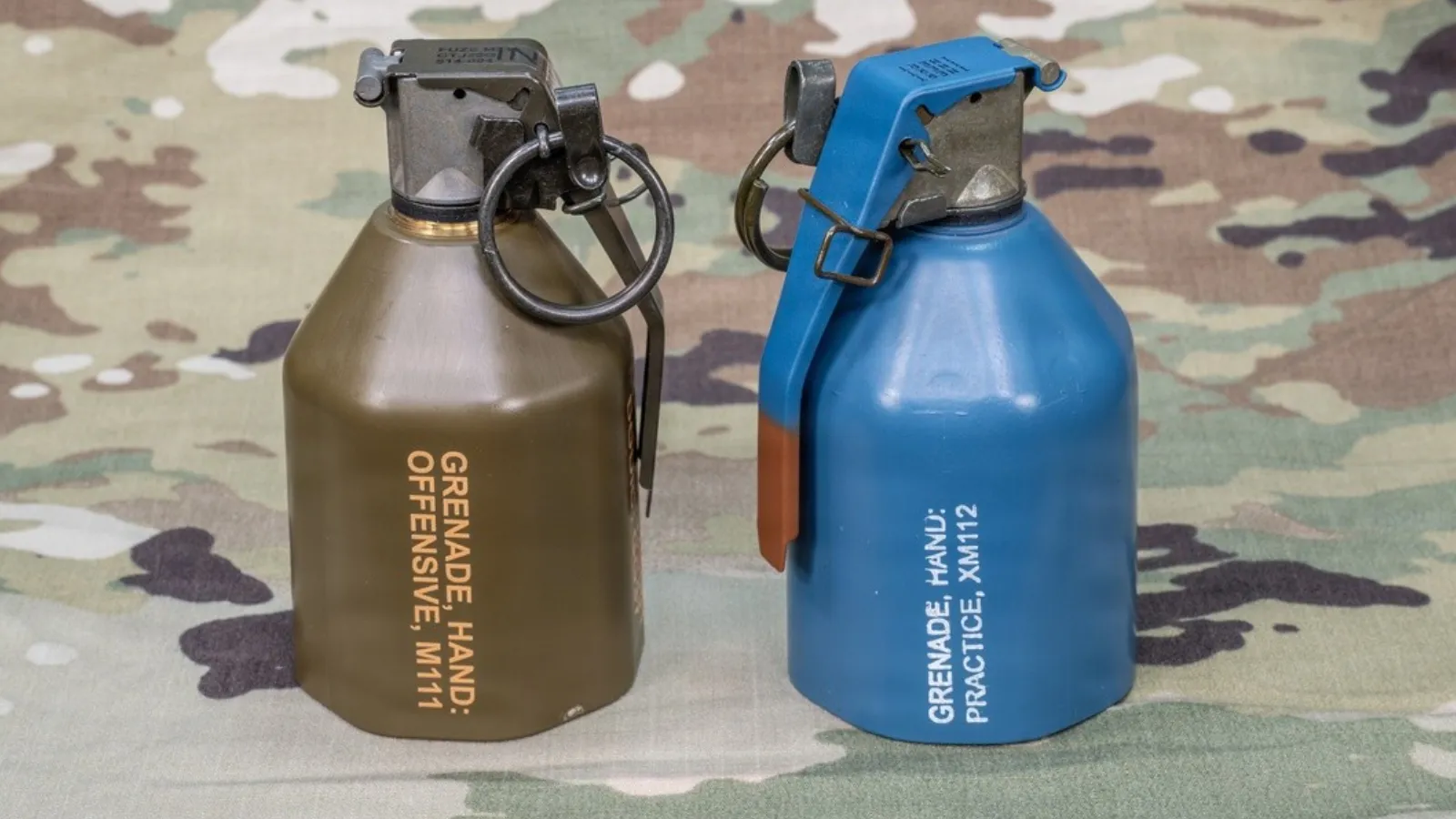
The M111 offensive hand grenade has been approved by the US Army for Full Material Release, marking the first newly authorized lethal hand grenade for the service since 1968. The decision allows the Army to move the weapon into wider production and operational use across infantry units.
Developed by the Army’s Capabilities Program Executive Office Ammunition and Energetics in partnership with the DEVCOM Armaments Center at Picatinny Arsenal, the grenade replaces the aging Mk3A2 series. The new munition addresses both safety concerns and modern battlefield requirements, particularly in urban environments where traditional fragmentation grenades pose significant risks to friendly forces.
The Big Picture
The US Army’s approval of the M111 reflects a broader effort to modernize legacy munitions and adapt infantry equipment for contemporary combat environments.
Urban warfare has become a defining feature of modern conflicts, from Iraq and Syria to recent fighting in densely populated areas worldwide. Military planners increasingly expect future operations to take place in cities, where buildings, narrow corridors, and civilian infrastructure complicate the use of traditional explosive weapons.

Hand grenades have remained a staple of infantry combat for decades. However, many designs currently in service trace their origins to Cold War era requirements. The Mk3A2 offensive grenade, introduced in 1968, remained the Army’s primary concussive grenade despite evolving operational needs.
By introducing the M111 offensive hand grenade, the Army is updating a critical piece of soldier equipment that had seen limited innovation for nearly six decades.
What’s Happening
The US Army formally cleared the M111 offensive hand grenade for Full Material Release after years of development and testing at Picatinny Arsenal in New Jersey.
The weapon replaces the obsolete Mk3A2 grenade, which faced increasing restrictions due to its asbestos based body. The M111 eliminates this hazard by using a plastic casing that is fully consumed during detonation.
Unlike the widely used M67 fragmentation grenade, the M111 relies primarily on blast overpressure rather than metal fragmentation to neutralize targets. This design produces powerful shock waves capable of incapacitating enemy personnel in enclosed spaces such as rooms, bunkers, and narrow structures.

Army officials say the weapon fills a critical operational niche. Fragmentation grenades like the M67 can send lethal fragments in all directions, which may bounce off walls or penetrate barriers in confined spaces. The M111 instead concentrates its lethal effects through pressure waves, reducing the risk to friendly forces positioned nearby.
The grenade uses the same fuze and five step arming process as the M67 fragmentation grenade. This design decision allows soldiers to train using familiar procedures while simplifying manufacturing and supply chains.
Why It Matters
The introduction of the M111 offensive hand grenade directly reflects lessons learned during decades of close quarters combat.
US forces conducting urban operations in Iraq and Afghanistan often encountered situations where fragmentation grenades were not the ideal tool. When fighting inside buildings or narrow corridors, fragments can travel unpredictably or penetrate interior walls, increasing the risk of friendly casualties.

Army program officials noted that door to door combat in Iraq revealed the limitations of existing grenade types. A blast based weapon designed for confined spaces offers a safer alternative for clearing rooms and fortified positions.
The M111 gives infantry units greater flexibility. Soldiers can now choose between fragmentation effects in open terrain using the M67, or concentrated blast effects when operating inside structures.
This approach reflects a broader trend toward specialized infantry munitions tailored for specific tactical environments.
Strategic Implications
Although the M111 is a relatively small piece of equipment, its introduction has broader implications for infantry combat capability.
Urban combat presents unique challenges for modern militaries. Dense terrain restricts movement, limits visibility, and creates complex engagement environments where traditional weapons may not perform as intended.
By fielding a grenade optimized for enclosed spaces, the US Army is improving the survivability and effectiveness of infantry units conducting room clearing operations.
The change also highlights the importance of incremental modernization. While large scale programs such as next generation combat vehicles often dominate headlines, improvements to basic soldier equipment can have immediate operational impact.
Grenades remain among the most widely used infantry weapons. Enhancing their safety and effectiveness directly affects frontline combat units.
Competitor View
Potential adversaries closely monitor US efforts to improve infantry lethality and urban combat capabilities.

Russia and China both emphasize urban warfare in their military planning and training exercises. Russian operations in Ukraine have demonstrated the brutal realities of fighting in cities, while Chinese military writings frequently highlight the importance of urban operations in potential future conflicts.
The introduction of the M111 may reinforce perceptions that the US military is preparing for sustained close quarters combat scenarios. It also signals continued investment in infantry modernization even as attention shifts toward high technology systems such as drones and long range precision weapons.
At the tactical level, however, improvements to close combat equipment remain essential for ground forces.
What To Watch Next
The Army’s approval of the M111 offensive hand grenade allows the program to transition from development to broader production.
Future milestones will likely include expanded procurement contracts and gradual distribution to operational units. Training grenades, designated the M112, will support instruction and allow soldiers to practice with equipment that closely replicates the live weapon.
Industry participation may also expand. Because the Army retains government owned intellectual property for the grenade design, multiple manufacturers could potentially compete for production contracts.
This approach supports the Pentagon’s broader effort to strengthen the domestic ammunition industrial base.
Capability Gap
The M111 offensive hand grenade addresses a long standing capability gap in close quarters combat.
Fragmentation grenades excel in open terrain but can create unacceptable risks in confined spaces. Conversely, older offensive grenades such as the Mk3A2 lacked modern materials and safety standards.
The M111 attempts to balance lethality with controlled effects in urban environments. Its blast overpressure can incapacitate enemies inside rooms or bunkers while reducing unintended fragmentation hazards.
However, offensive grenades also have limitations. Their blast effects diminish quickly in open areas, meaning they cannot replace fragmentation grenades in all situations.
For this reason, the Army continues to field both grenade types as complementary tools for different combat scenarios.
The Bottom Line
The M111 offensive hand grenade modernizes a decades old infantry weapon and gives US soldiers a safer, more effective option for close quarters urban combat.
Russia Restarts SR-2M Production to Support Infantry Firepower
Russia has restarted production of the SR-2M Veresk submachine gun as part of efforts to sustain compact armor-piercing firepower for military and internal security forces. The move reflects ongoing demand for close-quarters weapons capable of defeating modern body armor.
(adsbygoogle = window.adsbygoogle || []).push({});The SR-2M, developed by TsNIITochMash under the Rostec state defense conglomerate, is chambered for the 9×21 mm cartridge. This round was designed to penetrate ballistic protection beyond the capabilities of standard 9×19 mm ammunition.
Sustaining a Niche Infantry Capability
The decision to resume SR-2M production comes as Russia continues to prioritize infantry equipment suited for urban combat, vehicle crews, and specialized units. Compact automatic weapons remain in demand for operations where maneuverability and penetration against protected targets are required.
The SR-2M is an upgraded version of the original SR-2, featuring improved ergonomics, an updated folding stock, and compatibility with modern optics. Its compact design allows it to be deployed by personnel operating in confined environments while retaining effective firepower.
Renewed production is aimed at sustaining existing inventories and ensuring replacement weapons remain available rather than introducing an entirely new platform.
Weapon Characteristics and Operational Role
The SR-2M fires the 9×21 mm SP-10 and SP-11 armor-piercing cartridges, which Russian sources claim can defeat certain levels of body armor at close range. This capability has long defined the weapon’s role within Russian internal security units and select military formations.
Key characteristics include a short barrel, high rate of fire, and detachable box magazines. The weapon is designed for close-range engagements where rapid target acquisition and penetration are critical.
(adsbygoogle = window.adsbygoogle || []).push({});The SR-2M is not intended to replace standard assault rifles but to complement them. Its role is focused on close protection details, counterterrorism units, and crews operating armored vehicles or aircraft.
Context Within Russian Small Arms Modernization
Russia’s small arms portfolio already includes platforms such as the AK-74M, AK-12, and the PP-19 Vityaz. However, the SR-2M occupies a specific niche that those systems do not fully address.
By restarting SR-2M production, Russia appears to be maintaining diversity within its infantry weapons inventory. This approach allows different units to be equipped according to mission requirements rather than adopting a single standard solution.
Analysts note that sustaining production of legacy but capable systems is often more cost-effective than developing new weapons during periods of high operational demand.
Industrial and Strategic Implications
The restart also highlights the role of Russia’s domestic defense industry in meeting internal requirements despite external pressures. TsNIITochMash has historically been responsible for specialized weapons development, particularly for ammunition and compact firearms.
Maintaining production lines for systems like the SR-2M ensures technical expertise and manufacturing capacity remain intact. This can be important for long-term sustainment and potential incremental upgrades.
(adsbygoogle = window.adsbygoogle || []).push({});While no export plans have been announced, the SR-2M has previously been marketed to select foreign customers. Any renewed production could also support future limited exports, subject to Russian government approval.
Broader Trends in Compact Weapon Demand
The SR-2M production restart aligns with broader global trends emphasizing close-quarters combat capabilities. Urban warfare, internal security missions, and protective duties continue to drive demand for compact automatic weapons with enhanced penetration.
Similar trends can be observed in other militaries that retain submachine guns or compact carbines for specialized roles rather than fully replacing them with standard rifles.
Raytheon expands Tube Launched Optically Tracked Wireless Guided Missiles production for US Army
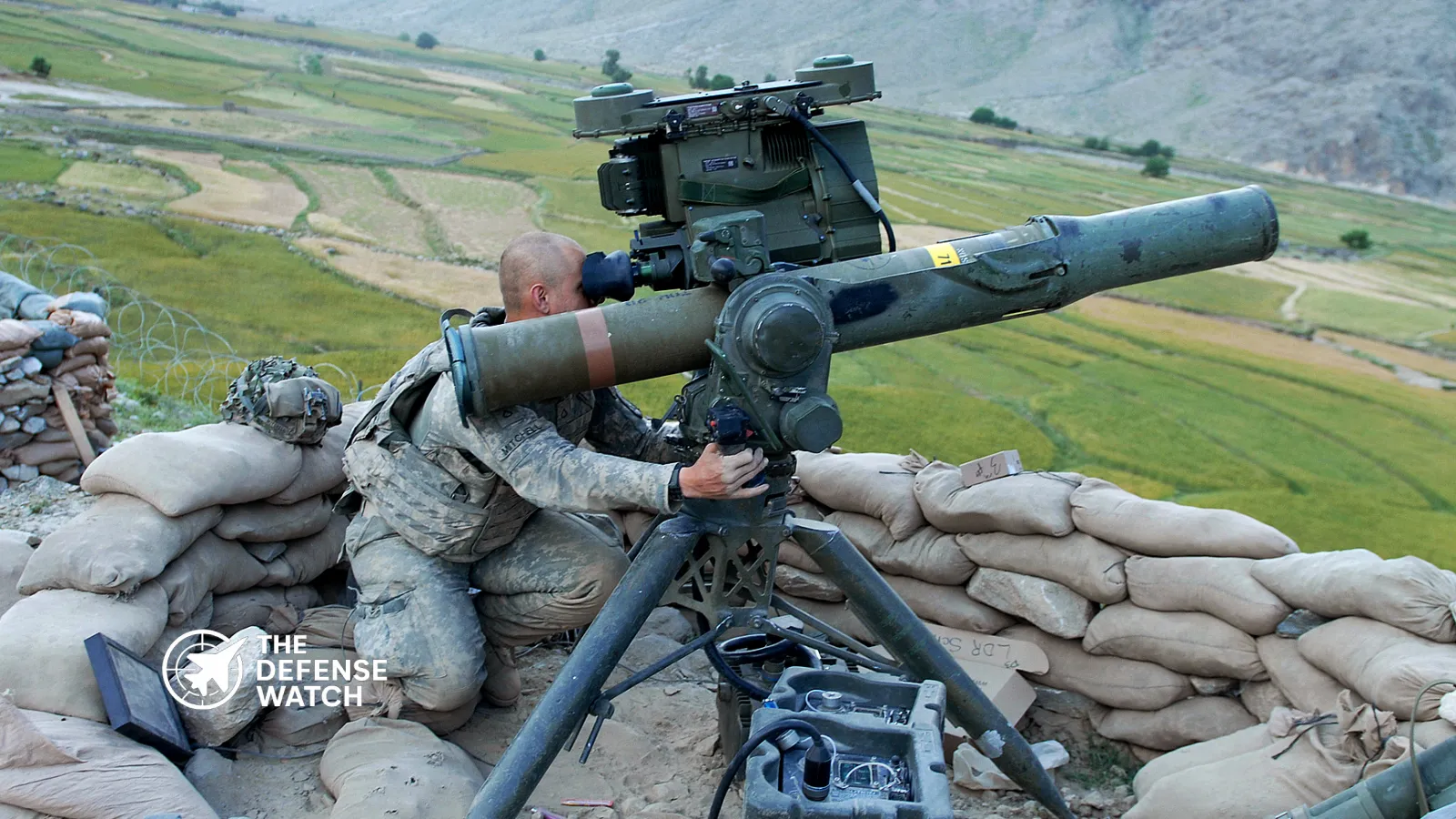
Tube Launched Optically Tracked Wireless Guided Missiles remain a core part of the US Army anti armor inventory as Raytheon secures a major contract modification to expand procurement through the end of the decade.
(adsbygoogle = window.adsbygoogle || []).push({});Raytheon, based in Tucson, Arizona, has been awarded a 193,705,262 dollar modification to an existing US Army contract for the procurement of Tube Launched Optically Tracked Wireless Guided Missiles, according to official US Department of Defense contracting data. The modification, listed as P00019 under contract W31P4Q 23 C 0026, brings the total cumulative face value of the contract to the same amount.
The award reflects continued Army investment in proven infantry and vehicle mounted missile systems as part of broader conventional force modernization efforts.
Contract details and funding breakdown
The modification covers additional procurement quantities of Tube Launched Optically Tracked Wireless Guided Missiles, commonly referred to as TOW missiles, which have been in US service for decades and remain widely deployed across allied forces.
Work under the contract will be performed in Tucson, Arizona, with an estimated completion date of Sept 30, 2028. The long performance period suggests sustained production rather than a one time surge buy.
At the time of award, the Army obligated 46,762,368 dollars in fiscal 2024 other procurement Army funds, along with 2,679,094 dollars from fiscal 2025 other procurement Army accounts. Army Contracting Command at Redstone Arsenal, Alabama, is managing the contracting activity.
According to Pentagon contracting announcements, the obligation structure allows the Army to incrementally fund missile production while maintaining flexibility for future procurement decisions.
Why Tube Launched Optically Tracked Wireless Guided Missiles still matter
Despite growing attention on next generation precision weapons and long range fires, Tube Launched Optically Tracked Wireless Guided Missiles remain a reliable and adaptable system for US and allied ground forces.
The missile system provides heavy anti armor capability against main battle tanks, fortified positions, and low speed aerial threats. Its wire free guidance variants reduce vulnerability to countermeasures and allow for longer engagement ranges compared to earlier wire guided versions.
(adsbygoogle = window.adsbygoogle || []).push({});The US Army continues to deploy TOW systems across multiple platforms, including Bradley infantry fighting vehicles, Stryker variants, Humvee mounted launchers, and tripod configurations for dismounted units.
Defense analysts note that the system’s continued relevance stems from incremental upgrades rather than radical redesigns. These upgrades have improved guidance accuracy, range, and warhead effectiveness while keeping training and sustainment costs relatively low.
Raytheon’s role in US missile industrial base
Raytheon has been the prime contractor for the TOW missile family for decades, making the Tucson facility a critical node in the US missile industrial base.
The company’s Arizona operations support missile assembly, testing, quality assurance, and supply chain coordination. Sustained contracts such as this one help preserve skilled manufacturing labor and ensure production continuity for the Army and foreign military sales customers.
Industry observers view long term production contracts as increasingly important amid broader Pentagon efforts to stabilize munitions manufacturing after years of surge demand driven by global conflicts and security assistance programs.
The Department of Defense has repeatedly emphasized the need for predictable funding to maintain missile stockpiles and avoid production gaps that could weaken readiness.
Alignment with Army modernization priorities
The contract modification aligns with the Army’s focus on near term readiness while it develops future anti armor solutions. While programs exploring advanced top attack and extended range missiles continue, Army leadership has signaled that existing systems will remain essential through the late 2020s.
Tube Launched Optically Tracked Wireless Guided Missiles offer a mature capability that integrates easily into current force structures. This reduces risk compared to fielding entirely new systems under compressed timelines.
Army budget documents have consistently included funding lines for TOW procurement and sustainment, particularly for armored brigade combat teams and allied force interoperability.
The continued investment also supports coalition operations, as many NATO and partner nations operate the same missile system, simplifying logistics and training during joint deployments.
Broader context in global security environment
The renewed emphasis on conventional ground combat capabilities reflects lessons drawn from recent conflicts, where armored vehicles and fortified positions remain decisive factors.
Defense planners have observed that high end anti armor weapons are consumed at faster rates than previously expected during sustained operations. This has prompted a reassessment of stockpile requirements and production capacity.
By extending procurement of Tube Launched Optically Tracked Wireless Guided Missiles through 2028, the Army signals confidence in the system’s ability to meet current and foreseeable operational needs.
Analysts at institutions such as the Center for Strategic and International Studies have highlighted the importance of balancing advanced research with immediate force requirements, particularly as global demand for munitions increases.
What comes next
With work scheduled to continue for more than three years, Raytheon’s Tucson facility is expected to remain a key supplier of anti armor missiles for the Army and potentially for allied customers through foreign military sales channels.
(adsbygoogle = window.adsbygoogle || []).push({});While the Pentagon has not disclosed specific quantities associated with the modification, the contract value suggests a substantial production run aimed at replenishing inventories and supporting operational units.
Future budget cycles may include additional options or follow on modifications, depending on Army requirements and congressional appropriations.
For now, the award reinforces the enduring role of Tube Launched Optically Tracked Wireless Guided Missiles within the US Army arsenal and highlights the continued reliance on established defense manufacturers to meet pressing readiness demands.