
(adsbygoogle = window.adsbygoogle || []).push({});Executive Summary:
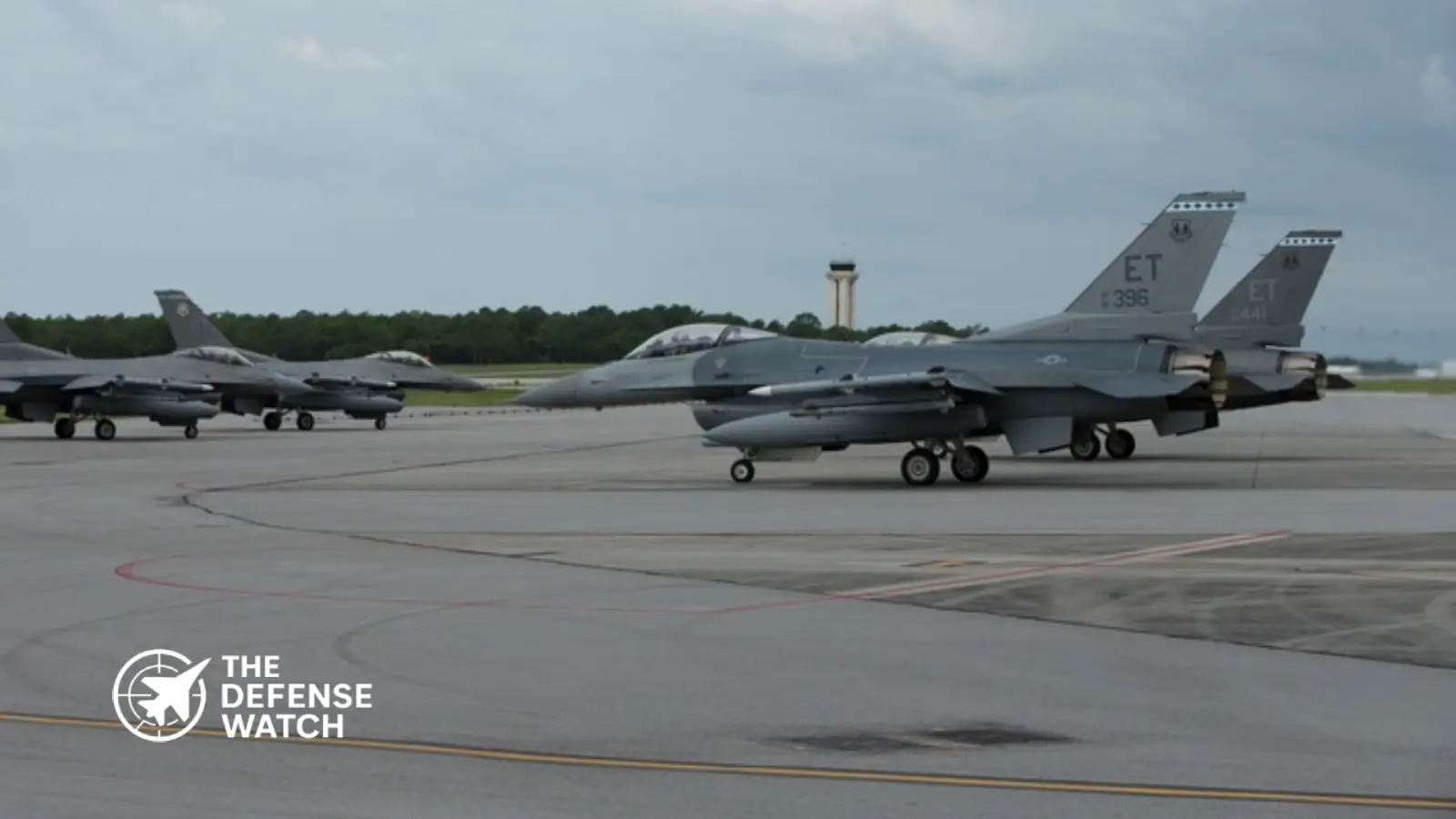
The U.S. Air Force has awarded Northrop Grumman a $14.2 million contract modification supporting production and sustainment of Active Electronically Scanned Array (AESA) radars for F-16 fighter aircraft. The award extends a major modernization effort that is transforming legacy F-16 fleets with advanced sensor capabilities comparable to those found on newer generation combat aircraft.
The U.S. Department of Defense announced that Northrop Grumman Systems Corp. of Linthicum Heights, Maryland, received a $14,215,800 modification to a previously awarded Air Force contract supporting AESA radar integration across F-16 aircraft.
According to the Air Force Life Cycle Management Center (AFLCMC) at Wright-Patterson Air Force Base, Ohio, the modification increases the total contract value from approximately $1.822 billion to $1.836 billion. Work will be performed in Linthicum Heights and is scheduled to continue through May 31, 2031.
The contract supports production and related activities associated with AESA radar systems for the F-16 fleet, one of the most widely operated fighter aircraft families in the world.
Deep Technical & Strategic Context Analysis
At the center of the modernization effort is Northrop Grumman’s AN/APG-83 Scalable Agile Beam Radar (SABR), an advanced Active Electronically Scanned Array radar designed specifically for legacy F-16 aircraft. The radar replaces mechanically scanned systems with a digital electronically steered array capable of tracking multiple airborne and surface targets simultaneously while providing significantly improved detection ranges, resistance to jamming, and high-resolution targeting capabilities.
The APG-83 leverages technology derived from fifth-generation fighter radar programs and has become one of the most important upgrades under the Air Force’s F-16 service life extension strategy. As global air forces increasingly face sophisticated electronic warfare environments and long-range missile threats, AESA radar modernization allows F-16 operators to maintain operational relevance without procuring entirely new fighter fleets.
- (adsbygoogle = window.adsbygoogle || []).push({});
The modernization effort is strategically significant because the F-16 remains in active service with more than two dozen nations. The aircraft continues to perform air superiority, strike, homeland defense, and expeditionary missions across Europe, the Indo-Pacific, and the Middle East. Enhanced radar capability improves interoperability with advanced weapons, networked battle management systems, and modern command-and-control architectures.
From a procurement perspective, this contract modification represents an incremental increase to an existing long-term production agreement rather than a new acquisition program. Such modifications are common within major defense procurement efforts, allowing the government to add production quantities, engineering support, testing activities, or sustainment requirements while maintaining continuity in manufacturing and supply chain operations.
Contract Breakdown & Details
Contract Value
- Award Recipient: Northrop Grumman Systems Corp.
- Location: Linthicum Heights, Maryland
- Contract Modification: P00178
- Original Contract Number: FA8615-17-C-6047
- Modification Value: $14,215,800
- Previous Contract Total: $1,821,928,979
- New Contract Total: $1,836,144,779
Program Focus
- System: Active Electronically Scanned Array (AESA) Radar
- Aircraft Platform: F-16 Fighting Falcon
- Primary Radar: AN/APG-83 SABR
- Mission Areas Supported:
- Air-to-air combat
- Precision strike operations
- Electronic warfare resilience
- Multi-target tracking
- Network-centric warfare
Funding Sources
The modification includes funding from multiple Air Force appropriations:
- Fiscal Year 2024 Procurement Funds: $2,843,160
- Fiscal Year 2026 Procurement Funds: $8,529,480
- Fiscal Year 2026 Research, Development, Test and Evaluation Funds: $2,843,160
Performance Schedule
- Work Location: Linthicum Heights, Maryland
- Expected Completion: May 31, 2031
Geographic Workshare
Based on the Department of Defense announcement:
- Maryland: 100% (Linthicum Heights)
Contracting Authority
- Contracting Activity: Air Force Life Cycle Management Center (AFLCMC)
- Location: Wright-Patterson Air Force Base, Ohio
Why This Matters
The latest modification underscores the Air Force’s continued commitment to extending the combat effectiveness of its F-16 fleet while bridging capability gaps ahead of broader next-generation fighter force expansion. With AESA-equipped F-16s now serving as a cornerstone of modernization efforts across the United States and allied air forces, the APG-83 radar program remains one of the most consequential avionics upgrades currently underway in the tactical aviation sector.
By combining fifth-generation sensor technologies with a proven fourth-generation airframe, the modernization initiative offers a cost-effective path to maintaining combat credibility against increasingly sophisticated threats through the next decade.
Get real time update about this post category directly on your device, subscribe now.

