
- ► North Korea has suffered approximately 6,000 casualties fighting alongside Russian forces in Ukraine, according to South Korean intelligence.
- ► South Korea’s military reported in September 2025 that Russia may have supplied North Korea with two to three nuclear submarine propulsion modules salvaged from decommissioned Russian vessels.
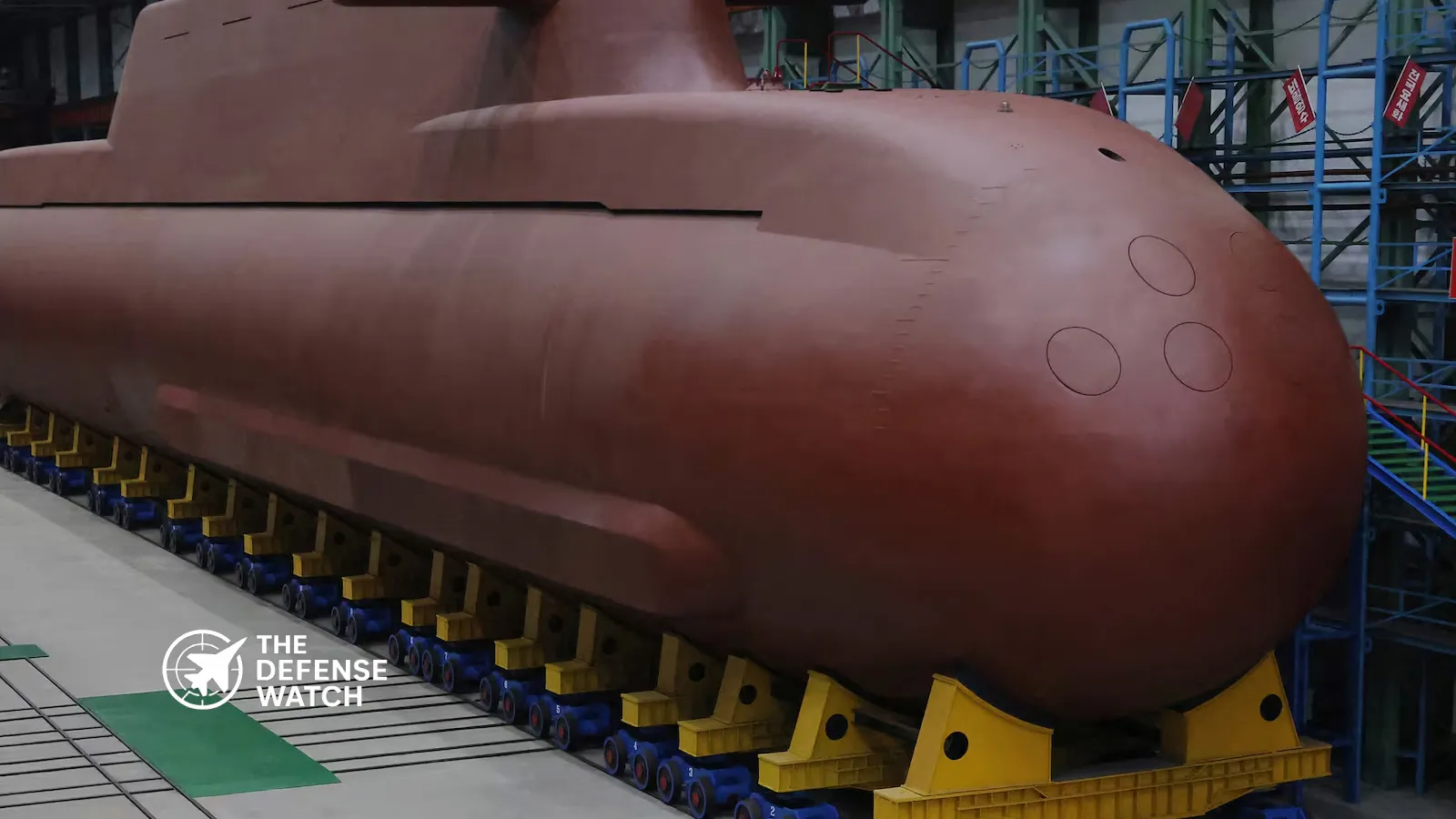
- ► Kim Jong Un publicly unveiled an 8,700-ton nuclear-powered guided missile submarine in December 2025, with analysts estimating sea trials could begin within months.
- ► Expert Peter Roberts, testifying before U.K. Parliament, called nuclear submarine operating knowledge Russia’s “crown jewels of military knowledge” — once considered untradeable.
- ► Analysts warn a functional North Korean nuclear submarine would complete Pyongyang’s nuclear triad, fundamentally altering regional deterrence in the Indo-Pacific.
Russia May Be Offering Nuclear Submarine Secrets to North Korea in Exchange for War Support in Ukraine
The Russia-North Korea nuclear quid pro quo is no longer a fringe concern among defense analysts — it is now the subject of formal testimony before Western legislatures. As Moscow’s dependence on Pyongyang deepens on the battlefields of Ukraine, experts are raising alarms that the Kremlin may be prepared to share what was once considered its most closely guarded military knowledge: the technology and expertise behind nuclear-powered submarines.
The warning came from Peter Roberts, associate fellow at the University of Exeter’s Centre for Public Understanding of Defence and Security, during a Feb. 10 hearing before the U.K. Parliament focused on undersea activity. Roberts stated that Russia has already transferred ballistic missile technology to North Korea and is now potentially moving toward offering nuclear submarine expertise to states including North Korea and Iran — in exchange for mass drone manufacturing capabilities and engineering support on the front lines in Ukraine.
North Korea’s Price for Putin’s War
North Korea’s contribution to Russia’s war effort has been substantial and growing. South Korean intelligence estimates Pyongyang has suffered around 6,000 military casualties fighting for Russian forces. The DPRK has also supplied millions of 152mm artillery shells, short-range ballistic missiles, and a range of military equipment and vehicles.
In exchange, Russia appears to be offering more than cash. Roberts told British lawmakers that the transactional calculus has evolved: having already transferred ballistic missile knowledge, Moscow now appears to be leaching submarine expertise toward its partners. Previously, nuclear submarine operating knowledge was something you never shared,” Roberts said. “These were the crown jewels of military knowledge.”
Kim’s Nuclear Triad Ambitions
North Korea has been building toward a nuclear triad — the ability to deliver nuclear weapons from land, air, and sea — for years. On Dec. 25, 2025, North Korean state media broadcast footage of Kim Jong Un personally inspecting an 8,700-ton nuclear-powered strategic guided missile submarine at the Sinpo shipyard. Seoul-based analysts noted the vessel appeared fully assembled externally, with reactor installation likely complete. A former South Korean submarine officer estimated the vessel could be ready for sea trials within months.
John Ford, a research associate at the James Martin Center for Nonproliferation Studies in California, described North Korea’s effort as building a “jank triad” — not sophisticated by great-power standards, but potentially sufficient to complicate any adversary’s calculus about a first strike. For subs, there’s a lot that can go wrong,” Ford told Defense News. “You’re basically taking all that previous stuff, and then you’re amplifying it — now it needs to be underwater.”
How Credible Is the Technology Transfer?
In September 2025, South Korea’s military reported intelligence indicating Russia had supplied North Korea with two to three nuclear submarine propulsion modules, reportedly salvaged from decommissioned Russian submarines, including a reactor, turbine, and cooling system. Seoul said it was still working to verify the claim.
Ford expressed skepticism about the most alarming scenarios. “Nuclear weapons designs: impossible,” he said. “Propulsion? More possible, but still very unlikely.” He pointed to a structural reason for Russian restraint: intelligence transferred to North Korea could leak to South Korea via human intelligence networks, giving Seoul — and by extension Washington — a window into Russian reactor designs.
Even if Russia shared propulsion data, Ford noted, North Korea would face an enormous practical gap. Operating a nuclear submarine requires skills the DPRK simply does not yet possess. The Soviet Union and the United States each took decades to develop that operational expertise during the Cold War. “The actual skill of operating underwater is something that they just don’t have,” Ford said. And unless Russian navy submariners are doing ride-alongs and training them — which I don’t think would be happening — even then, it would take a really long time.
There is also a meaningful distinction between handing over blueprints outright and providing incremental technical support — confirming component placement, answering technical questions — a more covert and deniable form of proliferation. Ford noted that this kind of tacit assistance has precedent, pointing to informal U.S. support while France developed its own nuclear weapons program.
Institutional Barriers and Strategic Leverage
Russia’s transfer of military knowledge to North Korea also faces internal resistance. Ford emphasized that those within Russia’s defense and scientific establishment responsible for protecting that information will object — though Putin retains the authority to override them.
Russia also likely holds more leverage in the relationship than commonly assumed. Ford argued that cash payments remain the primary compensation Pyongyang receives from Moscow. North Korea, subject to some of the world’s most stringent UN sanctions, channels that revenue into domestic development — manufacturing capacity, infrastructure, and military programs. Technical assistance, if it exists, is probably more limited and constrained than the most alarmist assessments suggest.
Strategic Implications for the Indo-Pacific
Whether or not the most sensitive transfers have already occurred, North Korea’s nuclear submarine program is advancing. Kim Jong Un has visited the Sinpo shipyard repeatedly, elevated the program to a stated political priority, and invoked the language of a “nuclear shield.” Analysts at the Center for Nonproliferation Studies have flagged new construction at North Korea’s Yongbyon nuclear research center that may represent a submarine reactor testbed.
A functional North Korean nuclear-powered submarine — even a rudimentary one — would complete the DPRK’s nuclear triad. That capability would extend Pyongyang’s second-strike threat beneath the ocean’s surface, making any adversary far less confident about eliminating North Korea’s nuclear arsenal in a preemptive strike. For U.S. and allied defense planners in the Indo-Pacific, this is not a distant hypothetical. It is a capability that may be closer to operational than most public assessments acknowledge.
The Russia-North Korea nuclear quid pro quo represents a convergence of two destabilizing trends: Russia’s willingness to erode longstanding non-proliferation norms to sustain its war effort, and North Korea’s accelerating drive toward a credible nuclear triad. The full extent of what has already been exchanged between Moscow and Pyongyang may not be known for years — but the strategic consequences are already beginning to take shape.
Get real time update about this post category directly on your device, subscribe now.
